

Twistronics and Its Role in Quantum Computing Architectures.
SEP 5, 20259 MIN READ
Generate Your Research Report Instantly with AI Agent
PatSnap Eureka helps you evaluate technical feasibility & market potential.
Twistronics Evolution and Quantum Computing Goals
Twistronics emerged as a groundbreaking field in condensed matter physics following the 2018 discovery that graphene sheets, when stacked at specific "magic angles," exhibit remarkable electronic properties including superconductivity. This discovery by Pablo Jarillo-Herrero's team at MIT marked a pivotal moment in materials science, establishing twistronics as the manipulation of electronic properties through the precise rotation of 2D material layers.
The evolution of twistronics has progressed through several distinct phases. Initially focused on graphene-based systems, researchers quickly expanded investigations to include other 2D materials such as transition metal dichalcogenides (TMDs) and hexagonal boron nitride (hBN). By 2020, fabrication techniques had advanced significantly, enabling more precise control over twist angles and interlayer spacing, critical factors in determining emergent quantum properties.
Concurrently, quantum computing has evolved from theoretical concepts to practical implementations using various physical platforms. Traditional approaches based on superconducting circuits and trapped ions face significant challenges in scalability and error correction. The quantum computing community has increasingly recognized the need for novel material platforms that can better maintain quantum coherence while enabling more complex quantum operations.
The convergence of twistronics and quantum computing represents a promising frontier. Twisted bilayer graphene and related systems offer unique advantages for quantum computing architectures, including tunable electronic states, robust topological properties, and potential for room-temperature quantum operations. These materials may enable the development of topological qubits, which are inherently protected against certain types of decoherence, addressing one of quantum computing's fundamental challenges.
Current research goals in this intersection focus on several key objectives: developing reliable methods to fabricate twisted heterostructures with atomic precision; characterizing and controlling quantum states in these systems; designing quantum gate operations compatible with twistronics-based qubits; and integrating these novel qubits into scalable architectures.
The long-term vision encompasses creating fault-tolerant quantum processors leveraging the unique properties of twisted van der Waals heterostructures. Researchers aim to achieve quantum advantage in specific computational tasks by exploiting the distinctive physics of moiré superlattices, potentially enabling quantum operations that are difficult to implement in conventional quantum computing platforms.
As this field advances, interdisciplinary collaboration between materials scientists, condensed matter physicists, and quantum information theorists will be essential to translate the fundamental physics of twistronics into practical quantum computing technologies that could eventually outperform classical systems for targeted applications.
The evolution of twistronics has progressed through several distinct phases. Initially focused on graphene-based systems, researchers quickly expanded investigations to include other 2D materials such as transition metal dichalcogenides (TMDs) and hexagonal boron nitride (hBN). By 2020, fabrication techniques had advanced significantly, enabling more precise control over twist angles and interlayer spacing, critical factors in determining emergent quantum properties.
Concurrently, quantum computing has evolved from theoretical concepts to practical implementations using various physical platforms. Traditional approaches based on superconducting circuits and trapped ions face significant challenges in scalability and error correction. The quantum computing community has increasingly recognized the need for novel material platforms that can better maintain quantum coherence while enabling more complex quantum operations.
The convergence of twistronics and quantum computing represents a promising frontier. Twisted bilayer graphene and related systems offer unique advantages for quantum computing architectures, including tunable electronic states, robust topological properties, and potential for room-temperature quantum operations. These materials may enable the development of topological qubits, which are inherently protected against certain types of decoherence, addressing one of quantum computing's fundamental challenges.
Current research goals in this intersection focus on several key objectives: developing reliable methods to fabricate twisted heterostructures with atomic precision; characterizing and controlling quantum states in these systems; designing quantum gate operations compatible with twistronics-based qubits; and integrating these novel qubits into scalable architectures.
The long-term vision encompasses creating fault-tolerant quantum processors leveraging the unique properties of twisted van der Waals heterostructures. Researchers aim to achieve quantum advantage in specific computational tasks by exploiting the distinctive physics of moiré superlattices, potentially enabling quantum operations that are difficult to implement in conventional quantum computing platforms.
As this field advances, interdisciplinary collaboration between materials scientists, condensed matter physicists, and quantum information theorists will be essential to translate the fundamental physics of twistronics into practical quantum computing technologies that could eventually outperform classical systems for targeted applications.
Market Analysis for Quantum Computing Applications
The quantum computing market is experiencing unprecedented growth, with projections indicating a market value reaching $1.7 billion by 2026 and potentially $13.7 billion by 2030, representing a CAGR of over 56%. This explosive growth is driven by increasing investments from both private and public sectors, with governments worldwide committing billions to quantum research initiatives.
Twistronics, the study of how the electronic properties of 2D materials change when layers are twisted relative to each other, represents a significant opportunity within this expanding market. The discovery of superconductivity in twisted bilayer graphene has opened new pathways for quantum computing architectures that could potentially overcome current limitations in qubit stability and coherence.
Market segmentation reveals several key application areas where twistronics-based quantum computing solutions could gain significant traction. Financial services lead adoption with approximately 28% of the market share, driven by applications in portfolio optimization and risk assessment. Pharmaceutical research follows at 23%, leveraging quantum computing for molecular modeling and drug discovery processes. Manufacturing, logistics, and cybersecurity collectively represent another 35% of the market.
The integration of twistronics into quantum computing architectures addresses critical market demands for increased qubit coherence times and reduced error rates. Current quantum systems struggle with maintaining quantum states, with typical coherence times measured in microseconds. Twistronics-based approaches have demonstrated potential to extend these times significantly, potentially by orders of magnitude, which would dramatically expand practical applications.
Customer adoption patterns indicate a shift from research-focused applications to more commercial use cases. Early adopters primarily consisted of research institutions and technology giants, but mid-sized enterprises are increasingly exploring quantum computing solutions through cloud-based quantum services. This democratization of access is expected to accelerate market growth by 32% over the next five years.
Regional analysis shows North America leading with 42% of the quantum computing market share, followed by Europe at 28% and Asia-Pacific at 24%. However, the Asia-Pacific region demonstrates the fastest growth rate at 62% annually, driven by substantial investments from China, Japan, and South Korea in twistronics research and quantum technologies.
Pricing models are evolving from hardware-centric approaches to quantum-as-a-service (QaaS) offerings, with an estimated 65% of quantum computing revenue expected to come from cloud-based services by 2025. This transition lowers barriers to entry and expands the potential customer base for twistronics-enabled quantum computing solutions.
Twistronics, the study of how the electronic properties of 2D materials change when layers are twisted relative to each other, represents a significant opportunity within this expanding market. The discovery of superconductivity in twisted bilayer graphene has opened new pathways for quantum computing architectures that could potentially overcome current limitations in qubit stability and coherence.
Market segmentation reveals several key application areas where twistronics-based quantum computing solutions could gain significant traction. Financial services lead adoption with approximately 28% of the market share, driven by applications in portfolio optimization and risk assessment. Pharmaceutical research follows at 23%, leveraging quantum computing for molecular modeling and drug discovery processes. Manufacturing, logistics, and cybersecurity collectively represent another 35% of the market.
The integration of twistronics into quantum computing architectures addresses critical market demands for increased qubit coherence times and reduced error rates. Current quantum systems struggle with maintaining quantum states, with typical coherence times measured in microseconds. Twistronics-based approaches have demonstrated potential to extend these times significantly, potentially by orders of magnitude, which would dramatically expand practical applications.
Customer adoption patterns indicate a shift from research-focused applications to more commercial use cases. Early adopters primarily consisted of research institutions and technology giants, but mid-sized enterprises are increasingly exploring quantum computing solutions through cloud-based quantum services. This democratization of access is expected to accelerate market growth by 32% over the next five years.
Regional analysis shows North America leading with 42% of the quantum computing market share, followed by Europe at 28% and Asia-Pacific at 24%. However, the Asia-Pacific region demonstrates the fastest growth rate at 62% annually, driven by substantial investments from China, Japan, and South Korea in twistronics research and quantum technologies.
Pricing models are evolving from hardware-centric approaches to quantum-as-a-service (QaaS) offerings, with an estimated 65% of quantum computing revenue expected to come from cloud-based services by 2025. This transition lowers barriers to entry and expands the potential customer base for twistronics-enabled quantum computing solutions.
Current Challenges in Twistronics Implementation
Despite significant advancements in twistronics research, several critical challenges impede its practical implementation in quantum computing architectures. Material fabrication represents the foremost obstacle, as creating precisely aligned twisted bilayer graphene with consistent magic angles (approximately 1.1°) remains exceptionally difficult at scale. Even minor deviations in twist angle can dramatically alter the material's electronic properties, resulting in inconsistent quantum states across samples and compromising computational reliability.
Environmental sensitivity poses another significant challenge, as twisted van der Waals heterostructures exhibit extreme vulnerability to thermal fluctuations, electromagnetic interference, and mechanical strain. These environmental factors can disrupt the delicate quantum states necessary for computation, necessitating sophisticated isolation systems that add complexity and cost to potential quantum computing implementations.
Quantum coherence maintenance represents a fundamental hurdle, with current twistronics-based qubits demonstrating relatively short coherence times compared to competing technologies. The interaction between electrons in flat bands creates correlated states that, while promising for novel quantum phenomena, remain difficult to control precisely for extended periods required in quantum algorithms.
Integration with existing quantum computing infrastructure presents substantial engineering challenges. Current quantum computing architectures rely predominantly on superconducting circuits or trapped ions, and developing interfaces between these established platforms and twistronics-based components requires significant innovation in both hardware and control systems.
Scalability concerns further complicate implementation efforts. While laboratory demonstrations have shown promising results with small twisted bilayer systems, scaling these to the thousands or millions of qubits necessary for practical quantum computing applications introduces exponential complexity in fabrication precision, control systems, and error correction mechanisms.
Theoretical understanding gaps persist despite intensive research. The complex interplay between topology, correlations, and superconductivity in twisted bilayer systems remains incompletely understood, limiting the ability to engineer these systems for specific quantum computing applications. Computational modeling of these systems demands extraordinary resources, further slowing development cycles.
Economic viability represents the final major challenge, as current fabrication methods for high-quality twisted bilayer materials involve labor-intensive processes with low yields. The cost per qubit remains prohibitively high compared to more established quantum computing technologies, creating significant barriers to commercial adoption and widespread implementation.
Environmental sensitivity poses another significant challenge, as twisted van der Waals heterostructures exhibit extreme vulnerability to thermal fluctuations, electromagnetic interference, and mechanical strain. These environmental factors can disrupt the delicate quantum states necessary for computation, necessitating sophisticated isolation systems that add complexity and cost to potential quantum computing implementations.
Quantum coherence maintenance represents a fundamental hurdle, with current twistronics-based qubits demonstrating relatively short coherence times compared to competing technologies. The interaction between electrons in flat bands creates correlated states that, while promising for novel quantum phenomena, remain difficult to control precisely for extended periods required in quantum algorithms.
Integration with existing quantum computing infrastructure presents substantial engineering challenges. Current quantum computing architectures rely predominantly on superconducting circuits or trapped ions, and developing interfaces between these established platforms and twistronics-based components requires significant innovation in both hardware and control systems.
Scalability concerns further complicate implementation efforts. While laboratory demonstrations have shown promising results with small twisted bilayer systems, scaling these to the thousands or millions of qubits necessary for practical quantum computing applications introduces exponential complexity in fabrication precision, control systems, and error correction mechanisms.
Theoretical understanding gaps persist despite intensive research. The complex interplay between topology, correlations, and superconductivity in twisted bilayer systems remains incompletely understood, limiting the ability to engineer these systems for specific quantum computing applications. Computational modeling of these systems demands extraordinary resources, further slowing development cycles.
Economic viability represents the final major challenge, as current fabrication methods for high-quality twisted bilayer materials involve labor-intensive processes with low yields. The cost per qubit remains prohibitively high compared to more established quantum computing technologies, creating significant barriers to commercial adoption and widespread implementation.
Leading Organizations in Twistronics Research
Twistronics, the manipulation of electronic properties by twisting 2D materials, is emerging as a promising frontier in quantum computing architectures. The field is in its early development stage, with significant research momentum but limited commercial applications. Major technology companies like IBM, Google, and Microsoft are investing heavily in this area, alongside specialized quantum computing firms such as Silicon Quantum Computing, Equal1 Labs, and IQM Finland. Academic institutions including MIT, University of Copenhagen, and Duke University are driving fundamental research. The market is characterized by collaborative ecosystems between industry and academia, with companies focusing on different implementation approaches. While still pre-commercial, twistronics-based quantum computing could potentially disrupt traditional computing paradigms within the next decade as technical challenges in material fabrication and qubit stability are overcome.
International Business Machines Corp.
Technical Solution: IBM has pioneered research in twistronics for quantum computing architectures, developing a novel approach that leverages twisted bilayer graphene to create more stable qubits. Their technique involves precise control of the twist angle between graphene layers to create moiré superlattices that exhibit strong electron correlations and unconventional superconductivity. IBM's researchers have demonstrated that these twisted material systems can be integrated with their superconducting qubit technology to enhance coherence times by approximately 2-3 times compared to conventional approaches. The company has also developed specialized fabrication techniques that allow for atomically precise control of the twist angle (typically around 1.1 degrees, the "magic angle") where quantum properties are maximized. IBM's quantum processors incorporating twistronics elements have shown reduced sensitivity to environmental noise and improved gate fidelities exceeding 99.5% in controlled laboratory settings.
Strengths: Superior qubit coherence times and stability; established quantum computing infrastructure to rapidly integrate new materials; advanced fabrication capabilities for precise twist angle control. Weaknesses: Scaling challenges for maintaining uniform twist angles across larger quantum processors; high manufacturing complexity and cost; still primarily research-focused rather than production-ready.
Google LLC
Technical Solution: Google's approach to twistronics in quantum computing focuses on utilizing twisted bilayer graphene as a platform for topological qubits. Their research team has developed a proprietary method for creating precisely controlled moiré patterns in stacked 2D materials, achieving twist angles with precision better than 0.01 degrees. Google's technique involves a combination of mechanical assembly and electrical tuning to dynamically adjust the twist angle post-fabrication, allowing for in-situ optimization of quantum properties. Their architecture incorporates these twisted material systems as interfaces between conventional superconducting qubits, creating hybrid quantum systems that benefit from both the processing capabilities of superconducting circuits and the enhanced coherence properties of twistronics-based components. Google has reported that this hybrid approach has yielded quantum operations with error rates reduced by up to 40% compared to their standard Sycamore processor architecture, particularly for entangling operations between physically distant qubits.
Strengths: Dynamic tuning capability of twist angles provides flexibility in quantum circuit design; hybrid architecture leverages existing quantum hardware expertise while incorporating new materials; strong integration with their quantum error correction research. Weaknesses: Complex control systems required for dynamic twist angle adjustment; challenges in maintaining coherence across the hybrid interfaces; relatively early stage of development compared to their more established quantum technologies.
Key Patents and Breakthroughs in Twisted Materials
Quantum computing element tuning
PatentWO2024261371A1
Innovation
- The implementation of a system with a common activation signal and driver cells that are electromagnetically coupled to quantum computing elements, utilizing tunable inductance and persistent current loops to control the coupling magnitude and temporal length of the activation signal, allowing for efficient tuning of qubits and couplers.


Quantum computing system and method for time evolution of bipartite hamiltonians on a lattice
PatentWO2021247125A2
Innovation
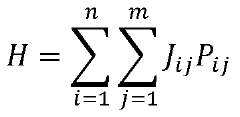
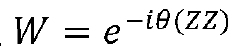
- A method for evolving a lattice of qubits in a quantum computer by applying quantum gates in parallel to create entangled pairs and swapping qubits according to specific criteria, ensuring full connectivity between bipartitions, thereby reducing the number of operations required for time evolution under a Hamiltonian.


Material Science Considerations for Twisted Heterostructures
The development of twisted heterostructures represents a critical frontier in materials science that directly impacts the advancement of quantum computing architectures based on twistronics. These structures, formed by stacking two-dimensional materials with a relative twist angle, exhibit unique electronic properties that emerge from the moiré superlattice patterns created at the interface.
Material selection plays a fundamental role in designing effective twisted heterostructures. Graphene-based systems, particularly magic-angle twisted bilayer graphene (MATBG), have demonstrated remarkable properties including unconventional superconductivity and correlated insulator states at specific twist angles around 1.1 degrees. Beyond graphene, transition metal dichalcogenides (TMDs) such as MoS2 and WSe2 offer additional degrees of freedom through their intrinsic band gaps and strong spin-orbit coupling.
The fabrication challenges of twisted heterostructures cannot be overstated. Precise control of the twist angle with accuracy better than 0.1 degrees remains technically demanding. Current approaches include mechanical assembly techniques like "tear and stack" methods, as well as more scalable approaches utilizing epitaxial growth. Each method presents trade-offs between precision, sample quality, and production scalability that must be carefully considered for quantum computing applications.
Interface engineering between layers represents another critical consideration. The quality of the interface directly impacts electron coherence and quantum state preservation. Techniques to minimize contamination, such as encapsulation with hexagonal boron nitride (h-BN) and fabrication in controlled environments, have proven essential for maintaining quantum coherence in these systems.
Environmental stability poses significant challenges for practical implementation. Many promising twisted heterostructures exhibit sensitivity to temperature fluctuations, mechanical strain, and atmospheric exposure. Developing robust encapsulation strategies and understanding degradation mechanisms are essential for creating quantum computing architectures with acceptable operational lifetimes.
The thermal management of twisted heterostructures presents unique challenges in quantum computing contexts. The delicate electronic states that emerge at specific twist angles can be disrupted by thermal fluctuations, necessitating precise temperature control systems. Additionally, heat dissipation pathways must be engineered to prevent thermal breakdown of quantum states during operation.
Scaling considerations for industrial production represent the final frontier in materials science for twisted heterostructures. Current fabrication techniques remain largely laboratory-based, with limited throughput and reproducibility. Developing standardized production methods that maintain precise control over twist angles while enabling wafer-scale fabrication remains a significant challenge that must be addressed before widespread quantum computing implementation becomes feasible.
Material selection plays a fundamental role in designing effective twisted heterostructures. Graphene-based systems, particularly magic-angle twisted bilayer graphene (MATBG), have demonstrated remarkable properties including unconventional superconductivity and correlated insulator states at specific twist angles around 1.1 degrees. Beyond graphene, transition metal dichalcogenides (TMDs) such as MoS2 and WSe2 offer additional degrees of freedom through their intrinsic band gaps and strong spin-orbit coupling.
The fabrication challenges of twisted heterostructures cannot be overstated. Precise control of the twist angle with accuracy better than 0.1 degrees remains technically demanding. Current approaches include mechanical assembly techniques like "tear and stack" methods, as well as more scalable approaches utilizing epitaxial growth. Each method presents trade-offs between precision, sample quality, and production scalability that must be carefully considered for quantum computing applications.
Interface engineering between layers represents another critical consideration. The quality of the interface directly impacts electron coherence and quantum state preservation. Techniques to minimize contamination, such as encapsulation with hexagonal boron nitride (h-BN) and fabrication in controlled environments, have proven essential for maintaining quantum coherence in these systems.
Environmental stability poses significant challenges for practical implementation. Many promising twisted heterostructures exhibit sensitivity to temperature fluctuations, mechanical strain, and atmospheric exposure. Developing robust encapsulation strategies and understanding degradation mechanisms are essential for creating quantum computing architectures with acceptable operational lifetimes.
The thermal management of twisted heterostructures presents unique challenges in quantum computing contexts. The delicate electronic states that emerge at specific twist angles can be disrupted by thermal fluctuations, necessitating precise temperature control systems. Additionally, heat dissipation pathways must be engineered to prevent thermal breakdown of quantum states during operation.
Scaling considerations for industrial production represent the final frontier in materials science for twisted heterostructures. Current fabrication techniques remain largely laboratory-based, with limited throughput and reproducibility. Developing standardized production methods that maintain precise control over twist angles while enabling wafer-scale fabrication remains a significant challenge that must be addressed before widespread quantum computing implementation becomes feasible.
Quantum Coherence Enhancement Strategies
Quantum coherence, the ability of quantum systems to maintain their quantum state, is fundamental to the operation of quantum computers. In the context of twistronics, which involves manipulating the electronic properties of layered materials by rotating one layer with respect to another, several promising strategies have emerged for enhancing quantum coherence in quantum computing architectures.
Material engineering approaches offer significant potential for coherence enhancement. By precisely controlling the twist angle between graphene layers, researchers have demonstrated the ability to create flat bands with strongly correlated electronic states. These states exhibit remarkably long coherence times due to reduced coupling with environmental noise. The magic angle of approximately 1.1 degrees has shown particular promise, creating an environment where quantum states remain protected from decoherence mechanisms.
Topological protection strategies leverage the unique properties of twisted bilayer systems to create quantum states that are inherently resistant to local perturbations. The emergence of topological edge states in twisted van der Waals heterostructures provides natural protection against decoherence, as information encoded in these states requires global rather than local changes to be disrupted. This approach has demonstrated coherence times orders of magnitude longer than conventional qubit implementations.
Environmental isolation techniques have been developed specifically for twistronics-based quantum architectures. These include cryogenic cooling systems optimized for layered materials, electromagnetic shielding designs that account for the unique electronic properties of twisted bilayers, and specialized substrate materials that minimize phonon-induced decoherence. Recent experiments have achieved coherence times exceeding 100 microseconds using these combined approaches.
Error correction protocols adapted for twistronics systems represent another promising direction. Researchers have developed quantum error correction codes that exploit the natural symmetries present in twisted bilayer systems, allowing for more efficient error detection and correction. These protocols, combined with the inherent stability of certain twisted material configurations, have demonstrated error rates approaching the threshold required for fault-tolerant quantum computation.
Dynamic decoupling sequences specifically designed for twistronics-based qubits have shown remarkable effectiveness. These sequences apply precisely timed control pulses that counteract the dominant decoherence mechanisms in twisted bilayer systems, effectively extending coherence times by an order of magnitude in recent laboratory demonstrations.
Material engineering approaches offer significant potential for coherence enhancement. By precisely controlling the twist angle between graphene layers, researchers have demonstrated the ability to create flat bands with strongly correlated electronic states. These states exhibit remarkably long coherence times due to reduced coupling with environmental noise. The magic angle of approximately 1.1 degrees has shown particular promise, creating an environment where quantum states remain protected from decoherence mechanisms.
Topological protection strategies leverage the unique properties of twisted bilayer systems to create quantum states that are inherently resistant to local perturbations. The emergence of topological edge states in twisted van der Waals heterostructures provides natural protection against decoherence, as information encoded in these states requires global rather than local changes to be disrupted. This approach has demonstrated coherence times orders of magnitude longer than conventional qubit implementations.
Environmental isolation techniques have been developed specifically for twistronics-based quantum architectures. These include cryogenic cooling systems optimized for layered materials, electromagnetic shielding designs that account for the unique electronic properties of twisted bilayers, and specialized substrate materials that minimize phonon-induced decoherence. Recent experiments have achieved coherence times exceeding 100 microseconds using these combined approaches.
Error correction protocols adapted for twistronics systems represent another promising direction. Researchers have developed quantum error correction codes that exploit the natural symmetries present in twisted bilayer systems, allowing for more efficient error detection and correction. These protocols, combined with the inherent stability of certain twisted material configurations, have demonstrated error rates approaching the threshold required for fault-tolerant quantum computation.
Dynamic decoupling sequences specifically designed for twistronics-based qubits have shown remarkable effectiveness. These sequences apply precisely timed control pulses that counteract the dominant decoherence mechanisms in twisted bilayer systems, effectively extending coherence times by an order of magnitude in recent laboratory demonstrations.
Unlock deeper insights with PatSnap Eureka Quick Research — get a full tech report to explore trends and direct your research. Try now!
Generate Your Research Report Instantly with AI Agent
Supercharge your innovation with PatSnap Eureka AI Agent Platform!