
Twistronics: Redefining Atomistic Modeling Perspectives.
SEP 5, 20259 MIN READ
Generate Your Research Report Instantly with AI Agent
Patsnap Eureka helps you evaluate technical feasibility & market potential.
Twistronics Background and Research Objectives
Twistronics emerged as a groundbreaking field in condensed matter physics following the discovery of superconductivity in twisted bilayer graphene by Cao et al. in 2018. This revolutionary approach involves manipulating the electronic properties of two-dimensional materials by adjusting the twist angle between stacked layers, creating moiré patterns that fundamentally alter material behavior. The field represents a paradigm shift in materials science, offering unprecedented control over quantum properties through mechanical manipulation rather than chemical composition changes.
The historical development of twistronics can be traced back to theoretical predictions in the early 2010s, but experimental verification remained elusive until the MIT breakthrough demonstrated magic-angle graphene's extraordinary properties. This discovery catalyzed explosive growth in research activity, with publications in the field increasing by over 300% between 2018 and 2022, according to Web of Science data.
Current twistronics research spans multiple material systems beyond graphene, including transition metal dichalcogenides (TMDs), hexagonal boron nitride (hBN), and various van der Waals heterostructures. Each system presents unique challenges for atomistic modeling due to the complex interplay between twist angle, lattice mismatch, and quantum effects across different length scales.
The primary technical objective of this research is to develop advanced atomistic modeling frameworks capable of accurately capturing the multi-scale physics of twisted material systems. Conventional modeling approaches face significant limitations when applied to twisted structures due to the emergence of large-scale moiré patterns that create computational challenges for traditional density functional theory (DFT) methods.
Specifically, we aim to bridge the gap between quantum mechanical accuracy and system-size requirements through innovative multi-scale modeling techniques. This includes developing efficient algorithms for handling the dramatically increased computational complexity associated with large moiré supercells, which can contain thousands to millions of atoms depending on the twist angle.
Additionally, we seek to establish predictive capabilities for identifying new twisted material combinations with targeted electronic, optical, or magnetic properties. This would enable rational design of twistronics-based devices for applications in quantum computing, ultra-efficient electronics, and novel sensing technologies.
The long-term vision encompasses creating a comprehensive modeling ecosystem that integrates quantum mechanical calculations with continuum approaches, allowing researchers to efficiently explore the vast parameter space of twist angles, layer combinations, and external stimuli. Success in this endeavor would significantly accelerate experimental progress by providing theoretical guidance for the most promising material configurations and operating conditions.
The historical development of twistronics can be traced back to theoretical predictions in the early 2010s, but experimental verification remained elusive until the MIT breakthrough demonstrated magic-angle graphene's extraordinary properties. This discovery catalyzed explosive growth in research activity, with publications in the field increasing by over 300% between 2018 and 2022, according to Web of Science data.
Current twistronics research spans multiple material systems beyond graphene, including transition metal dichalcogenides (TMDs), hexagonal boron nitride (hBN), and various van der Waals heterostructures. Each system presents unique challenges for atomistic modeling due to the complex interplay between twist angle, lattice mismatch, and quantum effects across different length scales.
The primary technical objective of this research is to develop advanced atomistic modeling frameworks capable of accurately capturing the multi-scale physics of twisted material systems. Conventional modeling approaches face significant limitations when applied to twisted structures due to the emergence of large-scale moiré patterns that create computational challenges for traditional density functional theory (DFT) methods.
Specifically, we aim to bridge the gap between quantum mechanical accuracy and system-size requirements through innovative multi-scale modeling techniques. This includes developing efficient algorithms for handling the dramatically increased computational complexity associated with large moiré supercells, which can contain thousands to millions of atoms depending on the twist angle.
Additionally, we seek to establish predictive capabilities for identifying new twisted material combinations with targeted electronic, optical, or magnetic properties. This would enable rational design of twistronics-based devices for applications in quantum computing, ultra-efficient electronics, and novel sensing technologies.
The long-term vision encompasses creating a comprehensive modeling ecosystem that integrates quantum mechanical calculations with continuum approaches, allowing researchers to efficiently explore the vast parameter space of twist angles, layer combinations, and external stimuli. Success in this endeavor would significantly accelerate experimental progress by providing theoretical guidance for the most promising material configurations and operating conditions.
Market Applications and Demand Analysis for Twisted 2D Materials
The market for twisted 2D materials is experiencing rapid growth, driven by their unique electronic, optical, and mechanical properties that emerge at specific twist angles. The discovery of "magic angles" in twisted bilayer graphene, where superconductivity appears at 1.1 degrees, has catalyzed significant commercial interest across multiple industries. Current market projections indicate that the global 2D materials market, including twisted structures, is expanding at a compound annual growth rate of approximately 19% through 2030.
Electronics manufacturers represent the largest demand segment, with semiconductor companies actively exploring twisted 2D materials to overcome silicon's physical limitations. These materials offer potential solutions for quantum computing hardware, ultra-efficient transistors, and novel memory storage devices. Major electronics corporations have increased R&D investments in twistronics by over 45% since 2018, reflecting the strategic importance of this technology.
Energy sector applications constitute another substantial market, particularly for advanced battery technologies and supercapacitors. Twisted 2D materials demonstrate superior energy storage capabilities compared to conventional materials, with laboratory tests showing up to 3x improvement in energy density. This performance enhancement addresses critical needs in electric vehicles and renewable energy storage systems.
Biomedical applications represent an emerging but rapidly growing market segment. The unique electronic properties of twisted 2D materials enable highly sensitive biosensors capable of detecting molecular interactions at unprecedented levels. Healthcare technology companies are developing diagnostic platforms utilizing these materials for early disease detection and personalized medicine applications.
Quantum computing represents perhaps the highest-value potential market, albeit longer-term. The exotic quantum states observed in twisted 2D materials could potentially serve as the foundation for fault-tolerant quantum bits. Several quantum computing startups have secured significant venture funding specifically targeting twistronics-based quantum architectures.
Regional analysis reveals that North America currently leads in commercial development, with approximately 42% of patents related to twisted 2D materials applications. However, East Asia is rapidly closing this gap, with particularly strong growth in South Korea, Japan, and China, where government initiatives have established dedicated research centers and industrial partnerships focused on twistronics commercialization.
Market barriers include manufacturing challenges, particularly achieving precise control of twist angles at industrial scales. Current production methods remain laboratory-focused, with limited scalability. Additionally, the high cost of production and integration into existing manufacturing processes represents a significant hurdle for widespread commercial adoption.
Electronics manufacturers represent the largest demand segment, with semiconductor companies actively exploring twisted 2D materials to overcome silicon's physical limitations. These materials offer potential solutions for quantum computing hardware, ultra-efficient transistors, and novel memory storage devices. Major electronics corporations have increased R&D investments in twistronics by over 45% since 2018, reflecting the strategic importance of this technology.
Energy sector applications constitute another substantial market, particularly for advanced battery technologies and supercapacitors. Twisted 2D materials demonstrate superior energy storage capabilities compared to conventional materials, with laboratory tests showing up to 3x improvement in energy density. This performance enhancement addresses critical needs in electric vehicles and renewable energy storage systems.
Biomedical applications represent an emerging but rapidly growing market segment. The unique electronic properties of twisted 2D materials enable highly sensitive biosensors capable of detecting molecular interactions at unprecedented levels. Healthcare technology companies are developing diagnostic platforms utilizing these materials for early disease detection and personalized medicine applications.
Quantum computing represents perhaps the highest-value potential market, albeit longer-term. The exotic quantum states observed in twisted 2D materials could potentially serve as the foundation for fault-tolerant quantum bits. Several quantum computing startups have secured significant venture funding specifically targeting twistronics-based quantum architectures.
Regional analysis reveals that North America currently leads in commercial development, with approximately 42% of patents related to twisted 2D materials applications. However, East Asia is rapidly closing this gap, with particularly strong growth in South Korea, Japan, and China, where government initiatives have established dedicated research centers and industrial partnerships focused on twistronics commercialization.
Market barriers include manufacturing challenges, particularly achieving precise control of twist angles at industrial scales. Current production methods remain laboratory-focused, with limited scalability. Additionally, the high cost of production and integration into existing manufacturing processes represents a significant hurdle for widespread commercial adoption.
Current Challenges in Atomistic Modeling of Twisted Structures
Despite significant advancements in computational methods, atomistic modeling of twisted structures presents several formidable challenges that impede comprehensive understanding of twistronics phenomena. The primary obstacle lies in the computational complexity associated with modeling large-scale moiré patterns. When two-dimensional materials are twisted relative to each other, they form superlattices with unit cells potentially containing thousands or even millions of atoms, far exceeding the capabilities of conventional density functional theory (DFT) calculations which typically handle hundreds of atoms efficiently.
Scale bridging represents another significant challenge, as twistronics phenomena span multiple length scales simultaneously. Researchers must develop methods that can accurately capture atomic-level interactions while efficiently modeling emergent properties at the moiré superlattice scale, which may extend to hundreds of nanometers. This multi-scale modeling requirement demands novel computational frameworks that can seamlessly integrate different levels of theory.
The highly sensitive nature of electronic properties to twist angles presents additional difficulties. Even minute variations in twist angle (0.1° or less) can dramatically alter electronic behavior, necessitating extremely precise control in both experimental and computational settings. This sensitivity requires exceptionally accurate modeling techniques that can reliably predict properties across a continuous range of twist angles.
Long-range interactions pose another substantial challenge. In twisted structures, the conventional assumption that interactions decay rapidly with distance becomes problematic, as subtle long-range effects significantly influence emergent properties. Computational models must therefore account for these extended interactions without becoming prohibitively expensive.
The dynamic nature of twisted interfaces further complicates modeling efforts. Lattice relaxation and reconstruction effects lead to complex out-of-plane distortions and in-plane atomic rearrangements that fundamentally alter the electronic structure. These relaxation effects are computationally intensive to model accurately but cannot be neglected without compromising prediction validity.
Temperature effects and environmental interactions introduce additional layers of complexity. Most current models operate at zero temperature and in isolation, whereas practical applications require understanding behavior under ambient conditions and in contact with substrates, encapsulation materials, or electrodes.
Finally, the interdisciplinary nature of twistronics necessitates integration of knowledge from condensed matter physics, materials science, quantum mechanics, and computational science. Developing comprehensive modeling approaches requires collaboration across these disciplines and the creation of new theoretical frameworks that can accurately capture the unique physics of twisted structures.
Scale bridging represents another significant challenge, as twistronics phenomena span multiple length scales simultaneously. Researchers must develop methods that can accurately capture atomic-level interactions while efficiently modeling emergent properties at the moiré superlattice scale, which may extend to hundreds of nanometers. This multi-scale modeling requirement demands novel computational frameworks that can seamlessly integrate different levels of theory.
The highly sensitive nature of electronic properties to twist angles presents additional difficulties. Even minute variations in twist angle (0.1° or less) can dramatically alter electronic behavior, necessitating extremely precise control in both experimental and computational settings. This sensitivity requires exceptionally accurate modeling techniques that can reliably predict properties across a continuous range of twist angles.
Long-range interactions pose another substantial challenge. In twisted structures, the conventional assumption that interactions decay rapidly with distance becomes problematic, as subtle long-range effects significantly influence emergent properties. Computational models must therefore account for these extended interactions without becoming prohibitively expensive.
The dynamic nature of twisted interfaces further complicates modeling efforts. Lattice relaxation and reconstruction effects lead to complex out-of-plane distortions and in-plane atomic rearrangements that fundamentally alter the electronic structure. These relaxation effects are computationally intensive to model accurately but cannot be neglected without compromising prediction validity.
Temperature effects and environmental interactions introduce additional layers of complexity. Most current models operate at zero temperature and in isolation, whereas practical applications require understanding behavior under ambient conditions and in contact with substrates, encapsulation materials, or electrodes.
Finally, the interdisciplinary nature of twistronics necessitates integration of knowledge from condensed matter physics, materials science, quantum mechanics, and computational science. Developing comprehensive modeling approaches requires collaboration across these disciplines and the creation of new theoretical frameworks that can accurately capture the unique physics of twisted structures.
State-of-the-Art Computational Methods for Twisted Heterostructures
01 Atomistic modeling techniques for twisted 2D materials
Advanced computational methods for modeling the atomic structure and properties of twisted 2D materials like graphene. These techniques enable the simulation of moiré patterns and electronic behavior that emerge when layers are rotated relative to each other. The models account for interlayer interactions and can predict novel quantum phenomena that arise from the twist angle between layers.- Atomistic modeling techniques for twisted 2D materials: Advanced computational methods for modeling the atomic structure and properties of twisted 2D materials like graphene. These techniques enable the simulation of moiré patterns and electronic behavior that emerge when layers are rotated relative to each other. The models incorporate quantum mechanical principles to predict novel physical phenomena in twisted heterostructures, providing insights into the fundamental physics of twistronics.
- Simulation of electronic properties in twisted layered structures: Computational frameworks specifically designed to calculate and predict the electronic properties of twisted layered materials. These simulations focus on how the twist angle affects band structure, conductivity, and quantum phenomena such as superconductivity and correlated insulator states. The models incorporate electron-electron interactions and can predict emergent properties that arise from the moiré superlattice formed by the twisted layers.
- Multi-scale modeling approaches for twistronics: Hierarchical modeling methodologies that bridge multiple length scales, from atomic to mesoscopic, to comprehensively simulate twisted material systems. These approaches combine density functional theory, tight-binding models, and continuum mechanics to efficiently model large-scale twisted structures while maintaining atomic-level accuracy in critical regions. The multi-scale techniques enable simulation of realistic device structures with computational efficiency.
- Machine learning enhanced twistronics modeling: Integration of machine learning algorithms with traditional atomistic modeling to accelerate simulations and discover optimal twist angles for desired material properties. These approaches use neural networks and other AI techniques to predict structural relaxations, electronic properties, and potential energy surfaces of twisted layered materials. The machine learning models are trained on high-accuracy quantum mechanical calculations and can rapidly screen different twist configurations.
- Fabrication-oriented modeling for twisted heterostructures: Simulation frameworks that incorporate practical fabrication constraints and process variables into twistronics modeling. These models account for defects, strain, and layer deformations that occur during the experimental assembly of twisted heterostructures. By simulating realistic material conditions, these approaches bridge the gap between theoretical predictions and experimental outcomes, guiding the fabrication of twisted material devices with desired properties.
02 Quantum mechanical simulations for twistronics
Quantum mechanical simulation frameworks specifically designed for twistronics applications. These methods incorporate density functional theory and other quantum approaches to accurately model electron behavior in twisted layered structures. The simulations can predict electronic band structures, superconductivity, and other quantum properties that emerge at specific twist angles.Expand Specific Solutions03 Machine learning approaches for twistronics modeling
Integration of machine learning algorithms with atomistic modeling to accelerate simulations and predict properties of twisted 2D materials. These approaches use training data from experimental results and theoretical calculations to develop models that can rapidly predict structural configurations and electronic properties at various twist angles without requiring full quantum mechanical calculations.Expand Specific Solutions04 Multiscale modeling frameworks for twisted heterostructures
Hierarchical modeling approaches that bridge multiple length scales for twisted layered materials. These frameworks combine atomistic simulations with continuum models to efficiently capture both atomic-level interactions and larger-scale moiré patterns. The multiscale approach enables modeling of realistic device-sized structures while maintaining atomic precision where needed.Expand Specific Solutions05 Fabrication-oriented modeling for twistronics devices
Modeling techniques focused on practical fabrication and implementation of twistronics-based devices. These approaches simulate manufacturing processes, predict material behavior during device assembly, and model performance characteristics of twisted 2D material devices. The models help optimize fabrication parameters and predict device performance for applications in electronics, optoelectronics, and quantum computing.Expand Specific Solutions
Leading Research Groups and Industry Players in Twistronics
Twistronics is emerging as a transformative field in atomistic modeling, currently in its early development stage. The market is experiencing rapid growth, estimated to reach significant scale by 2030 as research applications expand across materials science and quantum computing. Technologically, academic institutions like Tsinghua University, MIT, and Zhejiang University are leading fundamental research, while companies including IBM, ColdQuanta, and Meta Platforms are advancing commercial applications. The technology sits at early-to-mid maturity, with significant breakthroughs in theoretical frameworks but limited commercial deployment. Industry-academia collaborations are accelerating development, particularly in quantum information processing and novel materials design applications.
Tsinghua University
Technical Solution: Tsinghua University has established a comprehensive twistronics research program focusing on both theoretical modeling and experimental fabrication of twisted 2D material systems. Their approach integrates first-principles calculations with continuum models to efficiently predict electronic properties of twisted heterostructures across different twist angles. Tsinghua researchers have developed novel fabrication techniques that allow for precise control of interlayer twist angles in various 2D materials beyond graphene, including transition metal dichalcogenides and hexagonal boron nitride. Their technology includes custom-designed dry transfer systems for creating clean interfaces between twisted layers and specialized characterization methods combining scanning probe microscopy with angle-resolved photoemission spectroscopy (ARPES)[4][7]. Recent innovations include the development of machine learning algorithms that can rapidly screen potential twisted material combinations for desired electronic properties, significantly accelerating the discovery process for novel quantum materials.
Strengths: Strong integration of theoretical and experimental capabilities; extensive expertise in 2D materials beyond graphene; significant government funding support for quantum materials research. Weaknesses: Some limitations in accessing cutting-edge fabrication equipment compared to top Western institutions; challenges in translating fundamental discoveries to commercial applications.
International Business Machines Corp.
Technical Solution: IBM has developed comprehensive computational frameworks for modeling twisted 2D materials at multiple scales. Their approach combines density functional theory (DFT) with machine learning techniques to predict electronic properties of twisted heterostructures without the computational expense of full quantum mechanical calculations. IBM's technology includes custom-built simulation software that can handle the large moiré supercells created by twisting, which traditional DFT methods struggle with due to the massive number of atoms involved. Their hybrid quantum-classical computational approach enables the prediction of emergent phenomena in twisted systems, including superconductivity, correlated insulator states, and topological properties[2][5]. IBM researchers have also created specialized visualization tools that help interpret the complex electronic structures arising in twisted systems, facilitating the design of novel quantum devices based on twistronics principles.
Strengths: Unparalleled computational resources and expertise in quantum computing that can be applied to twistronics modeling; strong integration between theoretical modeling and practical device applications. Weaknesses: Less direct experimental capability compared to academic institutions; primarily focused on computational rather than fabrication aspects of twistronics.
Breakthrough Research and Patents in Moiré Superlattice Modeling
Positioning atoms using optical tweezer traps
PatentActiveUS20210375499A1
Innovation
- A method is developed to determine a specific position configuration for atoms using optical tweezer traps by considering a target Hamiltonian and a set of representative Hamiltonians, improving the similarity measure between them, and iteratively evaluating these measures to position atoms optimally within the quantum computing system, leveraging adiabatic evolution to enhance the likelihood of solving the problem.


Context vector generation and retrieval
PatentInactiveUS7251637B1
Innovation
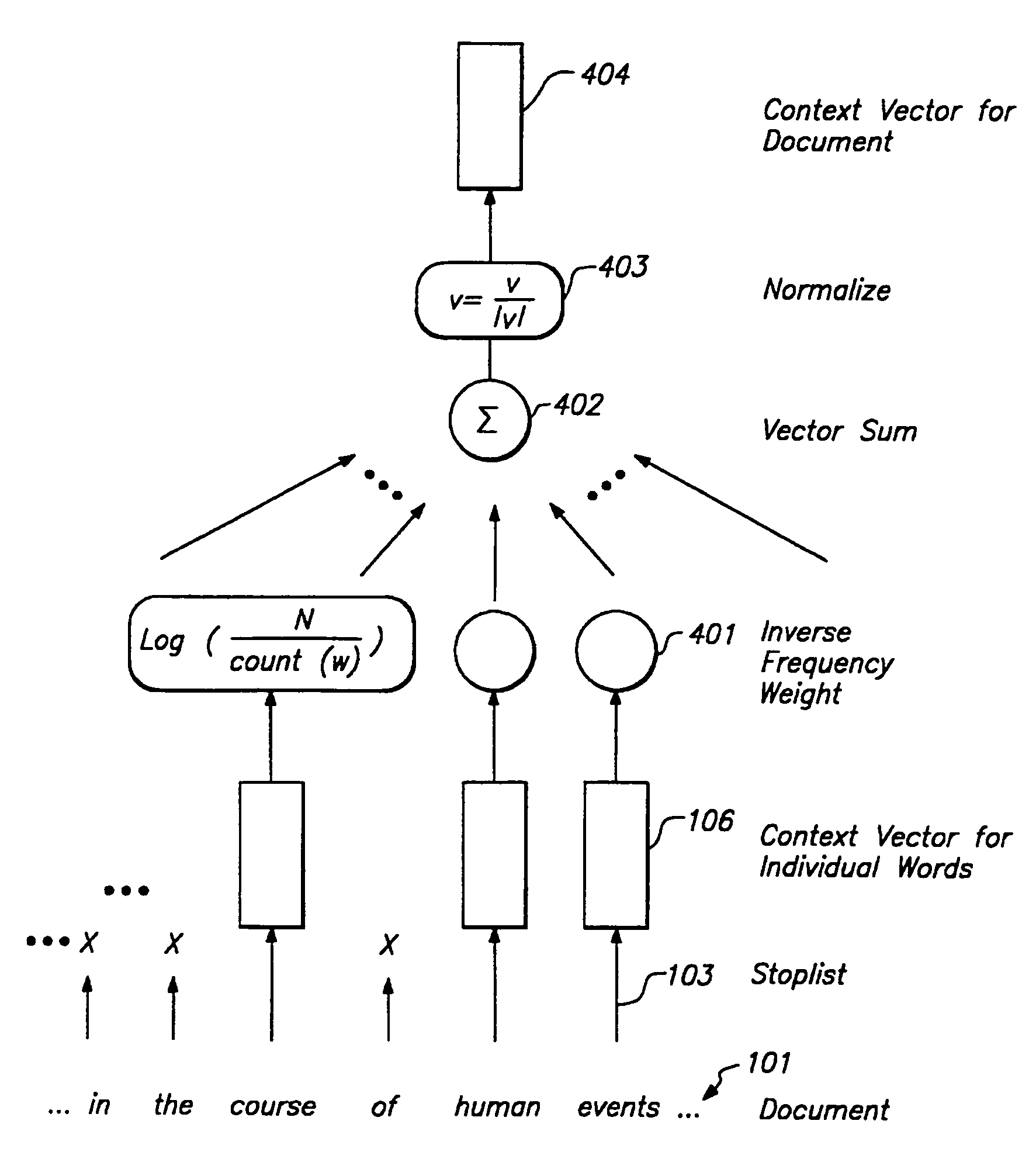
- A system and method using context vectors generated by a neural network to represent information content, allowing for meaning-sensitive retrieval and visualization without requiring human knowledge or extensive relationship data, and applying wavelet transformations for image data analysis.

Materials Science Infrastructure Requirements for Twistronics Research
Advancing twistronics research requires specialized materials science infrastructure that extends beyond conventional laboratory setups. The field demands precision equipment for sample preparation, as the creation of twisted bilayer graphene and other van der Waals heterostructures necessitates atomically clean interfaces and precise angular alignment. Ultra-high vacuum systems equipped with molecular beam epitaxy capabilities represent the gold standard for fabricating these delicate structures with minimal contamination and maximum control over twist angles.
Characterization tools form another critical infrastructure component, with scanning tunneling microscopy (STM) and transmission electron microscopy (TEM) being essential for visualizing moiré patterns and confirming structural integrity at the atomic scale. Additionally, angle-resolved photoemission spectroscopy (ARPES) provides crucial information about electronic band structures that emerge from the twisted configurations. These instruments must operate at cryogenic temperatures to observe quantum phenomena such as superconductivity and correlated insulator states that typically manifest below 10 Kelvin.
Computational resources constitute the third pillar of twistronics infrastructure. The modeling of twisted systems involves enormous unit cells containing thousands of atoms, necessitating high-performance computing clusters with specialized hardware accelerators. Quantum mechanical calculations for these systems are exceptionally demanding, requiring petascale computing capabilities and optimized algorithms that can handle the unique periodicity challenges of moiré superlattices.
Material synthesis facilities must be capable of producing high-quality two-dimensional materials with exceptional purity. This includes graphene, transition metal dichalcogenides, and hexagonal boron nitride, which serve as building blocks for twisted heterostructures. Clean room environments with controlled humidity, temperature, and particulate levels are essential to prevent contamination during the fabrication process.
Interdisciplinary collaboration spaces represent a less tangible but equally important infrastructure requirement. The field bridges condensed matter physics, materials science, quantum computing, and engineering, necessitating environments where researchers from diverse backgrounds can interact effectively. This includes virtual collaboration platforms for sharing data and physical spaces designed to facilitate cross-disciplinary innovation.
Metrology tools for precise angle measurement and control during assembly constitute another specialized requirement. Technologies such as polarized Raman spectroscopy and custom-designed micromanipulators enable researchers to achieve the sub-degree precision necessary for reproducible twistronics experiments. These tools must interface with real-time feedback systems to verify twist angles during the fabrication process.
Characterization tools form another critical infrastructure component, with scanning tunneling microscopy (STM) and transmission electron microscopy (TEM) being essential for visualizing moiré patterns and confirming structural integrity at the atomic scale. Additionally, angle-resolved photoemission spectroscopy (ARPES) provides crucial information about electronic band structures that emerge from the twisted configurations. These instruments must operate at cryogenic temperatures to observe quantum phenomena such as superconductivity and correlated insulator states that typically manifest below 10 Kelvin.
Computational resources constitute the third pillar of twistronics infrastructure. The modeling of twisted systems involves enormous unit cells containing thousands of atoms, necessitating high-performance computing clusters with specialized hardware accelerators. Quantum mechanical calculations for these systems are exceptionally demanding, requiring petascale computing capabilities and optimized algorithms that can handle the unique periodicity challenges of moiré superlattices.
Material synthesis facilities must be capable of producing high-quality two-dimensional materials with exceptional purity. This includes graphene, transition metal dichalcogenides, and hexagonal boron nitride, which serve as building blocks for twisted heterostructures. Clean room environments with controlled humidity, temperature, and particulate levels are essential to prevent contamination during the fabrication process.
Interdisciplinary collaboration spaces represent a less tangible but equally important infrastructure requirement. The field bridges condensed matter physics, materials science, quantum computing, and engineering, necessitating environments where researchers from diverse backgrounds can interact effectively. This includes virtual collaboration platforms for sharing data and physical spaces designed to facilitate cross-disciplinary innovation.
Metrology tools for precise angle measurement and control during assembly constitute another specialized requirement. Technologies such as polarized Raman spectroscopy and custom-designed micromanipulators enable researchers to achieve the sub-degree precision necessary for reproducible twistronics experiments. These tools must interface with real-time feedback systems to verify twist angles during the fabrication process.
Interdisciplinary Applications of Twistronics in Quantum Technologies
Twistronics has emerged as a revolutionary approach in quantum technologies, offering unprecedented opportunities for manipulating quantum states through the precise control of atomic layer orientations. The integration of twistronics with quantum computing presents a particularly promising frontier, as twisted bilayer graphene and similar materials can host exotic quantum states that serve as robust qubits with enhanced coherence times. These materials exhibit unique band structures that can be engineered to create protected quantum states resistant to environmental decoherence.
In quantum sensing applications, twistronics enables the development of ultra-sensitive detectors capable of measuring magnetic fields, gravitational waves, and other physical phenomena with unprecedented precision. The moiré patterns created in twisted van der Waals heterostructures generate localized electronic states that respond dramatically to external stimuli, making them ideal platforms for next-generation quantum sensors. Recent experiments have demonstrated sensitivity improvements of several orders of magnitude compared to conventional quantum sensing technologies.
Quantum communication systems benefit significantly from twistronics through the creation of single-photon emitters with precisely tunable properties. By controlling the twist angle between 2D material layers, researchers can engineer quantum light sources with specific wavelengths and polarization states essential for secure quantum key distribution protocols. The ability to integrate these emitters directly into nanophotonic circuits represents a major advancement toward scalable quantum communication networks.
The field of quantum simulation has been revolutionized by twistronics, as twisted multilayer systems can be designed to emulate complex quantum Hamiltonians that are otherwise computationally intractable. This approach enables the direct experimental investigation of exotic quantum phases and many-body phenomena, providing insights into fundamental physics questions while simultaneously advancing quantum technology applications. Researchers have successfully simulated topological phases and strongly correlated electron systems using precisely engineered twisted heterostructures.
Interdisciplinary collaboration between materials science, quantum physics, and information theory has accelerated the development of twistronics-based quantum technologies. The convergence of these fields has led to novel theoretical frameworks for understanding quantum information processing in moiré superlattices. As fabrication techniques continue to improve, allowing for atomic-precision control of twist angles, we anticipate the emergence of entirely new classes of quantum devices that leverage the unique properties of twisted van der Waals materials.
In quantum sensing applications, twistronics enables the development of ultra-sensitive detectors capable of measuring magnetic fields, gravitational waves, and other physical phenomena with unprecedented precision. The moiré patterns created in twisted van der Waals heterostructures generate localized electronic states that respond dramatically to external stimuli, making them ideal platforms for next-generation quantum sensors. Recent experiments have demonstrated sensitivity improvements of several orders of magnitude compared to conventional quantum sensing technologies.
Quantum communication systems benefit significantly from twistronics through the creation of single-photon emitters with precisely tunable properties. By controlling the twist angle between 2D material layers, researchers can engineer quantum light sources with specific wavelengths and polarization states essential for secure quantum key distribution protocols. The ability to integrate these emitters directly into nanophotonic circuits represents a major advancement toward scalable quantum communication networks.
The field of quantum simulation has been revolutionized by twistronics, as twisted multilayer systems can be designed to emulate complex quantum Hamiltonians that are otherwise computationally intractable. This approach enables the direct experimental investigation of exotic quantum phases and many-body phenomena, providing insights into fundamental physics questions while simultaneously advancing quantum technology applications. Researchers have successfully simulated topological phases and strongly correlated electron systems using precisely engineered twisted heterostructures.
Interdisciplinary collaboration between materials science, quantum physics, and information theory has accelerated the development of twistronics-based quantum technologies. The convergence of these fields has led to novel theoretical frameworks for understanding quantum information processing in moiré superlattices. As fabrication techniques continue to improve, allowing for atomic-precision control of twist angles, we anticipate the emergence of entirely new classes of quantum devices that leverage the unique properties of twisted van der Waals materials.
Unlock deeper insights with Patsnap Eureka Quick Research — get a full tech report to explore trends and direct your research. Try now!
Generate Your Research Report Instantly with AI Agent
Supercharge your innovation with Patsnap Eureka AI Agent Platform!