Using Kaolinite in Paints: Maximizing Tinting Strength
AUG 27, 20259 MIN READ
Generate Your Research Report Instantly with AI Agent
Patsnap Eureka helps you evaluate technical feasibility & market potential.
Kaolinite Paint Technology Background and Objectives
Kaolinite, a naturally occurring clay mineral with the chemical composition Al₂Si₂O₅(OH)₄, has been utilized in paint formulations for centuries. The evolution of kaolinite application in paints has progressed from basic fillers to sophisticated functional additives that significantly impact paint performance characteristics. Historically, kaolinite was primarily valued for its cost-effectiveness as an extender, but modern paint technology has revealed its potential for enhancing critical properties including opacity, durability, and tinting strength.
The paint industry has witnessed a paradigm shift in recent decades, moving from lead-based formulations to more environmentally friendly alternatives, with mineral additives like kaolinite playing an increasingly important role. This transition has been driven by stringent environmental regulations and growing consumer demand for sustainable products, positioning kaolinite as a key component in eco-friendly paint systems.
Tinting strength—the ability of a paint to maintain color intensity when mixed with white or other colors—represents a critical performance parameter in modern paint formulations. Enhanced tinting strength translates to reduced pigment requirements, lower production costs, and improved environmental profiles. Kaolinite's unique physical and chemical properties, including its plate-like particle structure, high brightness, and controlled particle size distribution, offer significant potential for optimizing this crucial characteristic.
Current research indicates that surface-modified kaolinite can dramatically improve pigment dispersion and stability in paint systems. The mineral's ability to create structured matrices that optimize light scattering properties contributes directly to improved color development and tinting efficiency. However, achieving consistent performance across diverse paint formulations remains challenging due to variability in raw kaolinite sources and processing methods.
The primary technical objective of this research is to systematically investigate and quantify how kaolinite's physical and chemical properties can be optimized to maximize tinting strength in various paint systems. This includes exploring surface modification techniques, particle size engineering, and innovative dispersion methodologies that enhance kaolinite-pigment interactions.
Secondary objectives include developing standardized protocols for kaolinite characterization specific to paint applications, establishing predictive models for tinting performance based on kaolinite properties, and creating formulation guidelines that enable paint manufacturers to fully leverage kaolinite's potential for tinting strength enhancement while maintaining or improving other critical paint properties such as durability, application characteristics, and environmental profile.
The technological trajectory suggests significant opportunities for innovation in specialized kaolinite grades designed specifically for tinting strength optimization, potentially revolutionizing formulation approaches in both architectural and industrial coating segments.
The paint industry has witnessed a paradigm shift in recent decades, moving from lead-based formulations to more environmentally friendly alternatives, with mineral additives like kaolinite playing an increasingly important role. This transition has been driven by stringent environmental regulations and growing consumer demand for sustainable products, positioning kaolinite as a key component in eco-friendly paint systems.
Tinting strength—the ability of a paint to maintain color intensity when mixed with white or other colors—represents a critical performance parameter in modern paint formulations. Enhanced tinting strength translates to reduced pigment requirements, lower production costs, and improved environmental profiles. Kaolinite's unique physical and chemical properties, including its plate-like particle structure, high brightness, and controlled particle size distribution, offer significant potential for optimizing this crucial characteristic.
Current research indicates that surface-modified kaolinite can dramatically improve pigment dispersion and stability in paint systems. The mineral's ability to create structured matrices that optimize light scattering properties contributes directly to improved color development and tinting efficiency. However, achieving consistent performance across diverse paint formulations remains challenging due to variability in raw kaolinite sources and processing methods.
The primary technical objective of this research is to systematically investigate and quantify how kaolinite's physical and chemical properties can be optimized to maximize tinting strength in various paint systems. This includes exploring surface modification techniques, particle size engineering, and innovative dispersion methodologies that enhance kaolinite-pigment interactions.
Secondary objectives include developing standardized protocols for kaolinite characterization specific to paint applications, establishing predictive models for tinting performance based on kaolinite properties, and creating formulation guidelines that enable paint manufacturers to fully leverage kaolinite's potential for tinting strength enhancement while maintaining or improving other critical paint properties such as durability, application characteristics, and environmental profile.
The technological trajectory suggests significant opportunities for innovation in specialized kaolinite grades designed specifically for tinting strength optimization, potentially revolutionizing formulation approaches in both architectural and industrial coating segments.
Market Analysis for High-Tinting Strength Paints
The global market for high-tinting strength paints has experienced significant growth over the past decade, driven by increasing demand in construction, automotive, and industrial applications. The market value reached approximately $45 billion in 2022, with projections indicating a compound annual growth rate of 5.7% through 2028. This growth trajectory is particularly pronounced in emerging economies where rapid urbanization and infrastructure development fuel paint consumption.
Consumer preferences have shifted notably toward high-performance coatings that offer superior coverage with minimal application. This trend has created a substantial market opportunity for paints with enhanced tinting strength, as they allow for reduced material usage while maintaining color intensity and coverage quality. Professional painters and contractors specifically seek products that can achieve desired opacity in fewer coats, directly impacting labor costs and project timelines.
The architectural segment dominates the high-tinting strength paint market, accounting for approximately 60% of total demand. Within this segment, premium interior paints with superior hiding power command price premiums of 15-30% compared to standard formulations. This price elasticity demonstrates consumers' willingness to pay more for products that deliver enhanced performance characteristics, particularly in color retention and coverage efficiency.
Regional analysis reveals that North America and Europe currently lead in adoption of high-tinting strength formulations, with market penetration rates of 37% and 42% respectively. However, the Asia-Pacific region represents the fastest-growing market, with China and India showing annual growth rates exceeding 8%. This geographic expansion presents significant opportunities for manufacturers who can effectively incorporate kaolinite and other performance-enhancing minerals into their formulations.
Competitive landscape assessment indicates that major paint manufacturers are increasingly focusing on tinting strength as a key differentiator. Industry leaders have launched specialized product lines emphasizing coverage efficiency and color accuracy, often highlighting the use of advanced mineral fillers in their marketing materials. This competitive focus has accelerated innovation in pigment dispersion technology and filler optimization.
Market research indicates that environmental considerations are becoming increasingly important to consumers, with 68% of professional buyers expressing preference for paints that combine high performance with reduced environmental impact. This trend favors kaolinite-enhanced formulations, as they can potentially reduce the need for titanium dioxide, a component with higher environmental footprint and cost.
Distribution channel analysis shows that professional contractors account for 55% of high-tinting strength paint purchases, while retail consumers represent 45%. This split highlights the importance of developing targeted value propositions for both segments, with professionals prioritizing application efficiency and consumers focusing on aesthetic outcomes and value perception.
Consumer preferences have shifted notably toward high-performance coatings that offer superior coverage with minimal application. This trend has created a substantial market opportunity for paints with enhanced tinting strength, as they allow for reduced material usage while maintaining color intensity and coverage quality. Professional painters and contractors specifically seek products that can achieve desired opacity in fewer coats, directly impacting labor costs and project timelines.
The architectural segment dominates the high-tinting strength paint market, accounting for approximately 60% of total demand. Within this segment, premium interior paints with superior hiding power command price premiums of 15-30% compared to standard formulations. This price elasticity demonstrates consumers' willingness to pay more for products that deliver enhanced performance characteristics, particularly in color retention and coverage efficiency.
Regional analysis reveals that North America and Europe currently lead in adoption of high-tinting strength formulations, with market penetration rates of 37% and 42% respectively. However, the Asia-Pacific region represents the fastest-growing market, with China and India showing annual growth rates exceeding 8%. This geographic expansion presents significant opportunities for manufacturers who can effectively incorporate kaolinite and other performance-enhancing minerals into their formulations.
Competitive landscape assessment indicates that major paint manufacturers are increasingly focusing on tinting strength as a key differentiator. Industry leaders have launched specialized product lines emphasizing coverage efficiency and color accuracy, often highlighting the use of advanced mineral fillers in their marketing materials. This competitive focus has accelerated innovation in pigment dispersion technology and filler optimization.
Market research indicates that environmental considerations are becoming increasingly important to consumers, with 68% of professional buyers expressing preference for paints that combine high performance with reduced environmental impact. This trend favors kaolinite-enhanced formulations, as they can potentially reduce the need for titanium dioxide, a component with higher environmental footprint and cost.
Distribution channel analysis shows that professional contractors account for 55% of high-tinting strength paint purchases, while retail consumers represent 45%. This split highlights the importance of developing targeted value propositions for both segments, with professionals prioritizing application efficiency and consumers focusing on aesthetic outcomes and value perception.
Current Challenges in Kaolinite-Based Paint Formulations
Despite kaolinite's widespread use in paint formulations, several significant challenges persist that limit its effectiveness in maximizing tinting strength. The primary issue stems from kaolinite's inherent physical properties, particularly its relatively low refractive index (approximately 1.56) compared to other mineral fillers like titanium dioxide (2.7). This fundamental limitation reduces kaolinite's ability to scatter light effectively, resulting in diminished opacity and tinting power in paint applications.
Particle size distribution presents another critical challenge. Conventional kaolinite processing methods often yield inconsistent particle sizes, with a significant portion falling outside the optimal range for maximum tinting strength (0.3-0.5 μm). Larger particles contribute less to tinting power, while ultrafine particles tend to agglomerate, reducing dispersion efficiency and overall performance.
Surface chemistry complications further hinder kaolinite's performance in paint systems. The mineral's hydrophilic nature creates compatibility issues with organic binders and pigments, leading to poor wetting and inadequate dispersion. This incompatibility manifests as flocculation and settling problems during storage, directly impacting color consistency and tinting strength in the final product.
Beneficiation challenges represent a significant technical hurdle. Current purification processes struggle to remove iron and titanium impurities completely from raw kaolinite. These impurities, even in trace amounts, can dramatically alter the mineral's whiteness and subsequently reduce its effectiveness as a tinting base. Advanced purification methods often increase production costs substantially, creating economic barriers to implementation.
Formulation stability issues persist when incorporating kaolinite at higher loadings. As manufacturers attempt to increase kaolinite content to improve cost-efficiency, they frequently encounter rheological problems including thixotropy, dilatancy, and viscosity instability. These rheological challenges compromise application properties and shelf stability of the final paint products.
Environmental and regulatory pressures add another dimension of complexity. Traditional chemical treatments used to enhance kaolinite's performance in paints often involve environmentally problematic substances. As regulations tighten globally, formulators must develop alternative modification approaches that maintain performance while meeting sustainability requirements.
The interface between kaolinite particles and organic colorants presents perhaps the most technically challenging aspect. Current binding mechanisms fail to optimize the interaction between mineral surfaces and organic chromophores, resulting in suboptimal color development and reduced tinting efficiency. This fundamental limitation requires innovative surface modification strategies to overcome.
Particle size distribution presents another critical challenge. Conventional kaolinite processing methods often yield inconsistent particle sizes, with a significant portion falling outside the optimal range for maximum tinting strength (0.3-0.5 μm). Larger particles contribute less to tinting power, while ultrafine particles tend to agglomerate, reducing dispersion efficiency and overall performance.
Surface chemistry complications further hinder kaolinite's performance in paint systems. The mineral's hydrophilic nature creates compatibility issues with organic binders and pigments, leading to poor wetting and inadequate dispersion. This incompatibility manifests as flocculation and settling problems during storage, directly impacting color consistency and tinting strength in the final product.
Beneficiation challenges represent a significant technical hurdle. Current purification processes struggle to remove iron and titanium impurities completely from raw kaolinite. These impurities, even in trace amounts, can dramatically alter the mineral's whiteness and subsequently reduce its effectiveness as a tinting base. Advanced purification methods often increase production costs substantially, creating economic barriers to implementation.
Formulation stability issues persist when incorporating kaolinite at higher loadings. As manufacturers attempt to increase kaolinite content to improve cost-efficiency, they frequently encounter rheological problems including thixotropy, dilatancy, and viscosity instability. These rheological challenges compromise application properties and shelf stability of the final paint products.
Environmental and regulatory pressures add another dimension of complexity. Traditional chemical treatments used to enhance kaolinite's performance in paints often involve environmentally problematic substances. As regulations tighten globally, formulators must develop alternative modification approaches that maintain performance while meeting sustainability requirements.
The interface between kaolinite particles and organic colorants presents perhaps the most technically challenging aspect. Current binding mechanisms fail to optimize the interaction between mineral surfaces and organic chromophores, resulting in suboptimal color development and reduced tinting efficiency. This fundamental limitation requires innovative surface modification strategies to overcome.
Technical Solutions for Enhancing Kaolinite Tinting Performance
01 Kaolinite modification for enhanced tinting strength
Kaolinite can be modified through various chemical treatments to enhance its tinting strength for use in pigments and colorants. These modifications may include surface treatment with organic compounds, intercalation with specific molecules, or chemical activation processes that alter the surface properties of kaolinite. Modified kaolinite exhibits improved dispersion characteristics and increased interaction with colorants, resulting in enhanced tinting strength in various applications.- Kaolinite modification for enhanced tinting strength: Kaolinite can be modified through various chemical treatments to enhance its tinting strength for use in pigments and colorants. These modifications may include surface treatment with organic compounds, intercalation with specific molecules, or chemical activation processes that alter the surface properties of kaolinite. Modified kaolinite exhibits improved dispersion characteristics and increased interaction with colorants, resulting in enhanced tinting strength in various applications.
- Kaolinite-based composite pigments: Composite pigments incorporating kaolinite with other materials such as titanium dioxide, calcium carbonate, or organic colorants can achieve superior tinting strength. The synergistic effect between kaolinite and these materials enhances the overall color performance. The particle size distribution and surface interaction between kaolinite and other components play crucial roles in determining the final tinting strength of these composite systems.
- Particle size control for optimized tinting strength: The particle size and distribution of kaolinite significantly impact its tinting strength in various applications. Finer particle sizes generally provide higher tinting strength due to increased surface area and better dispersion. Processing techniques such as grinding, classification, and fractionation are employed to achieve optimal particle size distributions of kaolinite for specific tinting applications. Controlled aggregation or delamination processes can further enhance the tinting properties.
- Surface treatment and functionalization of kaolinite: Surface treatment of kaolinite with various agents such as silanes, polymers, or surfactants can significantly improve its tinting strength. These treatments modify the surface chemistry of kaolinite, enhancing its compatibility with binders and other components in formulations. Functionalized kaolinite exhibits improved dispersion stability and interaction with colorants, leading to enhanced tinting efficiency in paints, coatings, and other colored applications.
- Kaolinite in polymer and coating applications for color enhancement: Kaolinite is utilized in polymer composites and coating formulations to enhance color properties and tinting strength. The incorporation of kaolinite affects the optical properties of the final product, including opacity, brightness, and color intensity. The interaction between kaolinite and polymer matrices or coating binders influences the dispersion of colorants and pigments, thereby affecting the overall tinting strength. Processing conditions and compatibility agents are crucial for optimizing the tinting performance of kaolinite in these applications.
02 Kaolinite as a tinting strength modifier in composite materials
Kaolinite can be incorporated into composite materials as a tinting strength modifier. When added to polymers, resins, or other matrix materials, kaolinite affects the optical properties of the final product by influencing light scattering and absorption. The particle size distribution, dispersion quality, and surface treatment of kaolinite play crucial roles in determining its effectiveness as a tinting strength modifier in these composite systems.Expand Specific Solutions03 Calcination effects on kaolinite tinting properties
The calcination process significantly impacts the tinting properties of kaolinite. When kaolinite is subjected to controlled heating at specific temperatures, its crystal structure transforms, affecting its optical properties and tinting strength. The calcination temperature, duration, and atmosphere influence the development of specific phases that can enhance or reduce tinting strength. Properly calcined kaolinite can be used as an effective pigment or extender in various coloring applications.Expand Specific Solutions04 Kaolinite particle size influence on tinting strength
The particle size of kaolinite significantly influences its tinting strength in various applications. Finer kaolinite particles generally provide higher tinting strength due to increased surface area and improved dispersion. Processing techniques such as grinding, classification, and fractionation can be employed to achieve specific particle size distributions that optimize tinting performance. The relationship between particle size, shape, and tinting strength is crucial for formulating effective colorant systems using kaolinite.Expand Specific Solutions05 Kaolinite in pigment formulations for color applications
Kaolinite serves as an important component in pigment formulations for various color applications. It can function as a carrier, extender, or modifier for organic and inorganic colorants. When properly formulated with other ingredients such as dispersants, binders, and primary pigments, kaolinite contributes to the overall color performance, including tinting strength, opacity, and color stability. The synergistic effects between kaolinite and other components in the formulation are essential for achieving desired color properties in paints, coatings, inks, and plastics.Expand Specific Solutions
Leading Manufacturers and Suppliers in Kaolinite Paint Market
The kaolin in paints market is in a growth phase, driven by increasing demand for high-performance coatings with enhanced tinting strength. The global market size is estimated at $4-5 billion, expanding at 4-5% CAGR. Technologically, the sector shows moderate maturity with ongoing innovation. Leading players include Imerys USA and Thiele Kaolin Co., who focus on specialized kaolin processing for paint applications, while BASF SE integrates kaolin into comprehensive formulation solutions. Chinese companies like China Kaolin Co. and Guangdong Kejin are rapidly advancing processing technologies, while research institutions such as China University of Geosciences and Guangxi University are developing next-generation applications to maximize tinting strength through particle size optimization and surface modifications.
Imerys USA, Inc.
Technical Solution: Imerys has developed a proprietary surface modification technology for kaolinite that enhances tinting strength in paint applications. Their process involves controlled calcination of ultra-fine kaolinite particles at specific temperatures (700-900°C) to create an optimized pore structure and surface area. This transforms the crystalline structure of kaolinite into a more amorphous metakaolin state with enhanced optical properties. Imerys' technology includes a patented chemical treatment process that modifies the surface chemistry of kaolinite particles to improve their dispersion in paint formulations and compatibility with titanium dioxide (TiO2). Their engineered kaolinite products achieve up to 15-20% TiO2 extension while maintaining or improving opacity and tinting strength. The company has also developed specialized milling techniques that produce kaolinite with controlled particle size distribution (typically 0.5-2 μm) specifically optimized for maximum light scattering efficiency in paint films.
Strengths: Superior particle size control and surface modification expertise allows for excellent TiO2 extension without sacrificing opacity. Their global mining operations ensure consistent quality and supply chain reliability. Weaknesses: Their premium modified kaolinite products command higher prices than standard grades, potentially limiting adoption in cost-sensitive paint formulations. Some of their advanced surface treatments require additional processing steps that increase manufacturing complexity.
BASF SE
Technical Solution: BASF has pioneered an innovative approach to maximizing tinting strength with kaolinite through their "Kaolin Plus" technology platform. This system combines specially processed kaolinite with proprietary dispersing agents and surface modifiers to create synergistic effects with pigments. Their process begins with selecting high-purity kaolinite sources followed by intensive wet processing to remove impurities that could diminish optical performance. BASF employs a controlled delamination process that separates kaolinite platelets while preserving their aspect ratio (typically 15:1 to 80:1), creating optimized spacing for light scattering. A key innovation is their "dual-functionality" surface treatment that simultaneously improves pigment spacing and enhances binding with paint resins. BASF's formulation scientists have developed specific guidelines for incorporating their treated kaolinite at 5-15% loading levels to achieve optimal TiO2 extension without compromising color development. Their research has demonstrated that properly dispersed kaolinite with their proprietary additives can improve tinting strength by up to 8-12% compared to conventional extender systems.
Strengths: Comprehensive approach integrating kaolinite processing with compatible dispersants and additives creates a complete system solution. Their extensive formulation expertise helps customers implement kaolinite effectively across diverse paint systems. Weaknesses: Their solutions often require using multiple BASF components together to achieve optimal results, creating potential supplier dependency. Performance benefits may vary significantly depending on the specific paint formulation and application method.
Key Patents and Research on Kaolinite Dispersion Technology
Calcined kaolin as extender for coatings
PatentWO2019144114A1
Innovation
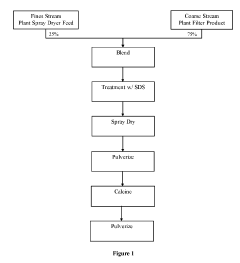
- Calcined kaolin particles with a narrow particle size distribution, high brightness, and specific mullite index are produced by calcining hydrous kaolin in the presence of a fluxing agent, such as sodium silicate, to achieve improved optical properties and resistance, with a focus on selecting the right hydrous kaolin feed and optimizing fluxing agent dosage.
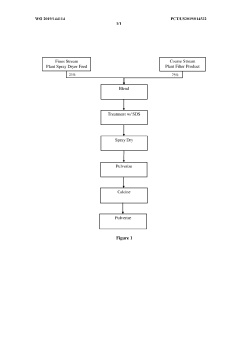
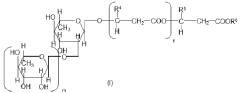
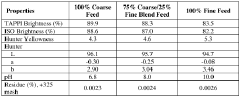
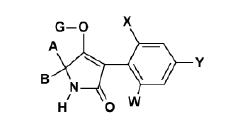
Calcined kaolin as extender for coatings
PatentInactiveUS20190225545A1
Innovation
- Calcined kaolin particles with a narrow particle size distribution, high brightness, and low +325 mesh residue are produced by calcining hydrous kaolin in the presence of a fluxing agent, specifically an alkali or alkaline earth metal salt, to achieve improved optical properties and resistance.
Environmental Impact and Sustainability of Kaolinite Paints
The environmental impact of kaolinite in paint formulations represents a significant consideration in the modern coatings industry. Kaolinite-based paints offer several sustainability advantages compared to conventional alternatives. The mining and processing of kaolinite generally requires less energy than synthetic pigment production, resulting in a lower carbon footprint across the product lifecycle. Studies indicate that kaolinite extraction typically generates 30-40% fewer greenhouse gas emissions compared to titanium dioxide production, a common white pigment in paints.
Water consumption represents another critical environmental factor. Kaolinite processing requires approximately 25% less water than many synthetic alternatives, contributing to resource conservation in regions where water scarcity is a concern. Additionally, kaolinite deposits are relatively abundant and geographically widespread, reducing transportation-related emissions associated with raw material delivery to manufacturing facilities.
From a toxicological perspective, kaolinite presents minimal environmental hazards. Unlike some synthetic pigments and additives, kaolinite is non-toxic to aquatic organisms and does not bioaccumulate in the environment. This characteristic significantly reduces the ecological impact when paint residues enter waterways through cleaning processes or weathering of painted surfaces.
The durability of kaolinite-enhanced paints also contributes to their sustainability profile. When properly formulated to maximize tinting strength, these paints can achieve longer service lives, reducing the frequency of repainting and consequently decreasing the overall environmental footprint of building maintenance. Research indicates that high-quality kaolinite paints can extend repaint cycles by 15-20% compared to lower-quality alternatives.
End-of-life considerations further highlight kaolinite's environmental advantages. Paints containing natural clay minerals like kaolinite generally produce less hazardous waste during disposal compared to formulations heavily reliant on synthetic components. Several recent innovations have focused on developing fully biodegradable paint systems using kaolinite as a primary component, potentially revolutionizing paint disposal practices.
Regulatory frameworks increasingly recognize these environmental benefits. The European Union's Ecolabel certification and the LEED green building rating system both award points for paints containing natural minerals like kaolinite when they meet specific environmental performance criteria. This regulatory support is driving further research into optimizing kaolinite's tinting strength while maintaining its environmental advantages.
Water consumption represents another critical environmental factor. Kaolinite processing requires approximately 25% less water than many synthetic alternatives, contributing to resource conservation in regions where water scarcity is a concern. Additionally, kaolinite deposits are relatively abundant and geographically widespread, reducing transportation-related emissions associated with raw material delivery to manufacturing facilities.
From a toxicological perspective, kaolinite presents minimal environmental hazards. Unlike some synthetic pigments and additives, kaolinite is non-toxic to aquatic organisms and does not bioaccumulate in the environment. This characteristic significantly reduces the ecological impact when paint residues enter waterways through cleaning processes or weathering of painted surfaces.
The durability of kaolinite-enhanced paints also contributes to their sustainability profile. When properly formulated to maximize tinting strength, these paints can achieve longer service lives, reducing the frequency of repainting and consequently decreasing the overall environmental footprint of building maintenance. Research indicates that high-quality kaolinite paints can extend repaint cycles by 15-20% compared to lower-quality alternatives.
End-of-life considerations further highlight kaolinite's environmental advantages. Paints containing natural clay minerals like kaolinite generally produce less hazardous waste during disposal compared to formulations heavily reliant on synthetic components. Several recent innovations have focused on developing fully biodegradable paint systems using kaolinite as a primary component, potentially revolutionizing paint disposal practices.
Regulatory frameworks increasingly recognize these environmental benefits. The European Union's Ecolabel certification and the LEED green building rating system both award points for paints containing natural minerals like kaolinite when they meet specific environmental performance criteria. This regulatory support is driving further research into optimizing kaolinite's tinting strength while maintaining its environmental advantages.
Quality Control Methods for Kaolinite-Enhanced Paint Systems
Quality control in kaolinite-enhanced paint systems requires systematic approaches to ensure consistent performance, particularly in maximizing tinting strength. Effective quality control begins with rigorous raw material testing, where kaolinite samples undergo particle size distribution analysis, brightness measurement, and chemical composition verification. These parameters directly influence the paint's tinting strength, with finer particles typically yielding better color development and dispersion characteristics.
In-process monitoring represents another critical quality control dimension, involving viscosity checks, dispersion quality assessment, and color consistency verification during production. Advanced dispersion equipment fitted with real-time monitoring capabilities can detect agglomeration issues before they compromise tinting performance. Manufacturers increasingly employ automated spectrophotometric systems that continuously monitor color development during the manufacturing process, allowing for immediate adjustments when deviations occur.
Statistical process control (SPC) methodologies have proven particularly valuable for kaolinite-enhanced paint systems. By establishing control limits for critical parameters such as particle size distribution, brightness values, and rheological properties, manufacturers can identify process drift before it affects tinting strength. Leading paint producers implement SPC charts specifically calibrated for kaolinite-based formulations, with specialized attention to parameters that influence pigment-kaolinite interactions.
Accelerated stability testing protocols represent an essential component of quality control systems for these specialized paints. These tests simulate various environmental conditions to predict long-term tinting strength retention. Standard protocols include freeze-thaw cycling, high-temperature storage, and UV exposure testing, with measurements taken at predetermined intervals to quantify any degradation in tinting performance.
Advanced instrumental analysis techniques further enhance quality control capabilities. X-ray diffraction (XRD) can verify kaolinite crystallinity, which correlates with optimal pigment interaction. Scanning electron microscopy (SEM) allows visualization of kaolinite-pigment interfaces, while dynamic light scattering provides insights into dispersion stability. These techniques enable manufacturers to establish quantitative relationships between kaolinite characteristics and tinting strength outcomes.
Batch certification procedures serve as the final quality control checkpoint, where each production batch undergoes comprehensive testing against predetermined specifications. This includes colorimetric evaluation using standardized tinting strength tests, rheological profile verification, and application testing on standardized substrates. Many manufacturers have developed proprietary tinting strength indices specifically for kaolinite-enhanced formulations, allowing for objective batch-to-batch comparison and traceability.
In-process monitoring represents another critical quality control dimension, involving viscosity checks, dispersion quality assessment, and color consistency verification during production. Advanced dispersion equipment fitted with real-time monitoring capabilities can detect agglomeration issues before they compromise tinting performance. Manufacturers increasingly employ automated spectrophotometric systems that continuously monitor color development during the manufacturing process, allowing for immediate adjustments when deviations occur.
Statistical process control (SPC) methodologies have proven particularly valuable for kaolinite-enhanced paint systems. By establishing control limits for critical parameters such as particle size distribution, brightness values, and rheological properties, manufacturers can identify process drift before it affects tinting strength. Leading paint producers implement SPC charts specifically calibrated for kaolinite-based formulations, with specialized attention to parameters that influence pigment-kaolinite interactions.
Accelerated stability testing protocols represent an essential component of quality control systems for these specialized paints. These tests simulate various environmental conditions to predict long-term tinting strength retention. Standard protocols include freeze-thaw cycling, high-temperature storage, and UV exposure testing, with measurements taken at predetermined intervals to quantify any degradation in tinting performance.
Advanced instrumental analysis techniques further enhance quality control capabilities. X-ray diffraction (XRD) can verify kaolinite crystallinity, which correlates with optimal pigment interaction. Scanning electron microscopy (SEM) allows visualization of kaolinite-pigment interfaces, while dynamic light scattering provides insights into dispersion stability. These techniques enable manufacturers to establish quantitative relationships between kaolinite characteristics and tinting strength outcomes.
Batch certification procedures serve as the final quality control checkpoint, where each production batch undergoes comprehensive testing against predetermined specifications. This includes colorimetric evaluation using standardized tinting strength tests, rheological profile verification, and application testing on standardized substrates. Many manufacturers have developed proprietary tinting strength indices specifically for kaolinite-enhanced formulations, allowing for objective batch-to-batch comparison and traceability.
Unlock deeper insights with Patsnap Eureka Quick Research — get a full tech report to explore trends and direct your research. Try now!
Generate Your Research Report Instantly with AI Agent
Supercharge your innovation with Patsnap Eureka AI Agent Platform!