
A metamaterial-based unidirectional non-reciprocal microwave absorber and a generation method thereof
A production method, non-reciprocal technology, applied in electrical components, antennas, etc., can solve problems such as non-reciprocal single-pass, and achieve the effects of broad application prospects, high isolation, and flexible design
Patent Information
- Authority / Receiving Office
- CN · China
- Patent Type
- Applications(China)
- Current Assignee / Owner
- Publication Date
- 2019-01-11
Smart Images
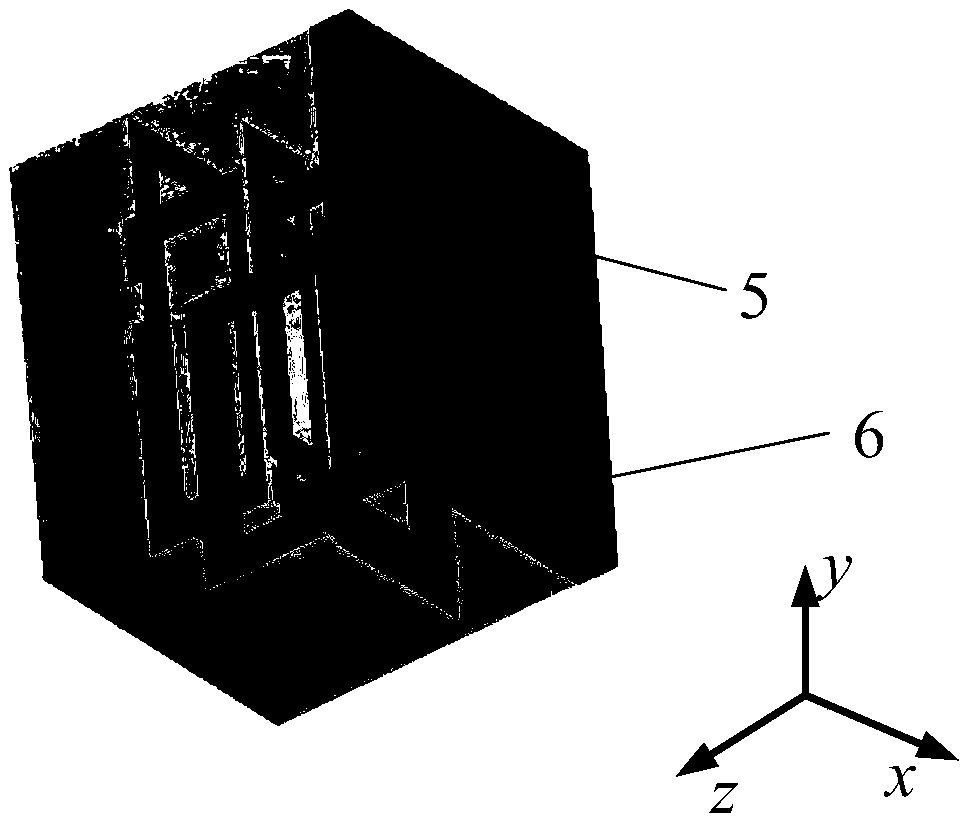
Figure 1 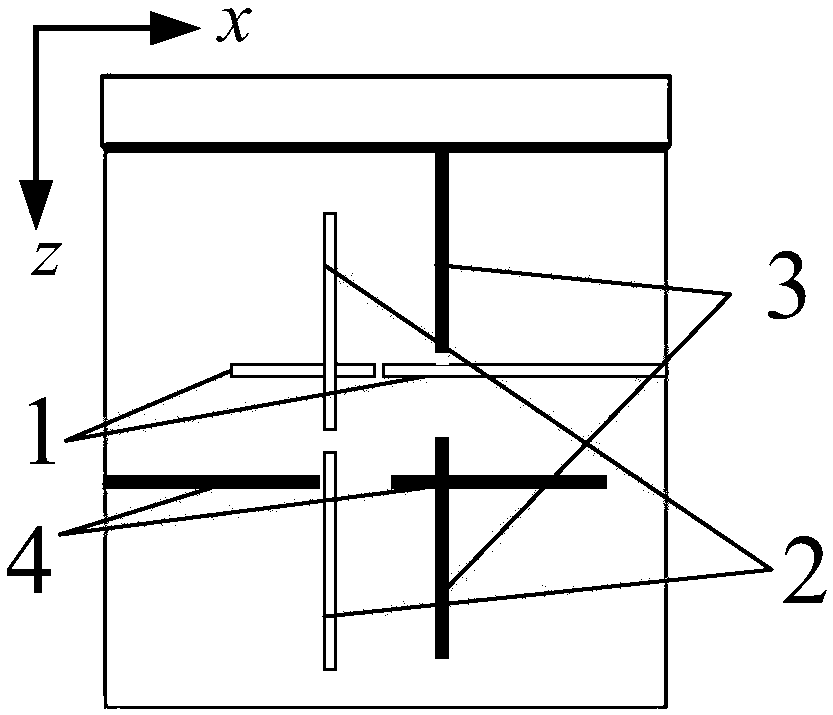
Figure 2 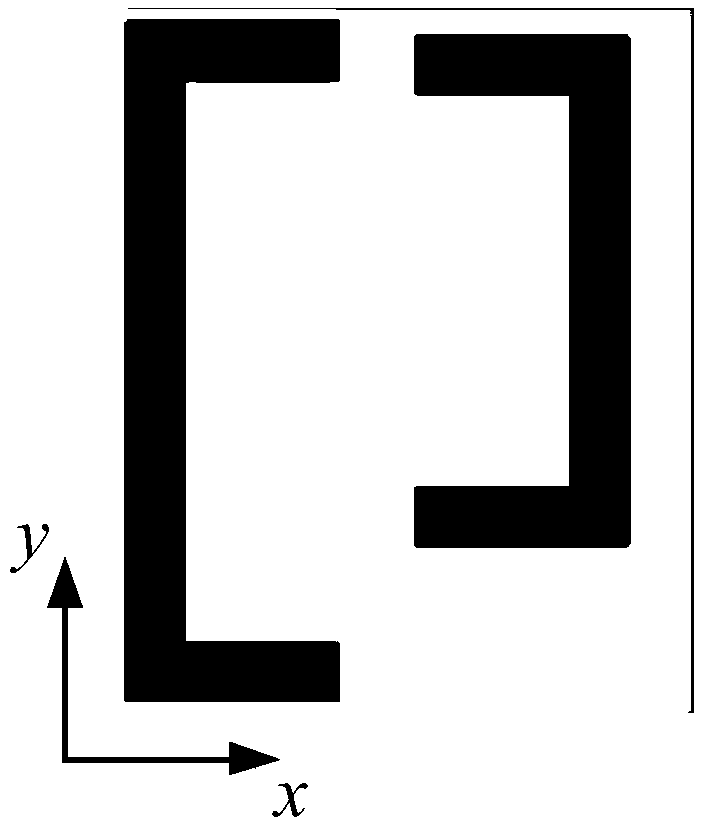
Figure 3
Abstract
Description
technical field
[0001] The invention relates to a wave absorber and a production method thereof, in particular to a metamaterial-based one-way non-reciprocal wave absorber and a production method thereof, belonging to the technical fields of electromagnetic communication and microwave devices. Background technique
[0002] Electromagnetic metamaterials refer to some artificial composite structures or composite materials with extraordinary physical properties. Using electromagnetic metamaterials, many exotic physical phenomena have been realized, such as negative refraction, "perfect" imaging and "invisibility cloaks". In addition, many applications of electromagnetic metamaterials have also been proposed, such as miniaturization of antennas, expansion of storage capacity, invisibility of antennas, ultrathin resonant cavities, and miniaturization of microwave devices. The realization of these phenomena and applications depends on the ability of electromagnetic metamaterials ...
Examples
Embodiment Construction
[0027] The present invention will be further described below in conjunction with the accompanying drawings.
[0028] A metamaterial-based unidirectional nonreflective nonreciprocal absorber, such as Figure 4 As shown, it is composed of several units spliced together. Such as figure 1 As shown, the one-way non-reflective non-reciprocal absorber unit is composed of a glass substrate, a dielectric material and metal microstructure units perpendicular to each other. The microstructural unit is figure 2 There are 2 pairs of mutually perpendicular C-shaped metal ring groups and 2 pairs of mutually perpendicular SRR ring groups (split resonant rings). The size and position of each C-shaped metal ring and SRR ring are different so that they can form cross-polarization. The absorbing efficiency and the reflection efficiency of the one-way non-reflection non-reciprocal absorber can be adjusted by adjusting the structure and position of the ring. Such as figure 2 As shown, 2 pa...