
Mutant N4BP2 gene related to non-syndromic cleft lip and palate and application thereof
A technology for cleft lip and palate and syndrome, applied in the fields of application, genetic engineering, plant genetic improvement, etc., can solve the problem of limited functional research and achieve the effect of enriching the mutation spectrum of pathogenic genes
- Summary
- Abstract
- Description
- Claims
- Application Information
AI Technical Summary
Problems solved by technology
Method used
Image

Examples
Embodiment
[0036] 1. Collection of families and sporadic cases of patients with non-syndromic cleft lip and palate
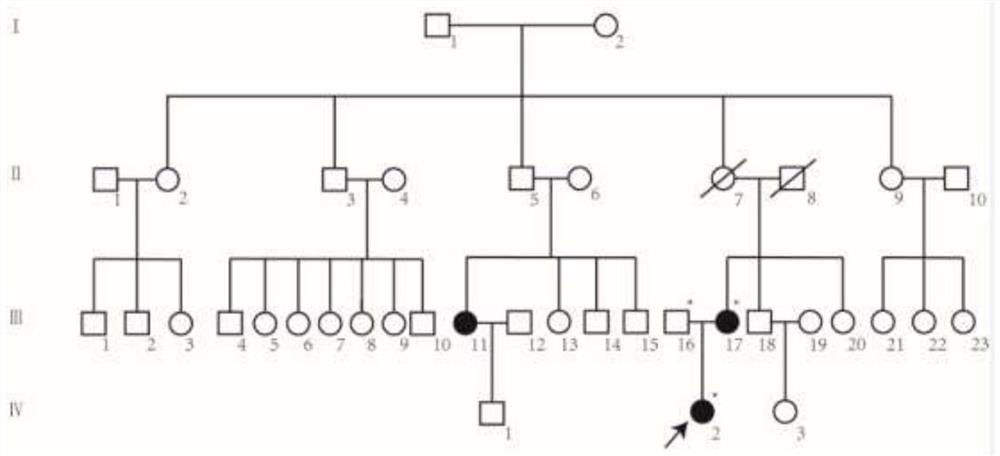
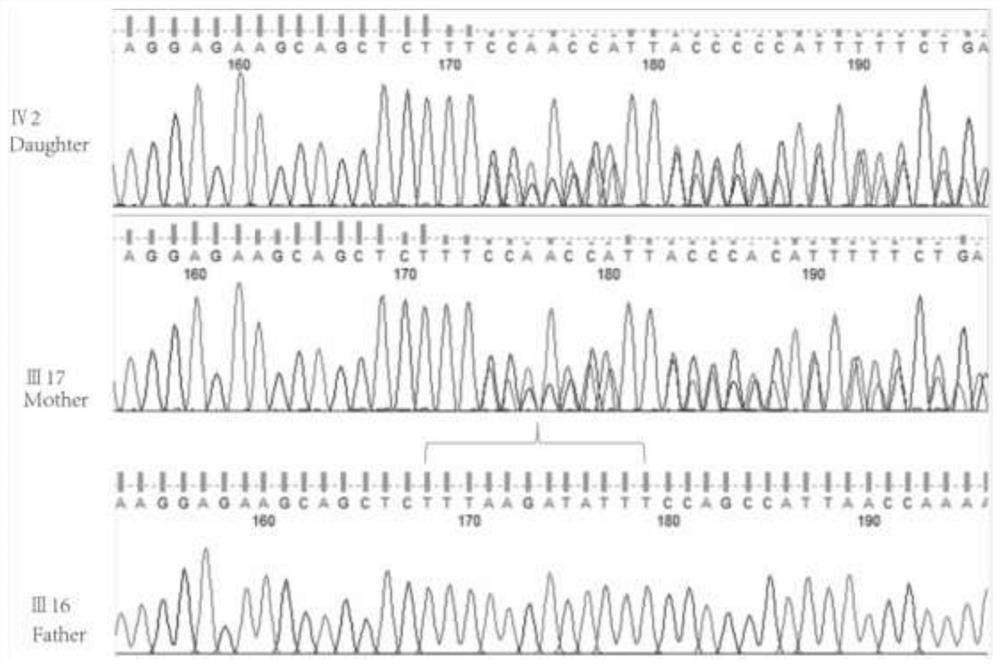
[0037] According to the principle of informed consent, a 4-generation family with non-syndromic cleft lip and palate in northern China and 33 sporadic patients were collected. The proband IV2 in the family was female, mainly manifested as left cleft lip. The mother of the patient also presented with a left cleft lip, the father was phenotypically normal, and was not consanguineous. Plot the pedigree ( figure 1 ). Of the 33 sporadic patients, 17 were cleft lip and 16 were cleft palate. The collected samples included peripheral blood samples of 2 patients (IV2, III17) and 1 normal individual (III16) in the family and 33 sporadic patients, as well as relevant basic information and clinical data, etc., and were numbered.
[0038] 2. DNA analysis of genetic diagnosis of non-syndromic cleft lip and palate pathogenic gene mutation
[0039] Genomic DNA extraction from the peri...
PUM
 Login to View More
 Abstract
Description
Claims
Application Information
 Login to View More