

System and method for estimating vehicular motion based on monocular video data
a monocular video and vehicle motion technology, applied in the field of systems, can solve the problems of inability to implement such costly and sophisticated hardware inside the vehicle, the inability to analyze and process abundance, and the inability to meet the requirements of the abundance analysis and processing process
Patent Information
- Authority / Receiving Office
- US · United States
- Patent Type
- Patents(United States)
- Current Assignee / Owner
- Publication Date
- 2018-09-04
- Estimated Expiration
- Not applicable · inactive patent
Smart Images
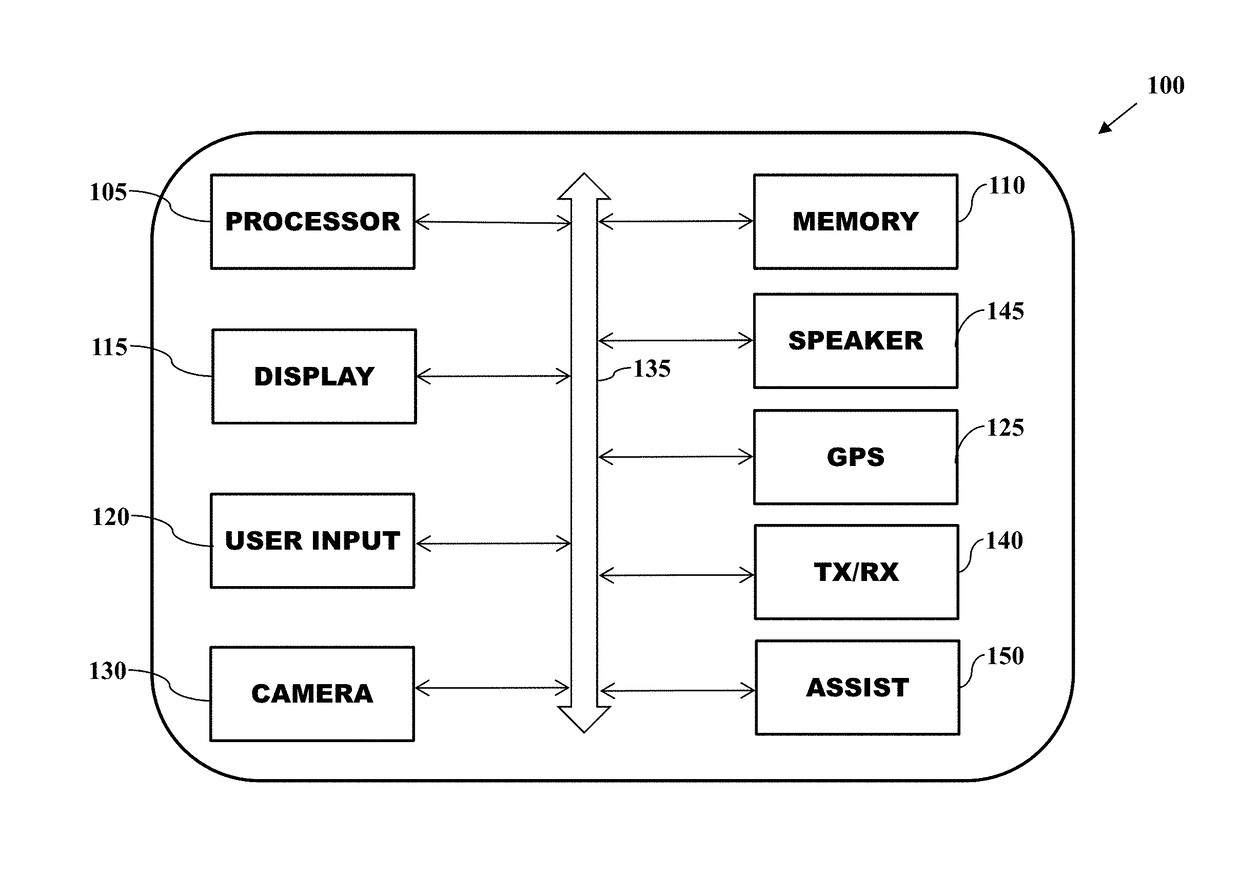
Figure 1 
Figure 2 
Figure 3
Abstract
Description
FIELD OF THE INVENTION
[0001] The present invention relates generally to the estimation of parameters of vehicular motion based on monocular video data from a single camera, unlike the currently popular dual camera / stereo estimation techniques.BACKGROUND OF THE INVENTION
[0002] In recent years there has been a resurgence in the field of artificial intelligence (“AI”), with a rising trend of its application to automotive. However, one of the main obstacles facing the integration of proper AI systems into vehicles is undoubtedly the cost and complexity of the hardware which is required to analyze and process the abundance of raw data in real-time—a mandatory requirement in such applications. While there has been a lot of advancement with regard to GPU technologies to facilitate backend training of huge neural networks on big data, the installation of such costly and sophisticated hardware inside the vehicle is not yet commercially viable.
[0003] However, the known AI approaches still have s...
Examples
Embodiment Construction
[0012]One aspect of the invention is to provide a system and method that capitalizes on improved modeling techniques to estimate vehicular movement, such as velocity, using real-time images captured by a single camera. In certain embodiments, the real-time camera captured images are analyzed by a convolutional neural network, which was pre-trained in accordance with the techniques described herein. To estimate vehicular movement, the invention is configured to recognize similar synchrony features in the captured images and, in accordance with such recognized features, to then encode the motion. The encoded motion features are then used to estimate vehicle movement, such as vehicle ego-motion / speed.
[0013]Another aspect of the invention is to output a parameter, corresponding to the estimated vehicle movement, to the driver or to a driver assistance system for use in controlling the vehicle. For example, a system may be particularly advantageous as a component of an autonomous driving...