
System and method for treatment of sexual dysfunction
a technology for sexual dysfunction and treatment methods, applied in the field of sexual dysfunction treatment, can solve the problems of refractory patients to current methods, inability to stimulate the desired nerve bundle, and possible stimulation of undesired nerve bundles,
- Summary
- Abstract
- Description
- Claims
- Application Information
AI Technical Summary
Benefits of technology
Problems solved by technology
Method used
Image

Examples
Embodiment Construction
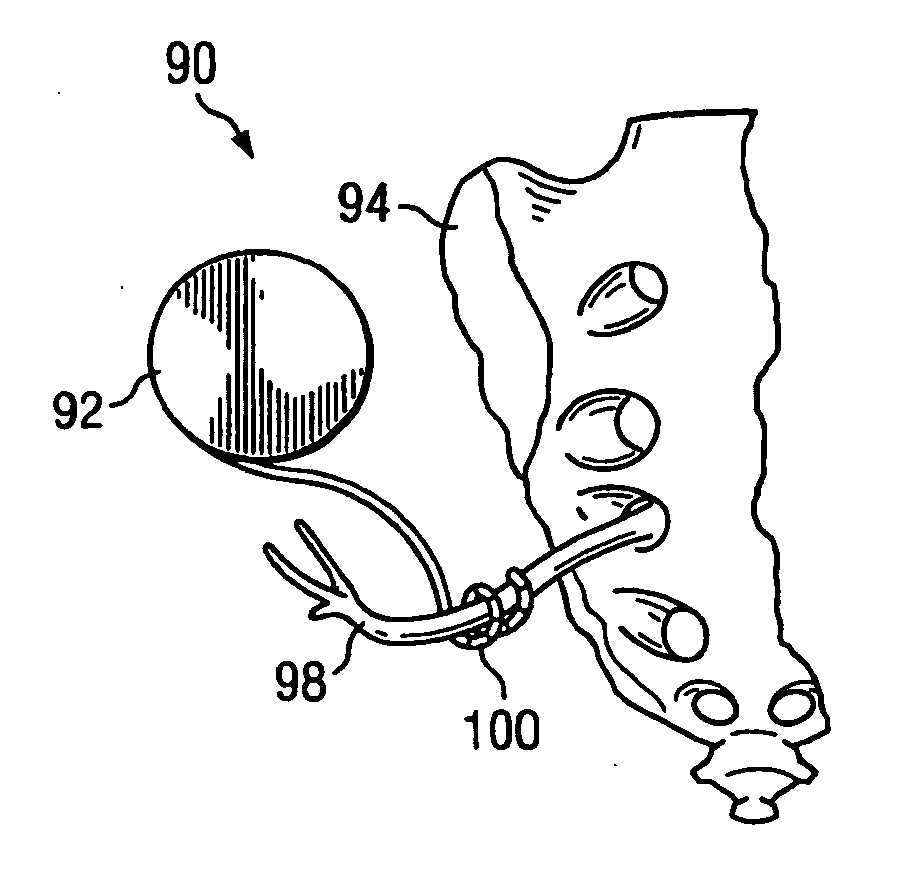
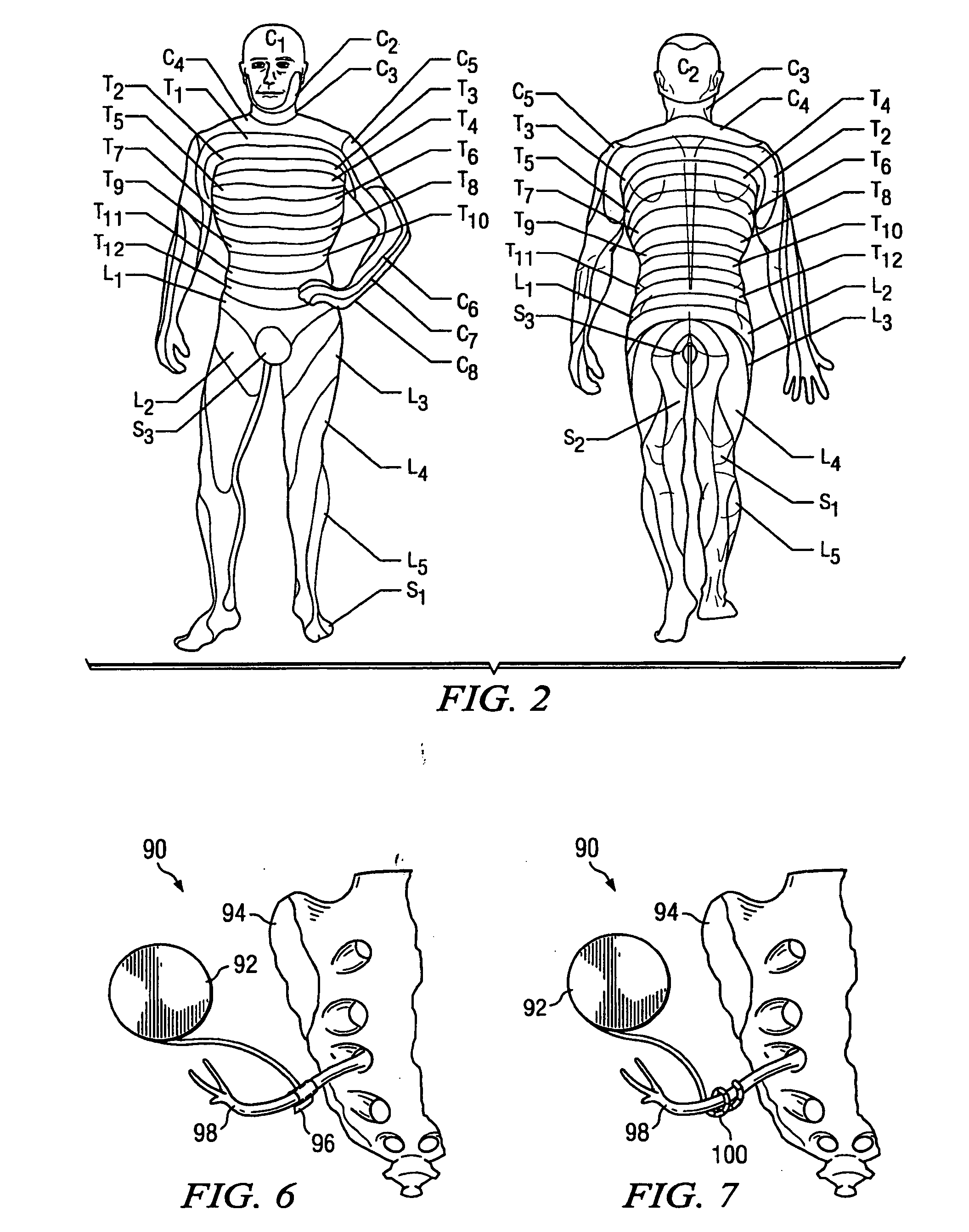
[0024] The sacral roots, in particular S2 and S3, have dermatomes associated with the genital region and the interior leg region. Stimulation of the sacral nerve roots in or about the sacrum provides a reliable and immobilized stimulation point. While nerve patterns may vary between patients, it is likely that proper stimulation of S2 or S3 leads to genital stimulation and orgasm.
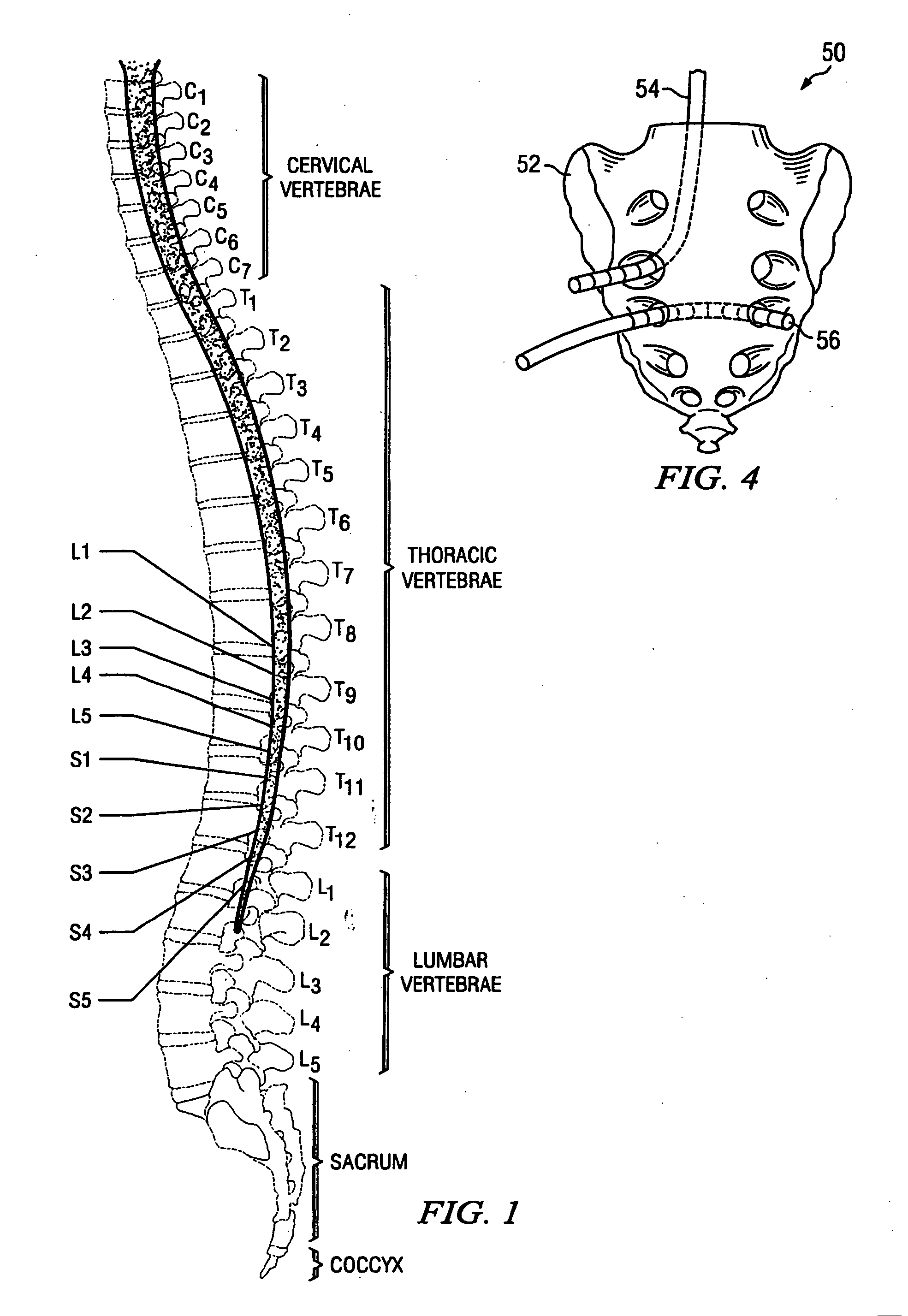
[0025]FIG. 1 depicts the spinal cord and the nerve roots extending from it in relation to the vertebrae. As can be seen, the spinal cord terminates in or around the L1 or L2 lumbar vertebrae. In this small termination region between about the T11 to L3 vertebrae, the spinal cord extends a large number of roots including lumbar, sacrum and coccyx roots, about eleven pair all together.
[0026] The spinal cord is not fixed in place and as such floats and changes position with changes in posture and body position. Stimulation of a selected region near the end of the spinal cord is difficult because the relative...
PUM
 Login to View More
 Abstract
Description
Claims
Application Information
 Login to View More