
Sedimentation basin for sewage treatment plants
a sewage treatment plant and sedimentation basin technology, applied in the direction of sedimentation settling tanks, stationary filter elements, feed/discharge, etc., can solve the problems of space requirements and material costs involved in building such a sedimentation basin, water has a relatively long residence time, and the operation of the sewage treatment plant is interrupted, etc., to achieve the effect of reducing space requirements and high waste water throughput ra
- Summary
- Abstract
- Description
- Claims
- Application Information
AI Technical Summary
Benefits of technology
Problems solved by technology
Method used
Image

Examples
Embodiment Construction
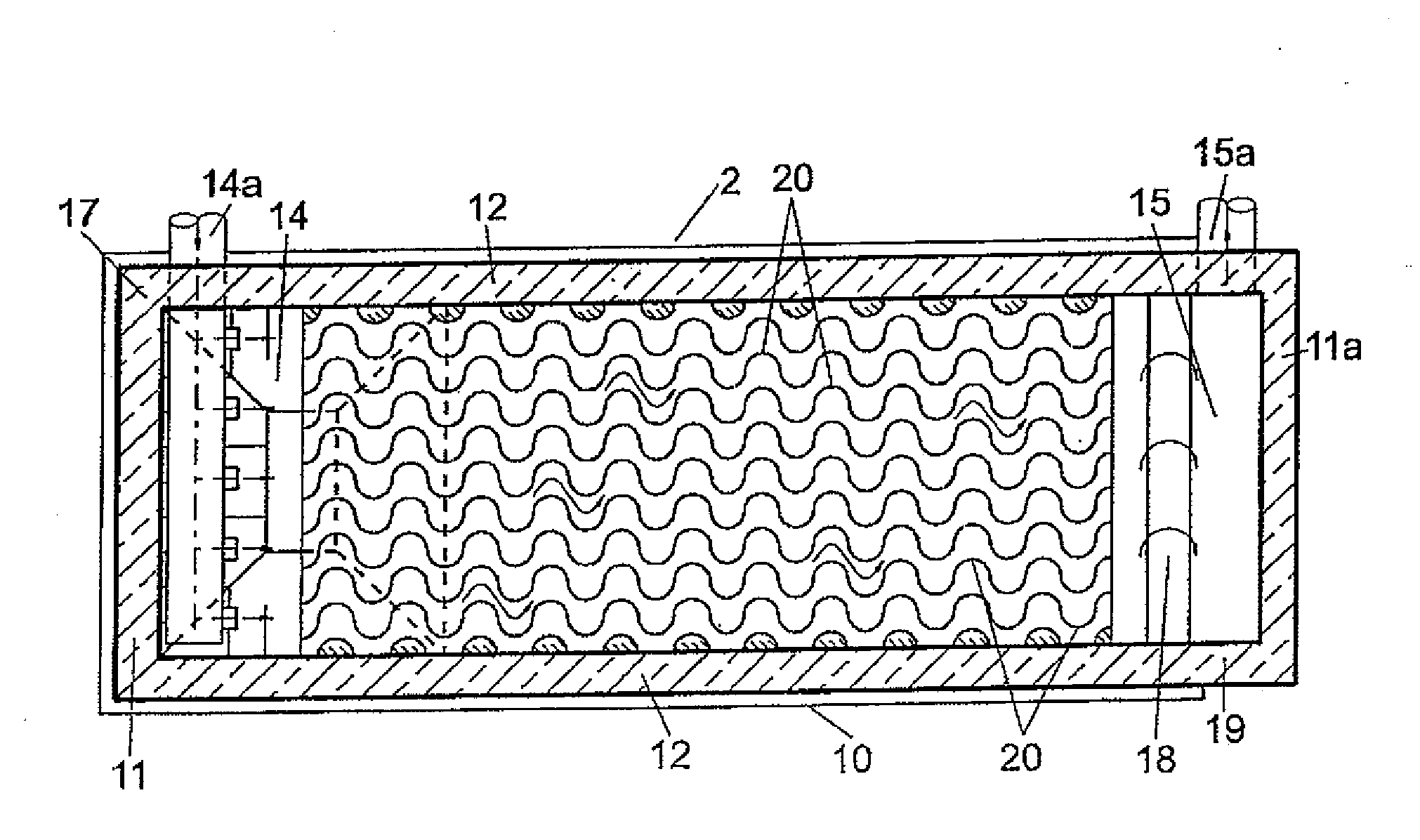
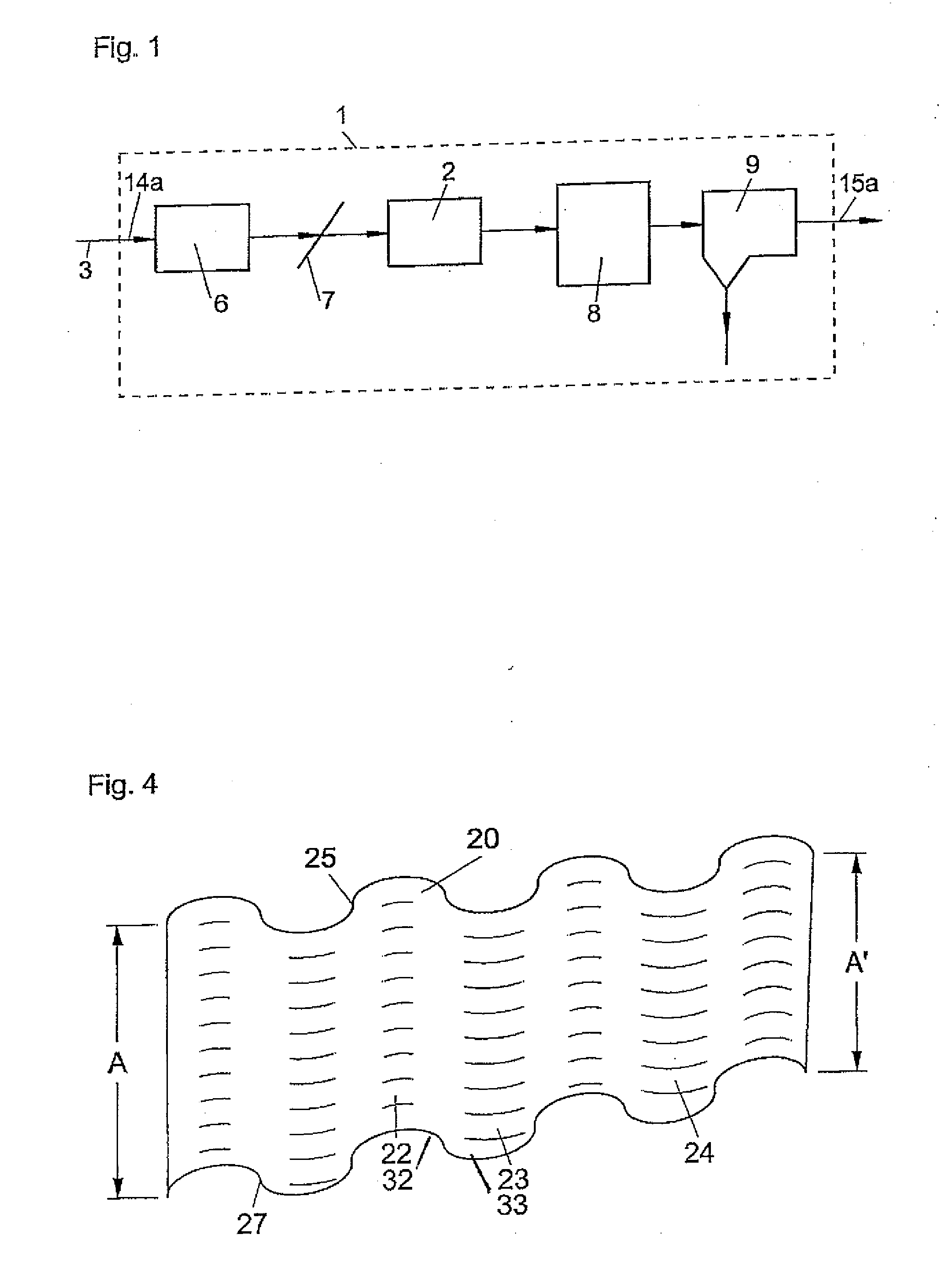
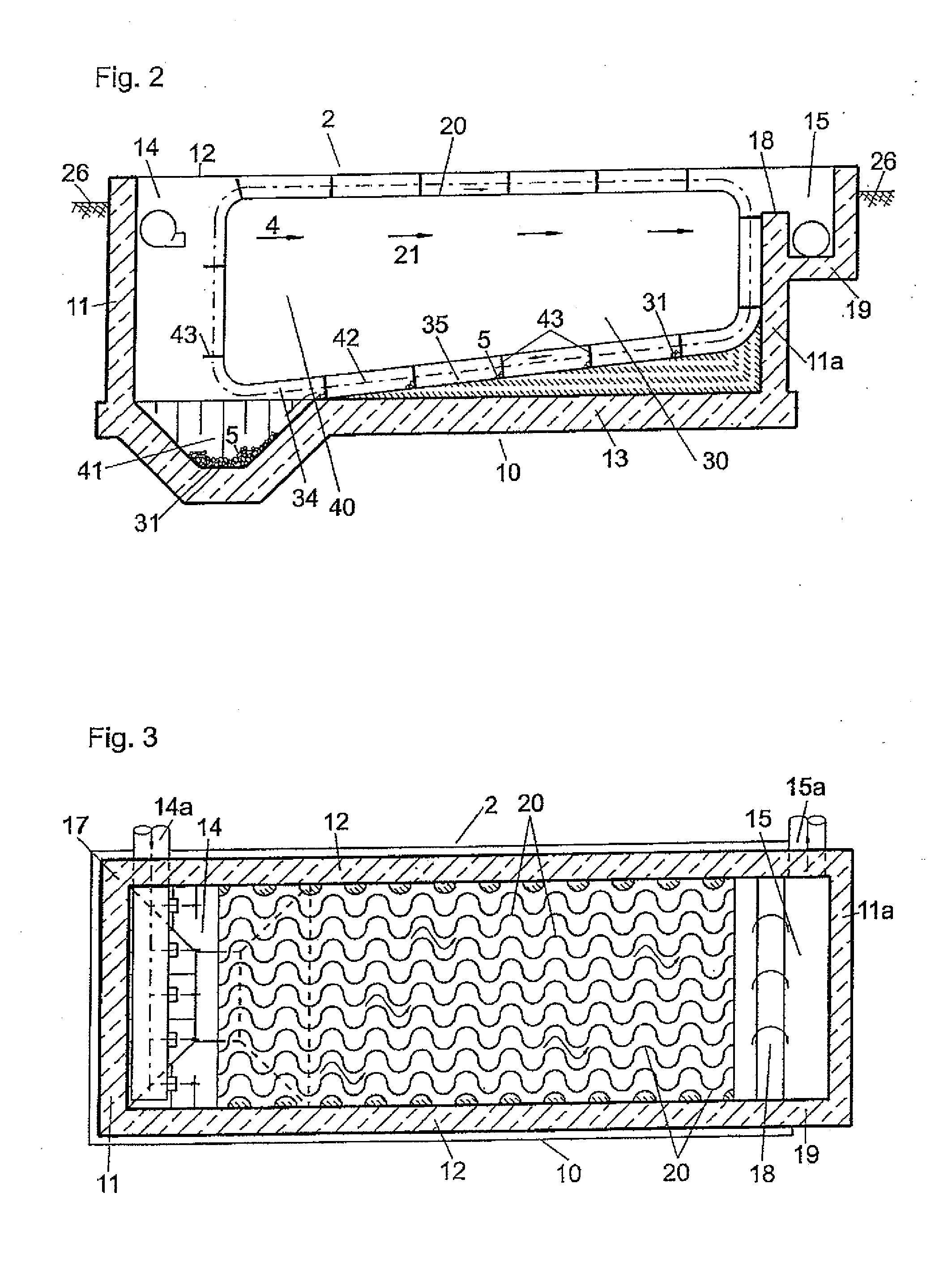
[0045]FIG. 1 shows a schematic illustration of a municipal sewage treatment plant 1, which is used to purify waste water 3 collected from drains and transported to the treatment plant. An inlet 14a leads to a collection tank 6 and then a grill 7, for sorting coarse, buoyant material, and then to a sedimentation basin 2. The purpose of the basin 210 is to remove coarse, settleable matter, such as sand, from the waste water. The raw waste water from which this matter has been separated enters an activated sludge basin 8, where organic and inorganic compounds are degraded by the action of microorganisms. In the secondary settling tank 9, suspended matter and other settleable impurities are precipitated as sewage sludge before the purified water flows via an outlet 15a into receiving water, typically a flowing body of water.
[0046]FIG. 2 shows a schematic illustration of a side view of a sedimentation basin 2,10 for sand according to the invention, configured as a rectangular elongate co...
PUM
| Property | Measurement | Unit |
|---|---|---|
| Length | aaaaa | aaaaa |
| Size | aaaaa | aaaaa |
| Shape | aaaaa | aaaaa |
Abstract
Description
Claims
Application Information
 Login to View More