
Multitube fiber-optic coupling method of symmetrical semiconductor laser
A technology of semiconductors and lasers, applied in the coupling of optical waveguides, instruments, optics, etc., can solve the problems of small number of integrations and low space utilization, and achieve the effects of simplified design, increased number of integrations, and high laser brightness
Patent Information
- Authority / Receiving Office
- CN · China
- Current Assignee / Owner
- Publication Date
- 2010-03-03
- Estimated Expiration
- Not applicable · inactive patent
Smart Images
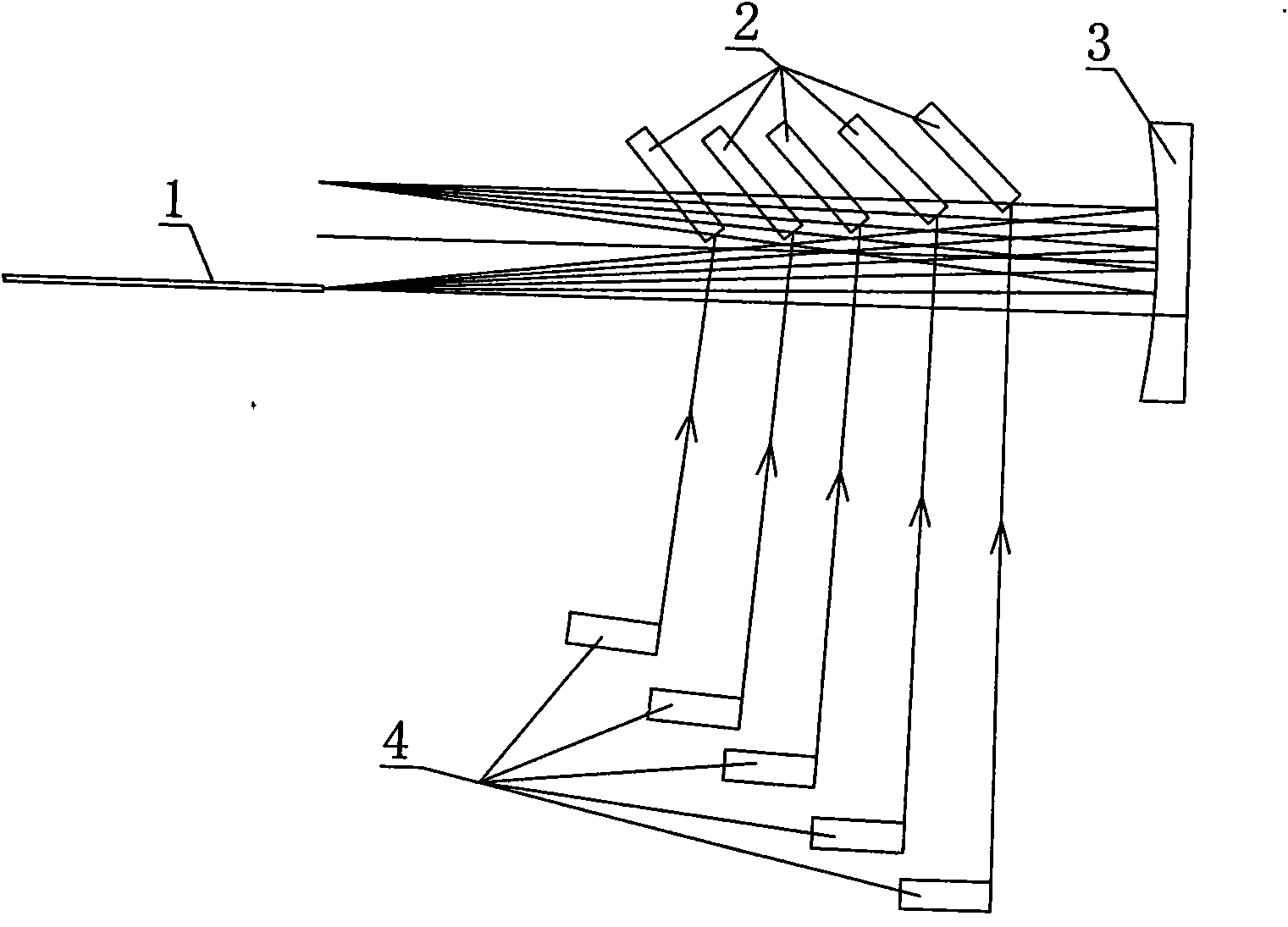
Figure 1 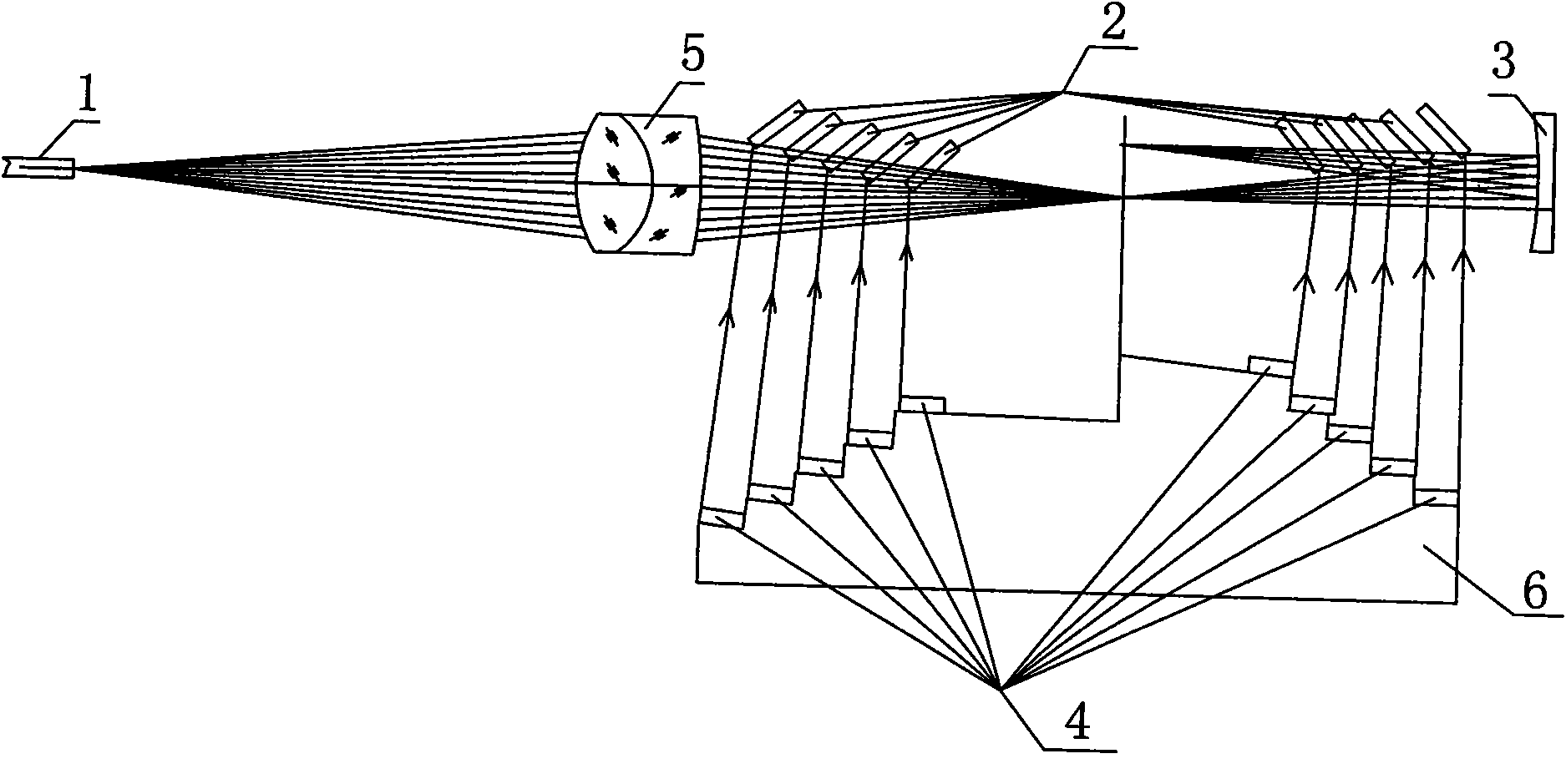
Figure 2 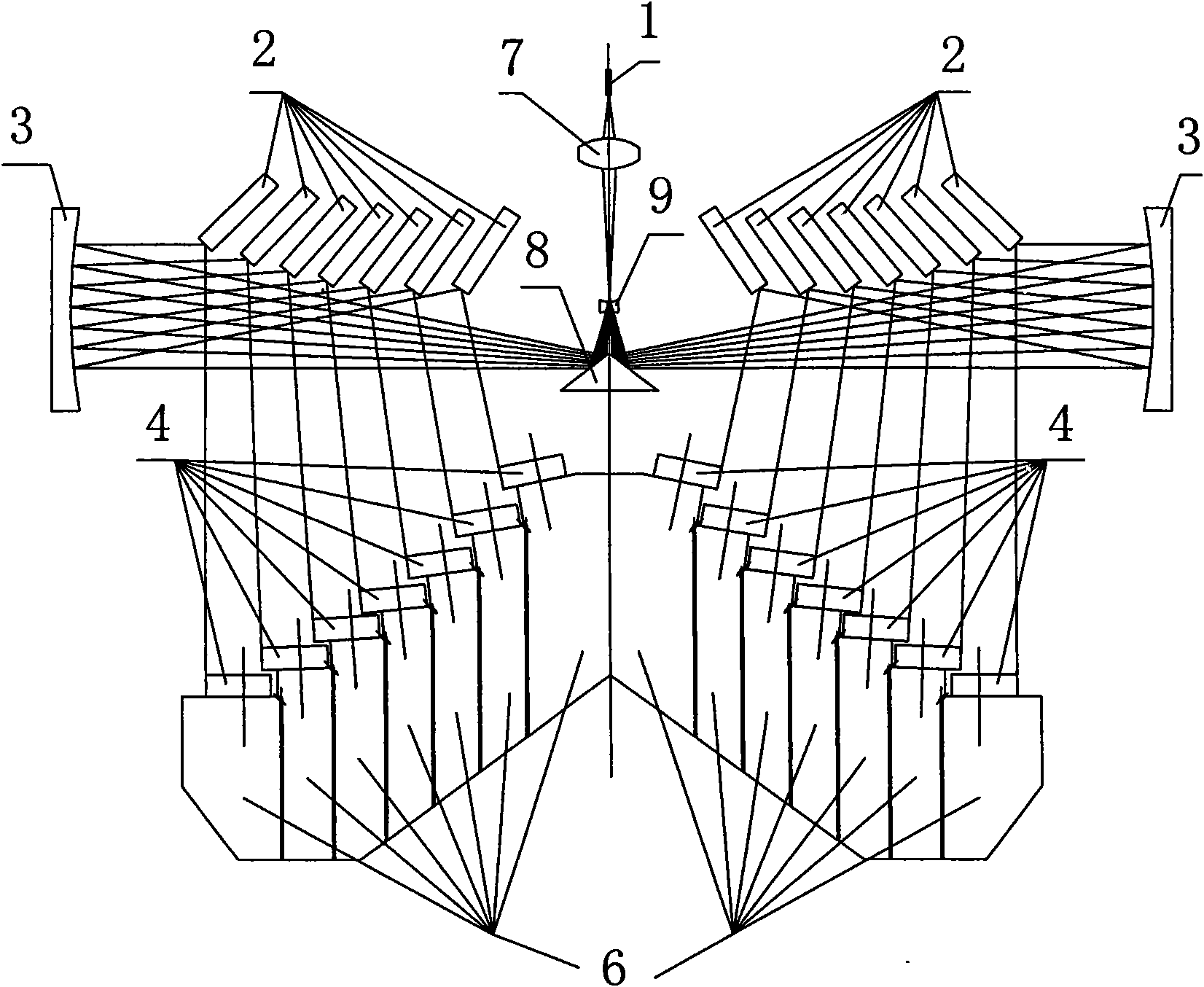
Figure 3
Abstract
Description
technical field
[0001] The invention relates to a multi-tube optical fiber coupling mode of a semiconductor laser, which adopts a design method for eliminating optical spherical aberration through a bidirectional optical path, and belongs to the technical field of light beam integration of multiple semiconductor lasers. Background technique
[0002] Due to its advantages of high electro-optic conversion efficiency, long life, small size, and low price, semiconductor lasers are developing very rapidly and their application fields are becoming more and more extensive. Limited by the P-N junction growth process of semiconductor lasers and the heat dissipation conditions of the laser active region, it is difficult to achieve high power output of semiconductor lasers with a single laser tube. Although multiple semiconductor lasers can be made into a laser bar, limited by the output divergence angle of the lasers, it is technically difficult and costly to couple the light emitted ...
Examples
Embodiment Construction
[0015] The beam integration method of the present invention is as image 3 As shown, the optical path is divided into two symmetrical parts. First, a cylindrical lens is used to compress the fast-axis divergence angle of each semiconductor laser 4 so that the fast-axis divergence angle is less than or equal to 1 degree. Then each semiconductor laser 4 is fixed on the laser seat 6, the laser seat 6 is divided into two parts with symmetrical left and right positions, and they are relatively insulated, so that each semiconductor laser can be connected in series to supply power. Each semiconductor laser 4 corresponds to a 45-degree reflector 2 . The light emitted by each semiconductor laser 4 in the left part is reflected on the same concave reflector 3 through the 45-degree reflector 2, and each 45-degree reflector and its corresponding concave reflector are adjusted so that the light spots are gathered on a plated At the same point before the top of the prism 8 of the all-refl...