
An optical transmission projection stereoscopic helmet-mounted display
A helmet display and optical transmission technology, which is applied in optics, optical components, instruments, etc., can solve the problems of unclear imaging, difficult to realize optical transmission large field of view helmet display, large display physical structure collision, etc.
Patent Information
- Authority / Receiving Office
- CN · China
- Patent Type
- Patents(China)
- Current Assignee / Owner
- Publication Date
- 2016-04-13
Smart Images
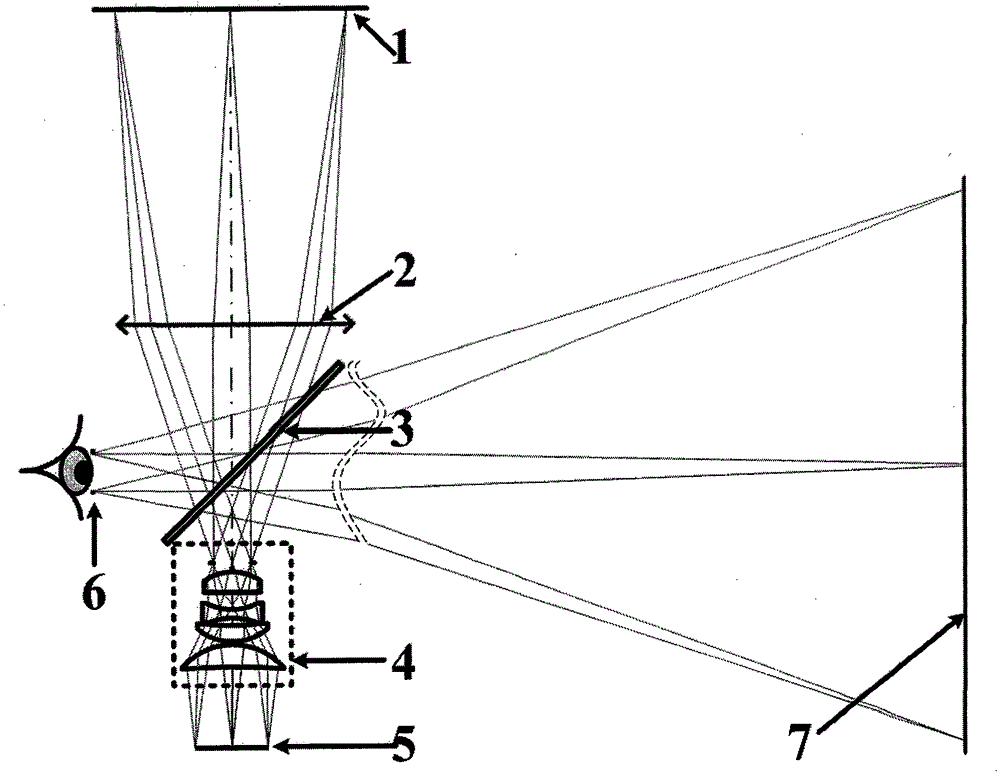
Figure 1 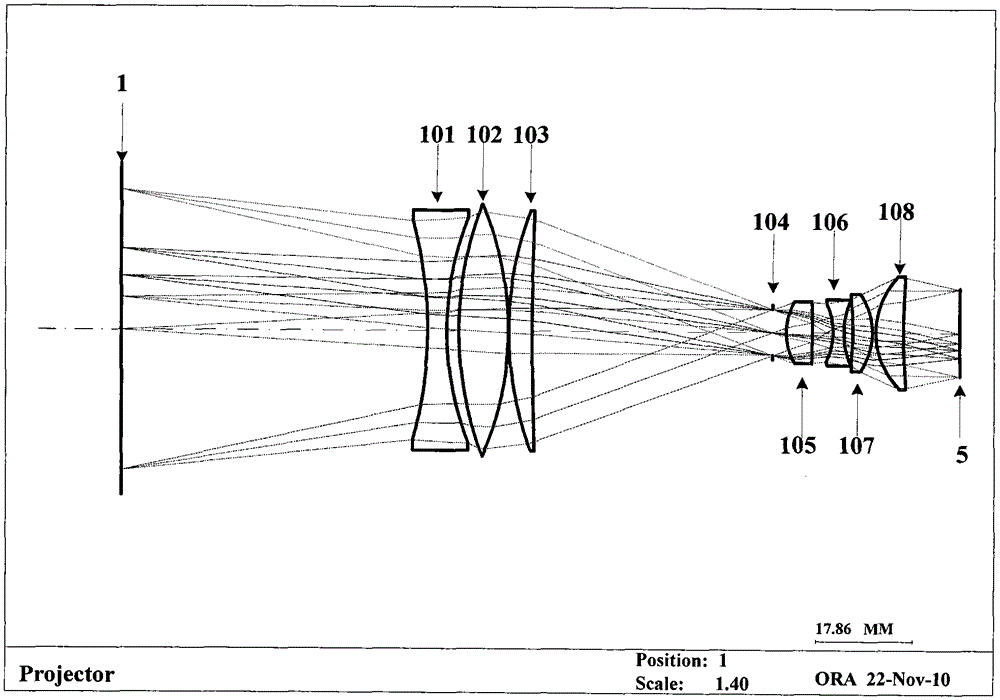
Figure 2 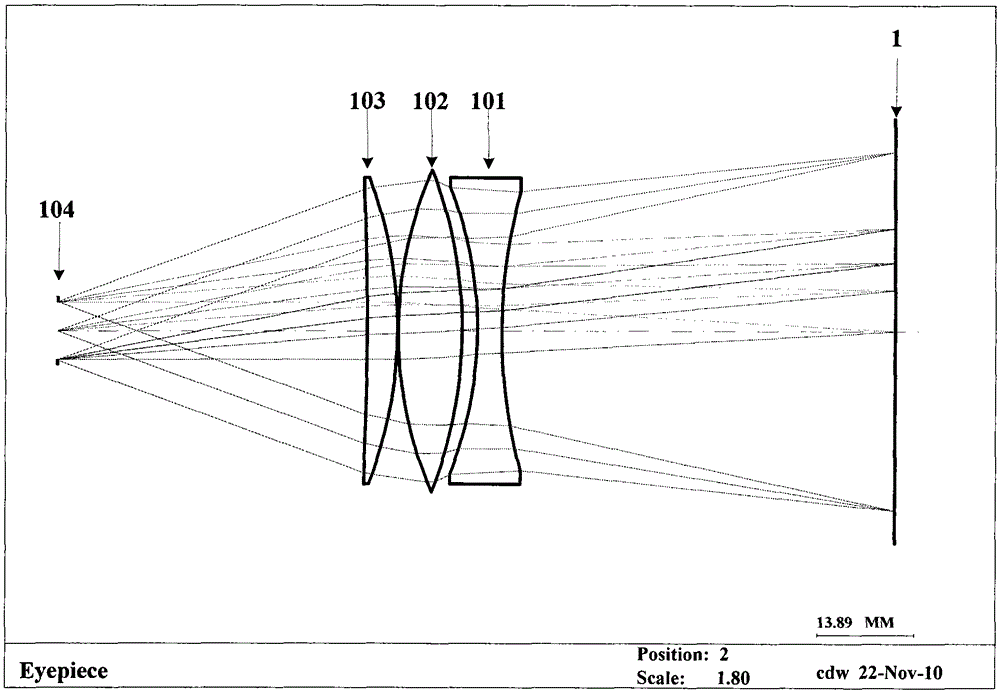
Figure 3
Abstract
Description
technical field
[0001] The invention relates to an optical transmission projection stereoscopic helmet display optical system, which is especially suitable for virtual reality or augmented reality systems. Background technique
[0002] Sir Charles Wheatstone, a British inventor, invented the first 3D stereoscopic screen viewer based on the principle of parallax in 1838, but at that time photos had not yet been invented, and pictures drawn by hand were used. In 1859, Oliver Wendel Holmes improved the patent of Joseph Bates and invented the hand-held pocket screen viewer, whose principle has been popular until today. Since the observed image of the stereoscopic screen viewer is a picture for a long time, the stereoscopic image cannot be played continuously, and its use has been limited to a certain extent. The stereo vision of the helmet display technology is also based on this principle.
[0003] The advantage of picture display is that its size can be made relatively large...
Examples
no. 1 example
[0045] figure 2 It shows a schematic structural diagram of the close-range micro-projection optical system of the projection-type head-mounted display device according to the first embodiment of the present invention; image 3 A schematic diagram of the eyepiece optical system of the projection head-mounted display device according to the first embodiment of the present invention is shown. Such as figure 2 As shown, the short-distance micro-projection system of the projection-type helmet display device according to the first embodiment of the present invention is composed of an eyepiece group and a rear projection lens. For the convenience of describing the projection optical system is carried out from the display screen to the direction of the micro-display. From left to right is 1, the scattering projection screen; 101 is a biconcave lens with negative dioptric power, 102 is a lens with positive dioptric power, and 103 is a lens with positive dioptric power; 104 is the d...
no. 2 example
[0055] image 3 It shows a schematic structural diagram of the close-range micro-projection optical system of the projection-type head-mounted display device according to the first embodiment of the present invention; Figure 4 A schematic diagram of the eyepiece optical system of the projection head-mounted display device according to the first embodiment of the present invention is shown. Such as image 3 As shown, the short-distance micro-projection system of the projection-type helmet display device according to the first embodiment of the present invention is composed of an eyepiece group and a rear projection lens. For the convenience of describing the projection optical system is carried out from the display screen to the direction of the micro-display. From left to right is 1 scattering projection screen; 201 is a biconcave lens with negative dioptric power, 202 is a lens with positive dioptric power, and 203 is a lens with positive dioptric power; 204 is the diaphra...
no. 3 example
[0064] Figure 6 It shows a schematic structural diagram of the close-range micro-projection optical system of the projection-type head-mounted display device according to the first embodiment of the present invention; Figure 7 A schematic diagram of the eyepiece optical system of the projection head-mounted display device according to the first embodiment of the present invention is shown. Such as Figure 6 As shown, the short-distance micro-projection system of the projection-type helmet display device according to the first embodiment of the present invention is composed of an eyepiece group and a rear projection lens. For the convenience of describing the projection optical system is carried out from the display screen to the direction of the micro-display. From left to right is 1, the scattering projection screen; 301 is a biconvex lens with positive dioptric power; 302 is the stop surface of the close-range micro-projection optical system; 303 is a lens with positive ...