
A kind of acid dye dyeing method of cotton textile
A cotton textile and acid dye technology, applied in the field of textile printing and dyeing, can solve the problems of fiber moisture absorption, air permeability and hand feeling, and achieve the effects of improving the dyeing rate, strong operability and less dosage.
Patent Information
- Authority / Receiving Office
- CN · China
- Patent Type
- Patents(China)
- Current Assignee / Owner
- Publication Date
- 2015-12-30
Smart Images
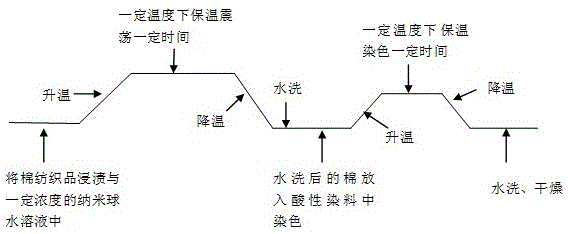
Figure 1 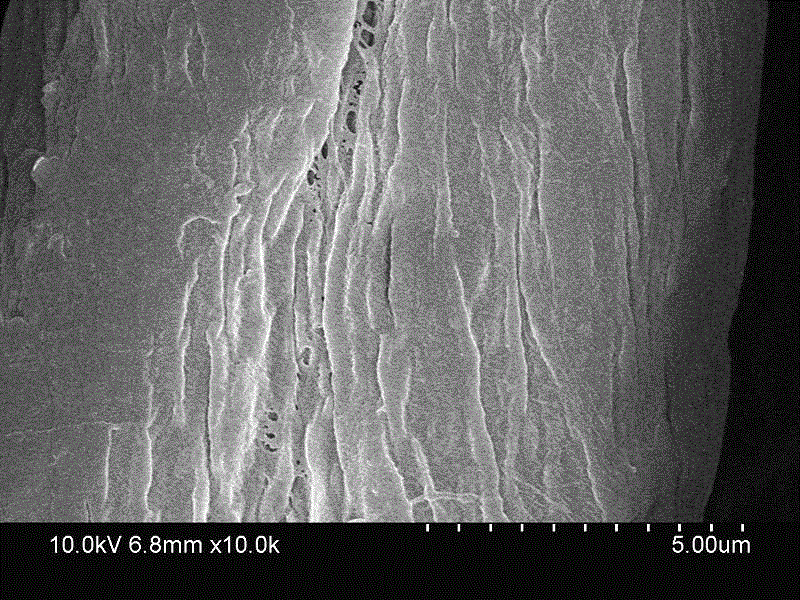
Figure 2 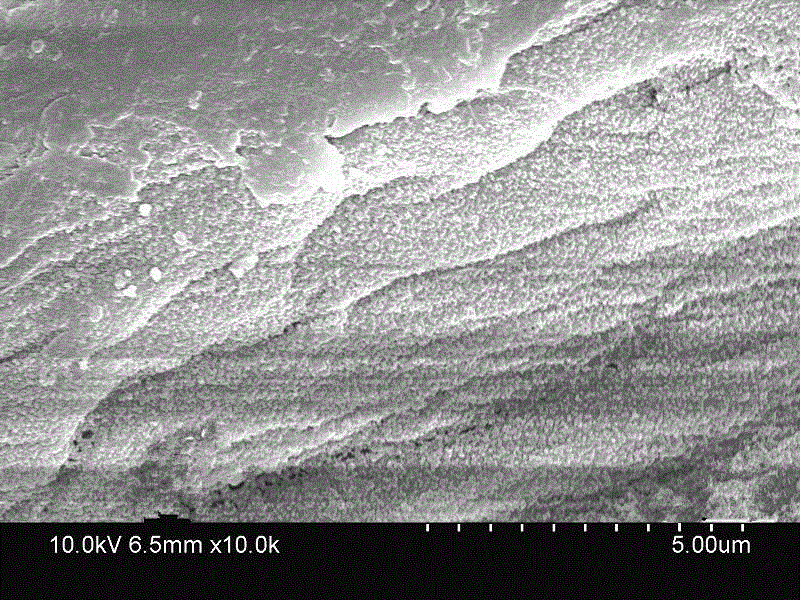
Figure 3
Abstract
Description
technical field
[0001] The invention belongs to the field of textile printing and dyeing, and relates to an acid dye dyeing method for cotton textiles. Background technique
[0002] Cotton is an important natural cellulose fiber, which has excellent wearing properties such as comfortable softness, good hygroscopicity, and is not easy to generate static electricity. It is widely used in the manufacture of textile fabrics and occupies an important position in the textile industry worldwide. It accounts for about 65% of the total fiber production. Acid dyes have the advantages of bright color, complete chromatogram, and high safety to the human body, but because they have no affinity for cellulose fibers, they cannot be used for dyeing cotton fiber products.
[0003] Dyes commonly used in cotton textile dyeing include reactive dyes, direct dyes, vat dyes, etc. However, because cotton fibers are large and negatively charged under normal conditions, there is electrostatic repuls...
Examples
Embodiment 1
[0020] Configure a solution of cationic polystyrene nanospheres with a weight of 0.1% for pure cotton knitted fabrics, and place the cotton fabrics in an impregnation solution with a liquor ratio of 1:50, a pH of 7.2, and a sodium chloride concentration of 0mol / L at a temperature of 30 At ℃, soak for 1min, 2min, 5min, 10min, 15min, 20min, 25min, 30min, 40min, 50min, 60min, 70min, 80min, 90min, 100min, 110min, 120min. After the treatment, take out the sample and wash it with water; For Acid Yellow 1 dye with a weight of 0.35% of the fabric, dye for 30 minutes at a bath ratio of 1:30, dye bath pH 6.0, sodium chloride concentration of 0 g / L, and a dyeing temperature of 25°C, and wash with water after dyeing Allow to dry at room temperature.
Embodiment 2
[0022] Configuration is respectively 0.01%-1.0% cationic polystyrene-methyl acrylate nanosphere solution to the weight of pure cotton woven fabric, and the cotton fabric is 1:50 in bath ratio, and pH is 7.2, and sodium chloride concentration is 0mol / L In the soaking solution, at a temperature of 30°C, soak for 120 minutes. After the treatment, take out the sample and wash it with water; then use acid orange 7 with a weight of 0.35% of the fabric, at a liquor ratio of 1:30, and a pH of 6.0 in the dyeing bath. , the concentration of sodium chloride is 0g / L, and the dyeing temperature is 25°C, dyeing for 30min, after dyeing, wash with water and dry at room temperature.
[0023] The color depth of the dyed fabric was measured with an American X-Rite computer color measuring and matching instrument, as shown in Table 1.
Embodiment 3
[0025] Configure a cationic polystyrene-butyl acrylate-methacryloyloxyethyltrimethylammonium chloride nanosphere solution with a weight of 0.1% for cotton / sky bamboo fiber blended fabrics, and make the fabric in a bath ratio of 1:50, pH 7.2, the concentration of sodium chloride is 0mol / L, 0.0001mol / L, 0.001mol / L, 0.01mol / L, 0.1mol / L impregnation solution, at a temperature of 30 ℃, immersion treatment for 120min, the treatment is completed Finally, take the sample out and wash it with water; then use acid red 3 with a weight of 0.35% to the fabric, under the conditions of a bath ratio of 1:30, a pH of the dyeing bath of 6.0, a concentration of sodium chloride of 0g / L, and a dyeing temperature of 25°C. , dyed for 30min, washed with water and dried at room temperature after dyeing.