
Coupling device between low-frequency vibration source and mastoid for treating peripheral vertigo
A low-frequency vibration and coupling device technology, applied in the field of medical devices, can solve problems such as patient intolerance, oscillator heating, and unstable contact between vibration source and mastoid, so as to improve treatment accuracy, ensure stability and controllability sexual effect
Patent Information
- Authority / Receiving Office
- CN · China
- Patent Type
- Patents(China)
- Current Assignee / Owner
- Publication Date
- 2016-09-07
Smart Images
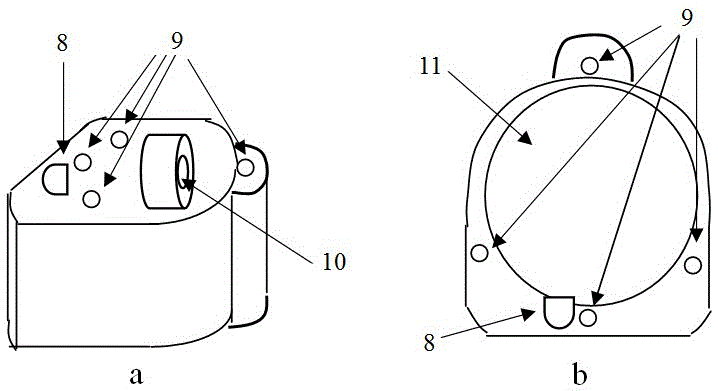
Figure 1 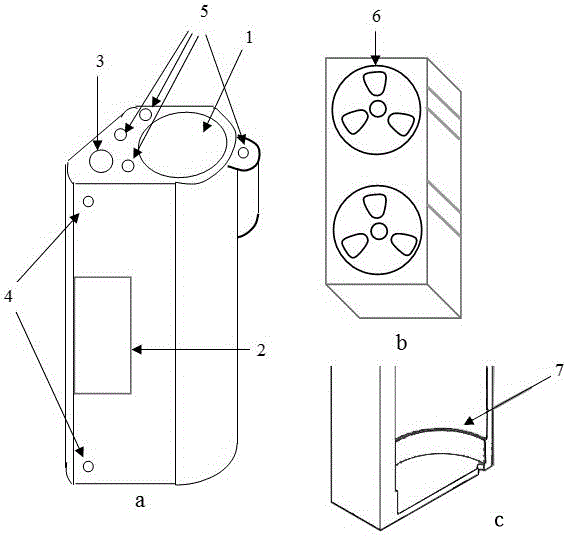
Figure 2 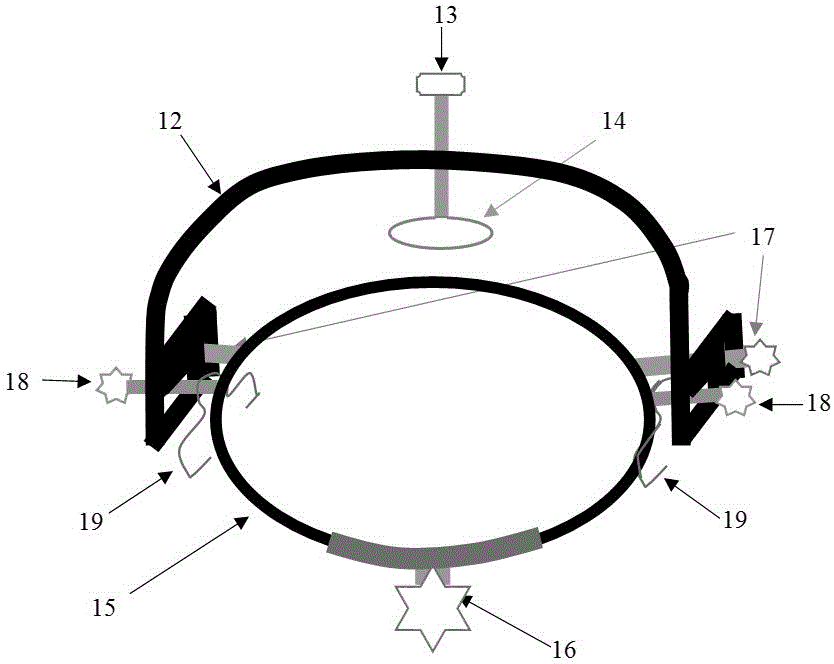
Figure 3
Abstract
Description
technical field
[0001] The invention belongs to the technical field of medical devices, and in particular relates to a device for treating peripheral vertigo. Background technique
[0002] Vertigo is the sensation that the patient feels that he or she is spinning or the surrounding environment is spinning. During the attack, the patient is very painful, at risk of falling, unable to work, and the quality of life is seriously affected. The causes are diverse, including peripheral (especially inner ear) and central pathological changes, but peripheral lesions are the main reason. The most common peripheral vertigo is Meniere's disease and benign paroxysmal positional vertigo, followed by vestibular neuronitis, vertebrobasilar insufficiency, ototoxic drug poisoning, and migraine. The cumulative incidence in the working population is approximately 30%. Of the $3.9 billion spent on vertigo in US emergency departments in 2011, otic (vestibular) causes accounted for 25.7%. Altho...
Examples
Embodiment Construction
[0020] In the present invention, the structure of the aluminum groove is referred to figure 1 As shown, it includes a central hole 1 for accommodating a polarized DC motor, a frame 2 for accommodating a miniature cooling fan, a miniature temperature sensor jack 3, a metal buckle jack 4, and a screw hole 5 for fixing the cover to reduce the surface temperature of the aluminum tank A miniature heat dissipation fan 6, and a step 7 for controlling the insertion depth of the polarized DC motor. The specific size range is as follows: the diameter of the central hole 1 is 28-35mm; the length of the frame 2 that accommodates the miniature cooling fan is 44-46mm, and the width is 20-22mm; the diameter of the miniature temperature sensor jack 3 is 3-4.6mm; The step 7 of the insertion depth of the polarization DC motor has a width of 6-9mm and a height of 6-9mm.
[0021] For the structure of the cover shell matched with the aluminum groove, see figure 2 As shown, it includes an outlet...