
Triazole-containing tetracarboxylic dianhydride, polymer, liquid crystal aligning agent, liquid crystal aligning film, and liquid crystal display element
A technology of liquid crystal aligning agent and tetracarboxylic dianhydride, used in liquid crystal materials, organic chemistry, instruments, etc., can solve the problems of reduced panel display quality, film peeling, reduction, etc., to achieve good electrical characteristics, high film hardness, good Show performance effects
Patent Information
- Authority / Receiving Office
- CN · China
- Patent Type
- Patents(China)
- Current Assignee / Owner
- Publication Date
- 2019-11-05
Smart Images
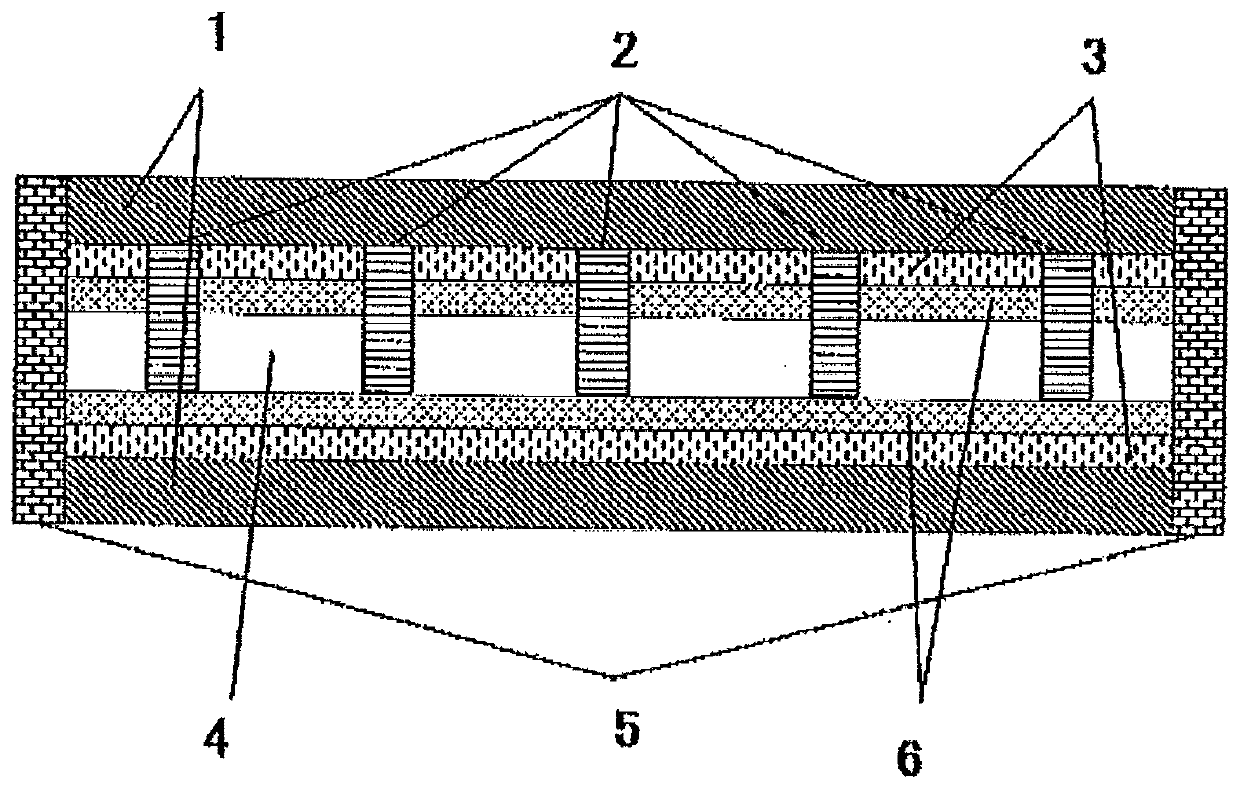
Figure 1 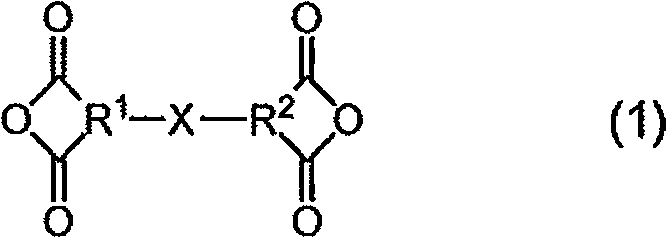
Figure 2 
Figure 3
Abstract
Description
technical field
[0001] The present invention relates to a novel tetracarboxylic dianhydride, polyamic acid or its derivative obtained by using it, and its application, especially a tetracarboxylic dianhydride containing triazole, a polymer, and a liquid crystal aligning agent , liquid crystal alignment film, and liquid crystal display elements. In addition, the term "liquid crystal aligning agent" in this invention shows the polymer containing composition for forming a liquid crystal aligning film. Background technique
[0002] In various display devices such as monitors of personal computers, LCD TVs, view finders of video cameras, projection displays, and optical printer heads, Among optical electronics-related components such as optical Fourier transform elements and light valves, nematic liquid crystal (nematic liquid crystal) display components. The display modes of the nematic liquid crystal display element are known as a twisted nematic (Twisted Nematic, TN) mode a...
Examples
Embodiment 1
[0776] [Example 1] Synthesis of compound (1-1)
[0777] [chem 163]
[0778]
[0779]
[0780] 4-(4-Bromobutyl) diethyl phthalate (12.1 g, 34.0 mol) was placed in a three-necked flask equipped with a thermometer and a nitrogen inlet tube, and 70 mL of DMF was added thereto. Sodium azide (2.4 g, 37.4 mmol) was added thereto. Thereafter, the solution was heated to 60° C., and stirred at the same temperature for 3 hours under a nitrogen atmosphere. The reaction solution was added to 400 mL of water, and extracted twice with 300 mL of heptane. After drying the organic layer with magnesium sulfate, the solvent was distilled off under reduced pressure to obtain a 4-(4-azidobutyl)-phthalic acid diethyl ester compound (yield: 10.0 g, yield: 92%).
[0781]
[0782] 4-(4-azidobutyl) diethyl phthalate (10.0 g, 31.3 mmol), 4-ethynyl - Dimethyl phthalate (7.5 g, 34.4 mmol), add 50 mL of dichloromethane and 50 mL of water. After stirring at room temperature to dissolve the compou...
Embodiment 2
[0793] [Example 2] Synthesis of compound (1-5)
[0794] [chem 166]
[0795]
[0796]
[0797] 1,6-Dibromohexane (5.0 g, 20.5 mmol) was put into a 100 mL three-necked flask equipped with a thermometer and a nitrogen inlet tube, and 25 mL of DMF was added. Sodium azide (2.9 g, 45.6 mmol) was added thereto. Thereafter, the solution was heated to 60° C., and stirred at the same temperature for 3 hours under a nitrogen atmosphere. The reaction solution was added to 200 mL of water, and extracted twice with 100 mL of heptane. After drying the organic layer with magnesium sulfate, the solvent was distilled off under reduced pressure to obtain 1,6-diazidohexane (3.2 g of yield, 93% yield).
[0798]
[0799] Put 1,6-diazidohexane (2.2 g, 13.1 mmol) and 4-ethynyl-phthalic acid dimethyl ester (5.7 g, 26.2 mmol) obtained in the first stage, and add 5 mL of diazide Chloromethane with 5 mL of water. After stirring at room temperature to dissolve the compound, copper sulfate pentah...
Embodiment 3
[0810] [Example 3] Synthesis of compound (1-6)
[0811] [chem 169]
[0812]
[0813]
[0814] Put 1,6-diazidohexane (2.2g, 13.1mmol), 4-ethynyl-1,2-cyclohexanedicarboxylic acid dimethyl ester (6.2g, 27.5mmol), add 20ml of dichloro Methane and 20ml of water. After stirring at room temperature to dissolve the compound, copper sulfate pentahydrate (0.16 g, 0.65 mmol) and L-sodium ascorbate (0.26 g, 13 mmol) were added, followed by stirring at room temperature for 1 hour. The reaction solution was added to 50 ml of water, and extracted twice with 50 ml of toluene. After drying the organic layer over magnesium sulfate, the solvent was distilled off under reduced pressure to obtain a crude product. The crude product was purified by column chromatography to obtain the following compound (yield: 7.8 g, yield: 97%).
[0815] [chem 170]
[0816]
[0817]
[0818] The compound (7.0 g, 11.3 mmol) obtained in the first stage was added to a three-necked flask equipped with a ...