
Equipment and method for eccentric pull-out test of frp bars considering the influence of bending-shear stress
A technology of pull-out test and stress, which is applied in the direction of measuring devices, mechanical devices, instruments, etc., can solve the problems of complicated test piece production, complicated loading device, not intuitive and accurate enough, and achieve simple and efficient test device and simple test device , the effect of accurate slip value
Patent Information
- Authority / Receiving Office
- CN · China
- Patent Type
- Patents(China)
- Current Assignee / Owner
- Publication Date
- 2019-01-29
Smart Images
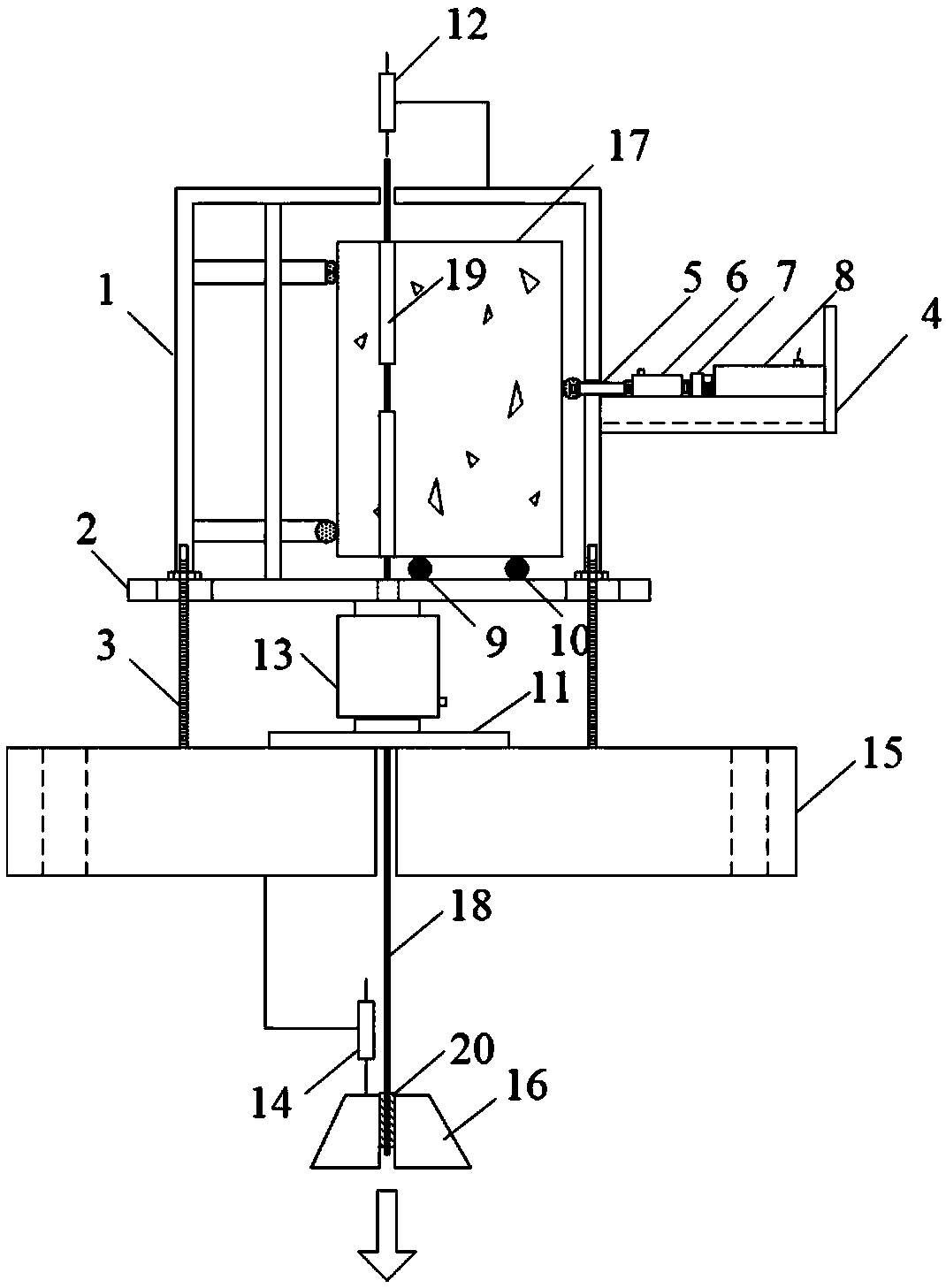
Figure 1 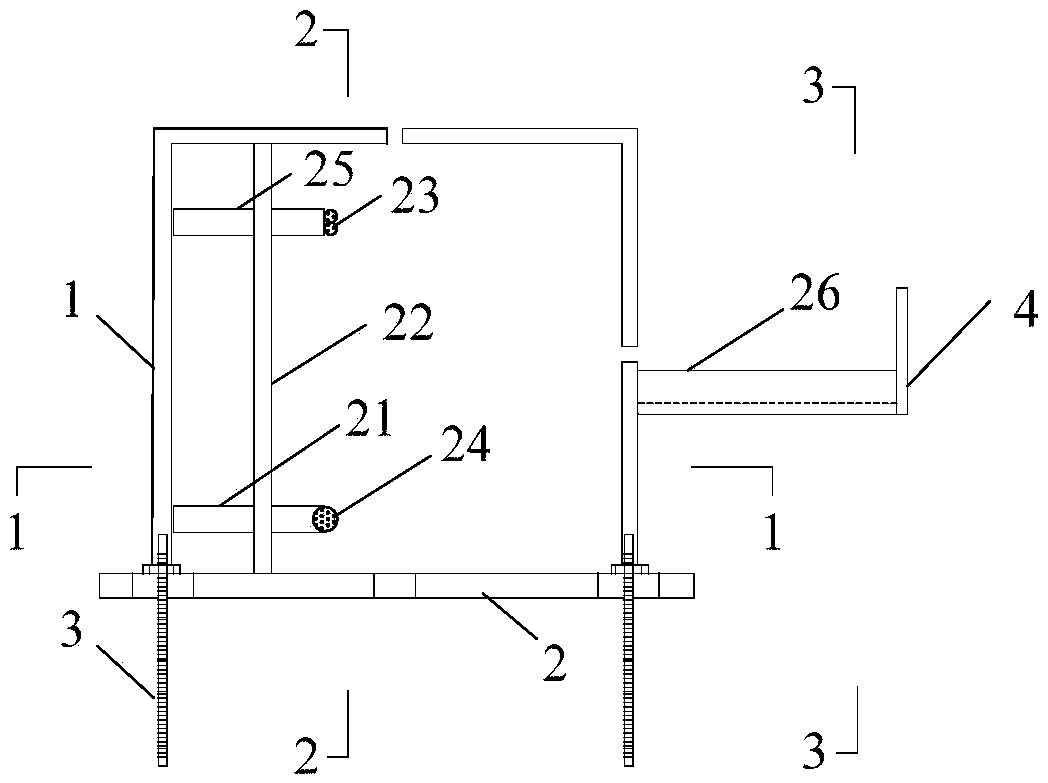
Figure 2 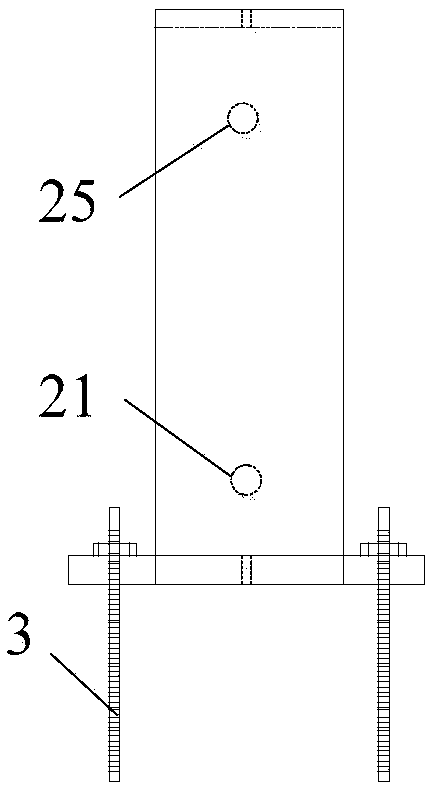
Figure 3
Abstract
Description
technical field
[0001] The invention relates to the technical field of pull-out test for building reinforcement, in particular to an FRP tendon eccentric pull-out test device and method considering the influence of bending and shear stress. Background technique
[0002] In a highly corrosive environment, the use of fiber reinforced composite bars (FRP bars) to replace traditional corrosion-prone steel bars will greatly improve the durability of concrete structures and prolong the service life of concrete structures, thereby minimizing the cost of the entire life cycle of the structure. change. The effective bonding between FRP bars and concrete is the key factor to ensure that they work with concrete and work together. The surface morphology of FRP bars is different from ordinary steel bars, and the bonding performance between them and concrete requires a lot of theoretical and experimental research.
[0003] At present, the most commonly used test method for the bond perf...
Examples
Embodiment Construction
[0037] The present invention will be further described below in conjunction with the accompanying drawings.
[0038] like figure 1 Shown, a kind of FRP tendon eccentric pull-out test device of the present invention that considers the influence of bending-shear stress includes steel reaction force frame system, bending-shear stress application system, and pull-out force and bar slip measurement system; figure 2 As shown, the steel reaction frame system includes a rectangular steel frame 1 , a bottom plate 2 , a screw 3 , and a steel bracket 4 . like Figure 7 As shown, the flexural-shear stress application system is composed of a steel T-shaped loading rod 5, a load cell 6 for testing horizontal force, a connecting screw 7 and a jack 8 connected in sequence and placed on a bracket 4 for applying to a concrete block 17. Horizontal force, so that the bending and shearing stress is generated in the concrete block 17, which is used to simulate the actual situation. like figure...