
A kind of silicone acrylic emulsion and preparation method thereof
A silicone-acrylic emulsion and emulsifier technology, applied in the coating and other directions, can solve the problems of high film-forming temperature and low organic silicon content, and achieve the effects of strong hydrophobicity, lower film-forming temperature and simple synthesis process.
Patent Information
- Authority / Receiving Office
- CN · China
- Patent Type
- Patents(China)
- Current Assignee / Owner
- Publication Date
- 2020-11-20
Smart Images
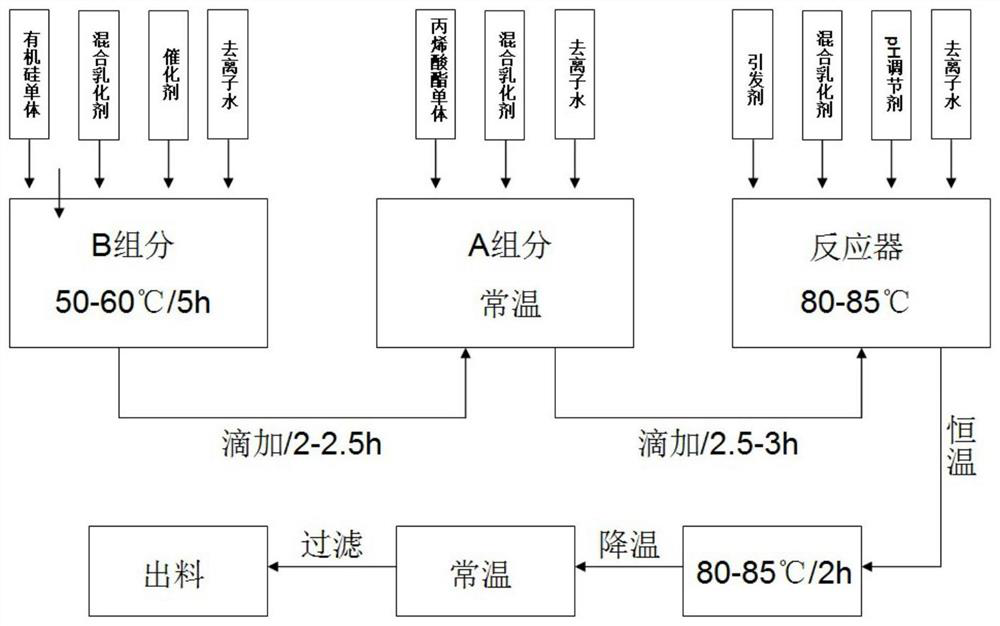
Figure 1 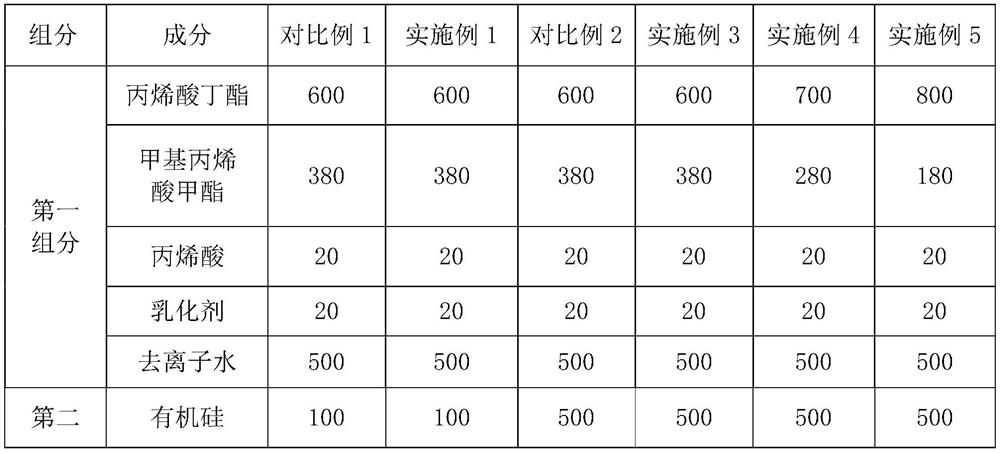
Figure 2 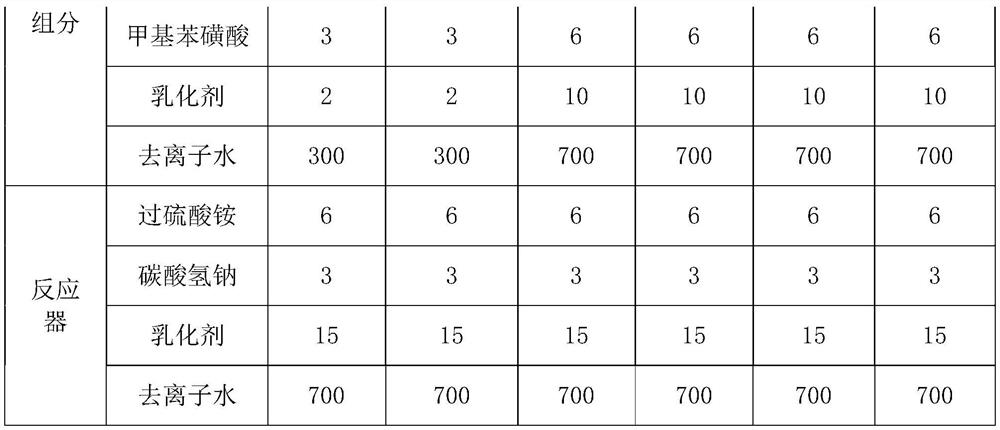
Figure 3
Abstract
Description
Technical field
[0001] The invention relates to the field of building materials, in particular to a silicone acrylic emulsion and a preparation method thereof. Background technique
[0002] Silicone-acrylic emulsion is a commonly used film-forming substance in the formulation of waterproof coatings. It is a water-based emulsion polymerized by the core-shell coating polymerization process by adding organic silicon monomers and acrylic monomers containing unsaturated bonds with appropriate additives. . It combines high temperature resistance, weather resistance, chemical resistance, hydrophobicity, low surface energy, and high color retention, flexibility, and adhesion of acrylic resin. It is a kind of high weather resistance, high water resistance, and pollution resistance. Emulsion for environmentally friendly architectural coatings.
[0003] Although silicone-acrylic emulsion has good application prospects, it is difficult to emulsify in water due to the extremely low surface en...
Examples
Embodiment 1
[0036] Prepare the raw materials according to the formula shown in Table 1. The emulsifier is a mixture of sodium lauryl sulfate and alkylphenol polyoxyethylene ether, the mass ratio of the two is 2:1; the organic silicon monomer is octamethylcyclotetrasiloxane The mixture of oxygen and vinyl triethoxy siloxane, the mass ratio of the two is 3:1;
[0037] Mix methyl methacrylate, butyl acrylate, acrylic acid, emulsifier and deionized water, and stir at room temperature for 30 minutes to form the first component after pre-emulsification; combine the silicone monomer, dodecylbenzene sulfonic acid, emulsifier and Mix deionized water, stir at room temperature for 30 minutes to pre-emulsify, then heat to about 55°C and keep at constant temperature for 5 hours to form the second component; add deionized water, emulsifier and sodium bicarbonate into the reactor to mix, stir and heat to 80°C At around -85°C, nitrogen gas is introduced into the reactor, and ammonium persulfate is added aft...
Embodiment 2
[0040] The difference between Example 2 and Example 1 lies in the ratio of raw materials.
Embodiment 3
[0042] The difference between Example 3 and Example 1 lies in the ratio of raw materials.