
A Cognitive Heterogeneous Cellular Network Interference Alignment Method Based on Cooperative Processing of Polarization-Space Domain Information
A cellular network and interference alignment technology, which is applied in multiplexing communication, electrical components, orthogonal multiplexing systems, etc., can solve problems such as performance needs to be improved, calculation and solution complexity, etc., to eliminate cross-layer interference and reduce Downlink signal transmission error, the effect of improving the total capacity
Patent Information
- Authority / Receiving Office
- CN · China
- Patent Type
- Patents(China)
- Current Assignee / Owner
- Publication Date
- 2021-05-07
Smart Images
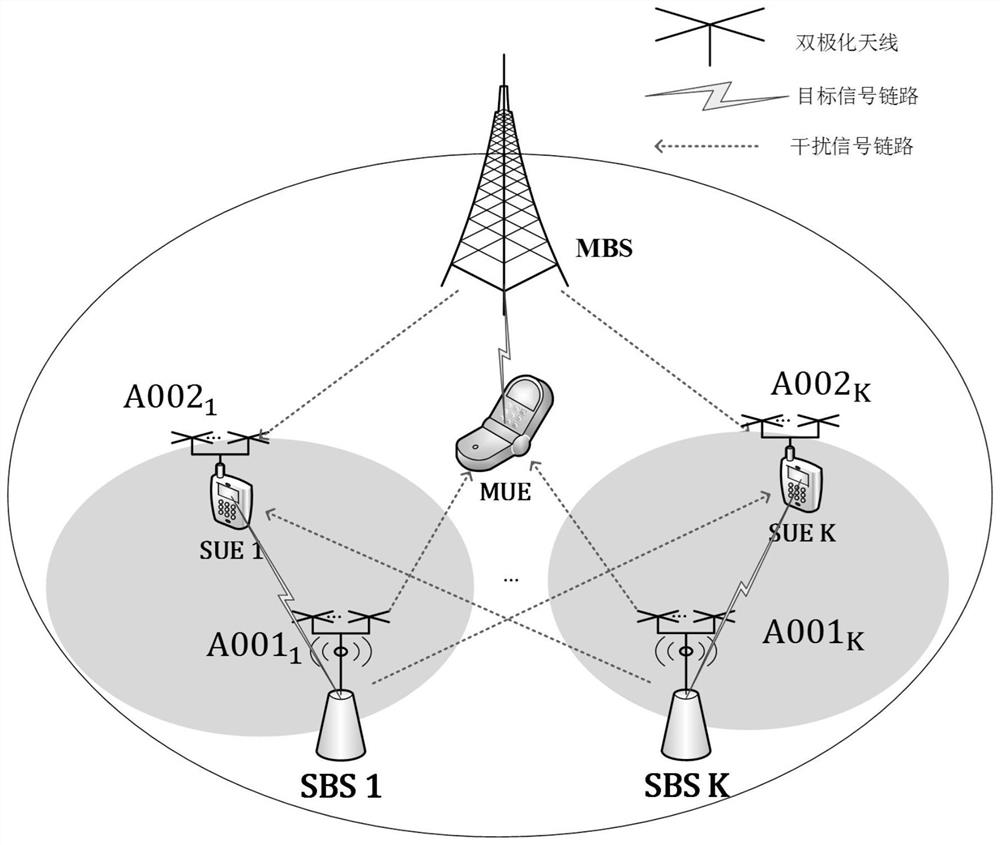
Figure 1 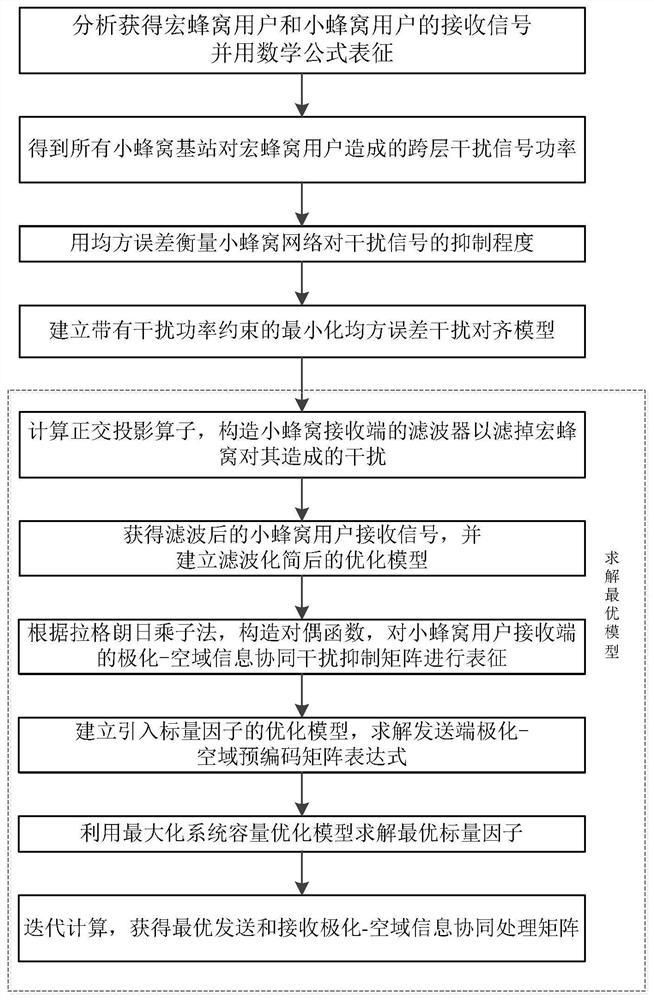
Figure 2 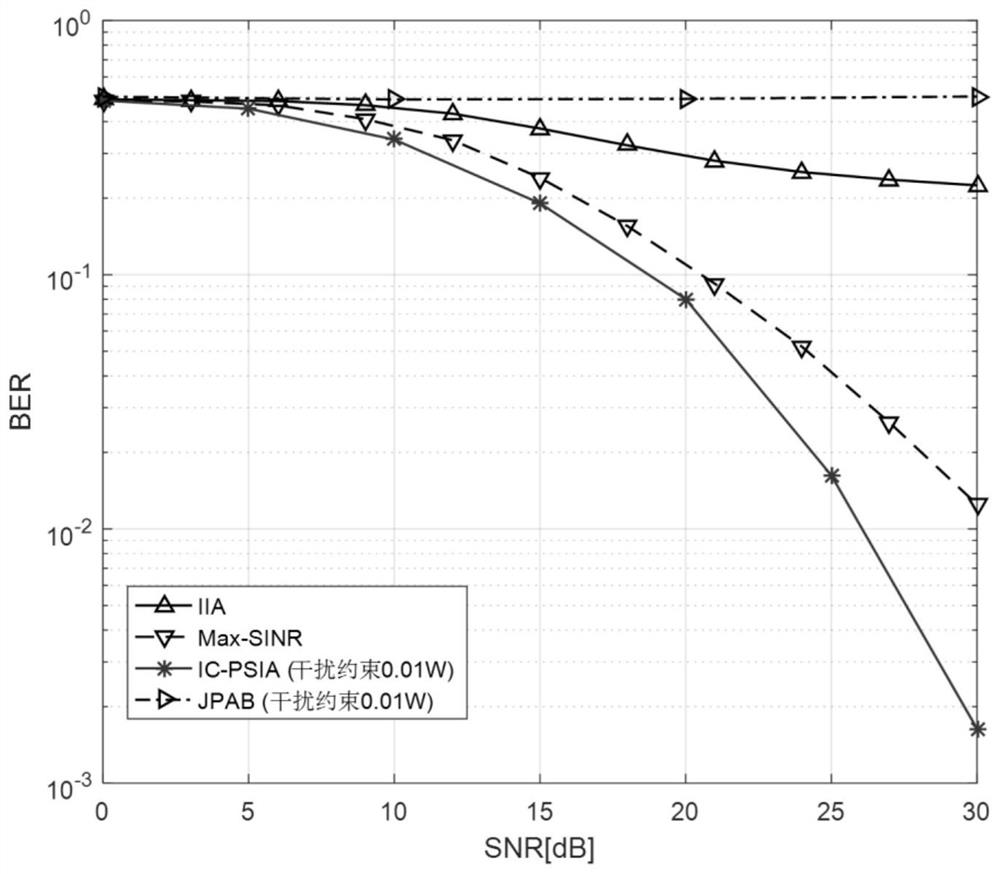
Figure 3
Abstract
Description
technical field
[0001] The invention belongs to the field of wireless communication, and relates to a cognitive heterogeneous cellular network system, in particular to a method for cognitive heterogeneous cellular network interference alignment based on polarization-space information collaborative processing. Background technique
[0002] With the development of wireless communication technology and the popularization of wireless communication equipment, wireless mobile communication networks are faced with the problem that limited spectrum resources cannot meet a large number of business needs. In order to greatly increase the capacity of the cellular network, it will be a major development trend in the future to innovate the traditional macro-cellular network architecture and deploy multiple small-cell nodes with low power and frequency reuse to form a heterogeneous cellular network. On the one hand, the heterogeneous cellular network effectively improves the network capac...
Examples
Embodiment Construction
[0018] In order to facilitate those of ordinary skill in the art to understand and implement the present invention, the present invention will be further described in detail below in conjunction with the accompanying drawings.
[0019] A cognitive heterogeneous cellular network interference alignment method based on polarization-space information collaborative processing provided by the present invention uses orthogonal projection filtering and interference alignment technology to detect cross-layer and same-layer interference existing in cognitive heterogeneous cellular networks After processing, the polarization-space collaborative processing matrix of the small cell at the base station transmitting end and the user receiving end are respectively optimized, and the alignment and elimination of the cross-layer interference generated by the macro cell to the small cell user and the same-layer interference between the small cells are realized. The purpose is to align the cross-l...