
A remote interference fallback method and base station
A technology of remote interference and base station, which is applied in orthogonal multiplexing system, multiplexing communication, wireless communication and other directions to achieve the effect of improving average spectral efficiency and reducing downlink resource overhead.
Patent Information
- Authority / Receiving Office
- CN · China
- Patent Type
- Patents(China)
- Current Assignee / Owner
- Publication Date
- 2021-08-10
Smart Images

Figure 1 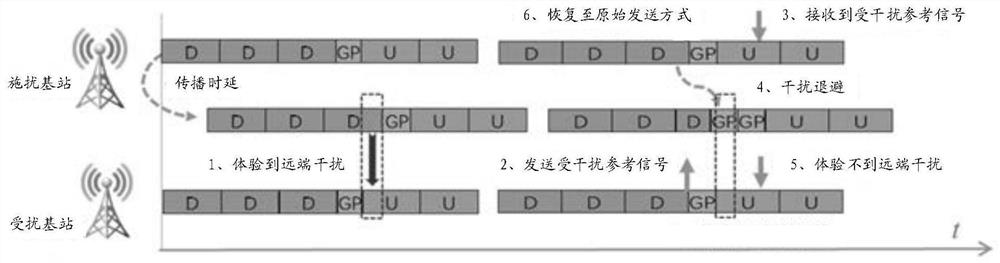
Figure 2 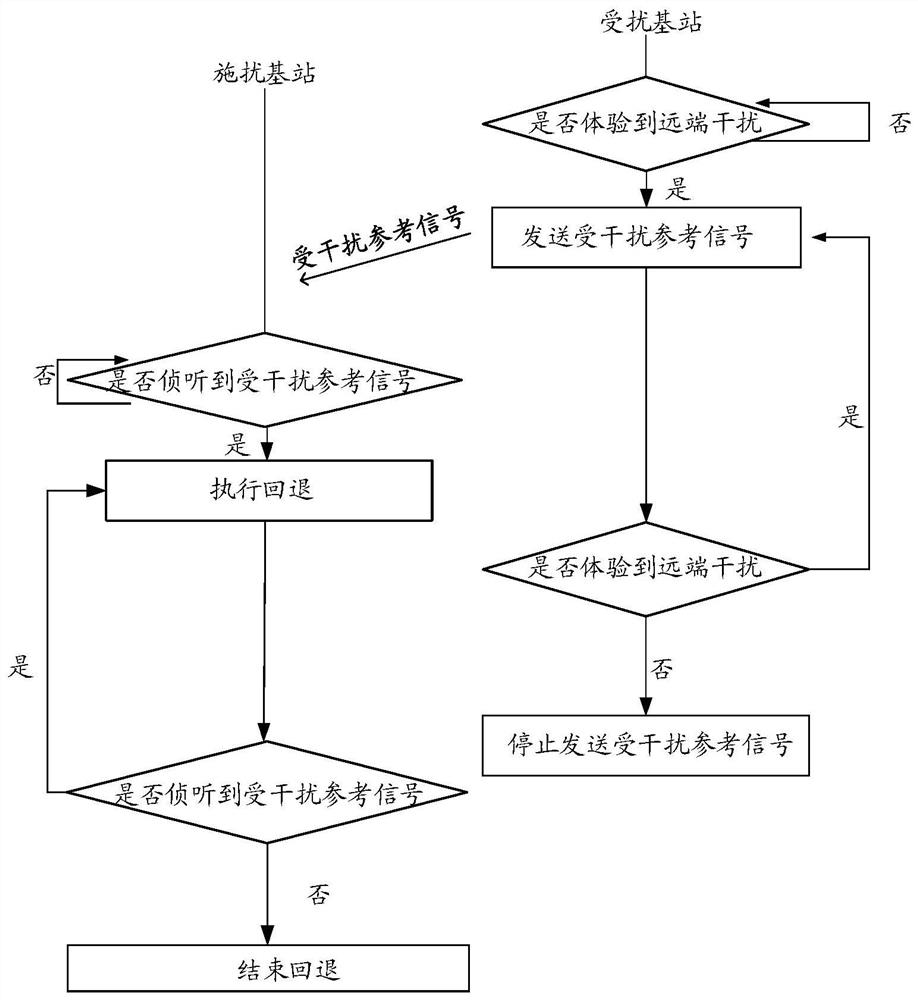
Figure 3
Abstract
Description
technical field
[0001] The present invention relates to the technical field of wireless communication, in particular to a remote interference fallback method and a base station. Background technique
[0002] In the networking of a TDD (Time Division Duplexing, Time Division Duplex) system, in order to avoid uplink and downlink interference between cells, generally the same uplink and downlink configurations are selected. In addition, a guard interval (for example, Guard Period, GP for short) is set between the transmission of the downlink time slot and the uplink time slot. Generally, the length of the guard interval is N (<14) OFDM symbols. The selection of the guard interval length needs to ensure that the downlink transmission of the base station within a certain range (eg tens of kilometers) will not interfere with the uplink reception of the base station.
[0003] Under normal circumstances, considering the loss of electromagnetic wave propagation in space, the loca...
Examples
Embodiment Construction
[0075] In order to make the purpose, technical solutions and advantages of the embodiments of the present invention more clear, the following will clearly and completely describe the technical solutions of the embodiments of the present invention in conjunction with the drawings of the embodiments of the present invention. Apparently, the described embodiments are some, not all, embodiments of the present invention. All other embodiments obtained by those skilled in the art based on the described embodiments of the present invention belong to the protection scope of the present invention.
[0076] see Figure 4 , Figure 4 It is a schematic flowchart of a remote interference fallback method provided in Embodiment 1 of the present invention. The method is applied to the first base station and includes the following steps:
[0077] Step 11: From at least one detected reference signal, the first base station selects the reference signal with the last timing reference point or t...