
Crack closing stress determination method based on axial stress response
A technology of axial stress and closed stress, applied in the direction of applying stable tension/pressure to test the strength of materials, measuring devices, instruments, etc., can solve the problem of inconclusive stress threshold reliability, and solve the problem of determining the compaction point , the effect of improving the accuracy
Patent Information
- Authority / Receiving Office
- CN · China
- Current Assignee / Owner
- Publication Date
- 2021-10-29
Smart Images
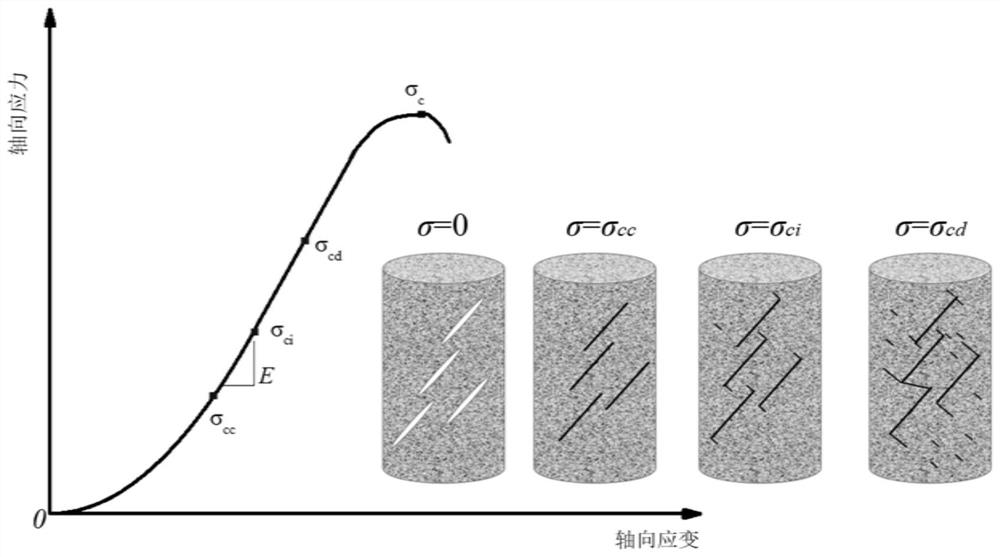
Figure 1 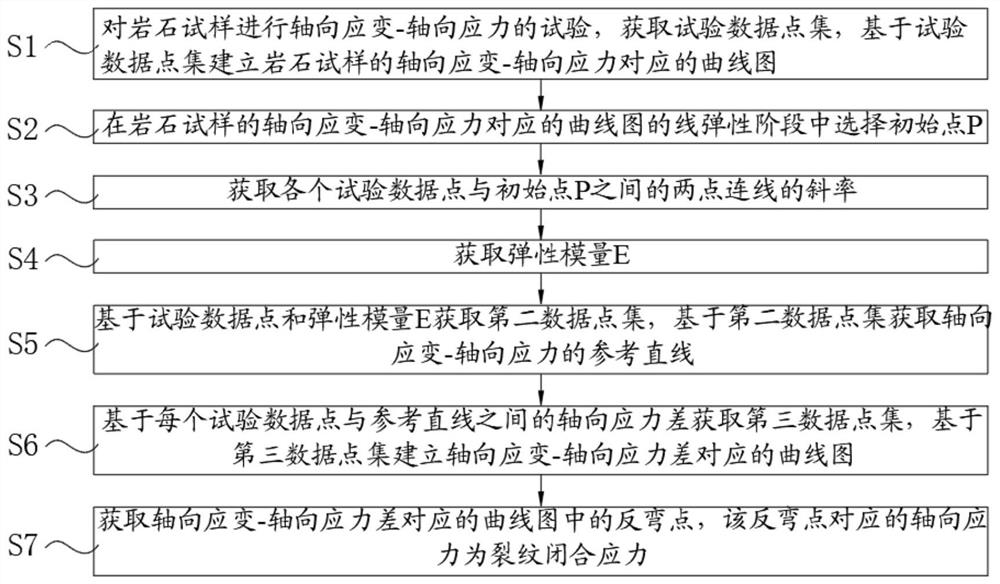
Figure 2 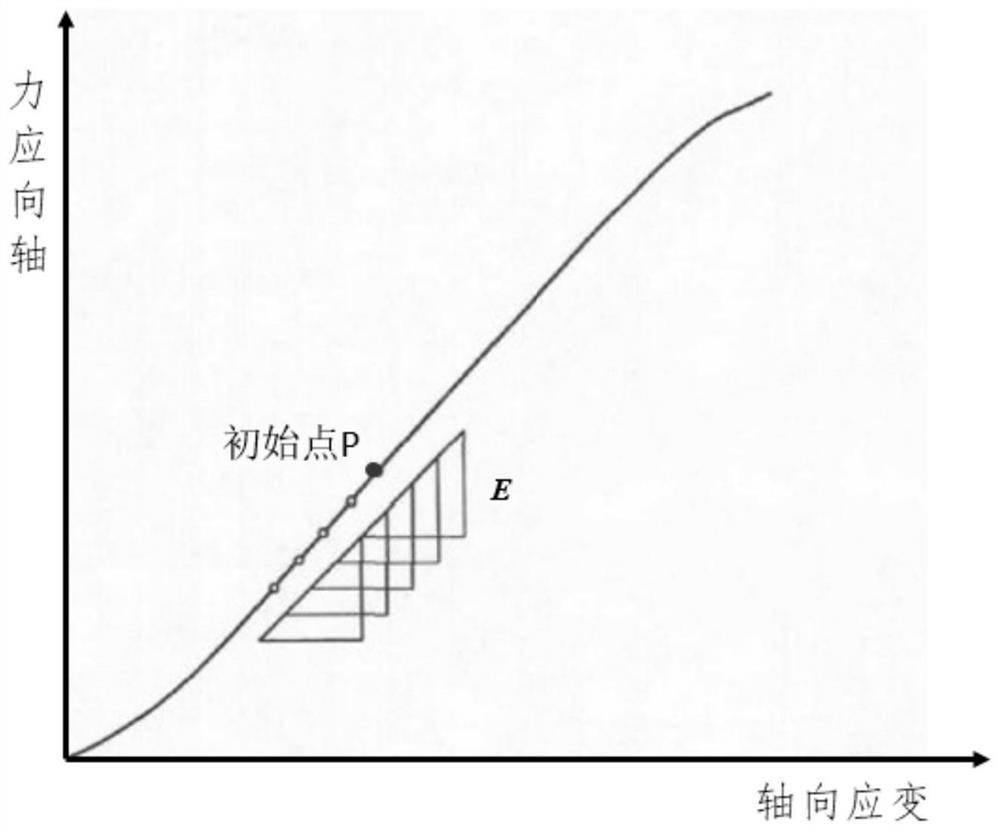
Figure 3
Abstract
Description
technical field
[0001] The invention relates to the technical field of engineering structures, in particular to a method for determining crack closure stress based on axial stress response. Background technique
[0002] Affected by complex geological structures and environmental factors such as excavation disturbances, earthquakes, and microseisms, natural rock materials contain more or less primary microscopic microcracks. Initiation, extension, and penetration are closely related [1,2] , it is of great significance to study the corresponding characteristics between microcrack development and macroscopic stress threshold for the stability evaluation of deep tunnels, underground storages and other underground projects.
[0003] The mechanical properties of rocks under compression have been extensively studied over the past 60 years [3] . Generally speaking, if figure 1 As shown, there are four key stress thresholds in the process of rock compression failure, that is, the...
Examples
Embodiment Construction
[0052] In order to further understand the features, technical means, and specific objectives and functions achieved by the present invention, the present invention will be further described in detail below in conjunction with the accompanying drawings and specific embodiments.
[0053] figure 2 is a schematic flowchart of a method for determining crack closure stress based on axial stress response provided by an embodiment of the present invention, as shown in figure 2 As shown, the method for determining the crack closure stress based on the axial stress response specifically includes the following steps:
[0054] Step S1, carry out the compression test of the axial strain-axial stress relationship on the rock sample, and obtain the test data point set Based on the test data point set, the corresponding curve diagram of the axial strain-axial stress relationship of the rock sample is established, such as image 3 shown;
[0055] Step S2, select the initial point P(ε p ...