
Breeding method of grape rootstock with high cold resistance
By hybridizing Riverbank grapes and 5BB grapes, combined with potassium permanganate treatment and low-temperature screening, the problem of insufficient cold resistance of grape rootstocks was solved, and highly cold-resistant grape rootstocks were obtained, which improved the growth reliability and yield of grapes in cold regions.
Patent Information
- Application Number
- CN202511903914.3
- Authority / Receiving Office
- CN · China
- Patent Type
- Applications(China)
- Current Assignee / Owner
- Filing Date
- 2025-12-16
- Publication Date
- 2026-02-24
AI Technical Summary
Existing grape rootstocks are not cold-resistant enough and are unable to adapt to the climate conditions of cold regions and high-altitude mountainous areas in northern my country, resulting in frost damage to grape roots and affecting yield and quality.
Riverbank grapes and 5BB grapes were used as parents for hybridization. Seeds were treated with potassium permanganate solution to select high-quality seedlings, and low-temperature treatment was carried out to select highly cold-resistant grape rootstocks. The selection criteria included proline content, soluble sugar content, soluble protein content, and electrical conductivity.
We obtained grape rootstocks with better cold resistance, which can safely overwinter in cold regions, improving the reliability and yield of grape growth, significantly better than the control group.
Smart Images

Figure SMS_1 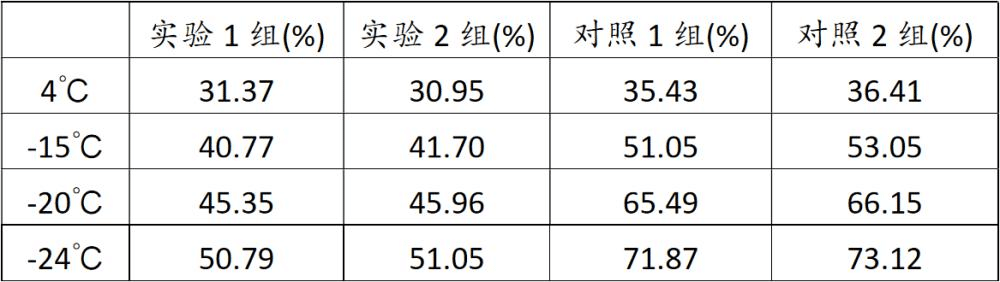
Figure SMS_2 
Figure SMS_3
Abstract
Description
Technical Field
[0001] This invention relates to the field of rootstock breeding technology, and in particular to a method for breeding highly cold-resistant grape rootstocks. Background Technology
[0002] Grapes are one of the main fruit tree species cultivated in my country, but their growth and development are easily constrained by climatic conditions. Low-temperature stress is a key limiting factor affecting the northward expansion of the grape industry and its cultivation in high-altitude areas. In winter, low temperatures and early spring frosts can easily damage grape roots, leading to decreased water and nutrient absorption capacity and even the death of the entire vine, severely impacting grape yield and quality and causing significant economic losses to growers. The growth of grapes is also closely related to the rootstock; excellent rootstock not only enhances the grapevine's resistance to adverse conditions but also positively influences fruit quality.
[0003] Currently, most grape rootstocks used in production need to be imported, and some rootstocks lack sufficient cold resistance, making them unsuitable for the cold climates of northern my country and high-altitude mountainous regions. Therefore, cultivating grape rootstocks with high cold resistance and excellent horticultural traits is of significant practical importance and application value for promoting the sustainable development of my country's grape industry. This invention aims to provide a breeding method for highly cold-resistant grape rootstocks. Through scientific selection of parents, optimization of hybridization and breeding processes, and precise screening, new grape rootstock varieties with strong cold resistance and wide adaptability can be obtained. Summary of the Invention
[0004] The purpose of this invention is to provide a method for breeding grape rootstocks with high cold resistance. By scientifically selecting parents, optimizing the hybridization and breeding process, and conducting precise screening, new grape rootstock varieties with strong cold resistance and wide adaptability can be obtained.
[0005] To achieve the above-mentioned objectives, the present invention provides the following technical solution: This invention provides a method for breeding highly cold-resistant grape rootstocks, comprising the following steps: (1) Using Riverbank grapes as the female parent and 5BB grapes as the male parent for hybridization, and collecting seeds from the offspring fruits; (2) After pre-treating the seeds described in step (1), sow them to obtain seedlings; (3) After selecting high-quality seedlings from the seedlings in step (2), harden the seedlings and then perform low-temperature treatment to obtain the seedlings.
[0006] As a preferred option, the selection criteria for the mother plant are: plant height not less than 1.8m, trunk diameter not less than 2.5cm, high branch maturity, no disease or pest damage, and good stress resistance.
[0007] As a preferred option, the selection criteria for the male parent are: plant height not less than 1.5m, trunk diameter not less than 2.2cm, uniform internode length, and good stress resistance.
[0008] As a preferred option, cold resistance index testing is also conducted after low-temperature treatment, and high cold-resistant grape rootstocks are selected based on the test results.
[0009] Preferably, the screening criteria for the highly cold-resistant grape rootstock are: at -24℃, the proline content is higher than 60 μg / g, the soluble sugar content is higher than 9.5%, the soluble protein content is higher than 0.2 mg / g, and the electrical conductivity is lower than 60%.
[0010] Preferably, the low-temperature treatment starts at 0°C and gradually decreases the temperature by 1°C every 2 hours until it reaches -24°C, which is maintained for 4 hours; then the temperature is increased to 4°C at a rate of 2°C / h.
[0011] As a preferred method, hybridization is carried out through artificial pollination.
[0012] Preferably, the pretreatment in step (2) involves soaking the seeds in water and potassium permanganate solution in sequence.
[0013] Preferably, the solution is soaked in water for 1-2 hours and in potassium permanganate solution for 10-15 minutes; the mass concentration of potassium permanganate solution is 0.08-0.15%.
[0014] As a preferred option, the selection criteria for high-quality seedlings in step (3) are: robust growth, plant height of 15-20cm, and 5-6 true leaves.
[0015] Preferably, the temperature for hardening the seedlings in step (3) is 3-5℃, and the hardening time is 5-8 days.
[0016] By adopting the above technical solution, the present invention has the following beneficial effects: This invention selects grape parent varieties and their properties to ensure the acquisition of seeds that possess the superior characteristics of the parents. Then, using proline content, soluble sugar content, soluble protein content, and electrical conductivity as key screening indicators for cold resistance, it selects seedlings with better cold resistance to serve as rootstocks. The breeding method of this invention can effectively breed grape rootstocks with better cold resistance, better ensuring the safe overwintering of grape varieties in cold regions and providing a reliable guarantee for grape growth. Furthermore, experimental results show that, compared with the control group, the highly cold-resistant grape rootstocks cultivated by this invention exhibit significant advantages in both cold resistance and growth indicators. Detailed Implementation
[0017] This invention provides a method for breeding highly cold-resistant grape rootstocks, comprising the following steps: (1) Using Riverbank grapes as the female parent and 5BB grapes as the male parent for hybridization, and collecting seeds from the offspring fruits; (2) After pre-treating the seeds described in step (1), sow them to obtain seedlings; (3) After selecting high-quality seedlings from the seedlings in step (2), harden the seedlings and then perform low-temperature treatment to obtain the seedlings.
[0018] In this invention, plants that are 3-5 years old and have vigorous growth are selected as parent plants.
[0019] In this invention, the preferred selection criteria for the mother plant are: a plant height of not less than 1.8m, a trunk diameter of not less than 2.5cm, high branch maturity, no disease or pest damage, and good stress resistance. The standard for good stress resistance in this invention is: after experiencing low winter temperatures in the past two growth cycles, there are no symptoms of frost damage, including branch dieback, bud necrosis, and root rot.
[0020] In this invention, the selection criteria for the male parent plant are: plant height not less than 1.5m, trunk diameter not less than 2.2cm, uniform internode length, and good stress resistance. The standard for good stress resistance in this invention is: after experiencing low winter temperatures in the past two growth cycles, there are no symptoms of frost damage, including branch dieback, bud necrosis, and root rot.
[0021] In this invention, hybridization is carried out by artificial pollination. Preferably, the inflorescences of the female parent are emasculated 1-2 days before the peak flowering period. After 24-48 hours of emasculation, the pollen collected from the peak flowering inflorescences of the male parent is collected using a sterile brush for pollination.
[0022] In this invention, fully mature offspring fruits are harvested, and the seeds are collected. Preferably, the seeds are first soaked in clean water to remove residual pulp and peel; then, the seeds are soaked in a potassium permanganate solution for disinfection. The soaking time in clean water is preferably 1-2 hours, more preferably 1.2-1.8 hours, and even more preferably 1.5 hours; the soaking time in the potassium permanganate solution is preferably 10-15 minutes, more preferably 11-14 minutes, and even more preferably 12 minutes; the mass concentration of the potassium permanganate solution is preferably 0.08-0.15%, more preferably 0.1-0.13%, and even more preferably 0.12%.
[0023] In this invention, after soaking in potassium permanganate solution, it is preferable to rinse with sterile water to ensure that no potassium permanganate solution residue remains.
[0024] In this invention, pretreated seeds are sown and managed in a conventional field to cultivate seedlings. High-quality seedlings are selected from the obtained seedlings, and the selection criteria for high-quality seedlings are: robust growth, plant height of 15-20cm, and 5-6 true leaves.
[0025] In this invention, high-quality seedlings are hardened off. Preferably, the high-quality seedlings are moved from the greenhouse and placed in a cool, shady outdoor area to harden off, allowing the seedlings to gradually adapt to the external environment and reducing stress during the selection process. The hardening time is preferably 5-8 days, more preferably 7 days; the hardening temperature is preferably 3-5℃, more preferably 3.5-4.5℃, and even more preferably 4℃.
[0026] In this invention, the low-temperature treatment is preferably performed starting at 0°C, gradually decreasing the temperature by 1°C every 2 hours until it reaches -24°C, which is maintained for 4 hours; then the temperature is increased to 4°C at a rate of 2°C / h. Preferably, 4°C is set as the ambient temperature in this invention.
[0027] In this invention, after low-temperature treatment, cold resistance index testing is preferably performed, and high cold resistance grape rootstocks are selected based on the test results. The cold resistance indexes include proline content, soluble sugar content, soluble protein content, and electrical conductivity.
[0028] In this invention, the screening criteria for the highly cold-resistant grape rootstock are: at -24℃, the proline content is higher than 60 μg / g, the soluble sugar content is higher than 9.5%, the soluble protein content is higher than 0.2 mg / g, and the electrical conductivity is lower than 60%.
[0029] The technical solutions provided by the present invention will be described in detail below with reference to the embodiments, but they should not be construed as limiting the scope of protection of the present invention.
[0030] The grape varieties described in this invention are all sourced from the grape resource nursery of the Fruit Tree Research Institute of Shanxi Agricultural University.
[0031] Example 1
[0032] A method for breeding highly cold-resistant grape rootstocks, comprising the following steps: (1) Select riverbank grapevines with a tree age of 3 years, a tree height of 1.8-2.0m, a trunk diameter of 2.5-3.0cm, high branch maturity, no disease or pest damage, and good resistance (no frost damage symptoms after experiencing low winter temperatures in the past two growth cycles; frost damage symptoms include branch dieback, bud necrosis, root rot, etc.) as the mother plant; select 5BB grapevines with a tree age of 3 years, a tree height of 1.5-1.8m, a trunk diameter of 2.2-2.5cm, uniform branch internode length, and good resistance as the father plant; (2) Remove the male inflorescences of the female parent 1-2 days before the full bloom period. After removing the male inflorescences for 36 hours, use a sterile brush to collect the pollen from the male parent's full bloom inflorescences for artificial pollination. Then, hybridize and cultivate the offspring. Harvest the fully mature offspring fruits and collect the seeds. (3) Soak the collected seeds in clean water for 1.5 hours, then soak them in a 0.12% potassium permanganate solution for 12 minutes, and then rinse them with sterile water to ensure that there is no potassium permanganate solution residue. (4) After sowing the seeds treated above, seedlings are obtained, and high-quality seedlings are selected. The selection criteria for high-quality seedlings are: vigorous growth, plant height of 16-18cm, and 5-6 true leaves. (5) Remove the high-quality seedlings from the greenhouse and place them in a cool, shady place outdoors at 3°C for 7 days to harden them off. (6) After hardening off, the seedlings are subjected to low temperature treatment. Starting from 0℃, the temperature is gradually reduced by 1℃ every 2 hours until it reaches -24℃, and maintained for 4 hours. Then the temperature is increased to 4℃ at a rate of 2℃ / h. (7) Conduct cold resistance index testing, and screen high cold resistance grape rootstocks based on the test results. The screening criteria are: proline content higher than 60 μg / g, soluble sugar content higher than 9.5%, soluble protein content higher than 0.2 mg / g, and electrical conductivity lower than 60% at -24℃.
[0033] Example 2
[0034] A method for breeding highly cold-resistant grape rootstocks, comprising the following steps: (1) Select riverbank grapevines with a tree age of 5 years, a tree height of 1.9-2.1m, a trunk diameter of 2.8-3.2cm, high branch maturity, no disease or pest damage, and good resistance (no frost damage symptoms after experiencing low winter temperatures in the past two growth cycles; frost damage symptoms include branch dieback, bud necrosis, root rot, etc.) as the mother plant; select 5BB grapevines with a tree age of 5 years, a tree height of 1.8-2.0m, a trunk diameter of 2.3-2.5cm, uniform branch internode length, and good resistance as the father plant; (2) Remove the male inflorescences of the female parent 1-2 days before the full bloom period. After removing the male inflorescences for 24 hours, use a sterile brush to collect the pollen from the male parent's full bloom inflorescences for artificial pollination. Then, hybridize and cultivate the offspring fruits and collect the seeds. (3) Soak the collected seeds in clean water for 1 hour, then soak them in a 0.08% potassium permanganate solution for 15 minutes, and then rinse them with sterile water to ensure that there is no potassium permanganate solution residue. (4) After sowing the seeds treated above, seedlings are obtained, and high-quality seedlings are selected. The selection criteria for high-quality seedlings are: vigorous growth, plant height of 15-17cm, and 5-6 true leaves. (5) Remove the high-quality seedlings from the greenhouse and place them in a cool, shady place outdoors. Harden them off at 4℃ for 5 days. (6) After hardening off, the seedlings are subjected to low temperature treatment. Starting from 0℃, the temperature is gradually reduced by 1℃ every 2 hours until it reaches -24℃, and maintained for 4 hours. Then the temperature is increased to 4℃ at a rate of 2℃ / h. (7) Conduct cold resistance index testing, and screen high cold resistance grape rootstocks based on the test results. The screening criteria are: proline content higher than 60 μg / g, soluble sugar content higher than 9.5%, soluble protein content higher than 0.2 mg / g, and electrical conductivity lower than 60% at -24℃.
[0035] Experimental Example 1
[0036] Grape rootstock seedlings obtained through the breeding methods described in Examples 1 and 2 were randomly selected as Experimental Group 1 and Experimental Group 2, respectively. Meanwhile, Grape riparia rootstock seedlings and 5BB grape rootstock seedlings were selected as Control Group 1 and Control Group 2, respectively. The selected seedlings were from the same region and under the same growing environment to ensure comparability of the experiments.
[0037] Ten 5cm stem segments were selected from each group of seedlings, cleaned, placed in plastic bags, and placed in a low-temperature incubator. Four low-temperature treatments were set up: 4℃, -15℃, -20℃, and -24℃. Each treatment was cooled at a rate of 4℃ / h. After reaching the set temperature, it was maintained for 12 hours. Then, the temperature was increased to 4℃ at a rate of 4℃ / h and maintained for 2 hours. The seedlings were then placed in a 4℃ refrigerator for later use. (one)
[0039] Take 0.4g of each sample from the above groups under -24℃ conditions, grind them, add 4mL of PBS buffer (pH 7.4), centrifuge at 5000r / min for 20min, collect the supernatant, and determine the content of soluble protein, proline, and soluble sugar. Refer to the relevant kit instructions from Beijing Box Biotechnology Co., Ltd. for specific determination methods.
[0040] Table 1. Content of soluble protein, proline, and soluble sugar in different treatment groups.
[0041] The results showed that the contents of soluble protein, proline, and soluble sugar in experimental groups 1 and 2 met the screening criteria for highly cold-resistant grape rootstocks described in this invention. Compared with control groups 1 and 2, the contents of soluble protein, proline, and soluble sugar in the experimental groups were significantly higher.
[0042] (II) Conductivity Measurement
[0043] Weigh 1.0g of the branch segments after the above low-temperature treatment and place them in a test tube containing 25mL of deionized water. Shake and extract the segments. Measure the initial conductivity C1 using a conductivity meter (Thermo Scientific Orion, USA). Then, boil the segments in a water bath for 20min. After cooling, measure the final conductivity C2 and calculate the conductivity.
[0044] Electrical conductivity = C1 / C2 × 100%.
[0045] Table 2. Conductivity of different treatment groups under different temperature conditions.
[0046] As shown in Table 2, the electrical conductivity of the branches in each treatment group gradually increased as the temperature decreased. The electrical conductivity of Experiment 1 and Experiment 2 was significantly lower than that of Control 1 and Control 2.
[0047] (iii) Germination rate
[0048] One hundred branches from each of the four low-temperature treatments (4℃, -15℃, -20℃, and -24℃) were randomly selected and placed in glass bottles filled with clean water for germination testing. The bottles were placed in an artificial climate chamber with a light duration of 16 hours / day and an illuminance of 2000 lx. The water was changed daily, and the branches were sprayed with water every morning and evening. The germination rate was measured after 10 days.
[0049] Sprouting rate = (Number of sprouting branches / Total number of branches) × 100%
[0050] Table 3 Germination rates of different treatment groups under different low-temperature conditions
[0051] As can be seen from Table 3, the budding rate of branches decreases as the temperature decreases. Among them, the budding rates of experimental groups 1 and 2 obtained by the breeding method of this invention are higher than those of the control group under different low temperature conditions.
[0052] In summary, this invention uses proline content, soluble sugar content, soluble protein content, and electrical conductivity as key screening indicators for cold resistance to select seedlings with better cold resistance for use as rootstocks. Grape rootstocks bred using this method exhibit significant advantages in both cold resistance and growth indicators, better ensuring the safe overwintering of grape varieties in cold regions and providing a reliable guarantee for grape growth.
[0053] The above description is only a preferred embodiment of the present invention. It should be noted that for those skilled in the art, several improvements and modifications can be made without departing from the principle of the present invention, and these improvements and modifications should also be considered within the scope of protection of the present invention.
Claims
1. A method for breeding highly cold-resistant grape rootstocks, characterized in that, Includes the following steps: (1) Using Riverbank grapes as the female parent and 5BB grapes as the male parent for hybridization, and collecting seeds from the offspring fruits; (2) After pre-treating the seeds described in step (1), sow them to obtain seedlings; (3) After selecting high-quality seedlings from the seedlings in step (2), harden the seedlings and then perform low-temperature treatment to obtain the seedlings. The selection criteria for the mother plant are: plant height not less than 1.8m, main trunk diameter not less than 2.5cm, high branch maturity, no disease or pest damage, and good stress resistance; The selection criteria for the male parent are: plant height not less than 1.5m, trunk diameter not less than 2.2cm, uniform internode length, and good stress resistance.
2. The breeding method according to claim 1, characterized in that, This also includes testing cold resistance indicators after low-temperature treatment, and screening for highly cold-resistant grape rootstocks based on the test results; The selection criteria for highly cold-resistant grape rootstocks are as follows: at -24℃, the proline content is higher than 60 μg / g, the soluble sugar content is higher than 9.5%, the soluble protein content is higher than 0.2 mg / g, and the electrical conductivity is lower than 60%.
3. The breeding method according to claim 1, characterized in that, The low-temperature treatment starts at 0°C and gradually decreases the temperature by 1°C every 2 hours until it reaches -24°C, which is maintained for 4 hours; then the temperature is increased to 4°C at a rate of 2°C / h.
4. The breeding method according to claim 1, characterized in that, Hybridization is achieved through artificial pollination.
5. The breeding method according to claim 1, characterized in that, The pretreatment in step (2) involves soaking the seeds in water and potassium permanganate solution in sequence.
6. The breeding method according to claim 4, characterized in that, Soak in the water for 1-2 hours, and soak in the potassium permanganate solution for 10-15 minutes; The mass concentration of the potassium permanganate solution is 0.08-0.15%.
7. The breeding method according to claim 1, characterized in that, The selection criteria for high-quality seedlings in step (3) are: robust growth, plant height of 15-20cm, and 5-6 true leaves.
8. The breeding method according to claim 1, characterized in that, The temperature for hardening the seedlings in step (3) is 3-5℃, and the hardening time is 5-8 days.