
Use of proxy servers and pseudonymous transactions to maintain individual's privacy in the competitive business of maintaining personal history databases
a technology of personal history and pseudonymous transactions, applied in the field of use of proxy servers and pseudonymous transactions to maintain individual's privacy in the competitive business of maintaining personal history databases, can solve the problems of personal data privacy rules and regulations that present significant challenges to all business and government operations
Patent Information
- Authority / Receiving Office
- US · United States
- Current Assignee / Owner
- Publication Date
- 2006-02-09
- Estimated Expiration
- Not applicable · inactive patent
Smart Images
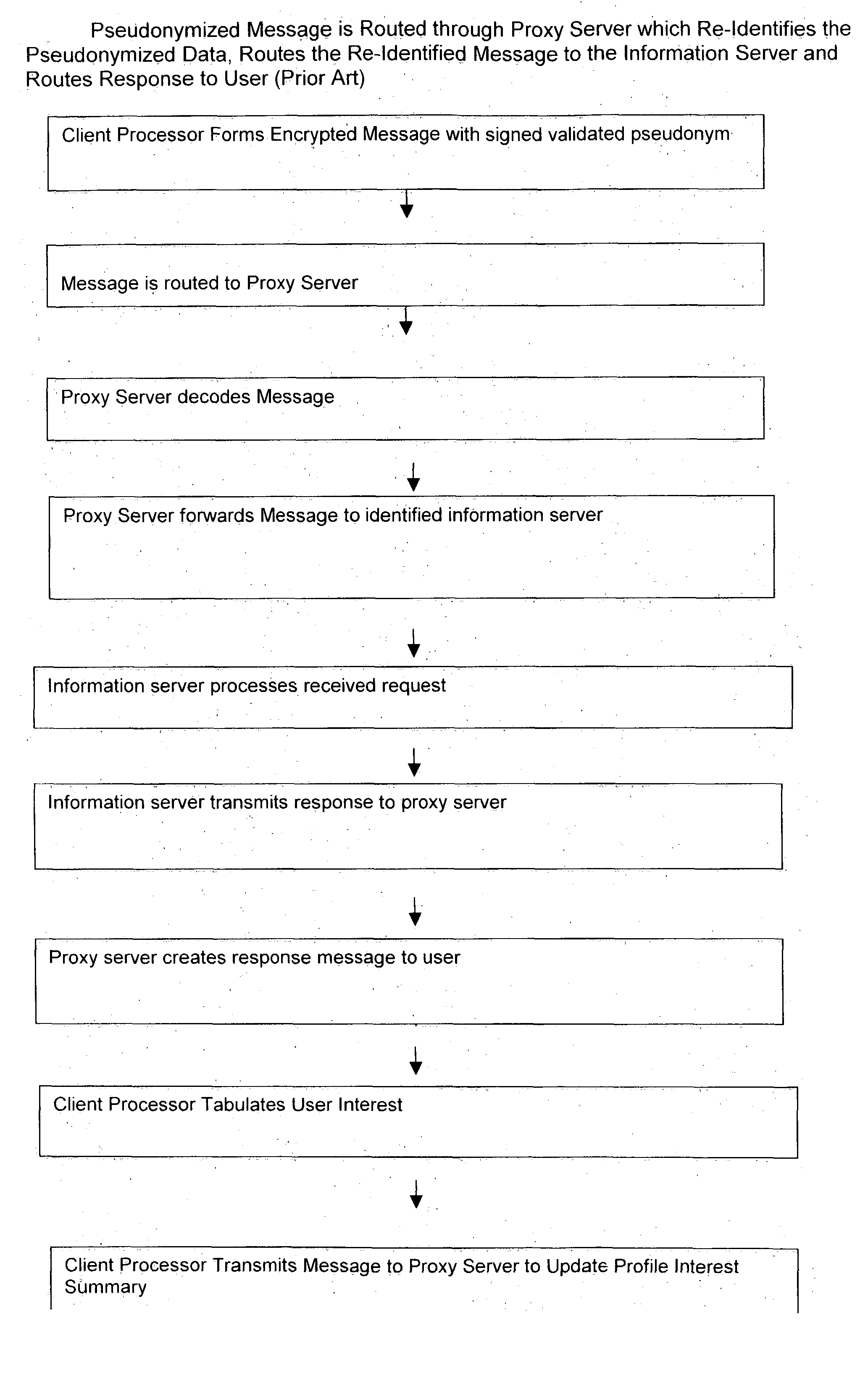
Figure 1 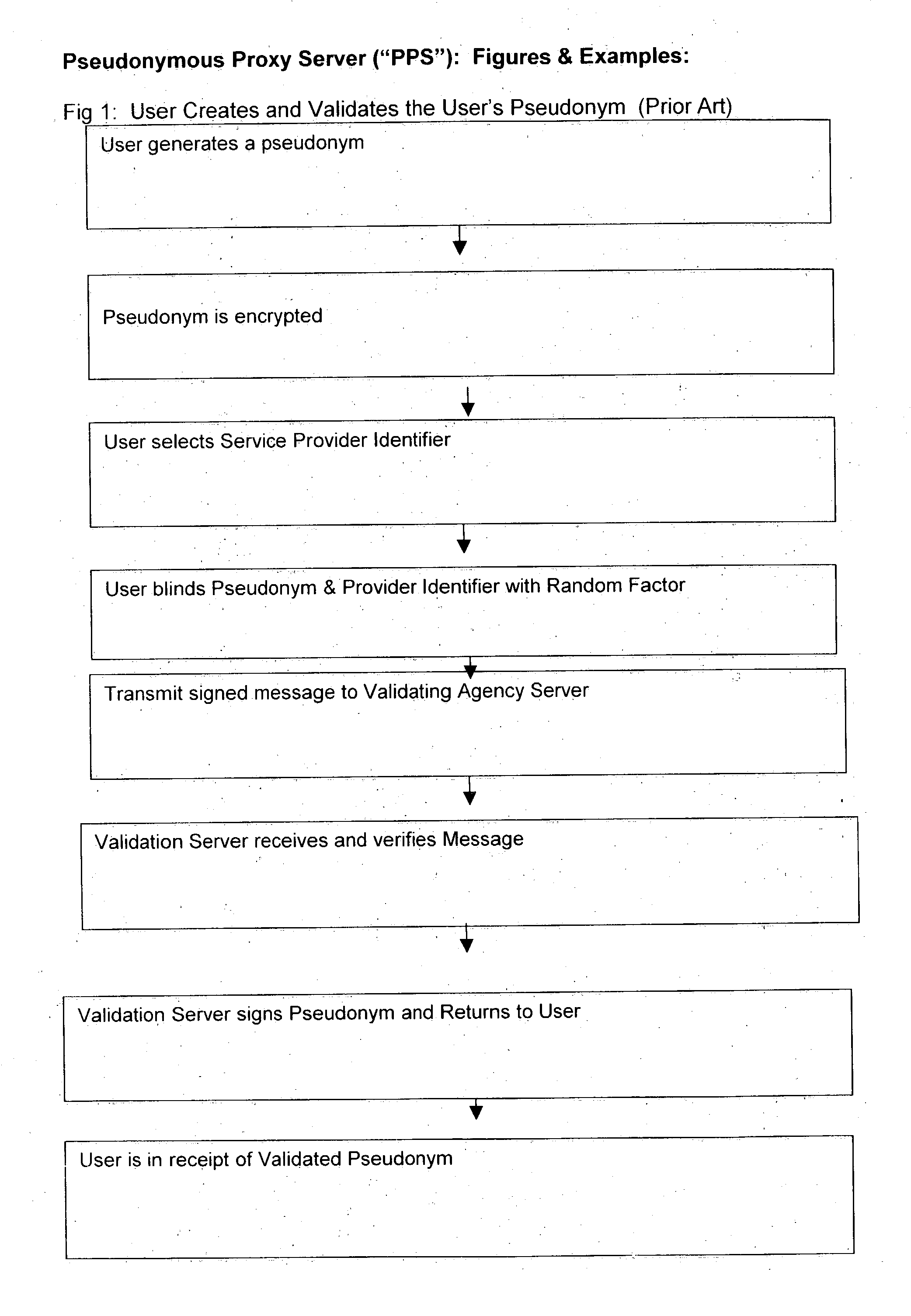
Figure 2 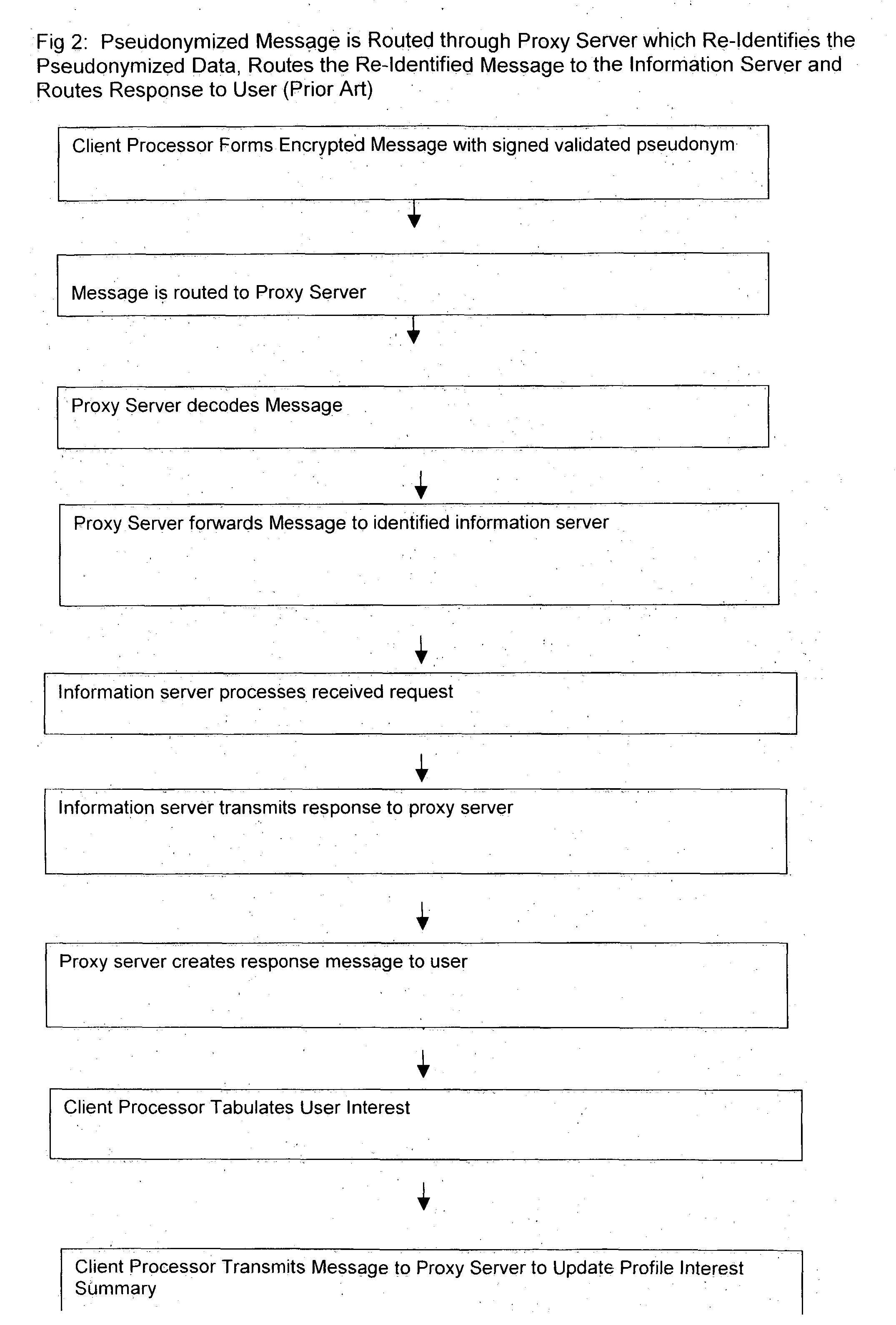
Figure 3
Abstract
Description
CROSS REFERENCE TO RELATED APPLICATIONS
[0001] Issued U.S. Pat. No. No. 5,754,938: Pseudonymous Server for System for Customized Electronic Identification of Desirable Objects—Herz, et al.
[0002] Conversion of Provisional Application No. 60 / 396,560—Proxy Servers and Pseudonymous Transactions to Maintain Individual's Privacy in the Competitive Business of Maintaining Personal History Databases—Hers / Radin / Madan Pending Provisional Applications:
[0003] 1. Provisional Application: No. 60 / 406,124 (filed: Aug. 26, 2002)—Use of Proxy Servers, Database Access Controls and Pseudonymization Methods to Maintain the Individual's Privacy during the Course of Accessing Data and Synchronizing Databases Containing Personal Data of a Private, Public and Identifying Nature (De-Identifier)—Radin / Herz
[0004] 2. Provisional Application: No. 60 / 414,869 (filed: Sep. 30, 2002)—MeDeData, A Privacy Protected System for Conflict Resolution (MeDeData)—Radin / Herz
[0005] 3. Provisional Application: No. 60 / 453,2...
Examples
Embodiment Construction
A. Proxy Server Architecture—A Preferred Embodiment for the Effective Implementation of the Present Methodology
[0110] While a method of using individual personal information presents many advantages to individuals and users of such Private Data, there are important privacy issues for both users and providers that must be resolved if the system is to be used freely by users without fear of breaking laws of privacy. It is likely that individuals will desire and government mandates will require that some, if not all, of the individual-specific information in their profiles remain confidential. The confidential information is disclosed only under certain circumstances and only to a handful of parties and only the part, which is needed by each of these parties. However, a complete privacy and inaccessibility of individual information would hinder the commerce and would deprive the user of many of the advantages derived through the use of individual-specific information. In many cases, a ...