
Method of detecting or diagnosing of a neurodegenerative disease or condition
a neurodegenerative disease and diagnosis technology, applied in the field of neurodegenerative diseases or diagnosis methods, can solve the problems of difficult to know what biological factors to look for, altering the binding specificity of antibodies, and mystery of neurodegenerative diseases
Patent Information
- Authority / Receiving Office
- US · United States
- Current Assignee / Owner
- Publication Date
- 2006-06-29
- Estimated Expiration
- Not applicable · inactive patent
Smart Images
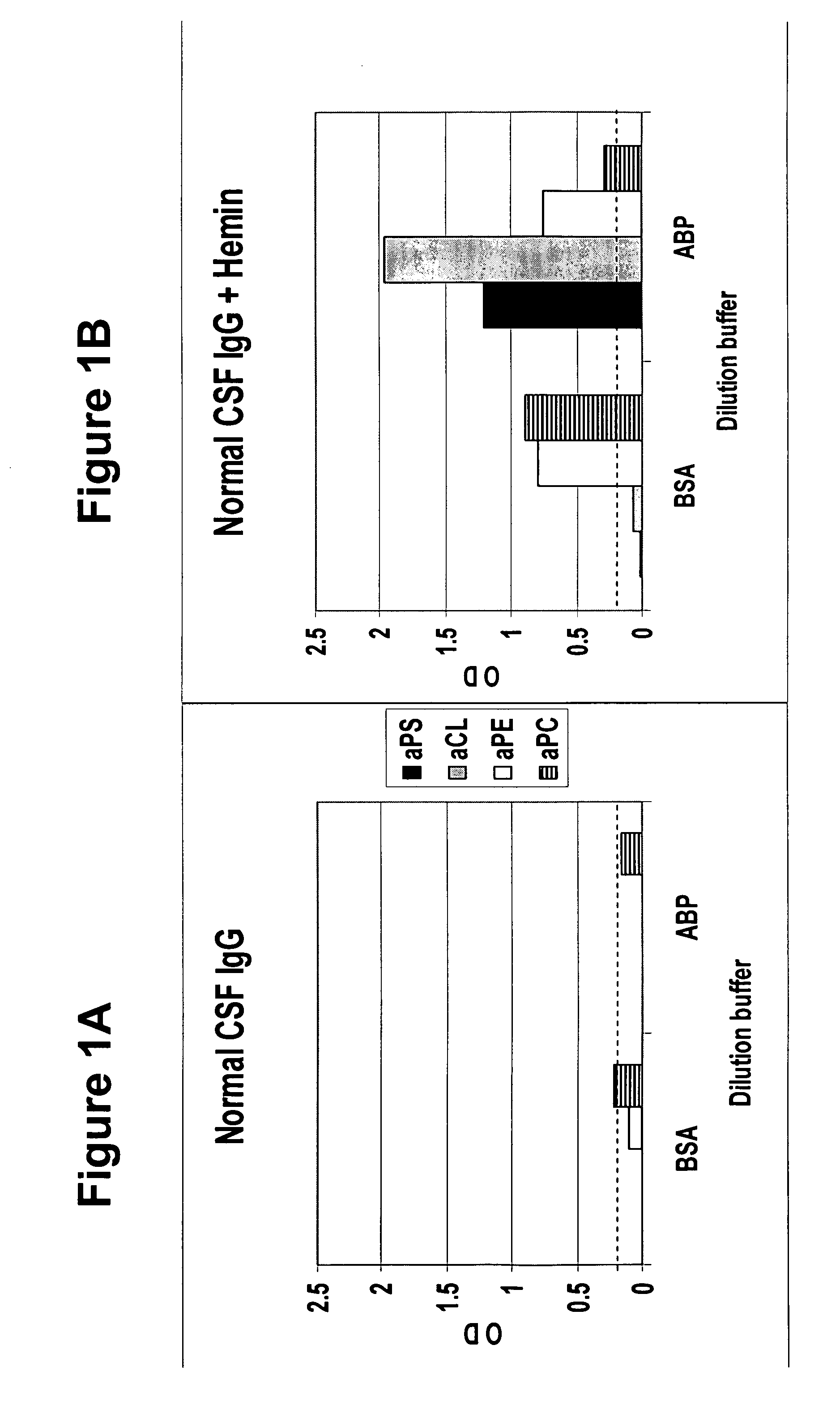
Figure 1 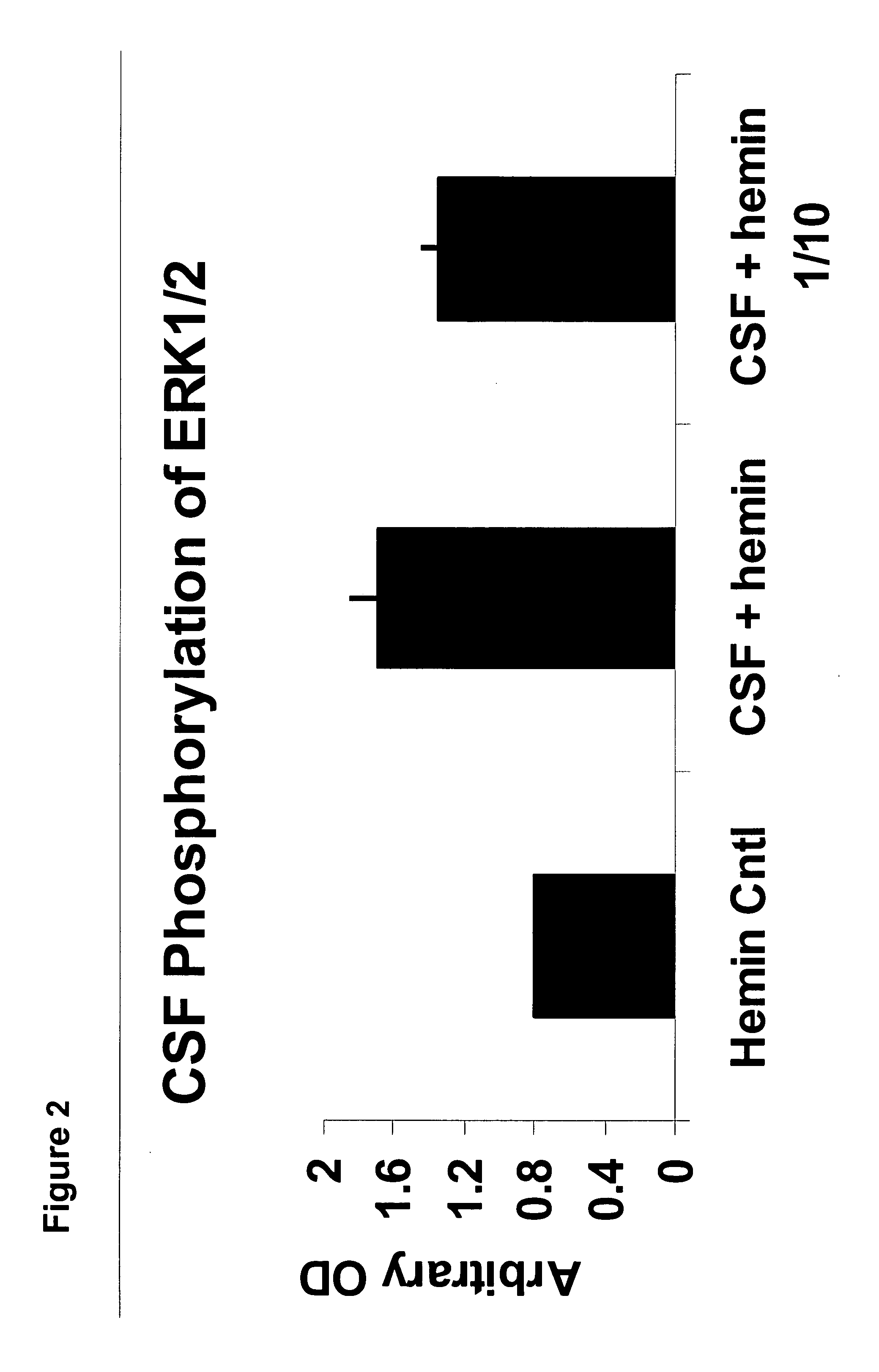
Figure 2 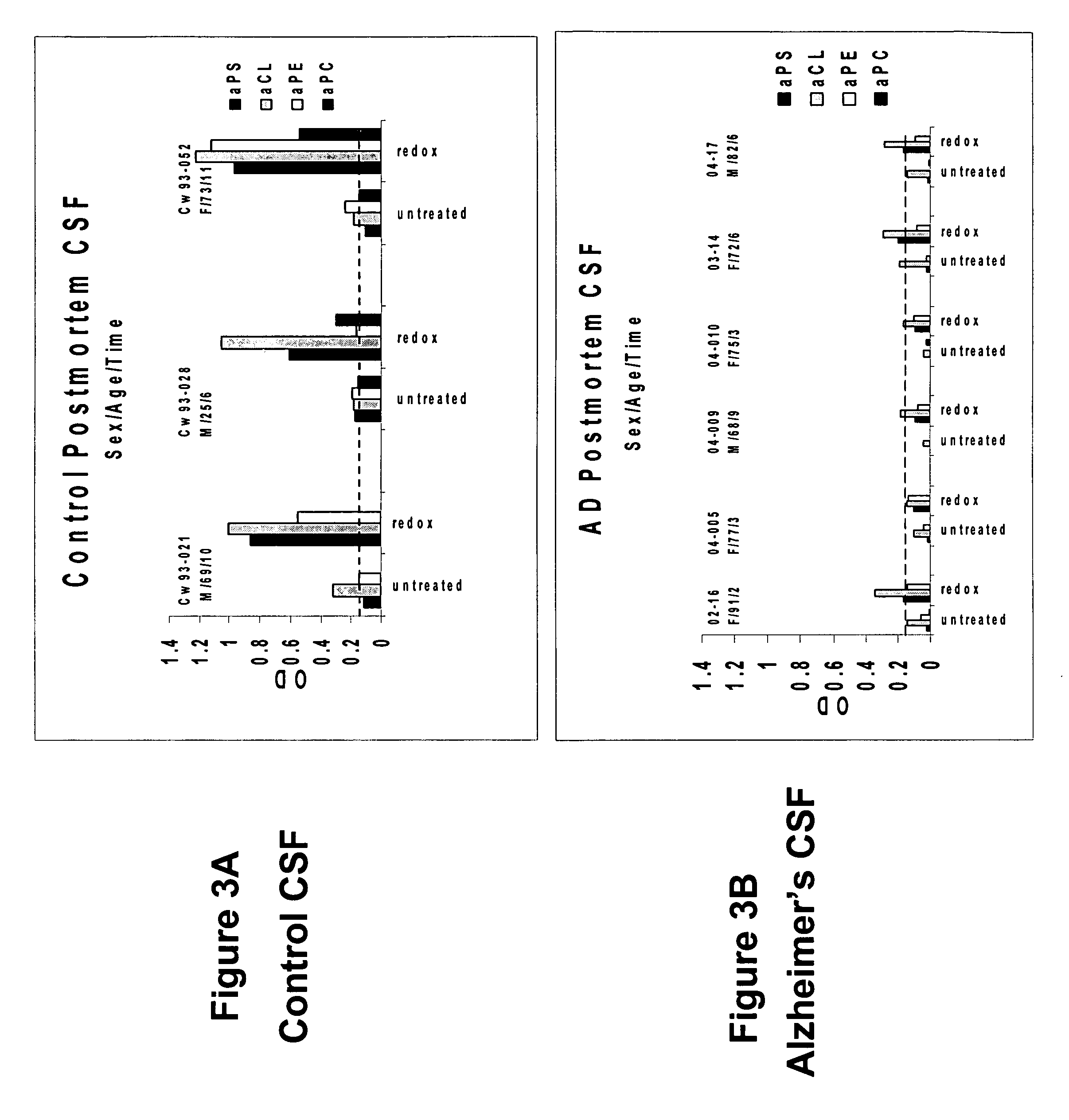
Figure 3
Abstract
Description
[0001] The present application is a continuation-in-part of U.S. patent application Ser. No. 11 / 108,826, filed on Apr. 19, 2005, which application is a continuation-in-part of Ser. No. 10 / 863,365, filed Jun. 9, 2004, which application claims the benefit of U.S. Provisional Application Ser. No. 60 / 476,607, filed Jun. 9, 2003, the entire contents of which applications are incorporated by reference herein.FIELD OF INVENTION
[0002] The present invention relates to methods of detecting or diagnosing a neurodegenerative disease or condition. In particular, the aspects of the present invention relate to methods of assaying cerebral spinal fluid of a subject to determine the presence or absence of autoantibodies. BACKGROUND OF THE INVENTION
[0003] A continuing problem in the diagnosis of neurodegenerative diseases or conditions such as Alzheimer's has been to devise a reliable biomarker that provides a definitive indication of a physical pathology. Typically, a neurodegenerative disease is ...
Examples
example 1
[0045] To determine whether human cerebral spinal fluid from a normal subject contains masked autoantibodies, spinal fluid was taken by spinal tap from a normal individual and samples in BSA and ABP dilution buffers were assayed by ELISA for aPS, aCL, aPE and aPC levels before and after oxidation treatment with hemin. As shown in FIGS. 1A and 1B, samples showed none or minimal levels of antiphospholipid antibodies before oxidation treatment (FIG. 1A), and substantial increases in the levels after oxidation treatment (FIG. 1B), with aPE and aPC showing the highest levels in a BSA buffer and aPS and aCL showing the highest levels in the ABP buffer.
example 2
[0046] The presence of autoantibodies sensitive to oxidation-reduction reactions in normal cerebral spinal fluid samples and their absence in Alzheimer's disease patients' spinal fluid is remarkable, albeit it does not imply that these autoantibodies are functional and / or pathogenic. To test for functional activity, the cerebral spinal fluid samples containing redox-reactive autoantibodies were tested in a mouse model synaptosome assay. Cerebral spinal fluid samples were incubated for 10 minutes on the synaptosomes followed by lysing of the cells and probing for phosphorylation activity by Western blots. FIG. 2 is a histogram showing redox-reactive autoantibody ERK1 / 2 phosphorylation activity of a hemin buffer control, a hemin treated cerebral spinal fluid and a 1 / 10 dilution of the same hemin-treated cerebral spinal fluid.
[0047] The redox-reactive autoantibodies significantly increased the phosphorylation of the members of the MAPK cascade of signal transduction molecules, thus gi...
example 3
[0048] To determine whether human cerebral spinal fluid from a subject having Alzheimer's disease contains an elevated level of unmasked or active phospholipid autoantibodies, spinal fluid was taken post mortem from six patients diagnosed with Alzheimer's disease based on biopsy confirmation. Samples of cerebral spinal fluid in BSA and ABP dilution buffers were assayed for aPL levels. As shown in FIGS. 3A and 3B, samples from Alzheimer's patients (FIG. 3B) showed a decreased level or absence of aPL in comparison with the post mortem controls level (FIG. 3A) subsequent to oxidation with hemin. This indicates that oxidation-related autoantibodies have been unmasked and bound to their neuronal targets, a process shown to cause modifications in the normal synaptic mechanisms brain cells that can lead to dementia.