
Multi-layer covering
a multi-layer, covering technology, applied in the direction of roof covering insulation, structural elements, building components, etc., can solve the problems of time-consuming, cracks and undulations of surfaces in buildings and structures, and exiting methods for treating buildings by rendering them or the like, etc., to achieve the effect of convenient application
Patent Information
- Authority / Receiving Office
- US · United States
- Current Assignee / Owner
- Publication Date
- 2006-08-10
- Estimated Expiration
- Not applicable · inactive patent
Smart Images
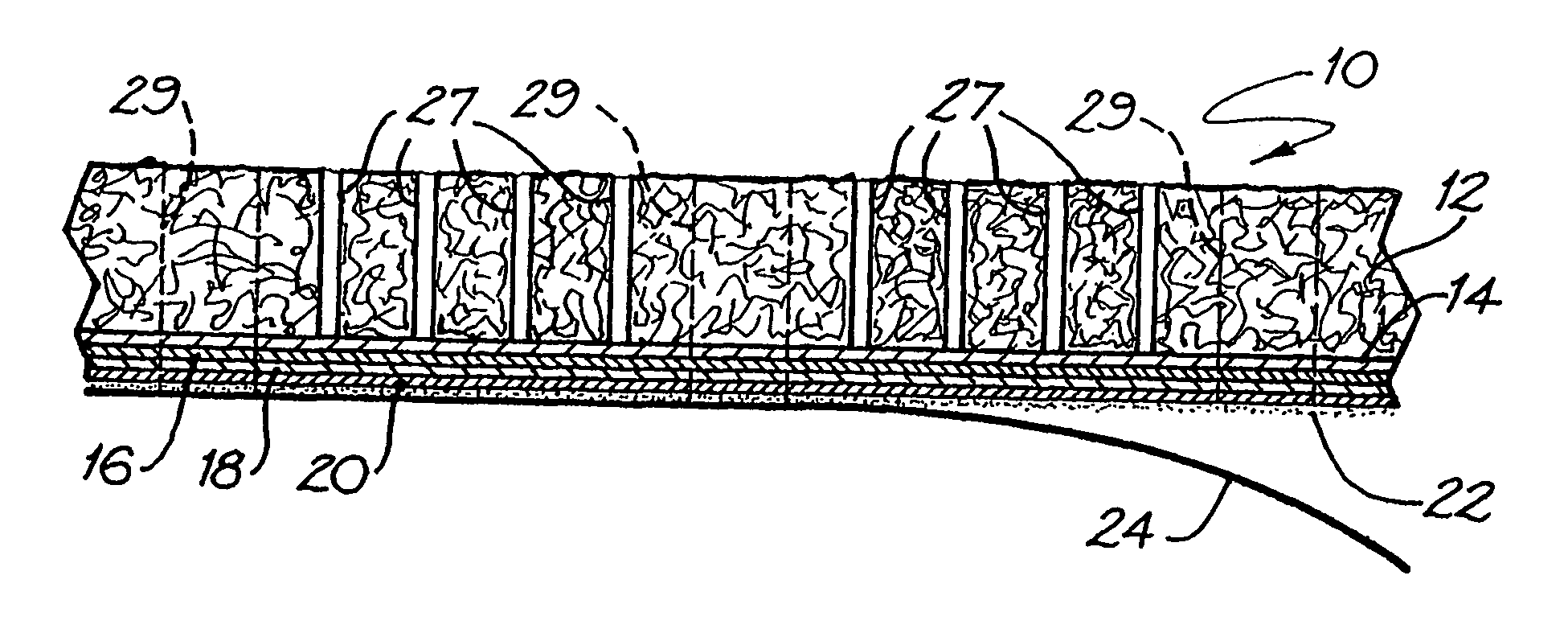
Figure 1 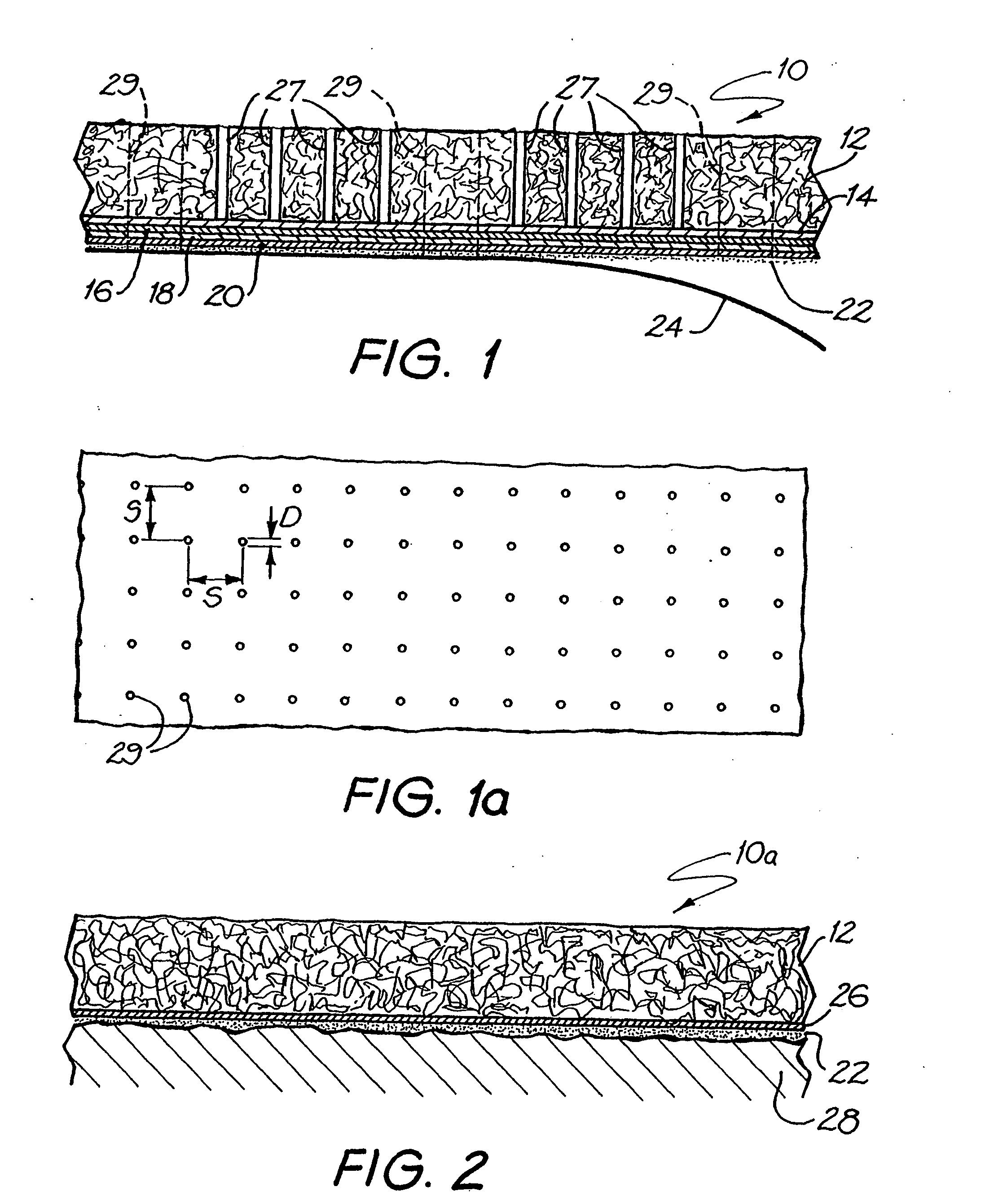
Figure 2 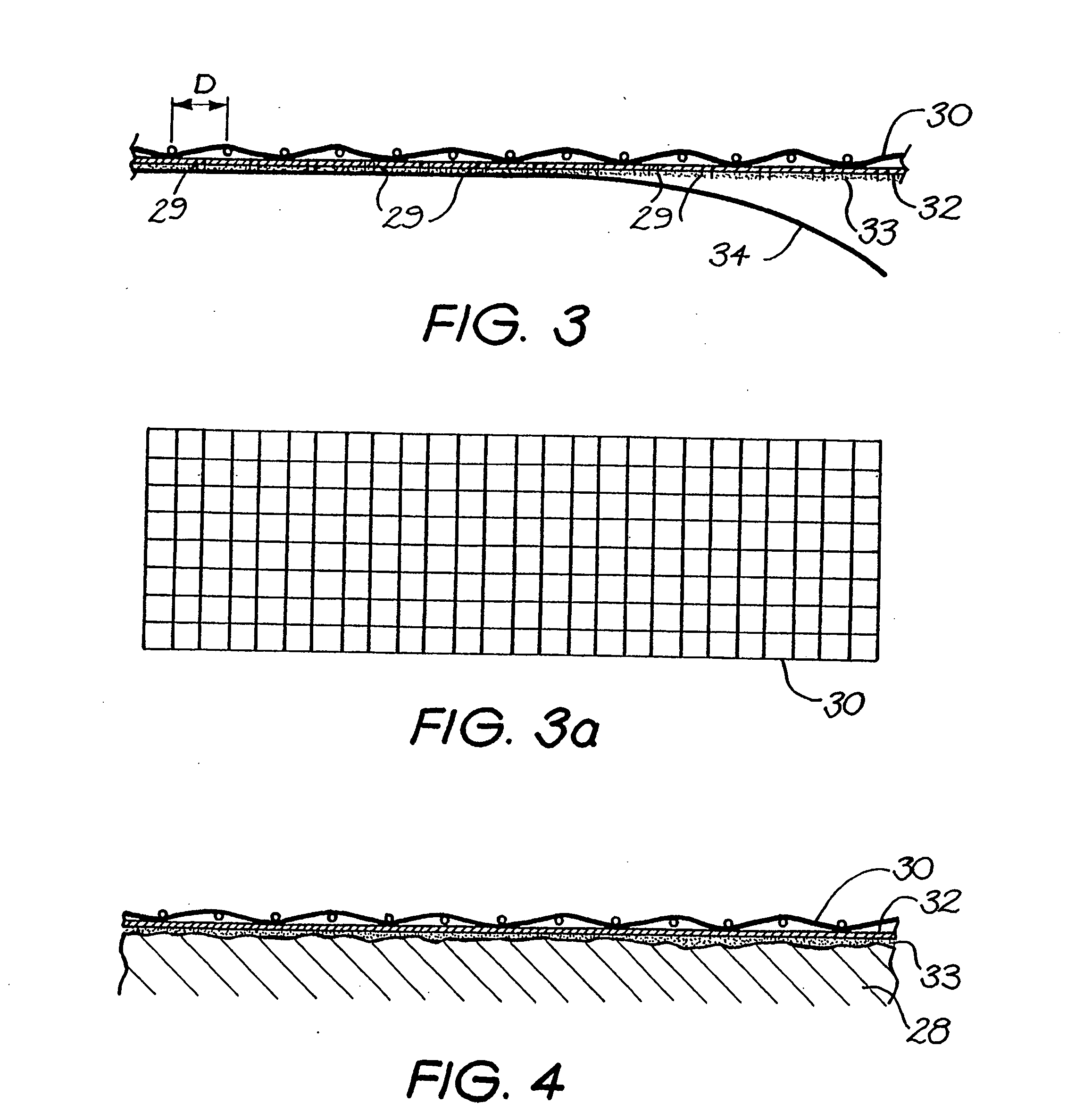
Figure 3
Abstract
Description
FIELD OF THE INVENTION
[0001] This invention relates to a multi-layer covering and in particular to a covering for a wall ceiling floor, roof or the like of a building or other structure. The invention also relates to a method for covering a wall ceiling, floor, roof or the like by applying a covering to the wall, ceiling, floor, roof or the like. BACKGROUND OF THE INVENTION
[0002] It is known to those who are familiar in the art that cracks and undulations of surfaces appear in buildings and structures at the outset of the building process due to poor workmanship, and later, once the building so to move and settle, cracks appear due to movement of base materials and framework. It is known to improve the integrity of existing buildings by filling cracks in the walls, or ceilings of the building and apply render. However, for the most part, exiting methods for treating buildings by rendering them or the like, are time consuming, require extensive preparation and are generally only su...
Examples
Embodiment Construction
[0054] Referring to the drawings FIG. 1 shows a multi-layer covering 10 comprising a first layer of a fabric which in the particular embodiment is a fluffy blanket 12 having a thickness of 2 to 4 mm, but which could, as described below, also be a mesh. The blanket is typically made of woven fibre glass but may be woven from other plastic materials, including recycled plastics such as recycled PET. The blanket may also be a batt or other unwoven matted plastic matrix, including a spun-bonded layer, or other suitable non-corrosive, non-toxic, flexible material resistant to radiation, ultra-violet, rays, most commercial solvents, (including mineral turpentine, kerosene, petrol, detergents, and paint thinners and the like).
[0055] Where a woven blanket, or non-woven blanket such as a spun bonded layer, is used the gaps between the fibres in the weave are generally between 0.3 mm to 3.0 mm and preferably between 0.6 mm and 3.0 mm. Where a batt or the like is used a matrix of closely spac...