
Technique for adaptive data rate communication over fading dispersive channels
Patent Information
- Authority / Receiving Office
- US · United States
- Current Assignee / Owner
- Publication Date
- 2007-06-28
Smart Images
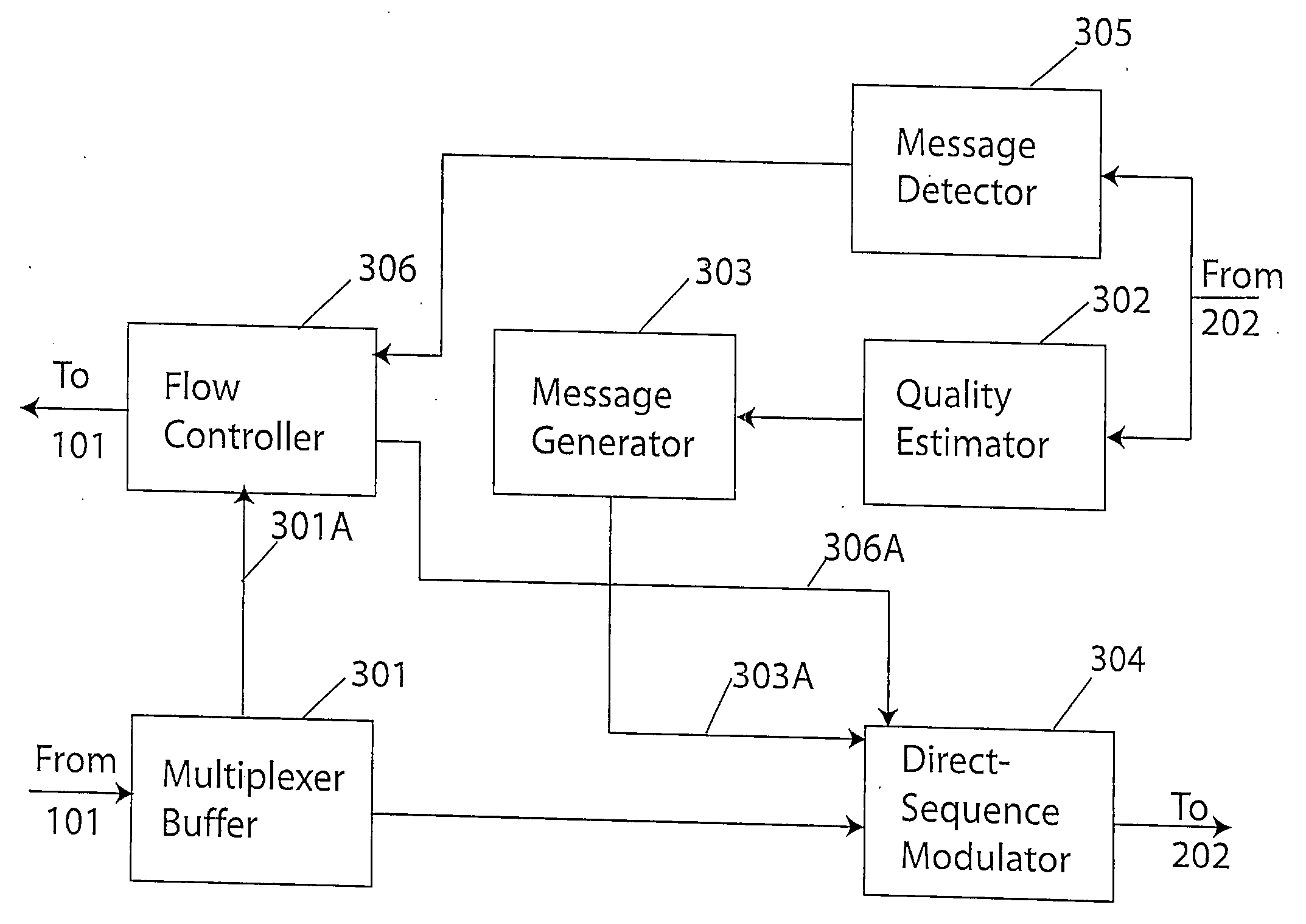
Figure 1 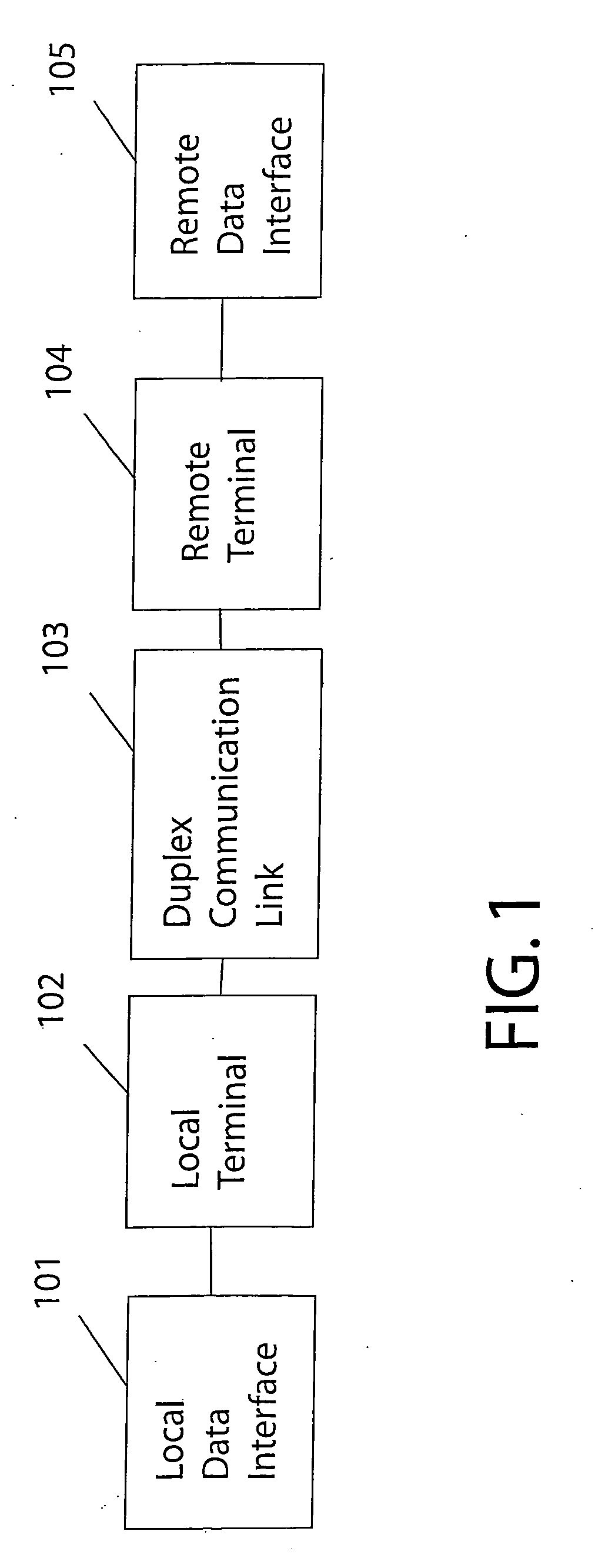
Figure 2 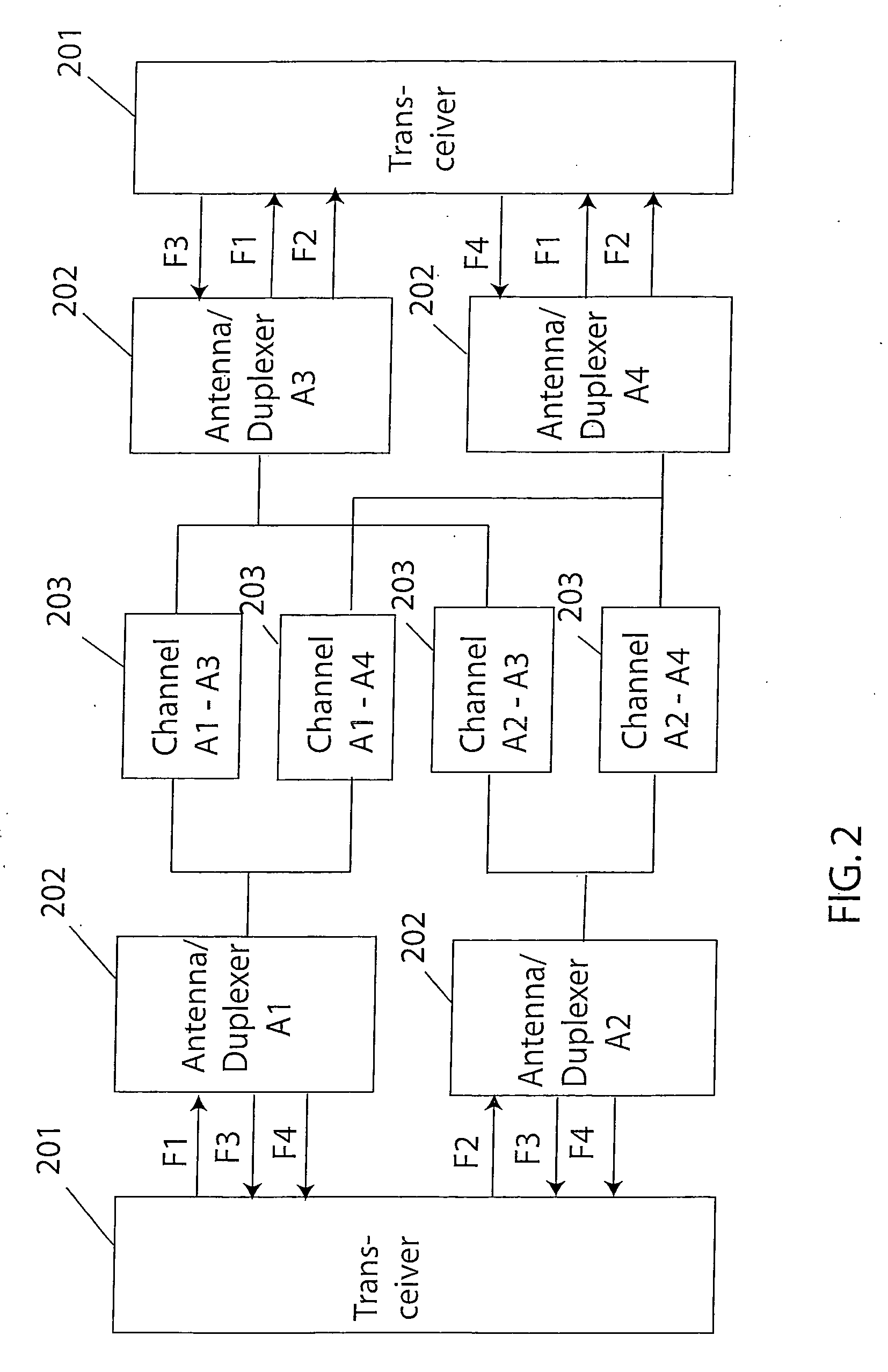
Figure 3
Abstract
Description
CROSS REFERENCE TO RELATED APPLICATION
[0001] This application claims the benefit of U.S. provisional application Ser. No. 60 / 720,180 filed Sep. 23, 2005, which is incorporated herein by reference.FIELD OF INVENTION
[0002] The present invention relates to data rate communication over duplex radio links containing fading channels that are dispersive in both time and frequency and, more particularly, to improvements in such communication in which feedback communications is used to adapt the transmitted data rate so as to maximize information throughput. BACKGROUND OF THE INVENTION
[0003] Fading channels result from time-varying multipath reflections or scattering of a transmitted signal so that multiple signal versions with different delays, amplitudes, and phases arrive simultaneously at the receiver. Multipath amplitude and phase values combine at certain frequencies resulting in signal enhancement while at other frequencies cancellation occurs. Consequently the signal response acro...
Examples
Embodiment Construction
[0035] A digital communication link that provides information transfer in both directions, i.e. duplex communication, connects two link end points each with digital data information sources and collectors. In FIG. 1 a local data interface 101 is used at the local end point as the combination source and collector of digital data information. Typically local data interface 101 contains Internet Protocol (IP) traffic in the form of packets that came from or are going to servers that provide connection to the Internet. Local terminal 102 accepts digital data information from local data interface 101 for transmission over the duplex communication link 103 to a remote terminal 104 at the remote end point of communication link 103. Remote terminal 104 recovers the transmitted digital data information from received signals that include channel distortions and noise introduced in communication link 103. The recovered digital data information is transferred to remote data interface 105 where ...