
Engine control strategy
a technology of engine control and control strategy, applied in the direction of engines, machines/engines, mechanical equipment, etc., can solve the problems of increasing the fuel consumption and emissions of unburned hydrocarbons, not successfully entering the market place, and reducing the efficiency of scavenging and volumetric efficiency, so as to minimise the short circuit of the intake charge, minimise the pumping loss, and reduce the effect of scalding and volumetric efficiency
Patent Information
- Authority / Receiving Office
- US · United States
- Patent Type
- Applications(United States)
- Current Assignee / Owner
- Publication Date
- 2009-08-13
- Estimated Expiration
- Not applicable · inactive patent
Smart Images
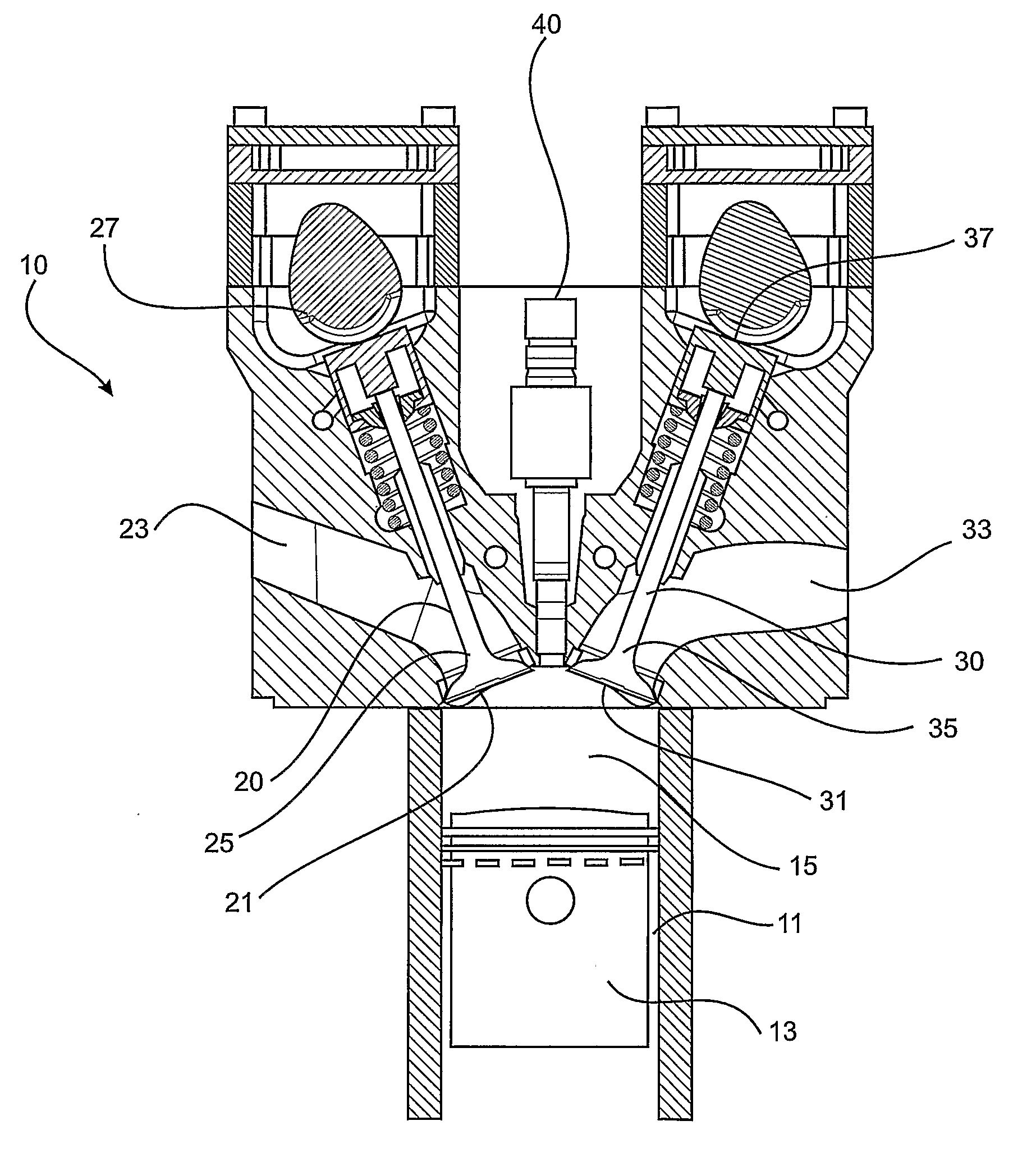
Figure 1 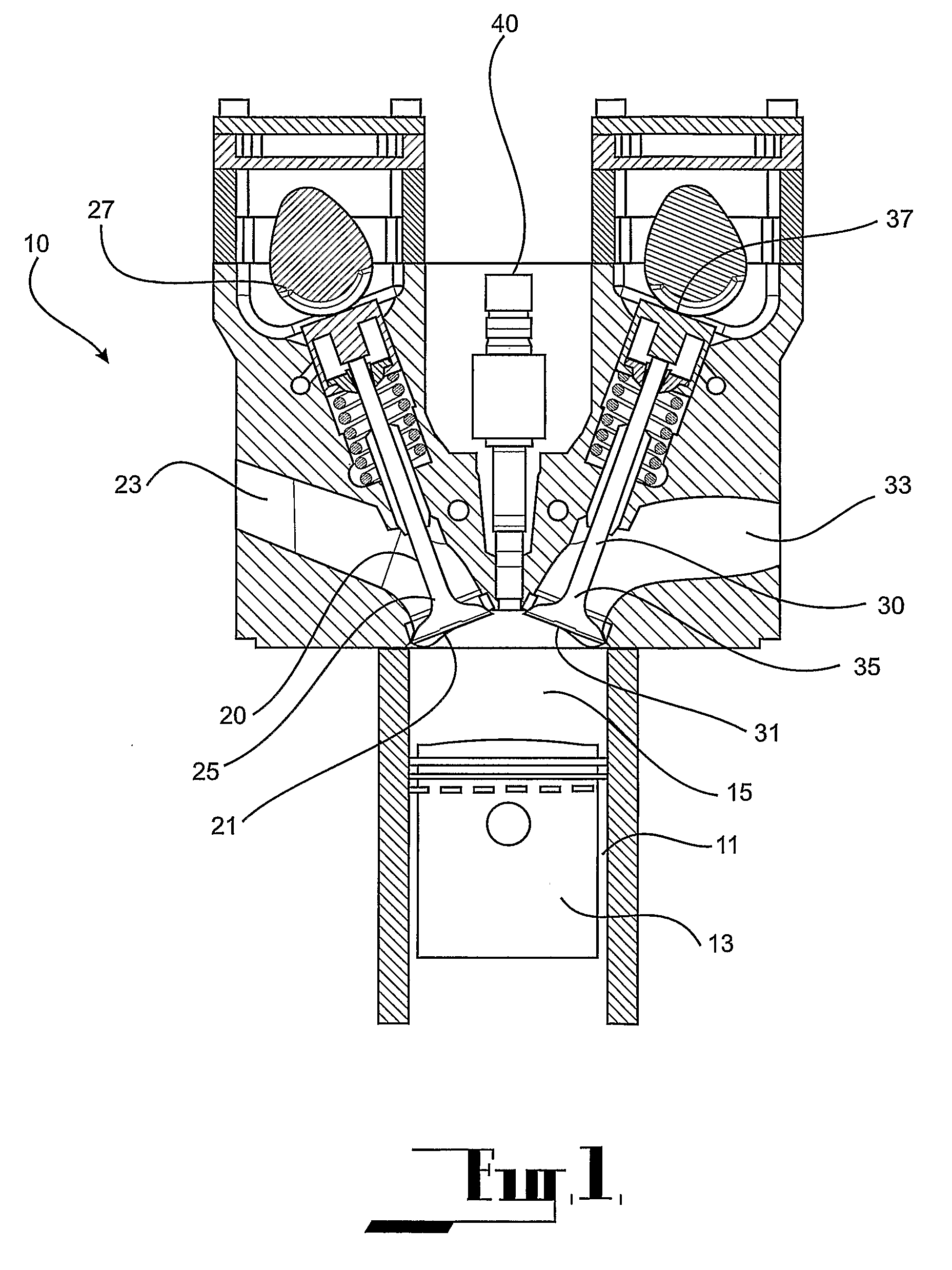
Figure 2 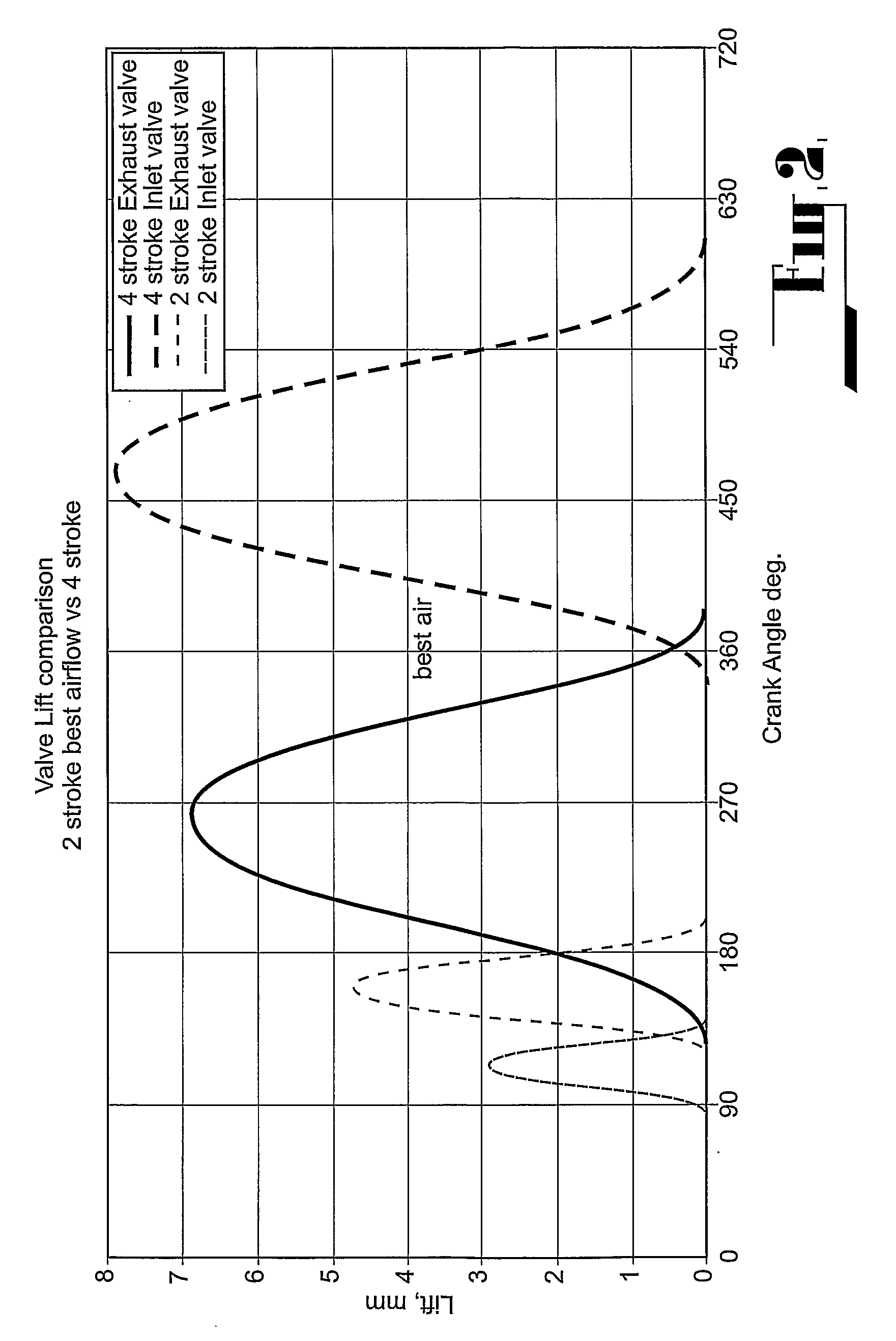
Figure 3
Abstract
Description
FIELD OF THE INVENTION
[0001] This invention relates to engine control strategies for internal combustion engines. In certain applications, the invention may be applicable to an engine system capable of operating in either two-stroke or four-stroke combustion cycles and switching between the two-stroke and four-stroke combustion cycles.BACKGROUND ART
[0002] A reciprocating internal combustion engine operating with a two-stroke combustion cycle may be piston ported or alternatively may have valves controlling the induction and exhaust processes. In the case of piston ported designs, port operation is typically symmetrical about the bottom-dead-centre (BDC) position of the piston; that is, the timing of opening of the inlet port before BDC position is approximately equal to the timing of closing of the inlet port after BDC, and the timing of opening of the exhaust port before BDC is also approximately equal to the timing of opening of the exhaust port after BDC. Typically, there is some o...
Examples
Embodiment Construction
[0050]The embodiment is directed to a reciprocating internal combustion engine 10 which is capable of operating in either two-stroke or four-stroke cycles of operation, with selective switching therebetween.
[0051]The engine 10 comprises a cylinder 11 and a piston 13 accommodated in the cylinder. The cylinder 11 and piston 13 cooperate to define a combustion chamber 15. The combustion chamber 15 undergoes volume expansion and contraction upon reciprocatory movement of the piston 13 within the cylinder 11 between top-dead-centre (TDC) and bottom-dead-centre (BDC) positions.
[0052]An inlet means 20 is provided for introducing an air charge into the combustion chamber and an outlet means 30 is provided for discharging exhaust gas fro in the combustion chamber.
[0053]The inlet means 20 comprises an inlet port 21 opening onto the combustion chamber 15 at the terminal end of a delivery duct 23, and an inlet valve 25 for opening and closing the inlet port 21. A control means 27 is provided fo...