
Modified monovision by extending depth of focus
a technology of depth of focus and monovision, which is applied in the field of presbyopia treatment, can solve the problems of reducing the visual performance of presbyopic patients, large disparity in retinal image quality between, and anisometropia greater than 2.0 d, and achieves the effect of enhancing through-focus binocular visual performance and reducing optical quality disparities
Patent Information
- Authority / Receiving Office
- US · United States
- Current Assignee / Owner
- Publication Date
- 2012-05-17
- Estimated Expiration
- Not applicable · inactive patent
Smart Images
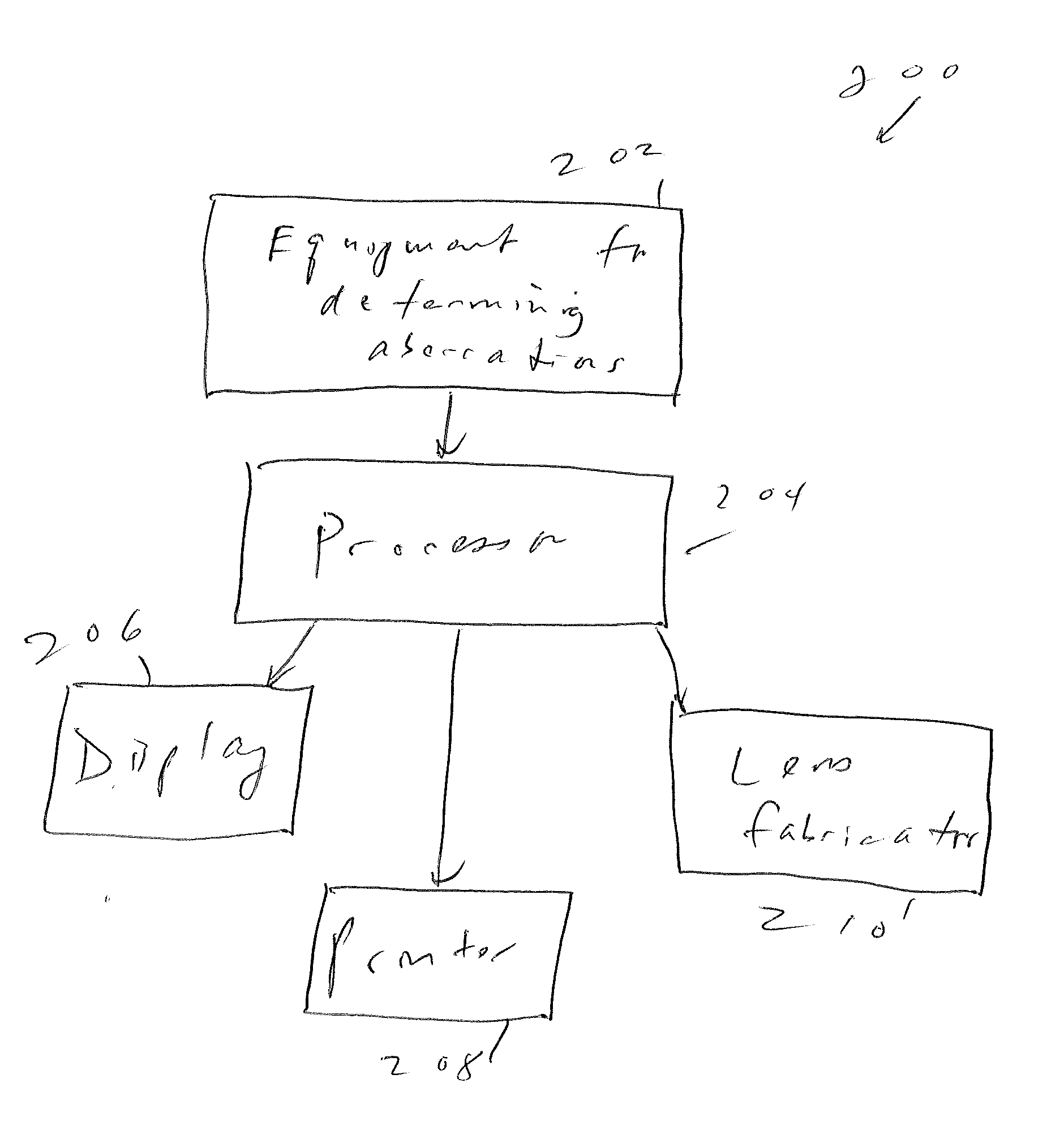
Figure 1 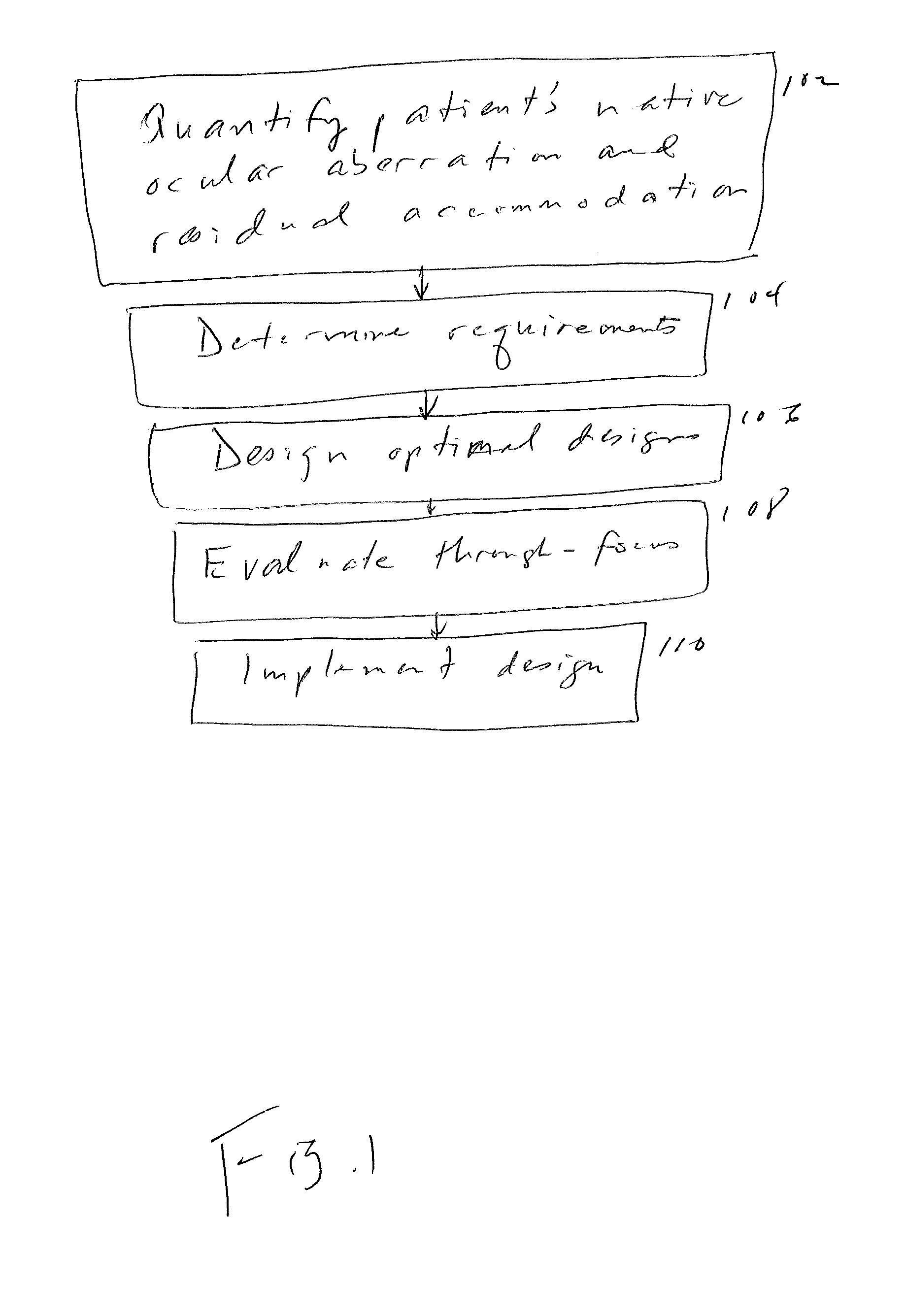
Figure 2 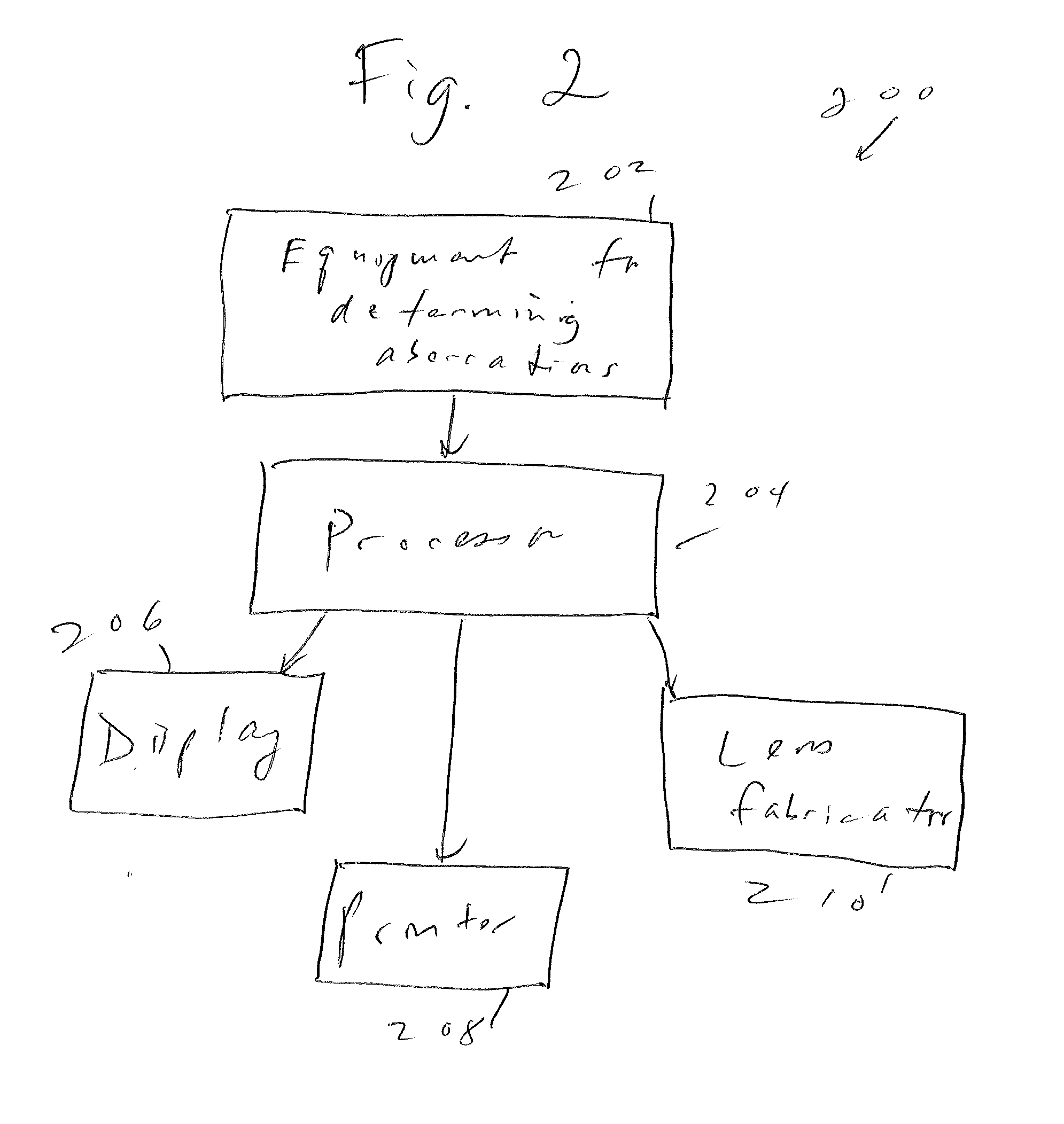
Figure 3
Abstract
Description
REFERENCE TO RELATED APPLICATION
[0001] The present application claims the benefit of U.S. Provisional Patent Application No. 61 / 412,682, filed Nov. 11, 2010, whose disclosure is hereby incorporated by reference in its entirety into the present disclosure.FIELD OF THE INVENTION
[0002] The present invention is directed to treatment of presbyopia and more particularly to treatment of presbyopia binocularly by extending the depth of focus.DESCRIPTION OF RELATED ART
[0003] Presbyopia, the age-related loss of unassisted near vision, is a visual affliction which significantly affects anyone past the age of 60 years. A clinically well established approach towards correcting presbyopia is monovision (MV). In traditional monovision (TMV), the patient's dominant eye (DE) is refracted for distant vision and the non-dominant eye (NDE) for near vision, thus inducing anisometropia, different refractive error between the two eyes. Poor intermediate image quality and monocular suppression or inhibition...
Examples
Embodiment Construction
[0054]A preferred embodiment of the invention will be set forth below with reference to the drawings.
[0055]FIG. 1 is a flow chart showing the method of carrying out the preferred embodiment.
[0056]The method involves the following steps:
[0057]Step 102: Quantifying (or evaluating) the patient's native ocular aberration and residual accommodation;
[0058]Step 104: Determining the patient's requirements, i.e., a range of depth of focus and relative importance of distance vs intermediate vs near vision, which will determine the required amount of anisometropia;
[0059]Step 106: Designing optimal designs of induced aberration for each of the two eyes that take the factors above into account;
[0060]Step 108 Evaluating through-focus visual performance using AO vision simulator; and
[0061]Step 110: Implementing the design onto actual ophthalmic devices, e.g., refractive surgery, contact lens or IOL.
[0062]The method of FIG. 1 can be implemented on the system 200 of FIG. 2. Equipment 202 for determi...