
Cooperative systems and methods for tdoa-based emitter location
a technology of electromagnetic radiation and co-operation, applied in the direction of direction finders, radio wave direction/deviation determination systems, instruments, etc., to achieve the effect of accurate resolution of signal arrival timing relationships
Patent Information
- Authority / Receiving Office
- US · United States
- Current Assignee / Owner
- Publication Date
- 2013-10-10
- Estimated Expiration
- Not applicable · inactive patent
Smart Images
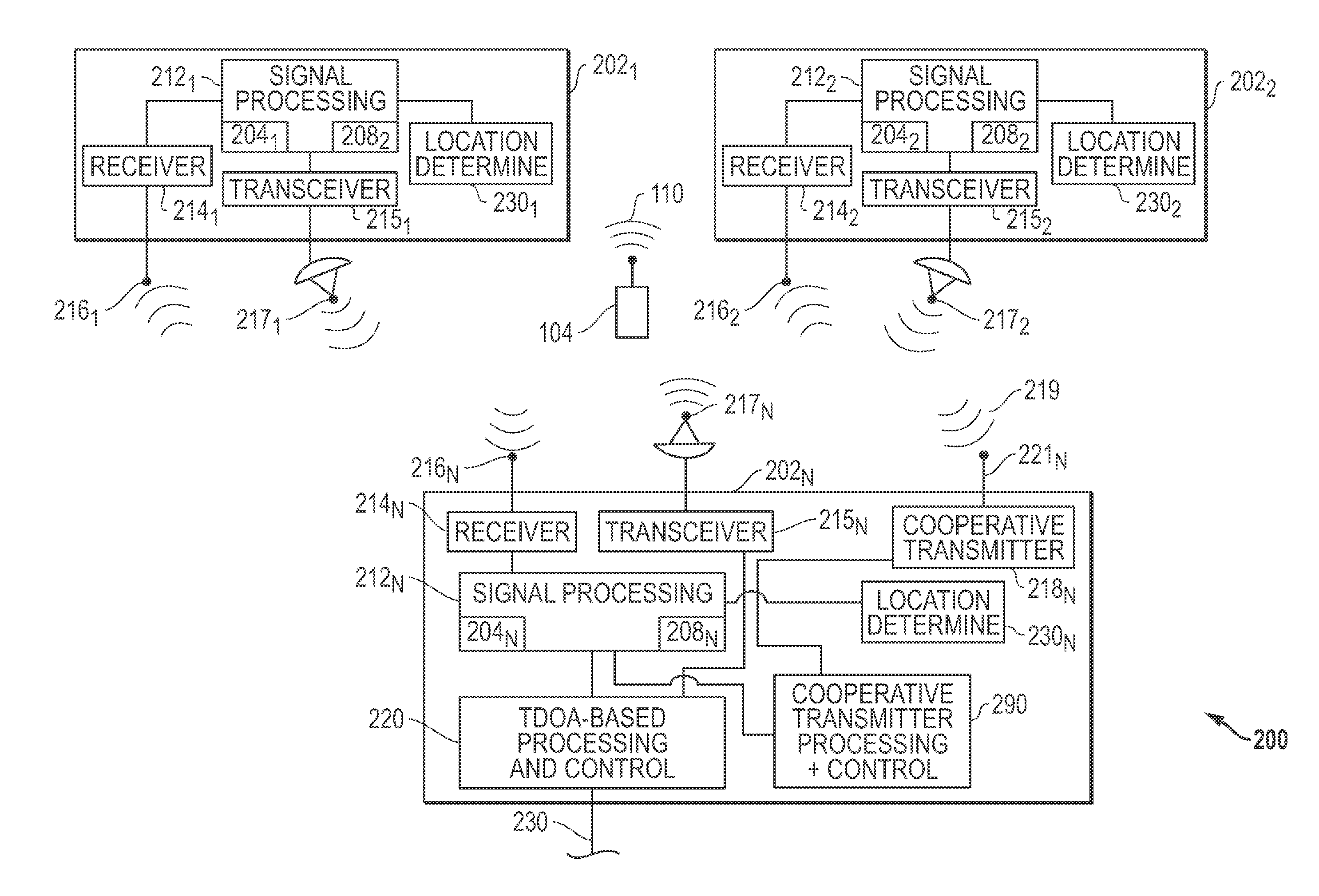
Figure 1 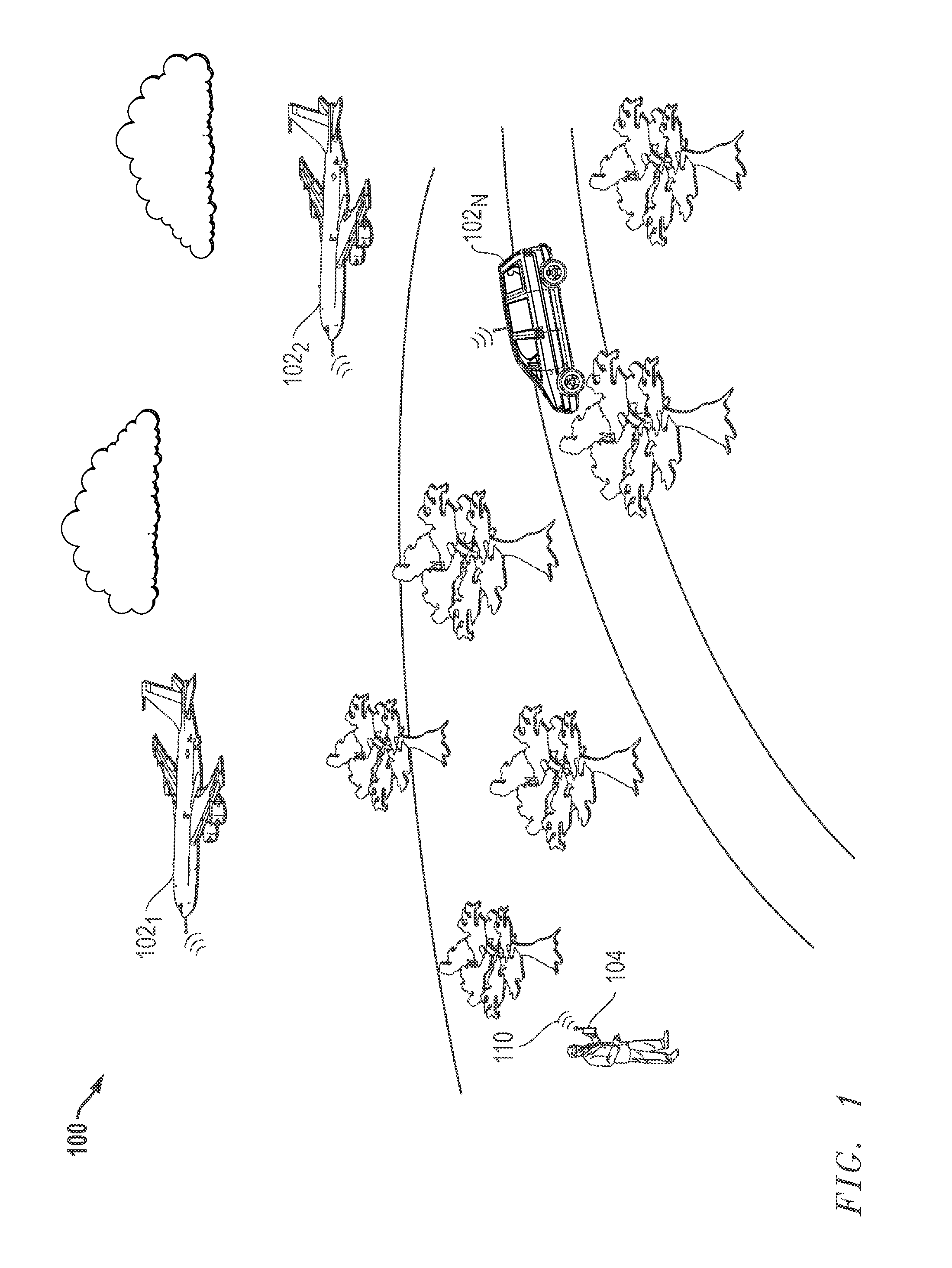
Figure 2 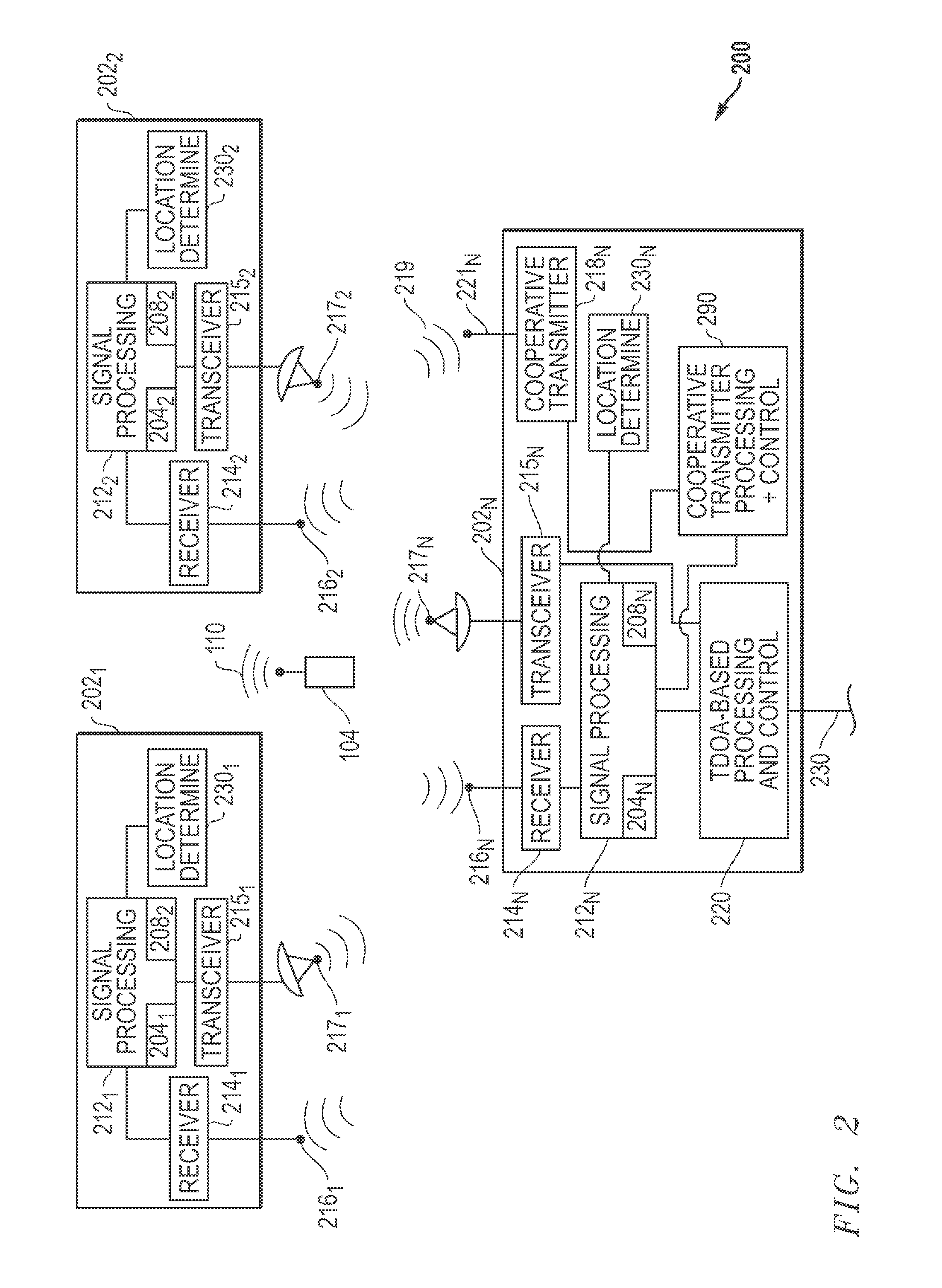
Figure 3
Abstract
Description
BACKGROUND OF THE INVENTION
[0001] 1. Field of the Invention
[0002] This invention relates generally to location of emitters of electromagnetic radiation, and in particular, to Time Difference of Arrival (“TDOA”)-based location of emitters of electromagnetic radiation.
[0003] 2. Description of the Related Art
[0004] TDOA techniques have been employed in the past to determine the location of emitters of electromagnetic radiation, such as radio frequency (“RF”) emissions. Using the TDOA technique, the time difference (TDOA) in reception of a radio signal received at multiple spaced sensing platforms may be used to define a hyperboloid upon which the RF emitter of interest is located. TDOA may be used to calculate the geolocation of the RF transmitter if three or more sensing platforms simultaneously capture the radio signal, and if the difference in the times of arrival of the captured radio signal at the different sensing platforms can be accurately determined.
[0005] Frequency difference (FDO...
Examples
Embodiment Construction
[0030]FIG. 1 illustrates one exemplary embodiment of an EM emissions environment 100 (in this case a radio communication environment) in which an emitter in the form of transmitter 104 at an unknown location is transmitting a target EM signal of interest 110 (TXunknown), e.g., in this case a radio frequency (RF) signal. In the illustrated embodiment, the illustrated emitter 104 is a ground-based mobile emitter (e.g., cell phone, push to talk radio, etc.) carried by a human being that is stationary and emitting from a fixed location. However, it will be understood that the disclosed systems and methods may be practiced in radio communication environments in which any type, number and / or combination of different types of emitters are transmitting on a one or more frequencies including, but are not limited to, base stations of a cellular telephone network, cell phone devices, weather broadcast stations, radar signal sources, microwave sources, etc. Furthermore, besides being hand carri...