
Heliostat calibration and control
a technology of heliostats and calibration methods, applied in the field of solar energy collection apparatuses, can solve the problems of inability to address the calibration of inexpensive and inaccurate heliostats, and the magnitude of misalignment is relatively large before corrective action, so as to improve the accuracy of its receipt
Patent Information
- Authority / Receiving Office
- US · United States
- Current Assignee / Owner
- Publication Date
- 2013-10-31
- Estimated Expiration
- Not applicable · inactive patent
Smart Images
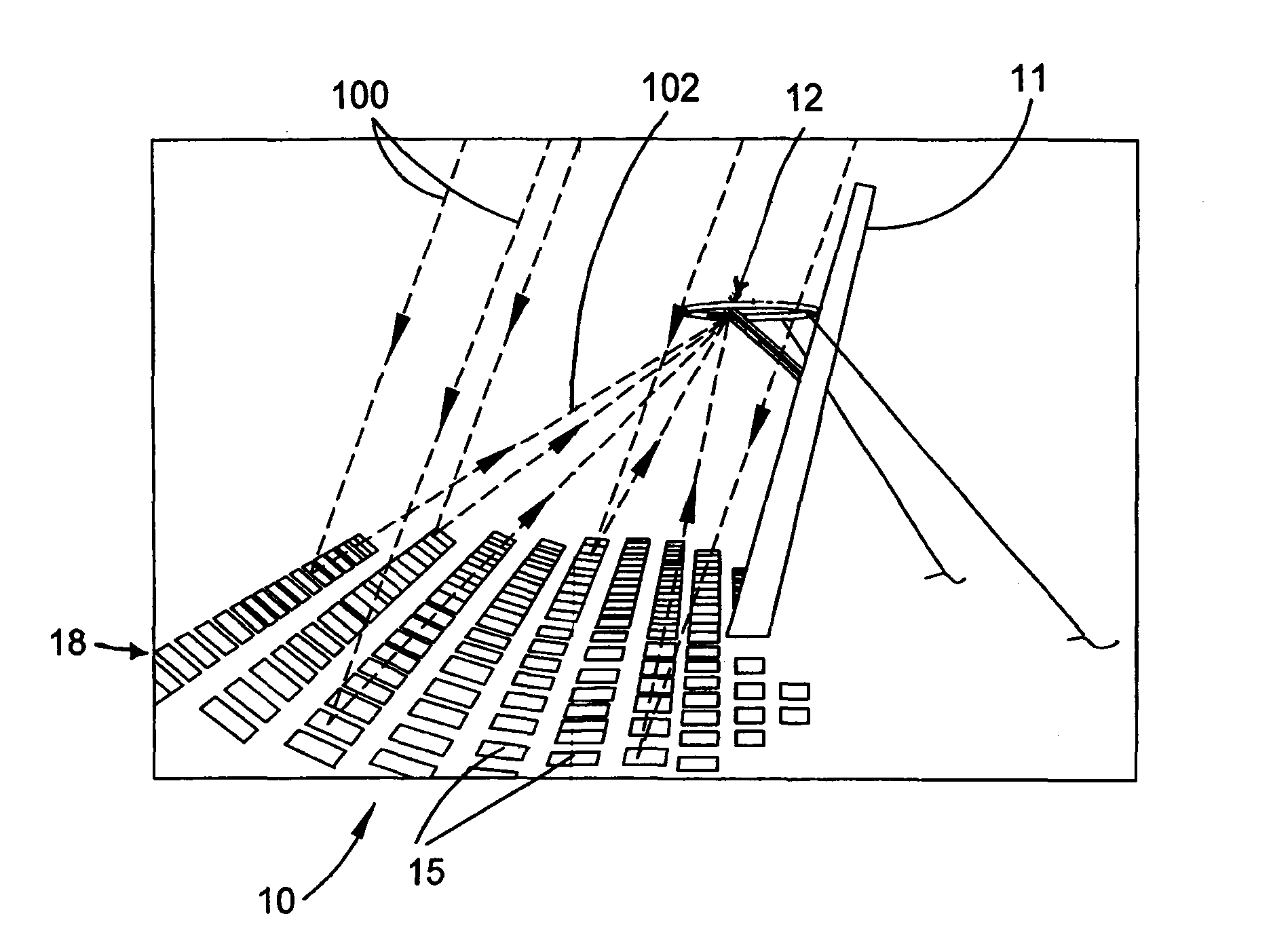
Figure 1 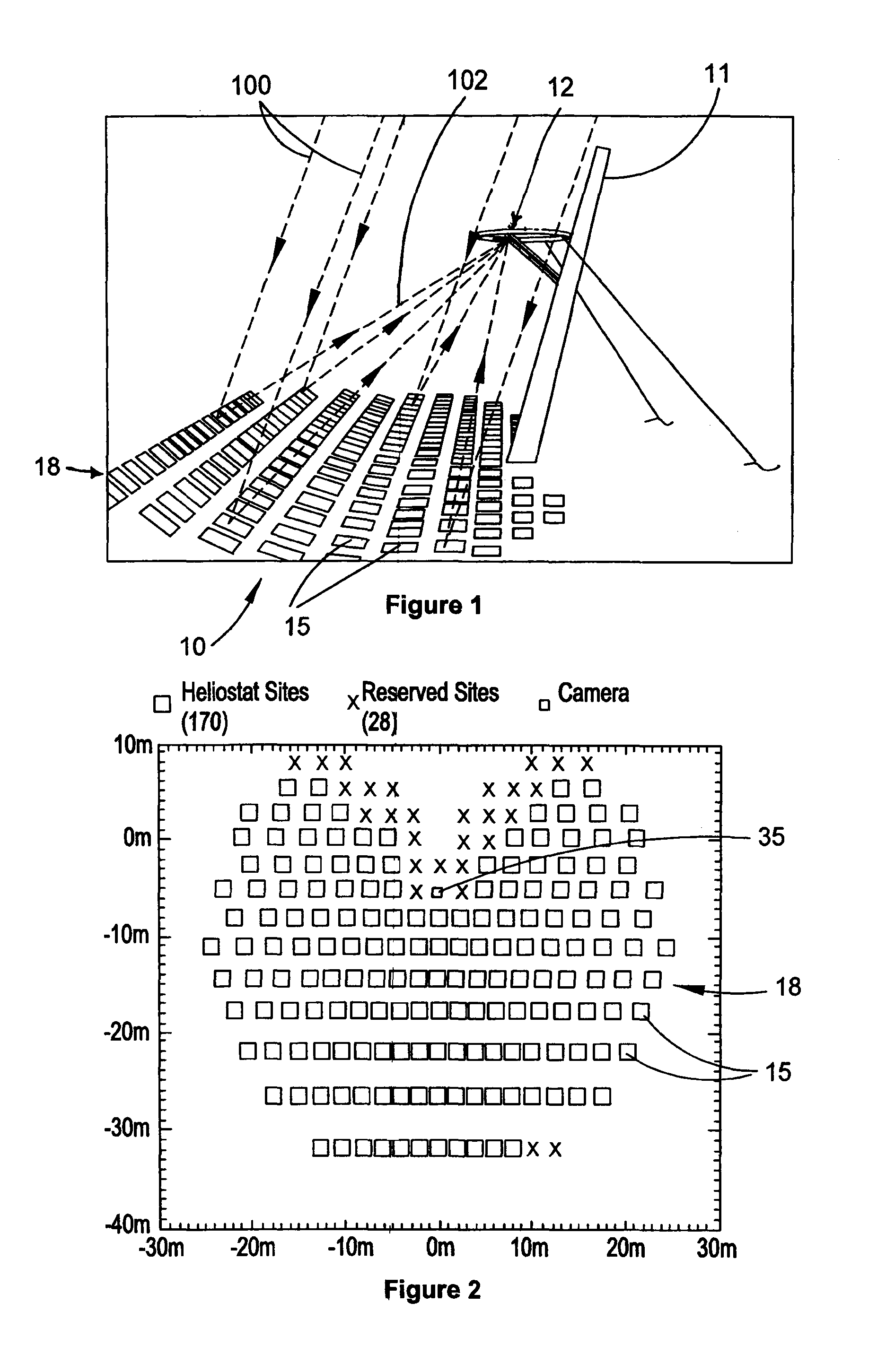
Figure 2 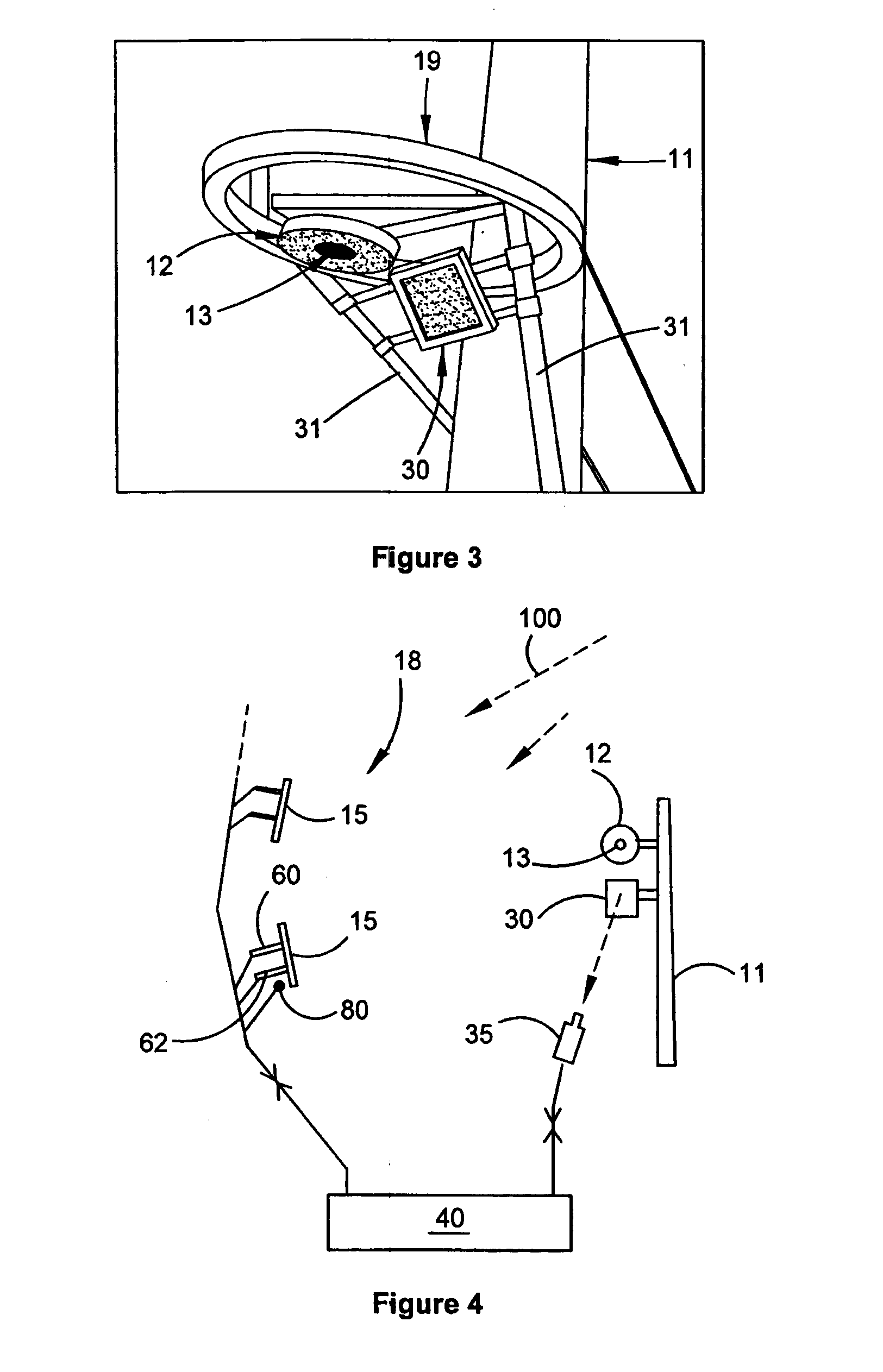
Figure 3
Abstract
Description
FIELD OF THE INVENTION
[0001] This invention relates generally to solar energy collection apparatus of the kind having a central solar energy receiver, typically on a tower, and an array of heliostats, commonly known as a solar field, mounted for angular adjustment to optimally receive a beam of sunlight and direct it to the central receiver. There may be more than one central receiver. More particularly, the invention is concerned with the calibration and control of the heliostats, both individually and collectively. Solar energy collection apparatus of the aforementioned kind is referred to herein as a central receiver solar energy collection system.BACKGROUND OF THE INVENTION
[0002] A challenge with central receiver solar energy collection systems is the trade off, in relation to the heliostats, between manufacturing cost and manufactured accuracy. A large solar field may have many hundreds, even thousands, of heliostats and so the overall economic performance of the system may be de...
Examples
Embodiment Construction
[0070]The present invention has particular utility in the operation of a central receiver solar energy collection system utilising inexpensively manufactured heliostats. Such a system 10 is depicted in FIGS. 1 and 2. The system comprises a central solar energy receiver 12 mounted in cantilevered fashion from a tower 11 above and in front of a large array or field 18 of heliostats 15. Heliostats 15 are mounted for angular adjustment to optimally receive a respective beam of sunlight 100 and to direct the beam, as a directed beam 102, to the solar receiver 12. Receiver 12 has an aperture 13 (FIG. 3) that defines a primary target to receive the directed beams of sunlight from the heliostats.
[0071]An optimally receiving position in this context is the angular position of the heliostat determined by a central controller, discussed further below, to be the appropriate position at the particular time on the particular date at which the respective heliostat makes a desired contribution to t...