
Cryogenic cooling apparatus and system
a cooling apparatus and cryogenic technology, applied in refrigeration devices, superconducting magnets/coils, sustainable buildings, etc., can solve the problems of increasing the amount of physical materials present and placing additional requirements on the cooling system, and achieves compact geometrical arrangement, reduced axial length, and compact arrangement
Patent Information
- Authority / Receiving Office
- US · United States
- Patent Type
- Applications(United States)
- Current Assignee / Owner
- Publication Date
- 2015-12-03
Smart Images
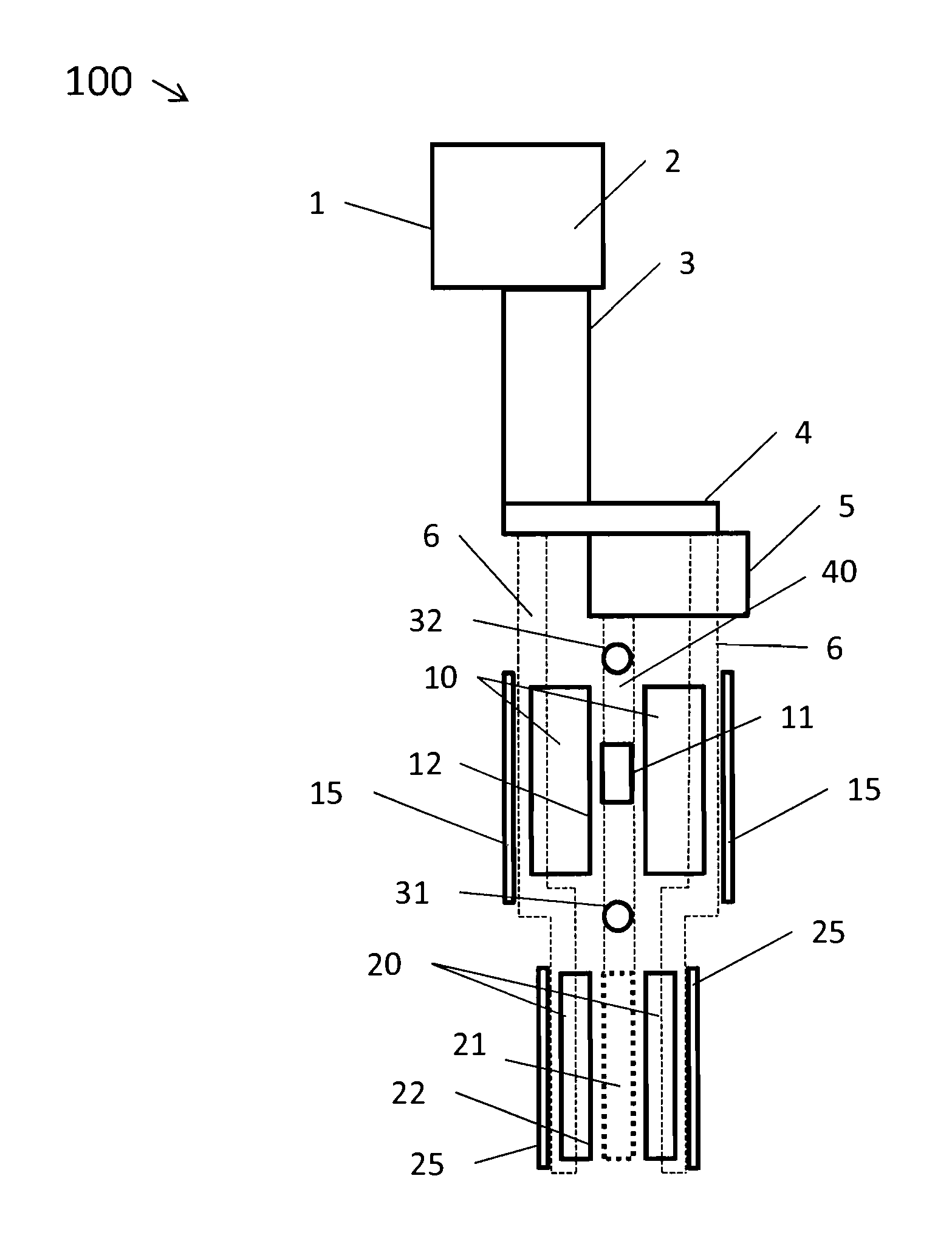
Figure 1 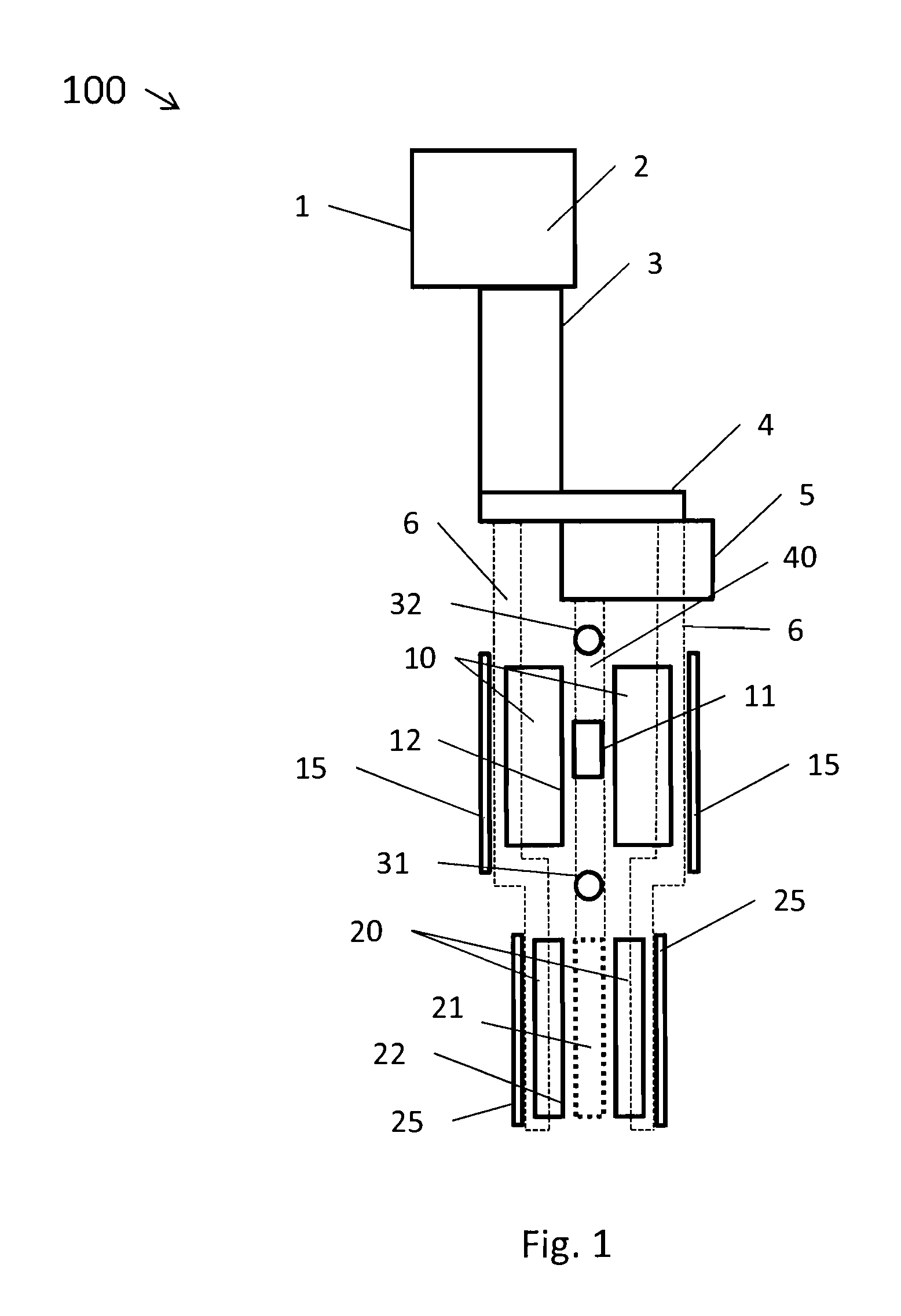
Figure 2 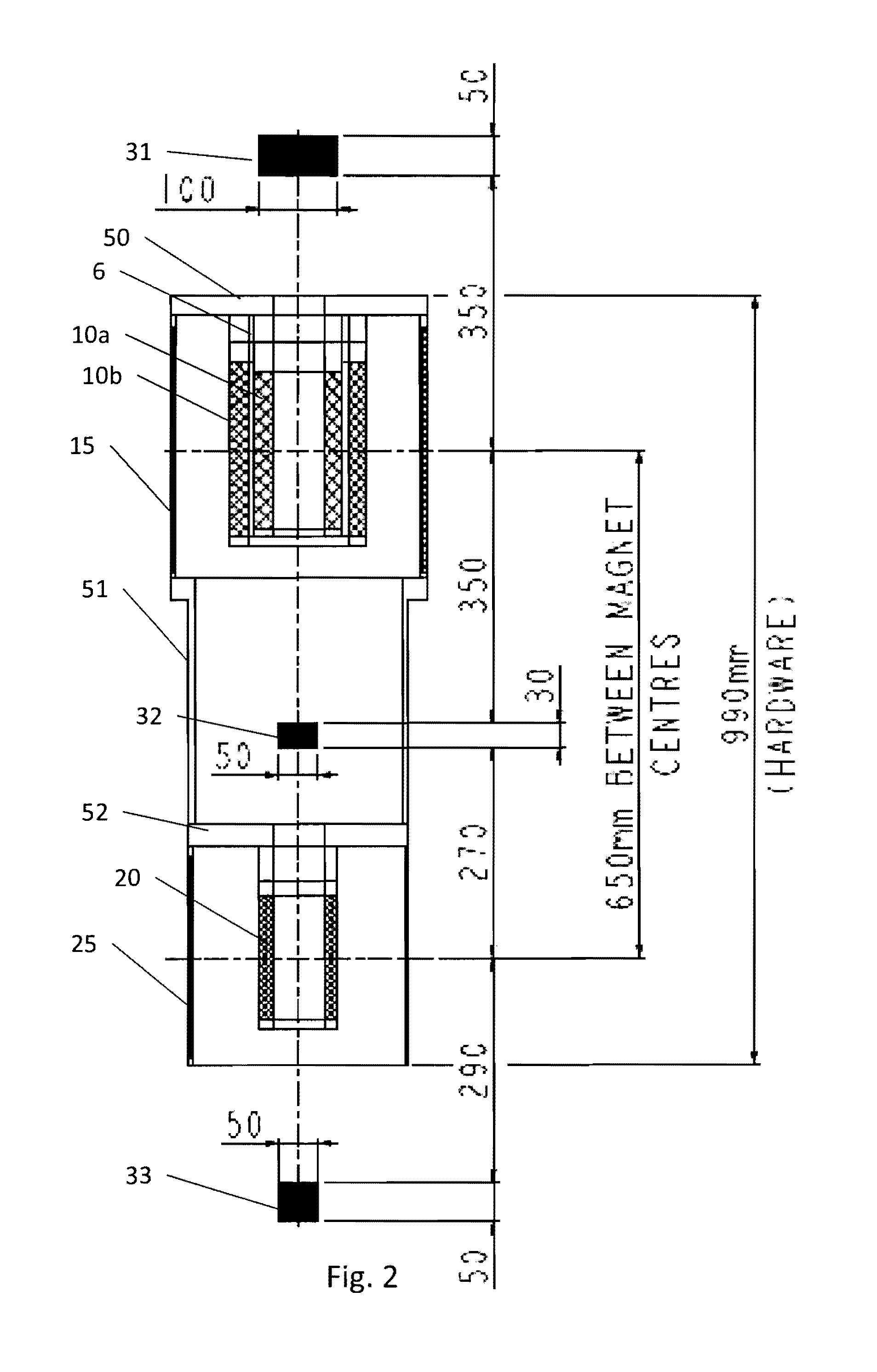
Figure 3
Abstract
Description
FIELD OF THE INVENTION
[0001] The present invention relates to a cryogenic cooling apparatus which uses the entropic effect of demagnetisation to provide the cooling of a target region. The invention also relates to a refrigeration system including such cryogenic cooling apparatus.BACKGROUND TO THE INVENTION
[0002] There is significant interest, both in scientific research and in certain commercial sectors, in being able to provide ultra-low temperature environments. Such environments can be thought of as having a temperature of 1 milliKelvin or less. This temperature range is beyond the reach of conventional dilution refrigerators. It is however possible to achieve such temperatures by using the effect of “nuclear demagnetisation”. Essentially, using this technique, a cooled member is located within a relatively strong magnetic field so as to align the nuclear spins, whilst at the same time also being cooled to a temperature of a few milliKelvin using a dilution refrigerator for exampl...
Examples
Embodiment Construction
[0027]FIG. 1 shows an example demagnetisation cooling system generally illustrated at 100. The cooling power to the system is provided by a pulse tube refrigerator (PTR) 1 which in the present case is a two stage device. This has a cooling head 2 from which extend pulse and regenerator tubes generally illustrated at 3. Although this is a two stage device, only the second, lower temperature stage 4 is illustrated for simplicity. The tubes 3 and second stage 4, together with the further apparatus to be described below, are all contained in a vacuum cryostat which is not illustrated in FIG. 1 for clarity purposes. Particularly the PTR 1 is capable of providing a cooling power of around 1 Watt at a temperature of 4.2 Kelvin at the second stage 4. This cooling power is used within the present system in two ways. Firstly, the second stage 4 is used to provide cooling power for a dilution refrigerator shown schematically at 5. Secondly, the cooling power of the second stage 4 is used to co...