
A suture device
a technology for a suture loop and a hernia, which is applied in the field of devices and a system for a hernia repair, can solve the problems of time-consuming and technical difficulties of transabdominal suturing techniques, weakening the abdominal wall that contains the intestine, and limiting so as to facilitate the locking of the distal tail and limit the collapse of the suture loop
Patent Information
- Authority / Receiving Office
- US · United States
- Current Assignee / Owner
- Publication Date
- 2016-08-25
Smart Images
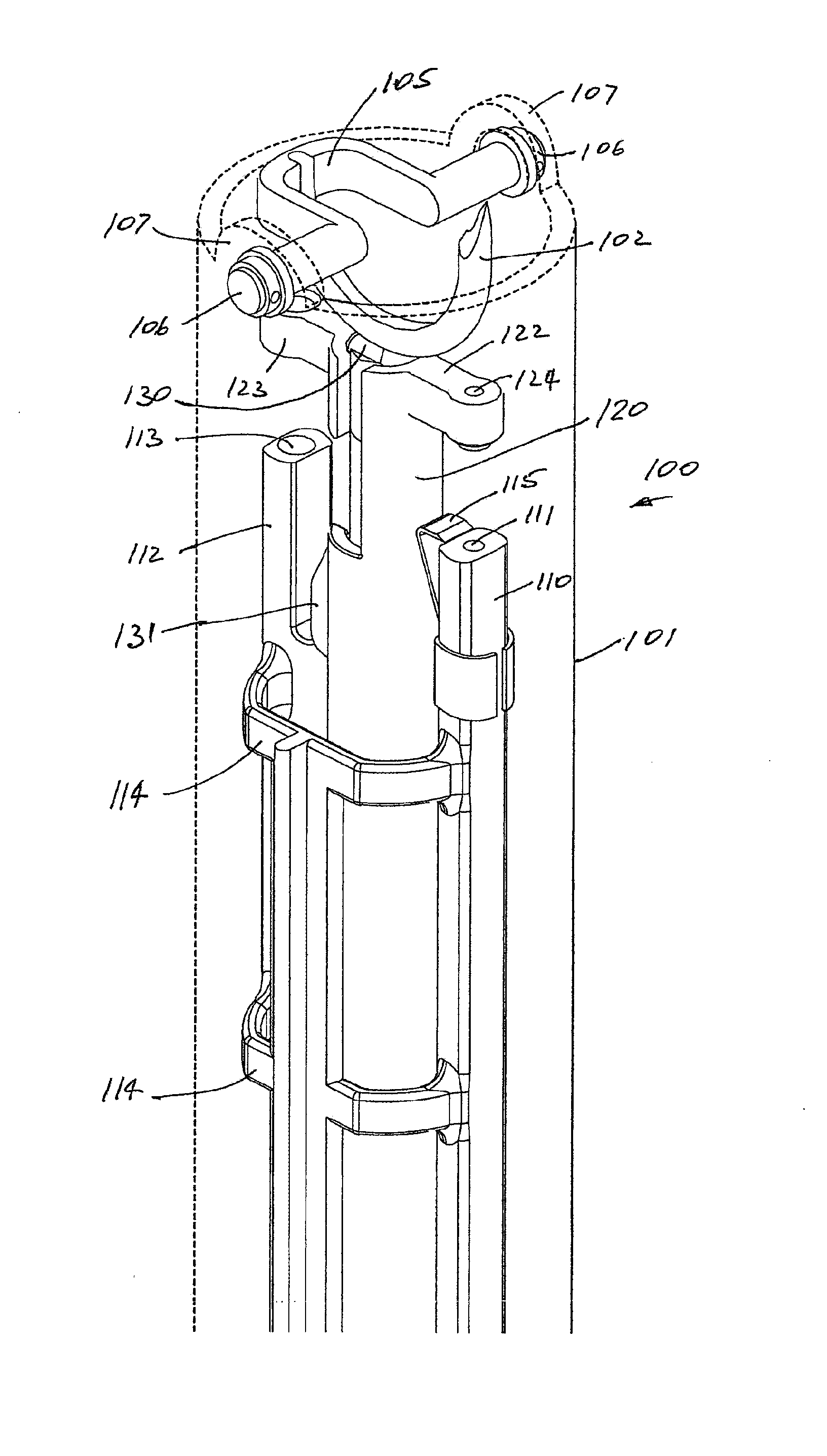
Figure 1 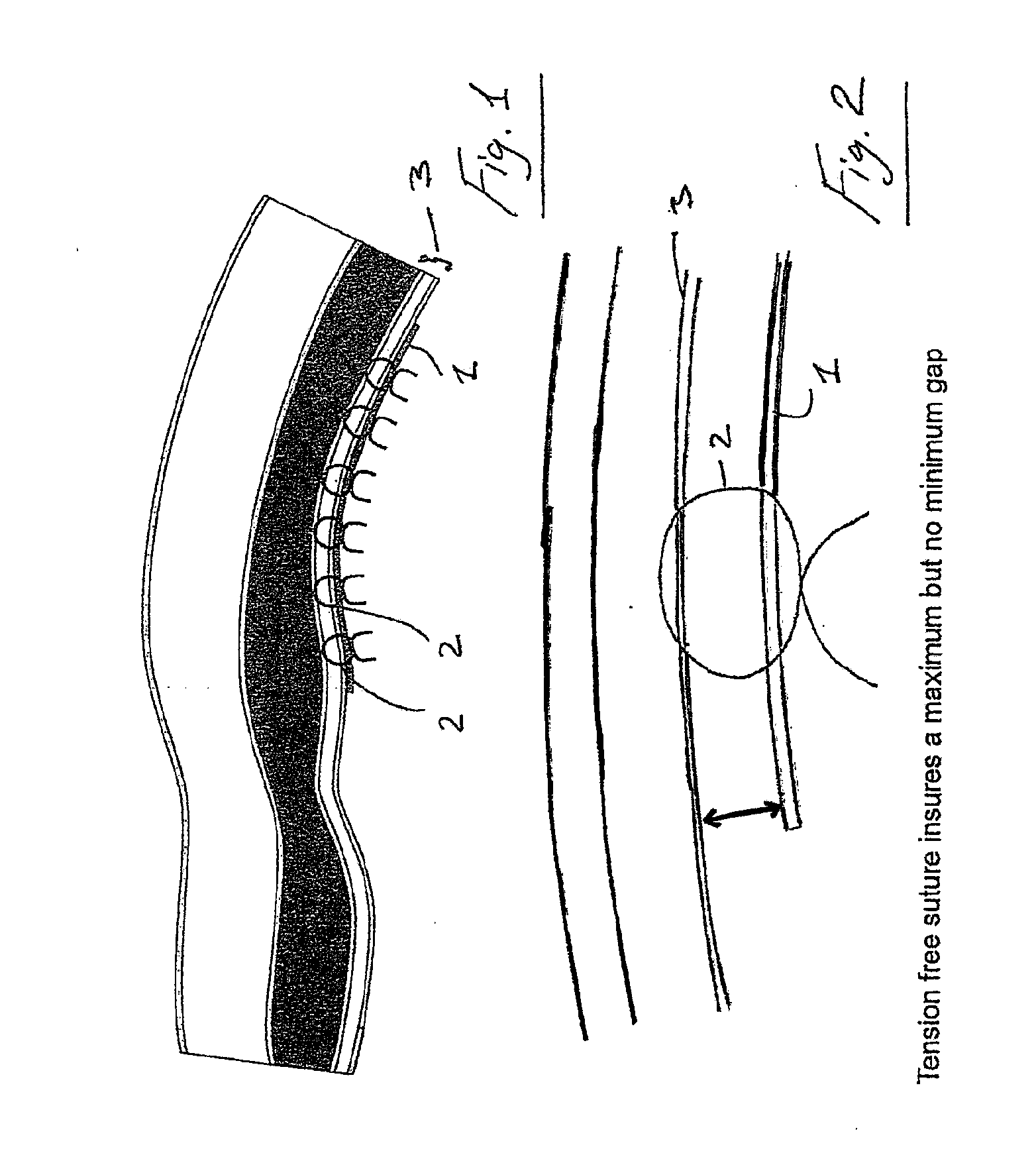
Figure 2 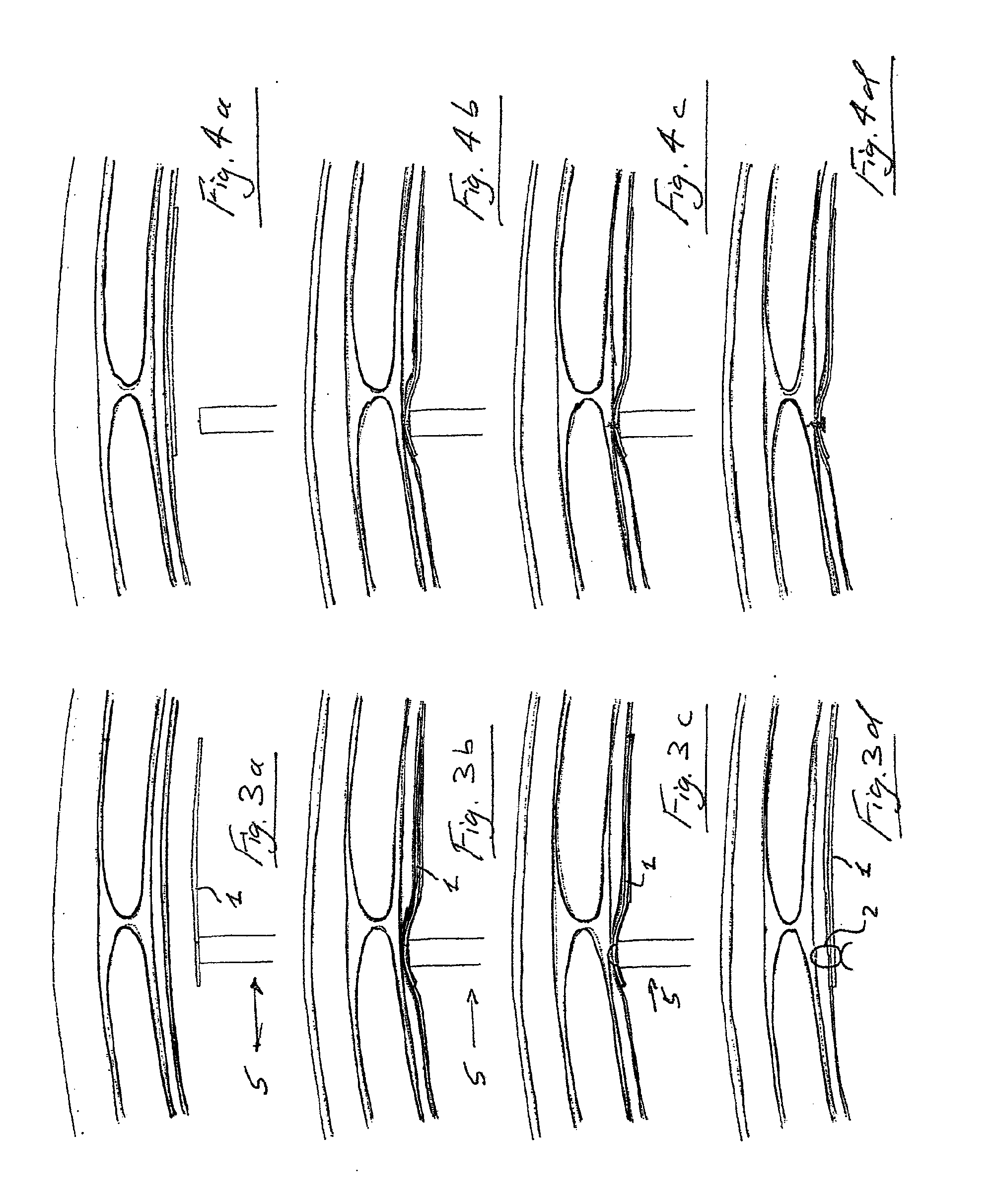
Figure 3
Abstract
Description
[0001] The invention relates to a device and a system for hernia repair.INTRODUCTION
[0002] A hernia is a development of a gap in the connective tissue of the abdominal wall. One type of hernia is a ventral hernia that can form in the linea alba region of the body. In such hernias often a weakness develops in the abdominal wall that contains the intestine. Part of the intestine pushes into the weakened area and can become restricted leading to digestive complications and pain.
[0003] To repair such hernias usually a mesh is used to bridge the weakened area in the abdominal wall. Such ventrical hernia repair procedures can be carried out either using open surgery or closed laparoscopic surgery.
[0004] In open surgery procedures an open incision is made and a synthetic or biological mesh is used to bridge the gap. The mesh is secured in position using standard suturing techniques. Generally in such open surgical procedures the mesh is sewn with sutures which are not biologically absorbable.[...
Examples
Embodiment Construction
[0085]U.S. patent application Ser. No. 13 / 714,540 (published as US2013 / 0158568A) describes an automated suture device. The entire disclosure of this application is incorporated herein by reference.
[0086]Referring initially to FIGS. 1 and 2 there is illustrated a hernia repair system which comprises a synthetic or biological mesh 1 which is held in place by sutures 2 which are formed by a suture device of the invention. It will be noted that the sutures extend from the internal surface of the body wall and are looped through portion 3 of the wall. The sutures 2 extend in this case only through the peritoneum and the inner facia and the layer of fat tissue therebetween. In addition, the sutures 2 are not tensioned which minimises the force applied to the tissue (and associated pain) whilst ensuring that the mesh 1 is retained in position. As illustrated particularly in FIGS. 3a to 3d of the sutures are applied using a suture device 5 which is manipulated using laparoscopic techniques....