
Maneuvering system for watercraft
a technology for watercraft and maneuvering, which is applied in the direction of watercraft, vessel parts, marine propulsion, etc., can solve the problems of requiring appropriate practice and affecting the operation of the operator, and achieve the effects of less noise, less vibration, and improved hydrodynamics
Patent Information
- Authority / Receiving Office
- US · United States
- Patent Type
- Applications(United States)
- Current Assignee / Owner
- Publication Date
- 2016-11-10
- Estimated Expiration
- Not applicable · inactive patent
Smart Images
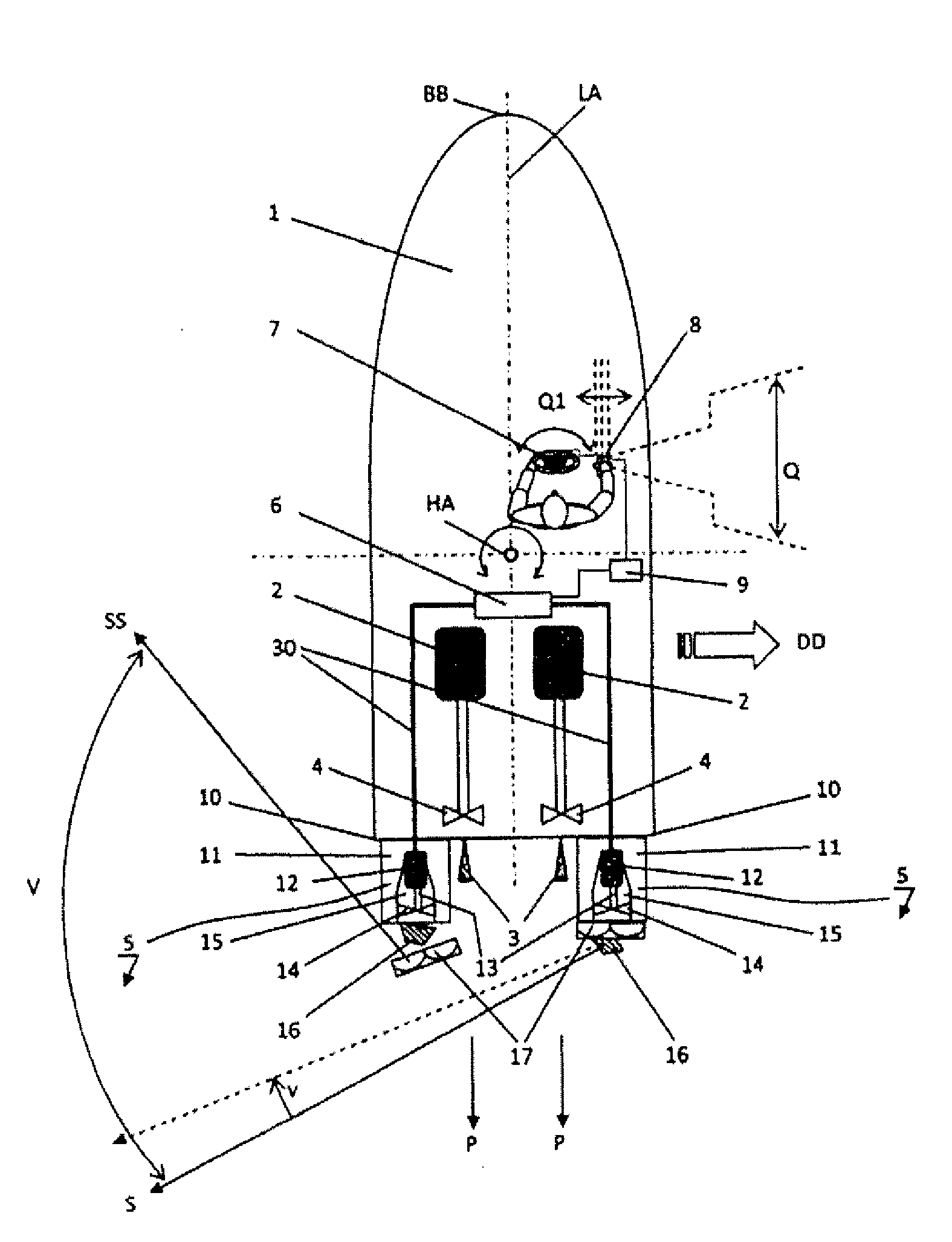
Figure 1 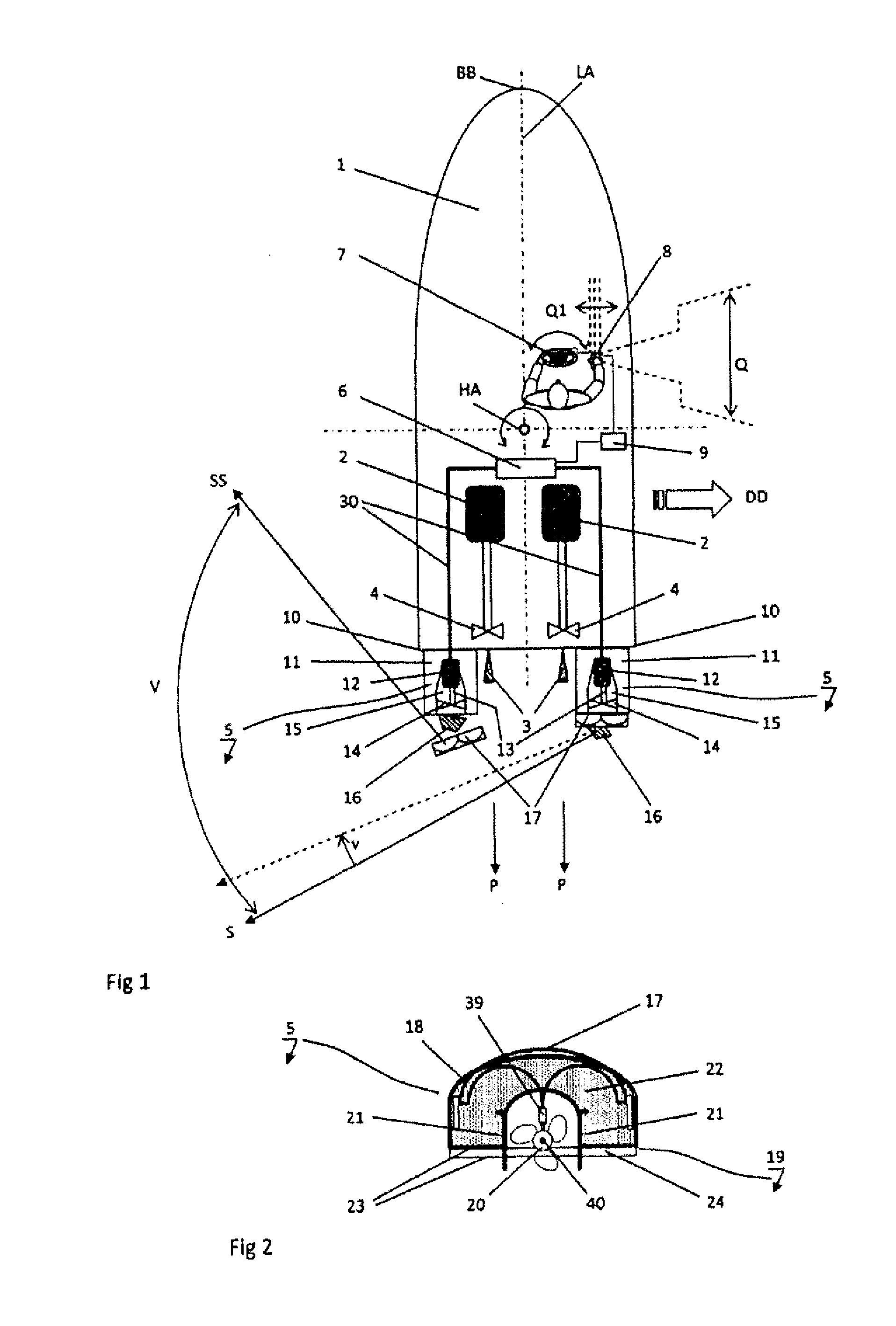
Figure 2 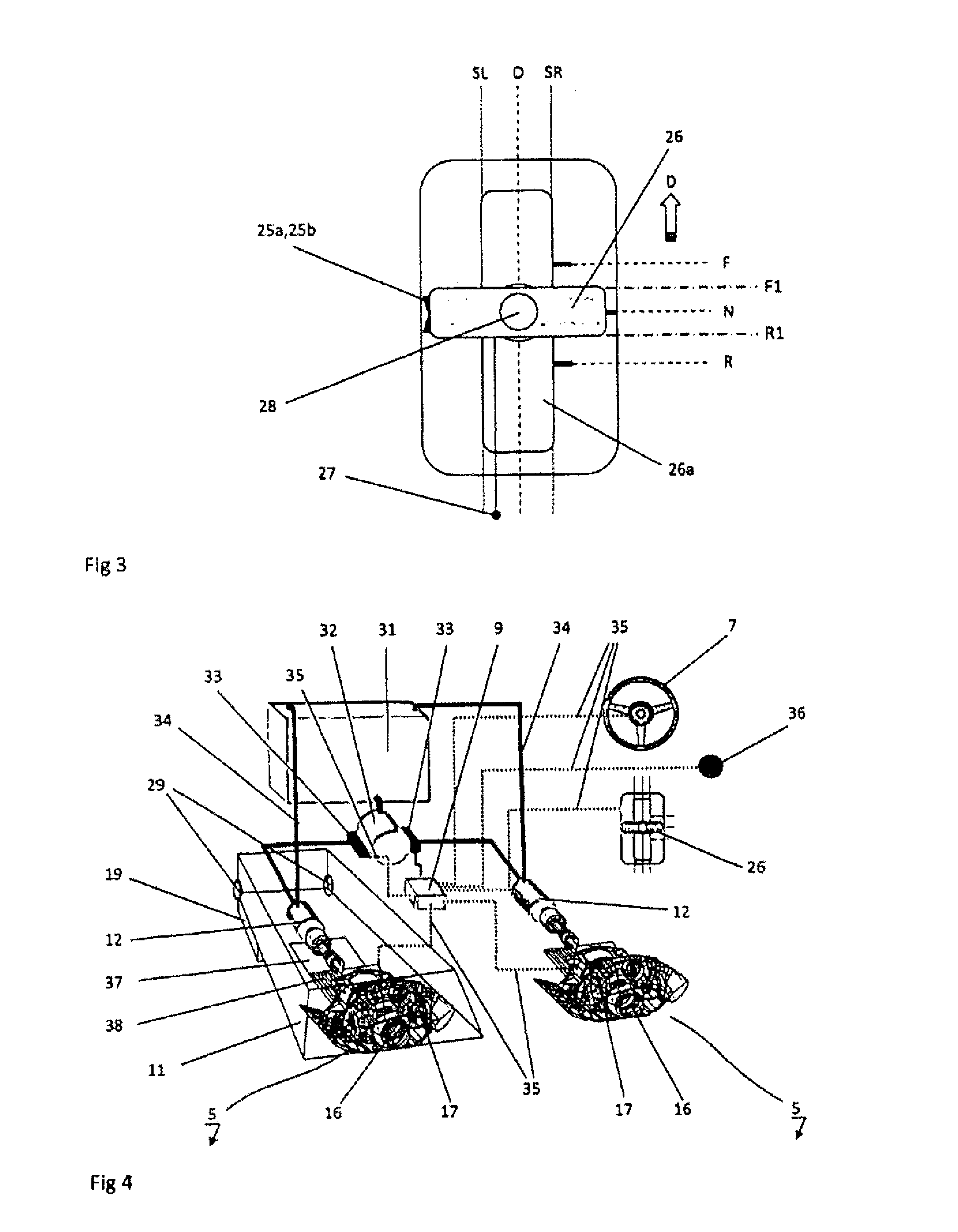
Figure 3
Abstract
Description
CONTINUITY INFORMATION
[0001] This is a Continuation of U.S. application Ser. No. 14 / 233,253 filed Apr. 21, 2014, which is a National Phase of International Application No. PCT / CH2012 / 000167 filed Jul. 16, 2012, which claims the benefit of Swiss Application No. CH 1202 / 11 filed Jul. 16, 2011. The disclosures of the prior applications are hereby incorporated by reference herein in their entireties.TECHNICAL FIELD
[0002] The invention relates to a maneuvering system for watercraft according to the preamble of the first claim.PRIOR ART
[0003] Maneuvering means such as lateral thrust rudders in the form of freestanding propellers or propellers in a tube, centrifugal pumps or jet systems in the bow and in the area of the stern are appropriately known. Their task as simple and efficient course-correction measures or maneuvering aids is to enable a watercraft to rapidly rotate the bow or the stern in an appropriate direction or travel sideways, particularly when maneuvering in narrow ports, in c...
Examples
Embodiment Construction
[0011]The object of the invention is to provide a maneuvering system for a watercraft with rigid drive, stern-drive, outboard engine or jet drive which has the function of a bow thrust rudder or stern thrust rudder, namely to enable lateral driving or rotating of the watercraft about the vertical axis, but without a tunnel in the bow, as well as easier operation for greater comfort and increased safety, as well as substantially easier maneuverability even with swivelable stern-drives, because the thrust forces act further outside on the hull. It is also advantageous that the maneuvering tasks can also be carried out with a single main engine. Furthermore, the maneuvering system has a “go home” emergency function as a drive in the event that the main engines fail. A housing carries and protects the maneuvering system and serves simultaneously as buoyancy means and hydrodynamic hull extension.
[0012]The system is controlled conventionally by means of the steering wheel and the throttle...