
Multi-point Multiple Sensor Array for Data Sensing and Processing System and Method
Patent Information
- Authority / Receiving Office
- US · United States
- Current Assignee / Owner
- Publication Date
- 2017-04-20
Smart Images
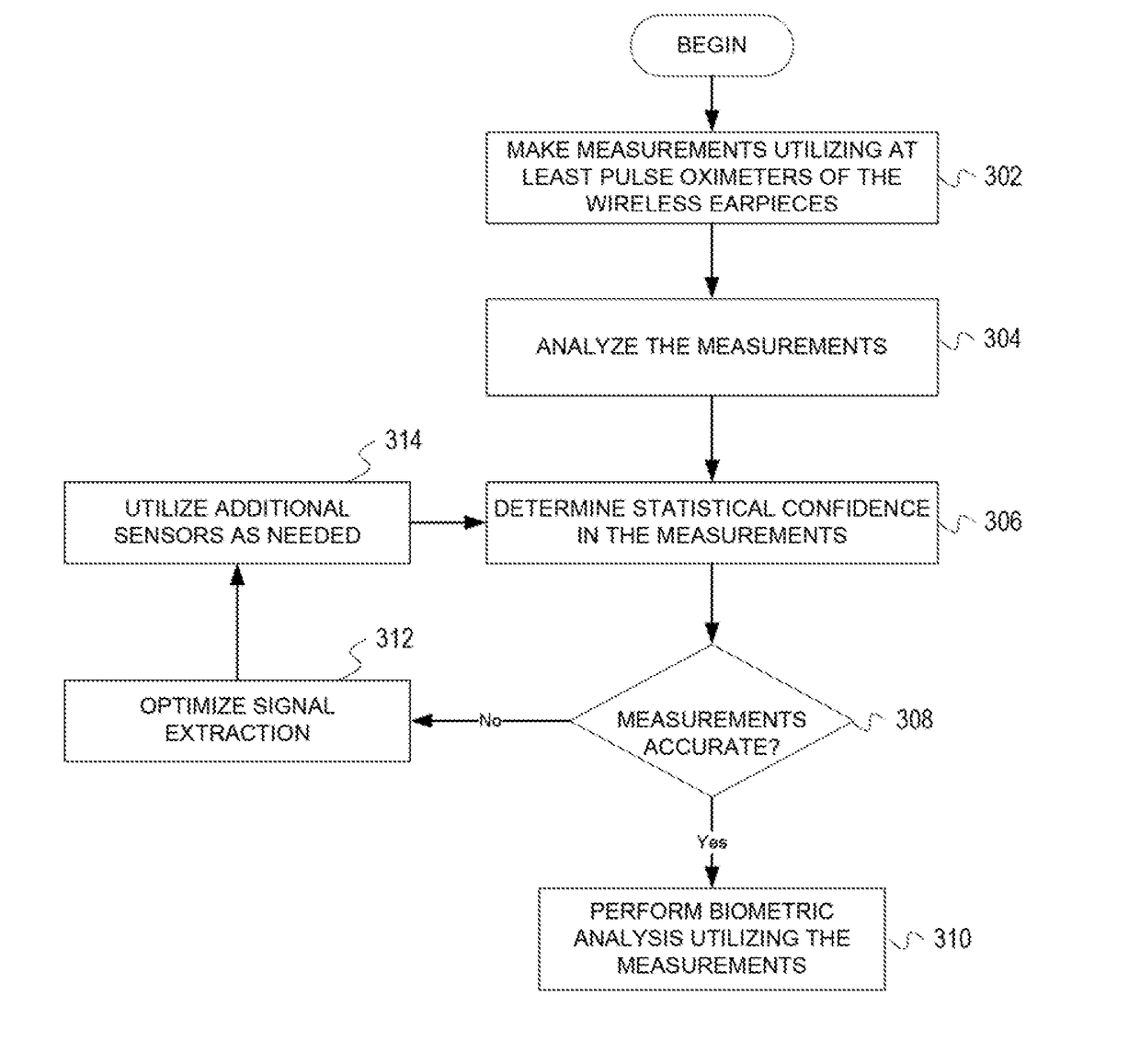
Figure 1 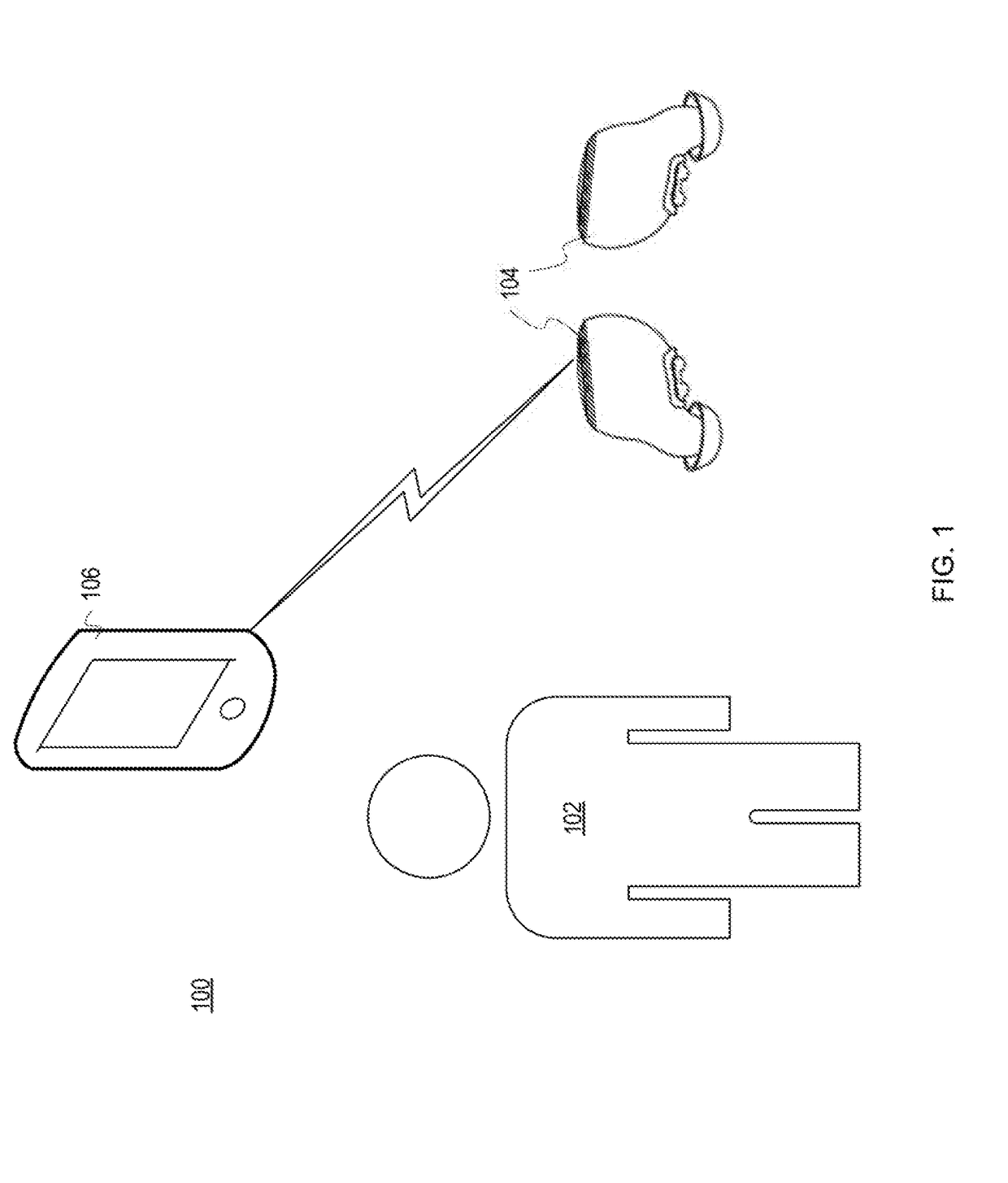
Figure 2 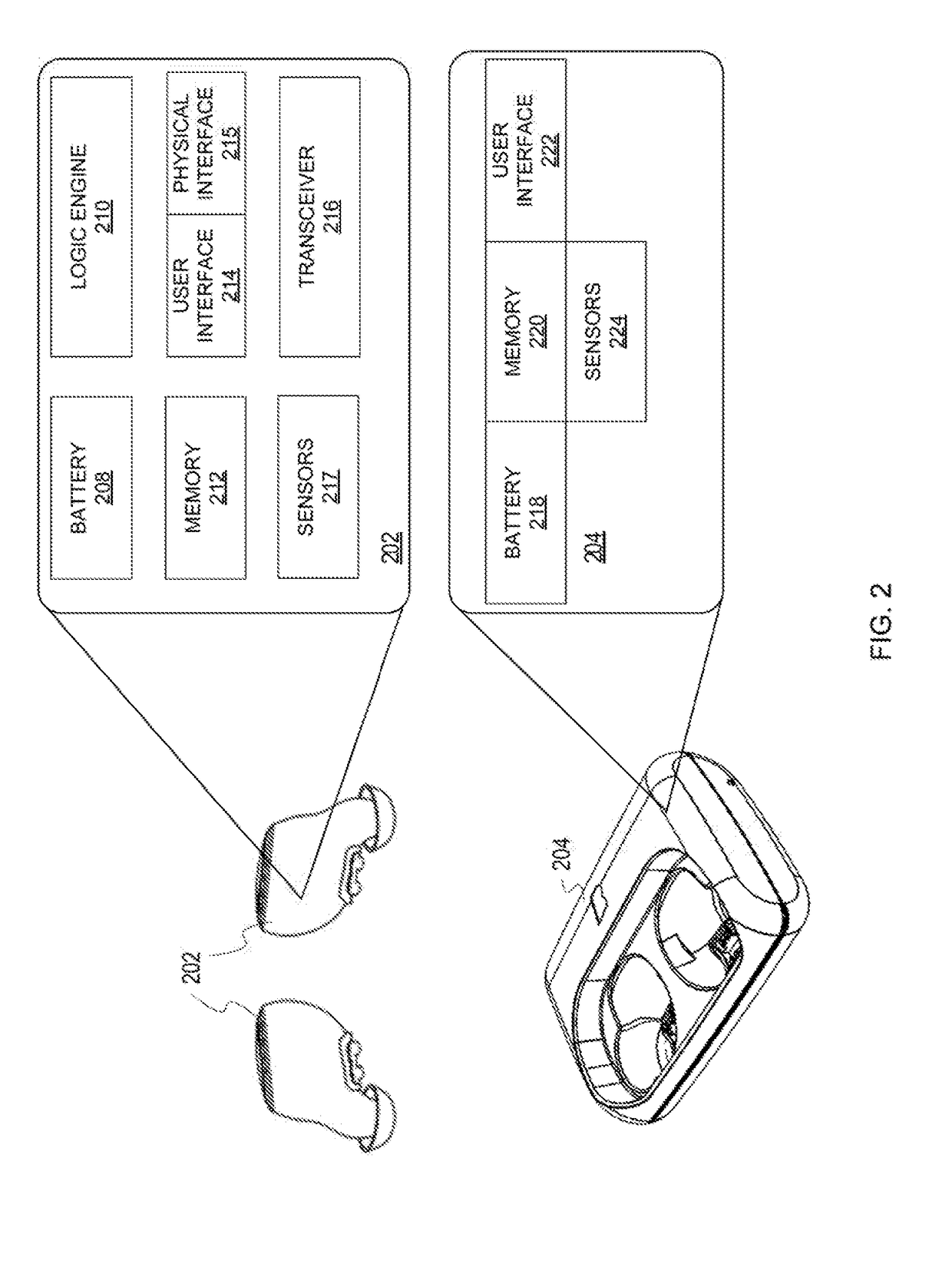
Figure 3
Abstract
Description
PRIORITY STATEMENT
[0001] This application claims priority to U.S. Provisional Patent Application 62 / 244,144, filed on Oct. 20, 2015, and entitled Multi-point Multiple Sensor Array For Data Sensing And Processing System and Method, hereby incorporated by reference in its entirety.BACKGROUND
[0002] I. Field of the Disclosure
[0003] The illustrative embodiments relate to biometric identification. More specifically, but not exclusively, the illustrative embodiments relate to biometric measurements, analysis, and determinations made by wireless earpieces.
[0004] II. Description of the Art
[0005] The growth of wearable devices is increasing exponentially. This growth is fostered by the decreasing size of microprocessors, circuitry boards, chips, and other components. It may be difficult to perform biometric sensing utilizing wearables. For example, current biometric sensors may be limited by their position on the body, shearing stresses, available power, exposure to caustic agents, and accuracy of...
Examples
Embodiment Construction
[0024]The illustrative embodiments provide a system and method for processing data retrieved by one or more sensors of an electronic device. Sensor data may be utilized from more than one sensor to make determinations regarding the accuracy of the sensor data. The sensors may include temperature sensors, pulse oximeters, accelerometers, gyroscopes, altitude sensors, GPS chips, and so forth. The sensors may be utilized to sense any number of biometric readings or information, such as heart rate, respiratory rate, blood, or skin physiology, or other biometric data. In one embodiment, the electronic device is one or more wireless earpieces. The wireless earpieces may be utilized to make and receive communications (e.g., telephone calls, transcribed text messages, audio / tactile alerts, etc.), play music, filter or block sound, amplify sounds, or so forth.
[0025]The sensors may be stand-alone measurement devices or may be integrated in one or more chips, motherboards, cards, circuits, or ...