
Stratification Of Acute Myeloid Leukaemia Patients For Sensitivity To Kinase Pathway Inhibitor Therapy
a technology of kinase pathway inhibitor and acute myeloid leukaemia, which is applied in the direction of material analysis, post-translational modification detection, instruments, etc., can solve the problems rapid death of acute myeloid leukaemia, and premature arrest state of development, so as to achieve accurate identification of sensitive cells, effective biomarkers, and high sensitivity to kinase pathway inhibitors
Patent Information
- Authority / Receiving Office
- US · United States
- Patent Type
- Applications(United States)
- Current Assignee / Owner
- Publication Date
- 2020-12-17
Smart Images
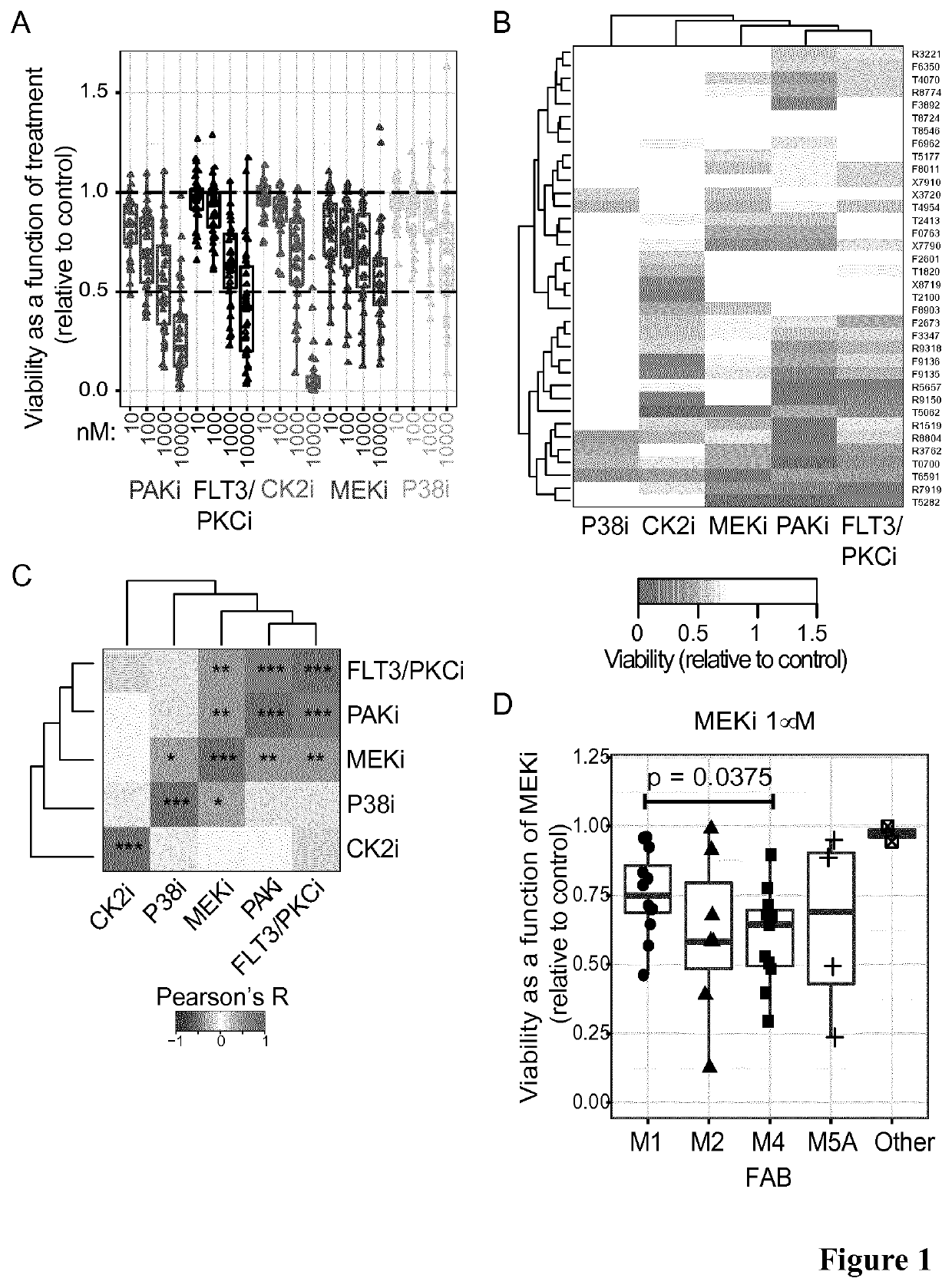
Figure 1 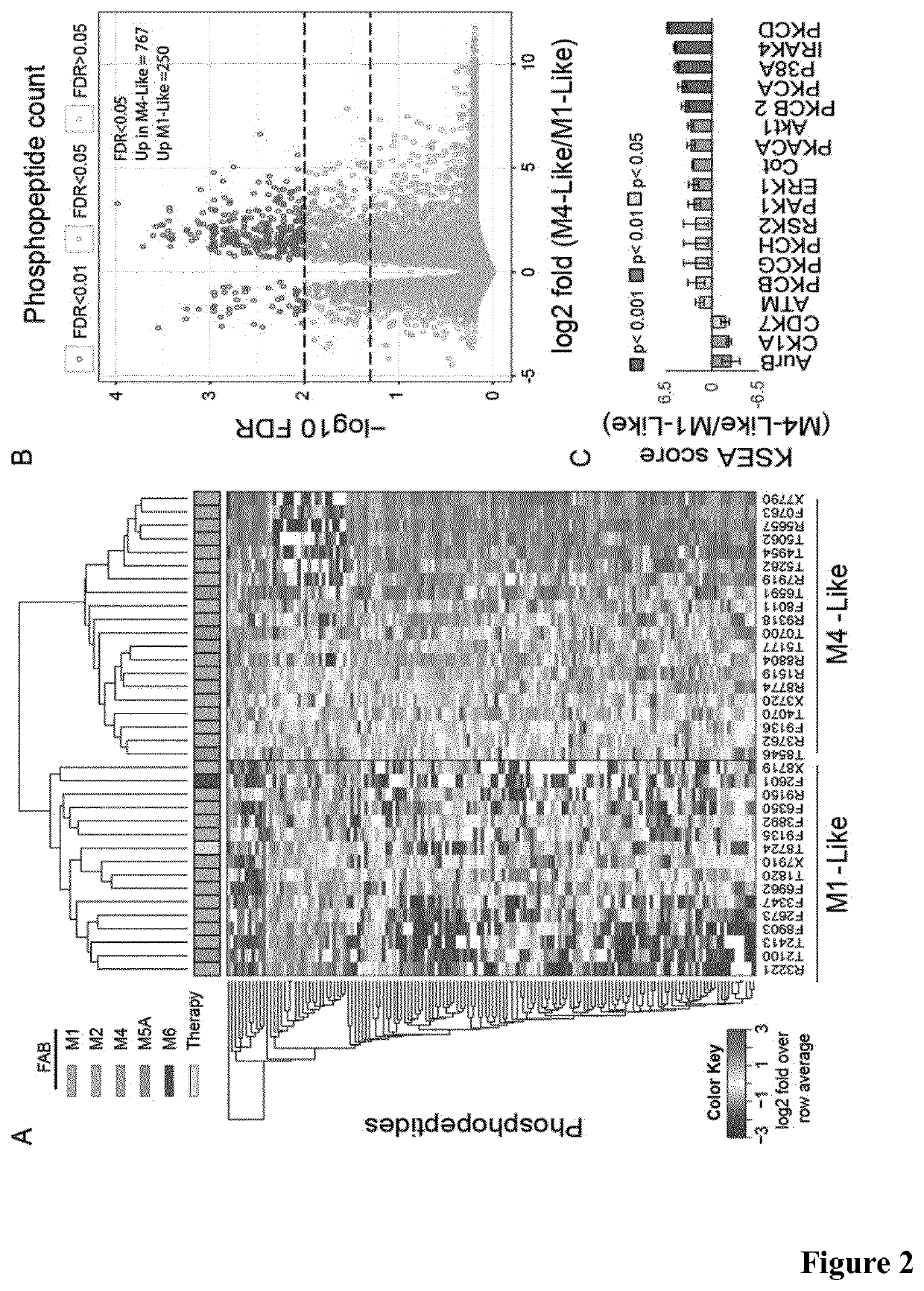
Figure 2 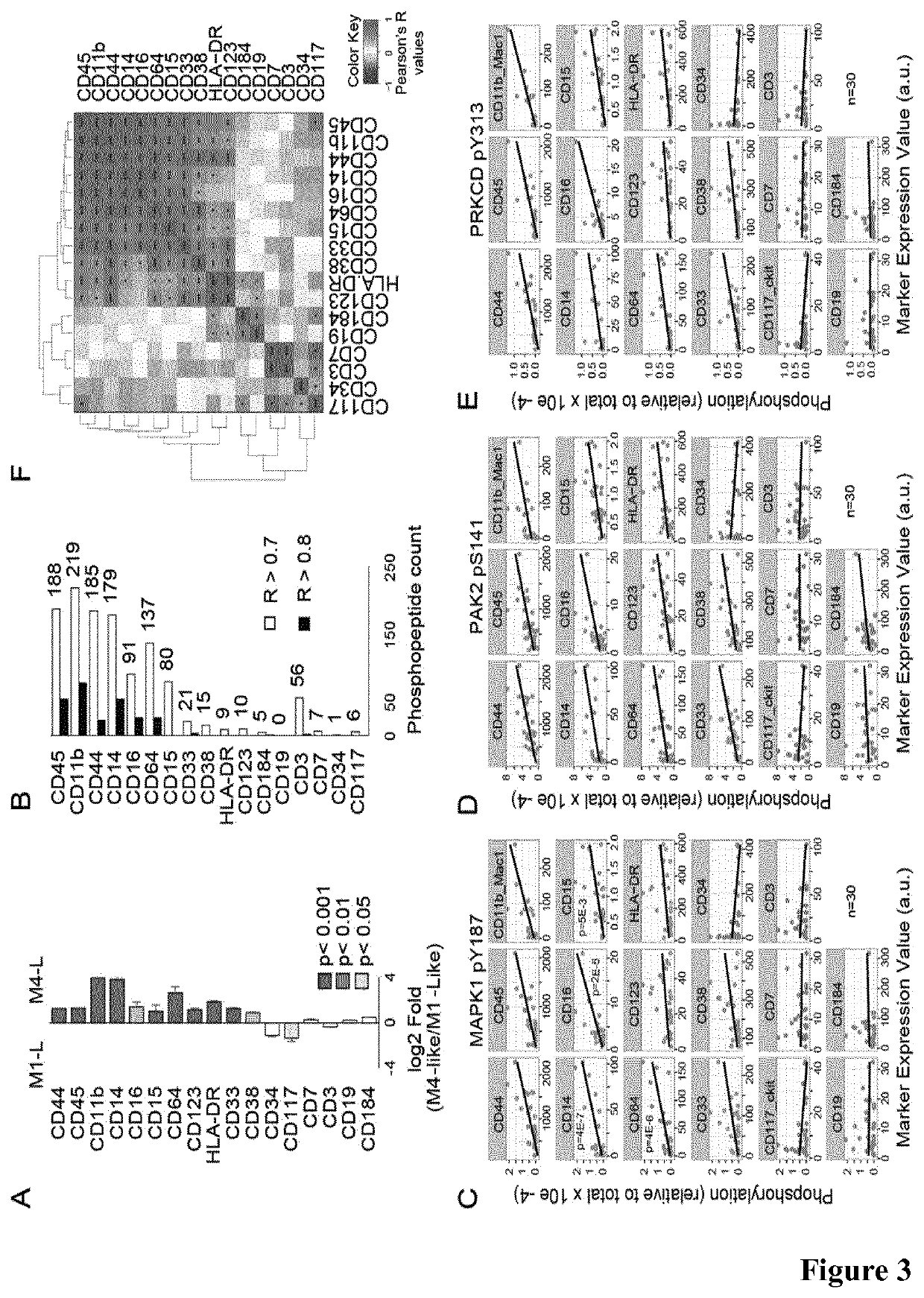
Figure 3
Abstract
Description
[0001] The present invention relates to the treatment of acute myeloid leukaemia (AML) in patients. In particular, the invention concerns improved methods for identifying AML patients who may be effectively treated with kinase pathway inhibitors, and improved methods for predicting whether a kinase pathway inhibitor may be efficacious for treatment of AML in an individual patient. The invention also comprehends a method of screening a plurality of patients suffering from acute myeloid leukaemia, to determine whether the acute myeloid leukaemia of any one or more of the patients may be effectively treated with a kinase pathway inhibitor. The invention further provides methods for the treatment of such patients with kinase pathway inhibitors, and kinase pathway inhibitors for use in such methods.Acute Myeloid Leukaemia—Disease Characteristics and Classification
[0002] Acute myeloid leukaemia (AML), also known as acute myelogenous leukaemia, acute myeloblastic leukaemia, acute granulocyti...
Examples
example 1
with a More Advanced Differentiation Status are More Responsive to Kinase Inhibitor Treatment than Less Differentiated Cells
[0263]We found that M4 cells responded significantly better than M1 cells to MEKi (FIG. 1D), suggesting that AML cases of the M4 subtype were more sensitive to MEKi than those categorized as M1. This indicates that the differentiation status of the leukaemia cells may be a marker for sensitivity to kinase inhibitor therapy.
example 2
ation of a Phosphoproteomic Signature that is Characteristic of Differentiated Cells
[0264]We investigated differences in kinase signaling between these AML subtypes. Using a mass spectrometry method as described below we identified and quantified 9,534 phosphopeptide ions in these experiments. Of these, we selected the 150 phosphorylation sites showing the most significant differences (based on Student's t-test p-values) across groups as a phosphoproteomics signature that discriminated M4 from M1 AML subtypes (FIG. 9A). Since M4 cells are more differentiated than M1, we hypothesized that this signature may be linked to the differentiation stage of the analyzed blasts. In a hierarchical clustering analysis, this phosphoproteomics signature subdivided our cohort of 36 patients into two defined groups (FIG. 2A). We termed “M1-Like” the group that included 10 of the 12 cases of the M1 subtype, and “M4-Like” the group that comprised all M4 cases (FIGS. 2A and 2B). The M1-Like and M4-Like...
example 3
ation of a Cell Surface Marker Protein Signature that is Characteristic of Differentiated Cells and Correlates with the Phosphoproteomic Signature
[0266]To measure differentiation status with precision, we used mass cytometry to immunophenotype 30 cases of the 36 AML cohort (for which we had available material) by measuring the surface expression of 17 differentiation markers (FIG. 10B). We found that M4-Like cases had a greater expression of myelomonocytic differentiation markers than M1-Like cases (FIG. 3A and FIG. 10C). We next investigated if the presence of specific differentiation markers was linked to the activation of kinase signaling pathways. We found that the surface expression of CD45, CD11b, CD44, CD14, CD16, CD64 and CD15 was statistically associated (r>0.7, p+ cells were characterized by the surface expression of a panel of cell surface markers consisting of CD33, CD123, HLA-DR, CD44, CD38, CD15, CD45, CD16, CD64, CD11b, and CD14.