
Intervention Device with Electrodes
a technology of electrodes and electrodes, applied in the field of intervention devices, can solve the problems of difficult sizable neuromonitoring probes, unsuitable arrays, and ring-like electrodes used, and achieve the effect of facilitating the detection of potential nerve collisions
Patent Information
- Authority / Receiving Office
- US · United States
- Current Assignee / Owner
- Publication Date
- 2021-05-27
- Estimated Expiration
- Not applicable · inactive patent
Smart Images
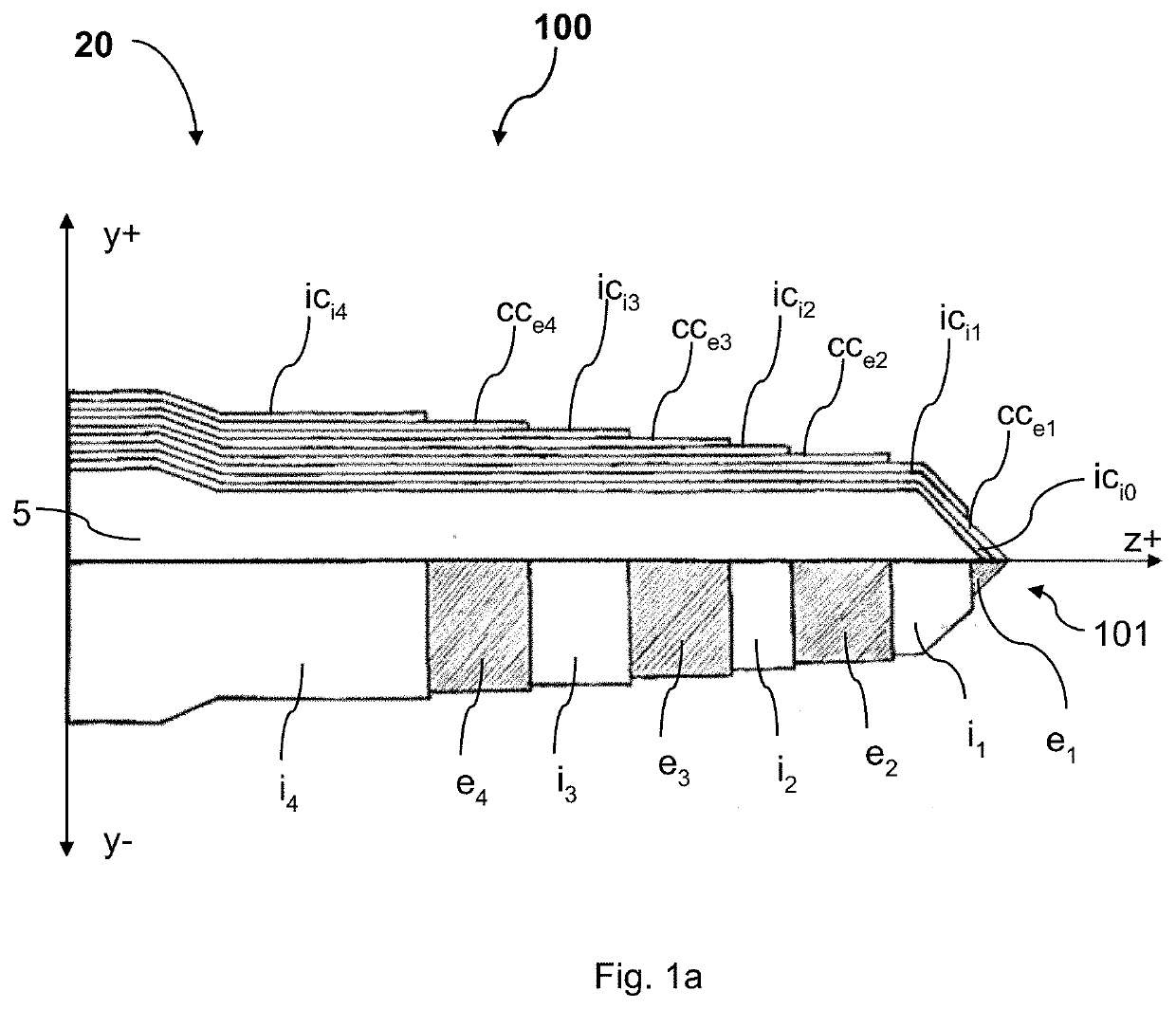
Figure 1 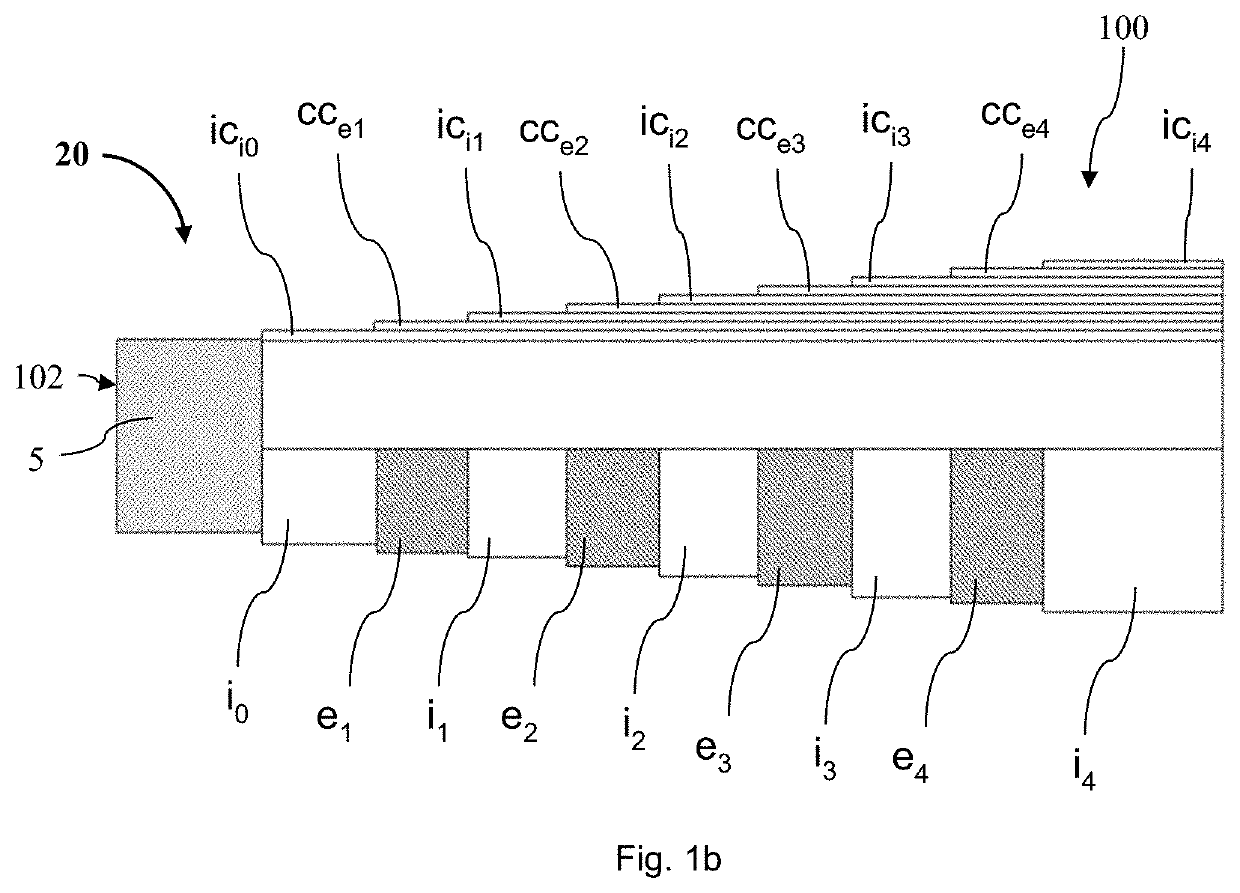
Figure 2 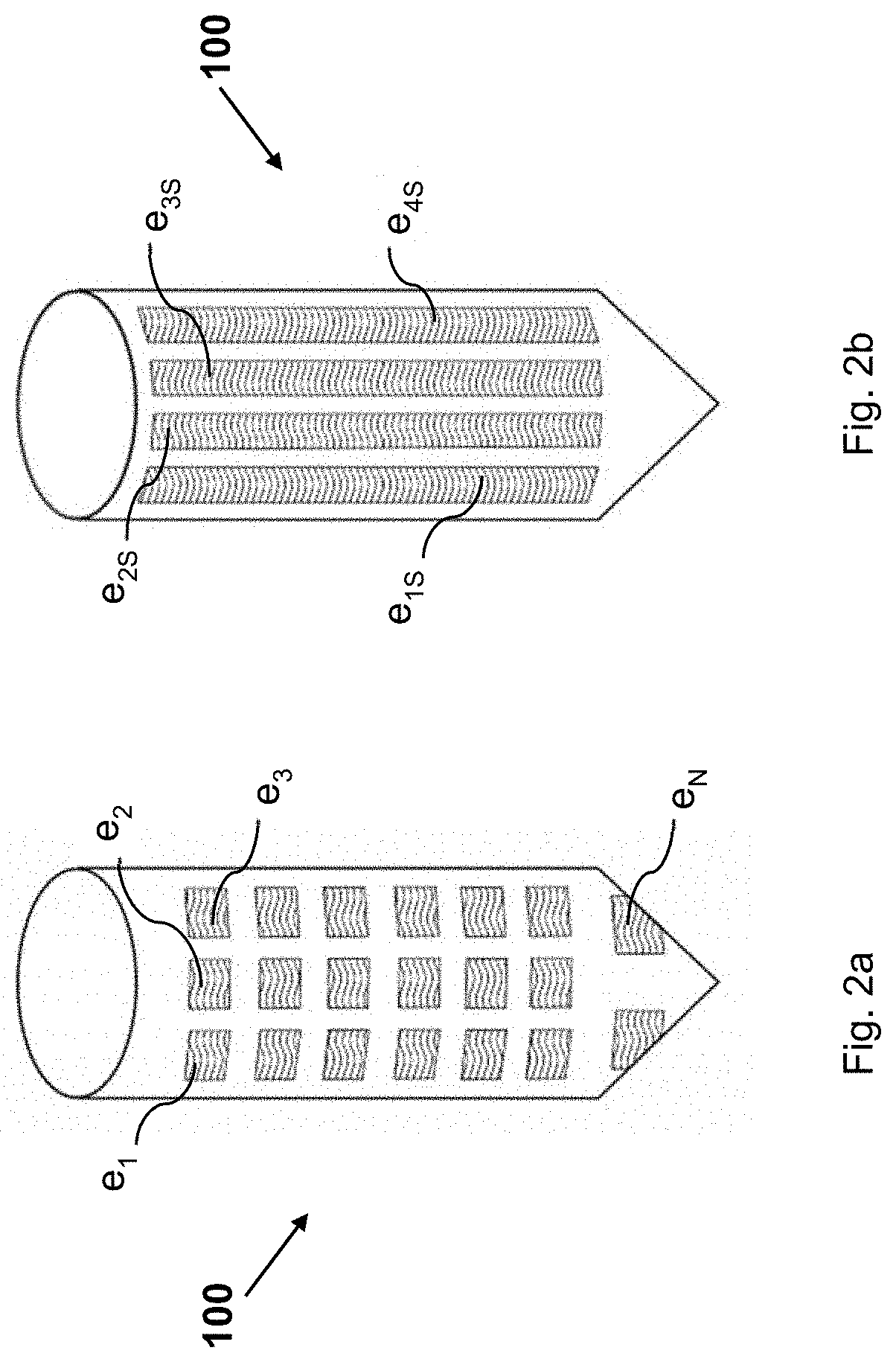
Figure 3
Abstract
Description
TECHNICAL FIELD
[0001] The present invention relates to an intervention device for surgically intervening a target tissue of a human or animal body according to the preamble of independent claim 1 and more particularly to an intervention device comprising a penetrating body whose outer surface is provided with a plurality of electrodes insulated from each other according to a specially engineered multi-layered configuration of electrically conducting coatings and electrically insulating coatings.
[0002] Such intervention devices can be used for safely, controllably and continuously intervening a target tissue, such as bone tissue or a soft tissue.
[0003] A possible application of the present invention can be, for instance, to prepare the placement of a cochlear implant, that is an electronic medical device that replaces the function of a damaged inner ear. Typically a cochlear implant comprises an internal receiver, or stimulator, which receives external signals from a speech processor an...
Examples
Embodiment Construction
[0064]In the following description certain terms are used for reasons of convenience and are not intended to limit the invention. The terms “right”, “left”, “up”, “down”, “under” and “above” refer to directions in the figures. The terminology comprises the explicitly mentioned terms as well as their derivations and terms with a similar meaning. Also, spatially relative terms, such as “beneath”, “below”, “lower”, “above”, “upper”, “proximal”, “distal”, and the like, may be used to describe one element's or feature's relationship to another element or feature as illustrated in the figures. These spatially relative terms are intended to encompass different positions and orientations of the devices in use or operation in addition to the position and orientation shown in the figures. For example, if a device in the figures is turned over, elements described as “below” or “beneath” other elements or features would then be “above” or “over” the other elements or features. Thus, the exempla...