
Intent Driven Dynamic Gesture Recognition System
a dynamic gesture and gesture recognition technology, applied in the field of improvement, can solve the problems of not being able to adapt existing systems, needing to change to a different mode that might not be suitable, and simple conversion of hand motion to a single set of mouse inputs often will not suffice, etc., to achieve the effect of enhancing the screen
Patent Information
- Authority / Receiving Office
- US · United States
- Current Assignee / Owner
- Publication Date
- 2022-05-19
Smart Images
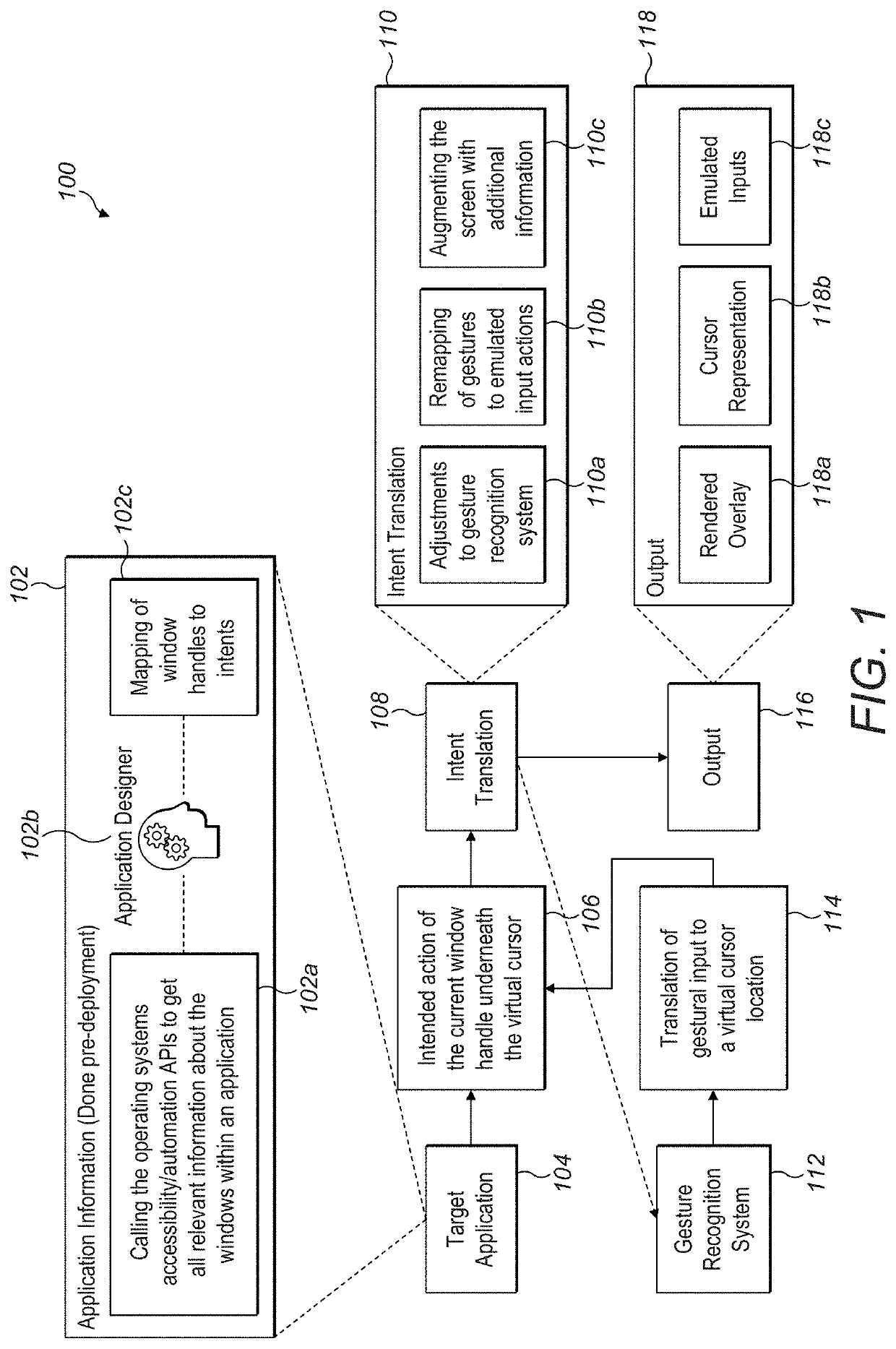
Figure 1 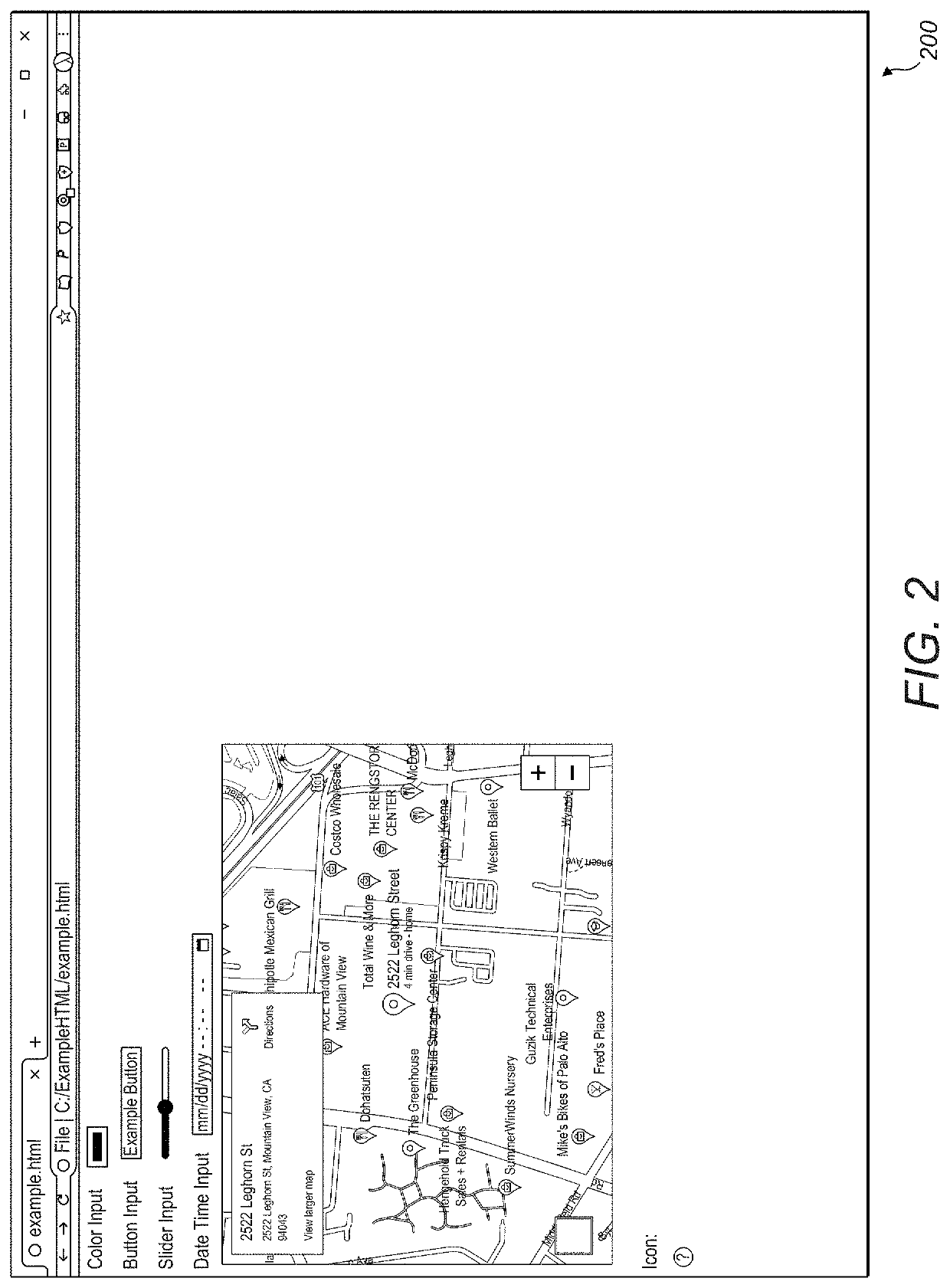
Figure 2 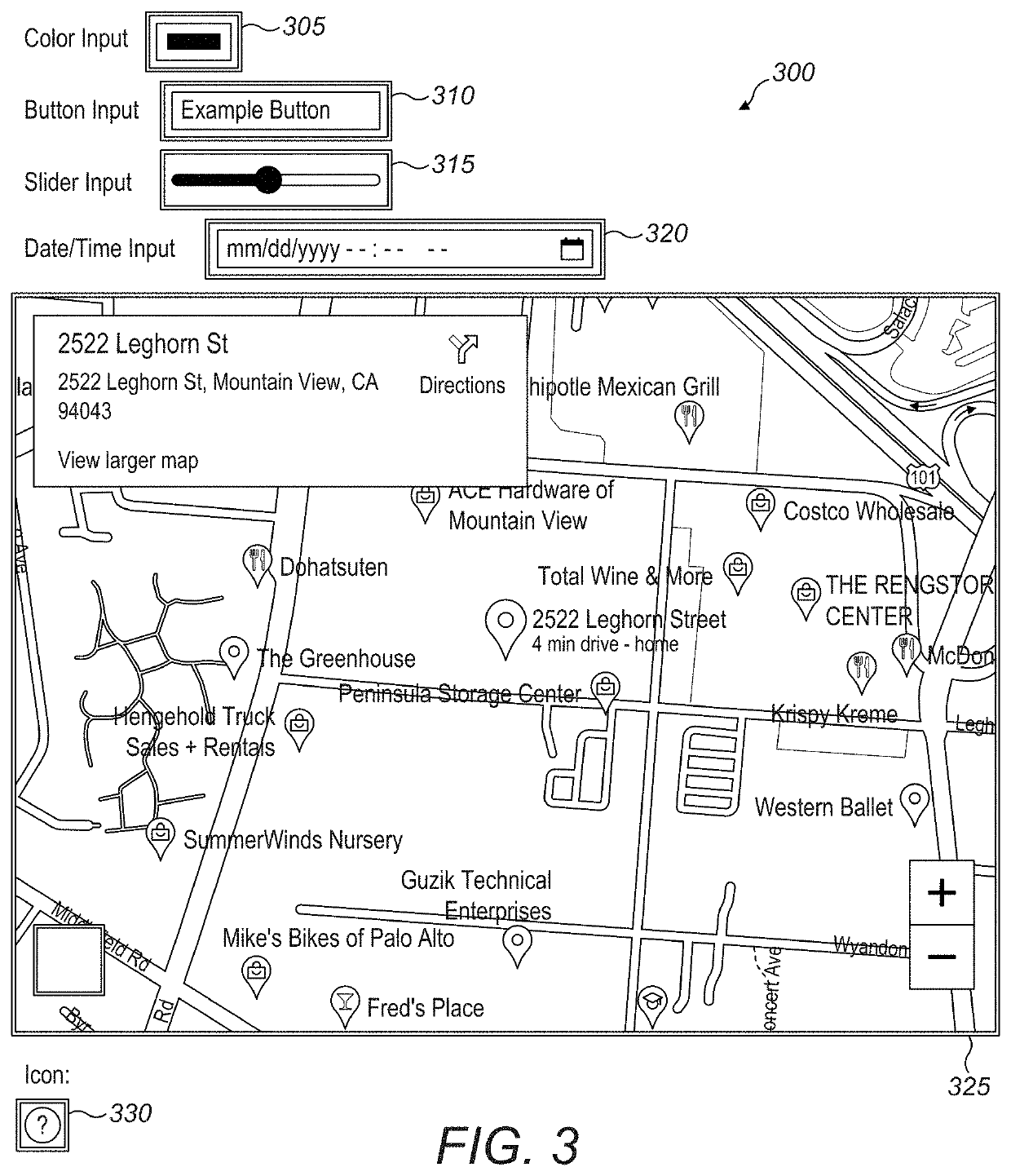
Figure 3
Abstract
Description
PRIOR APPLICATIONS
[0001] This application claims the benefit of the following application, which is incorporated by references in its entirety:
[0002] Ser. No. 63 / 114,513, filed Nov. 16, 2020.FIELD OF THE DISCLOSURE
[0003] The present disclosure relates generally to improved techniques in recognizing and interpreting dynamic gestures in haptic systems.BACKGROUND
[0004] A mid-air haptic feedback system creates tactile sensations in the air. One way to create mid-air haptic feedback is using ultrasound. A phased array of ultrasonic transducers is used to exert an acoustic radiation force on a target. This continuous distribution of sound energy, which will be referred to herein as an “acoustic field”, is useful for a range of applications, including haptic feedback.
[0005] It is known to control an acoustic field by defining one or more control points in a space within which the acoustic field may exist. Each control point is assigned an amplitude value equating to a desired amplitude of the a...
Examples
Embodiment Construction
[0026]I. Introduction
[0027]When a new input device is developed, there is often a large lead-up time before its mass adoption due to the development effort required to incorporate it into new or existing applications. To speed up this process, many device designers attempt to build intermediate tools or APIs that simply translate inputs from the new device to be recognizable to the inputs the system was previously designed for. One of the most relevant examples of this is touch screen interfaces, where a user's touches are translated to mouse positions and button clicks. While this works nicely in simple one-to-one translations, more complex input devices often require bespoke solutions to take advantage of their full range of capabilities. A simple example of this problem is pinch-to-zoom: in a map-application context, zooming in is often accomplished with the mouse wheel. If the mouse wheel were mapped to a pinch gesture, this would enable expected behavior in the map application....