
Storing predicted branch target address in different storage according to importance hint in branch prediction instruction
a branch prediction and target address technology, applied in the field of branch prediction, can solve the problems of performance degradation, bubbles (idle stages) in the pipeline, and major challenges in keeping branch instructions
Patent Information
- Authority / Receiving Office
- US · United States
- Current Assignee / Owner
- Publication Date
- 2001-01-23
- Estimated Expiration
- Not applicable · inactive patent
Smart Images
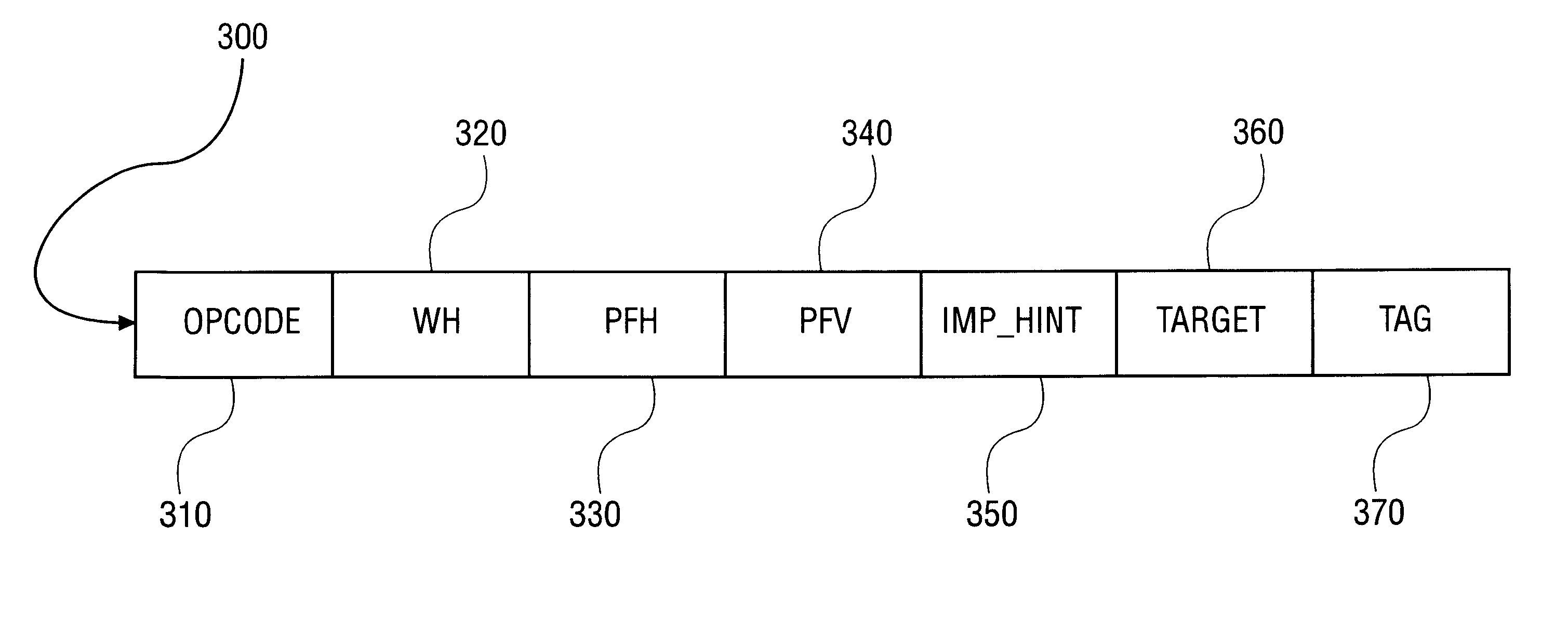
Figure 1 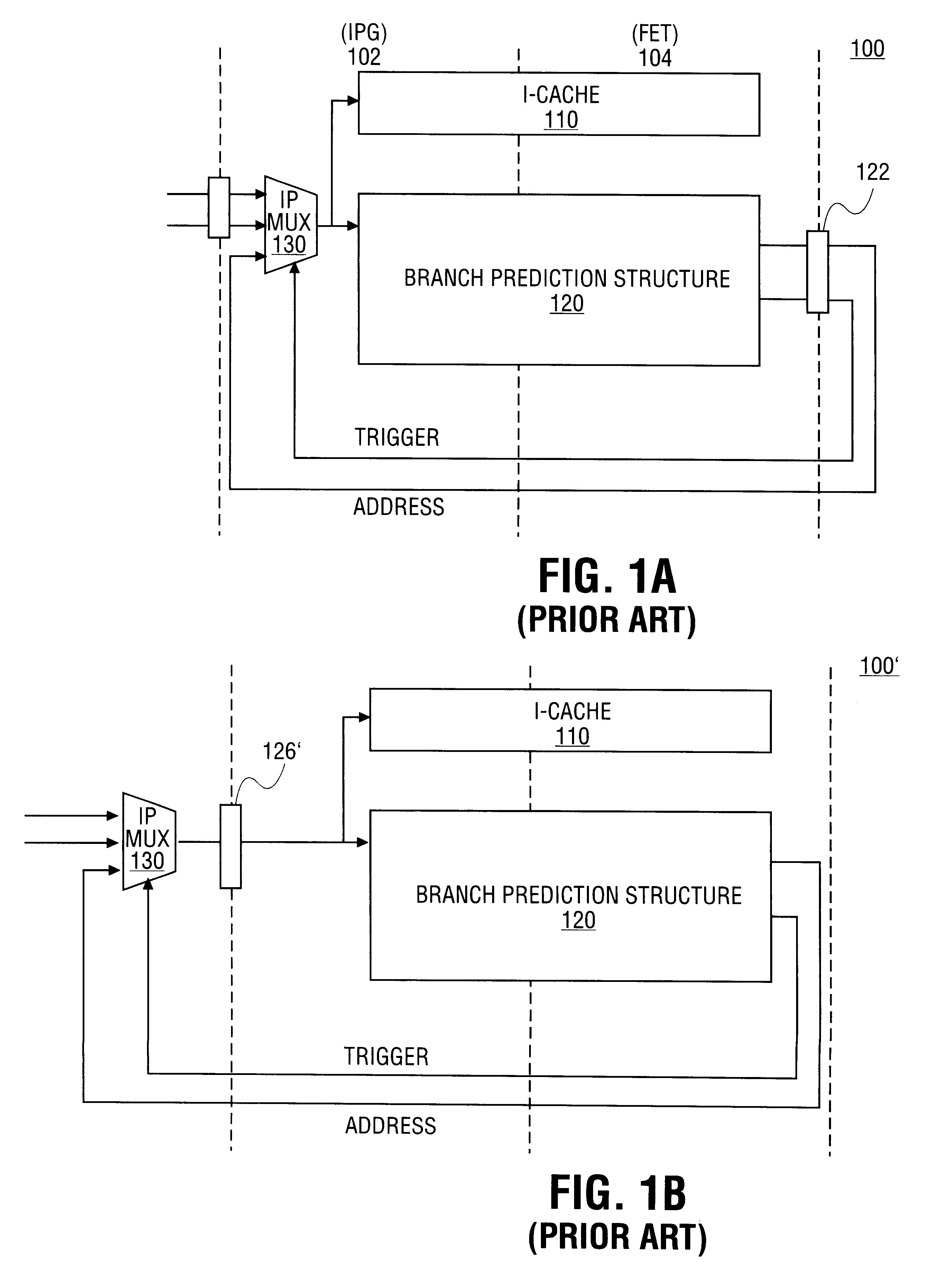
Figure 2 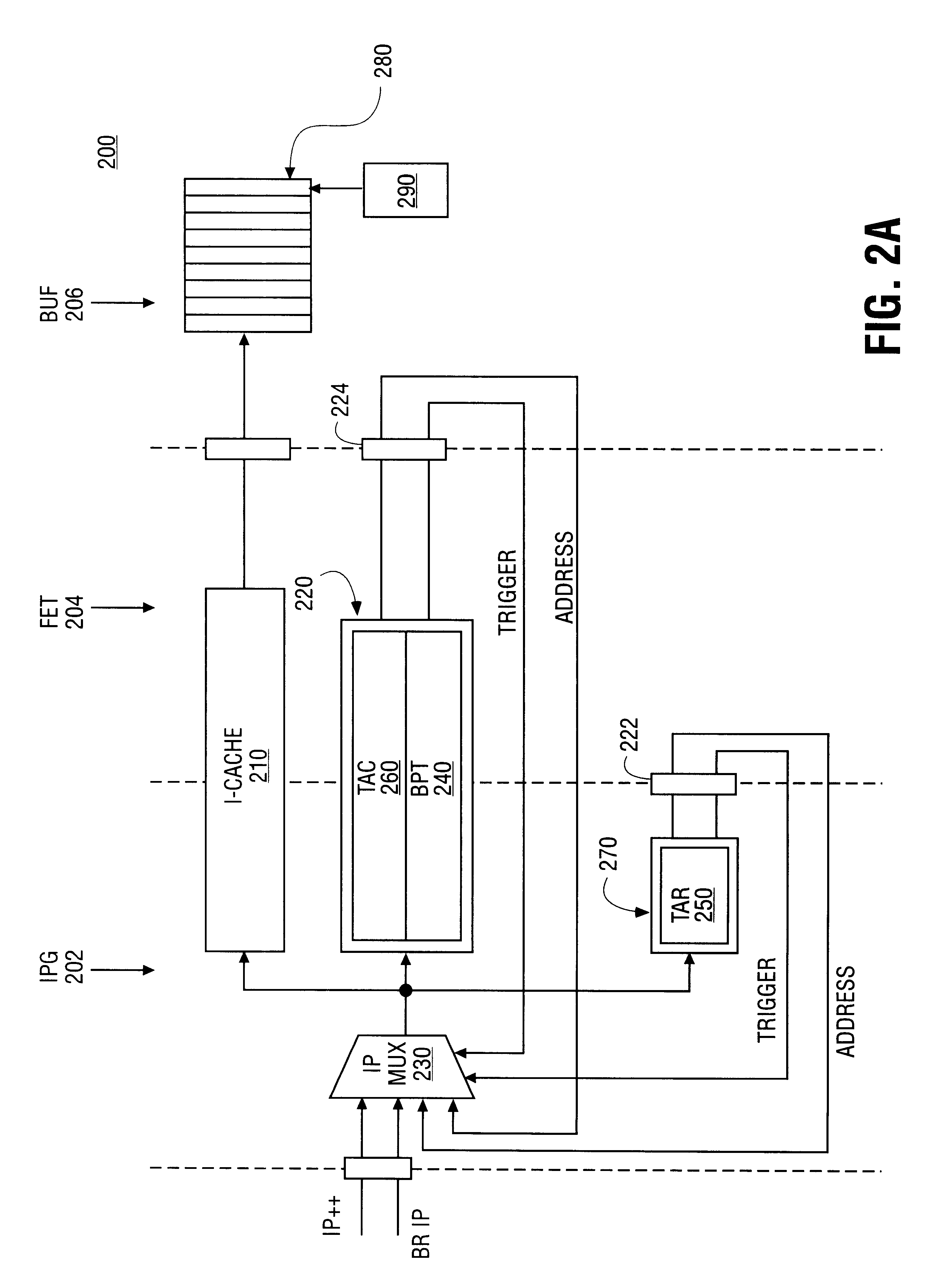
Figure 3
Abstract
Description
1. Field of the InventionThe present invention relates to the field of branch prediction, and in particular, to systems and methods for accessing prediction information related to branch instructions.2. Background ArtAdvanced processors employ pipelining techniques to execute instructions at very high speeds. On such processors, the overall machine is organized as a pipeline consisting of several cascaded stages of hardware. Instruction processing is divided into a sequence of operations, and each operation is performed by hardware in a corresponding pipeline stage ("pipe stage"). Independent operations from several instructions may be processed simultaneously by different pipe stages, increasing the instruction throughput of the pipeline. Where a pipelined processor includes multiple execution resources in each pipe stage, the throughput of the processor can exceed one instruction per clock cycle. Contemporary superscalar, deeply pipelined processors may have anywhere from 5 to 15 ...
Examples
Embodiment Construction
The following discussion sets forth numerous specific details to provide a thorough understanding of the invention. However, those of ordinary skill in the art, having the benefit of this disclosure, will appreciate that the invention may be practiced without these specific details. In addition, various well known methods, procedures, components, and circuits have not been described in detail in order to focus attention on the features of the present invention.
Referring first to FIG. 1A, there is shown a front end 100 of a conventional processor pipeline, including various elements that appear in an instruction pointer generation (IPG) stage 102 and an instruction fetch (FET) stage 104. Here, IP represents a pointer to the next instruction(s) to be executed by the processor. IPG stage 102 includes an IP multiplexer (MUX) 130 and portions of an instruction cache (I-cache) 110 and branch prediction module 120. Remaining portions of I-cache 110 and branch prediction module 120 extend i...