
Prevention of fetal alcohol syndrome and neuronal cell death with ADNF polypeptides
a technology of fetal alcohol syndrome and polypeptides, which is applied in the direction of peptide/protein ingredients, antibody medical ingredients, peptide sources, etc., can solve the problems of reducing or preventing a condition associated with fetal alcohol syndrome, and achieve the effect of reducing neuronal cell death
Patent Information
- Authority / Receiving Office
- US · United States
- Patent Type
- Patents(United States)
- Current Assignee / Owner
- Publication Date
- 2005-08-23
- Estimated Expiration
- Not applicable · inactive patent
Smart Images
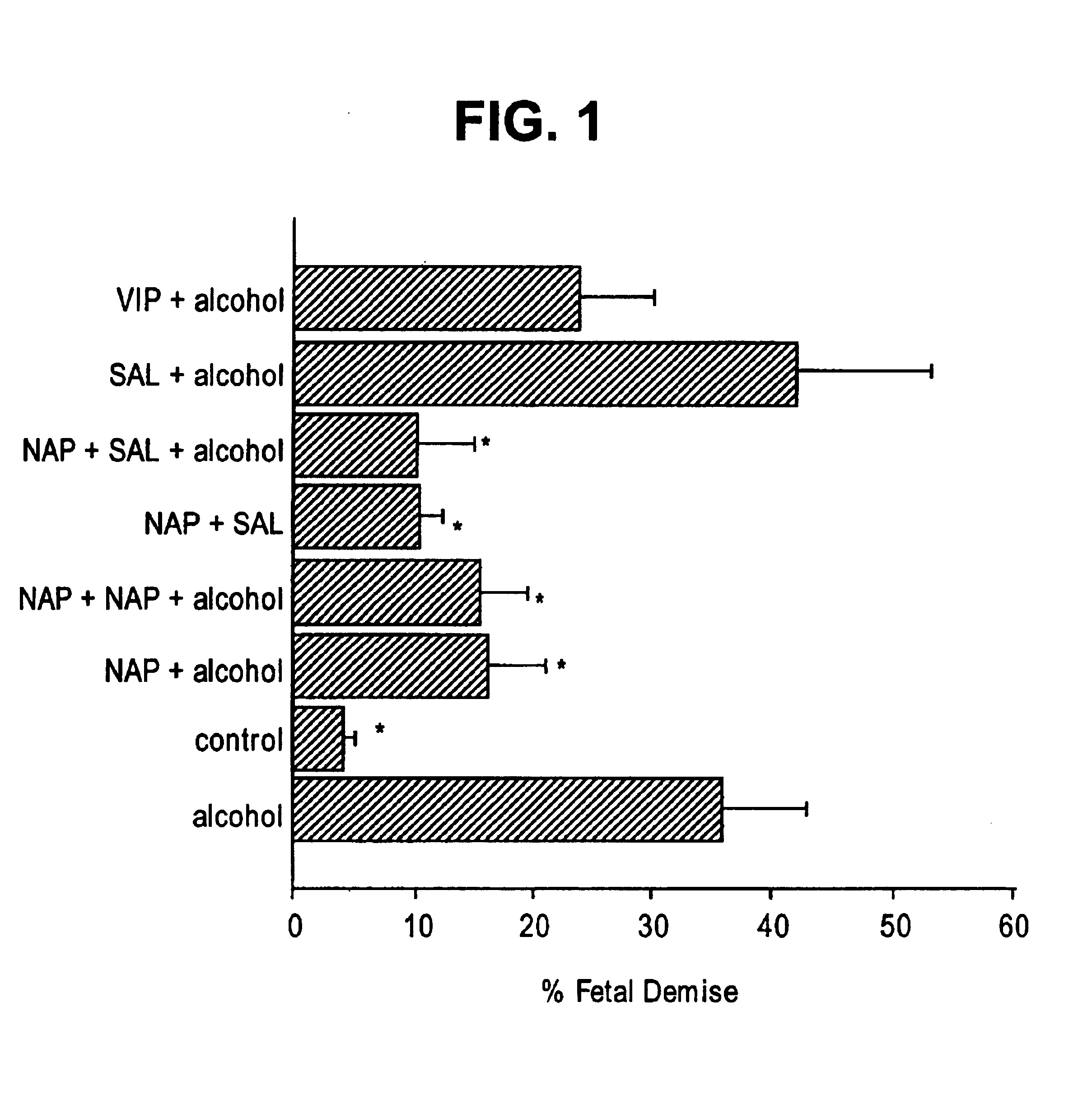
Figure 1 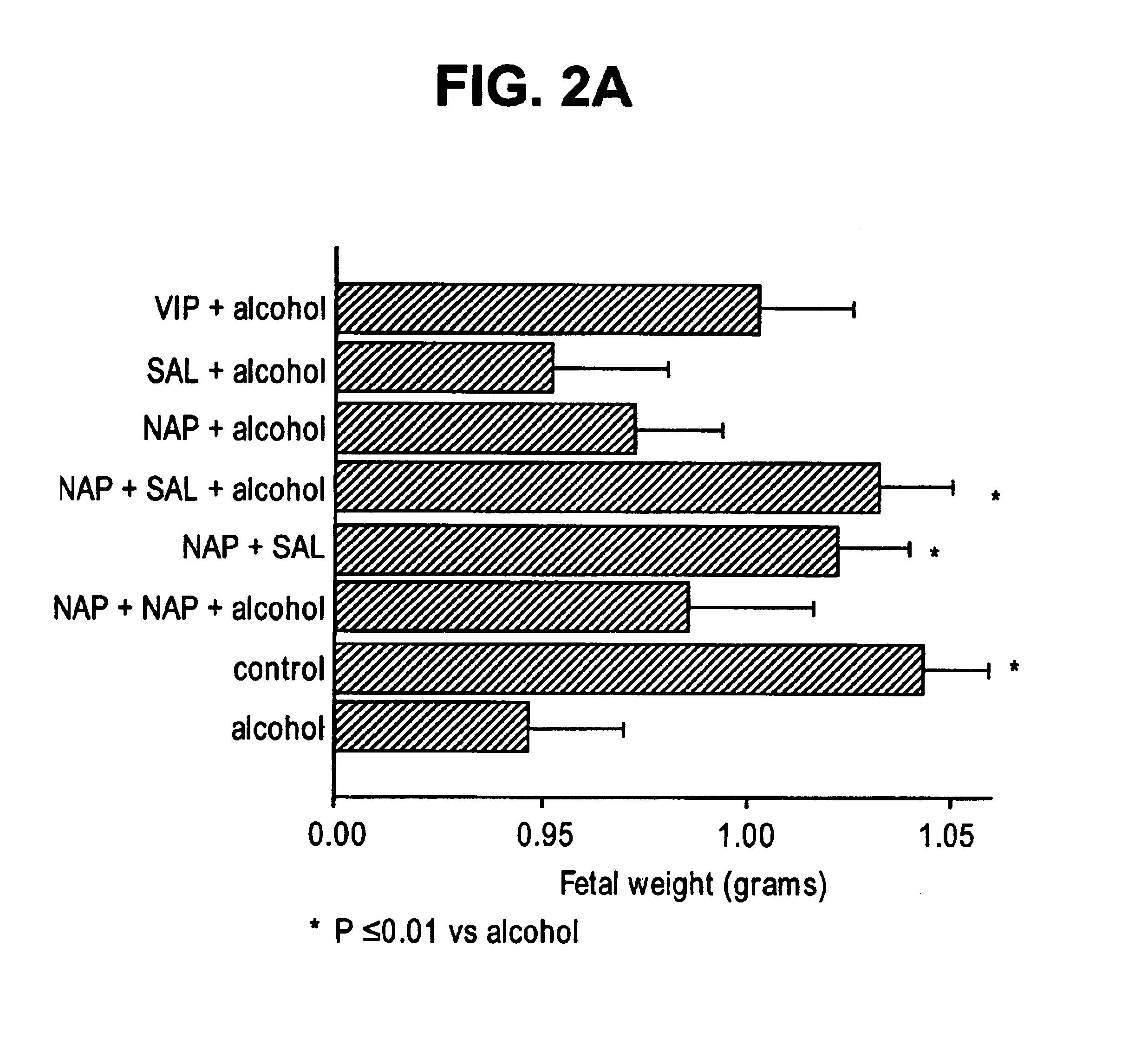
Figure 2 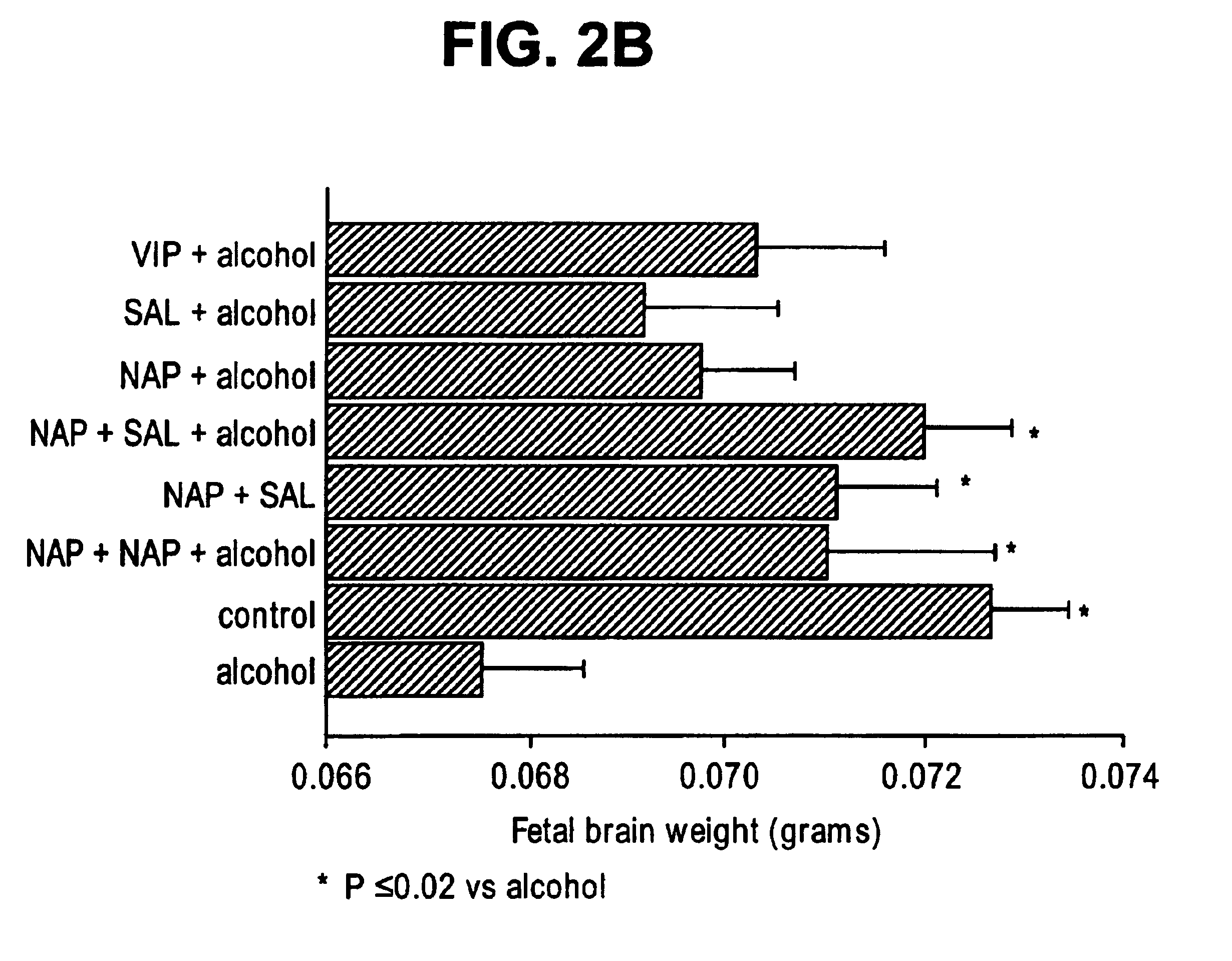
Figure 3
Abstract
Description
CROSS-REFERENCES TO RELATED APPLICATIONS
[0001] This application is related to U.S. Ser. No. 07 / 871,973 filed Apr. 22, 1992, now U.S. Pat. No. 5,767,240, issued Jun. 16, 1998; U.S. Ser. No. 08 / 342,297, filed Oct. 17, 1994 (published as WO96 / 11948); U.S. Ser. No. 60 / 037,404, filed Feb. 27, 1997 (published as WO98 / 35042); and U.S. Ser. No. 09 / 187,330, filed Nov. 11, 1998. All of these applications are incorporated herein by reference.STATEMENT AS TO RIGHTS TO INVENTIONS MADE UNDER FEDERALLY SPONSORED RESEARCH AND DEVELOPMENT
[0002] Not applicable.FIELD OF THE INVENTION
[0003] This invention relates to a method for reducing a condition associated with fetal alcohol syndrome in a subject who is exposed to alcohol in utero with an ADNF polypeptide. In particular, the present invention relates to a method for reducing a condition associated with fetal alcohol syndrome in a subject who is exposed to alcohol in utero with a combination of ADNF I and ADNF III polypeptides. The present invention fu...
Examples
examples
I. Materials and Methods
[0127]A. Animals
[0128]C57-B16J female mice (Jackson Labs) were kept under a 12 h light, 12 h dark regimen with food and water available at all times. The mice received humane animal care in compliance with the “Guideline for Care and Use of Experimental Animals.” Six week old females (21-24 grams) were mated with C57-B 16J males for 4 h. The presence of a vaginal plug was considered day 0 pregnancy.
[0129]B. Treatment Groups
[0130]A published well-delineated model for FAS was followed (Webster, W. S., et al., Neurobehav Tox, 2:227-34 (1980)). Animals were injected (intraperitoneal) on E8 with 255 ethyl alcohol in saline (v / v) or vehicle alone at 0.030 ml / g body weight. Pretreatment with VIP and ADNF peptides (NAPVSIPQ (SEQ ID NO:2), SALLRSIPA (SEQ ID NO:1), NAPVSIPQ (SEQ ID NO:2)+SALLRSIPA (SEQ ID NO:1)) were given 30 min prior to alcohol. Dosages of the neuropeptides were NAPVSIPQ (SEQ ID NO:2) (20 μg) and (40 μg), SALLRSIPA (SEQ ID NO:1) (20 μg), NAPVSIPQ (SE...