
Fuel cell system and control method of the same
a fuel cell and control method technology, applied in the direction of battery/fuel cell control arrangement, cell components, electrochemical generators, etc., can solve the problems of large amount of heat generated, inability to obtain sufficient durability, etc., to prevent cross leakage and prevent deterioration of fuel economy
Patent Information
- Authority / Receiving Office
- US · United States
- Patent Type
- Patents(United States)
- Current Assignee / Owner
- Publication Date
- 2007-01-02
- Estimated Expiration
- Not applicable · inactive patent
Smart Images
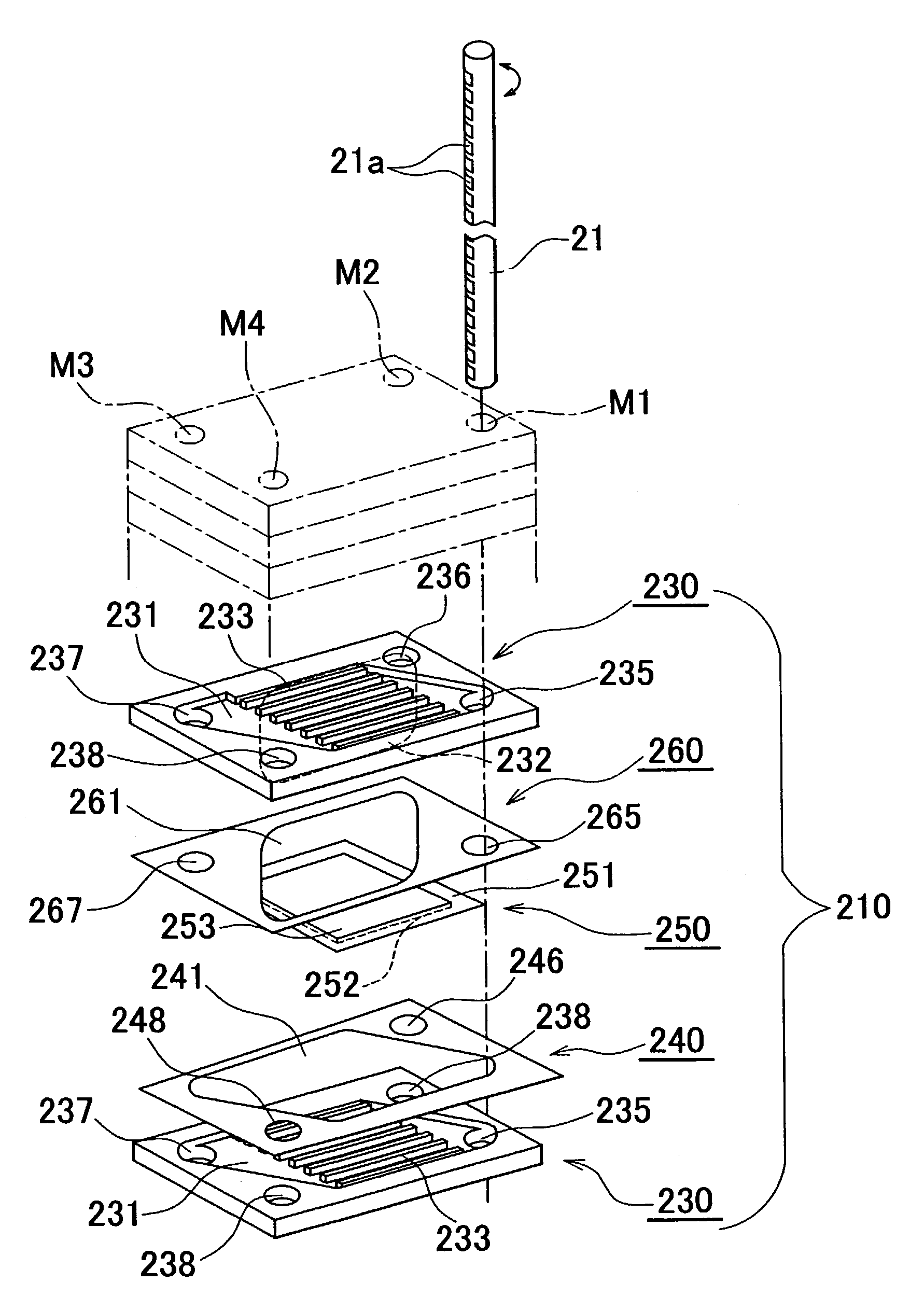
Figure 1 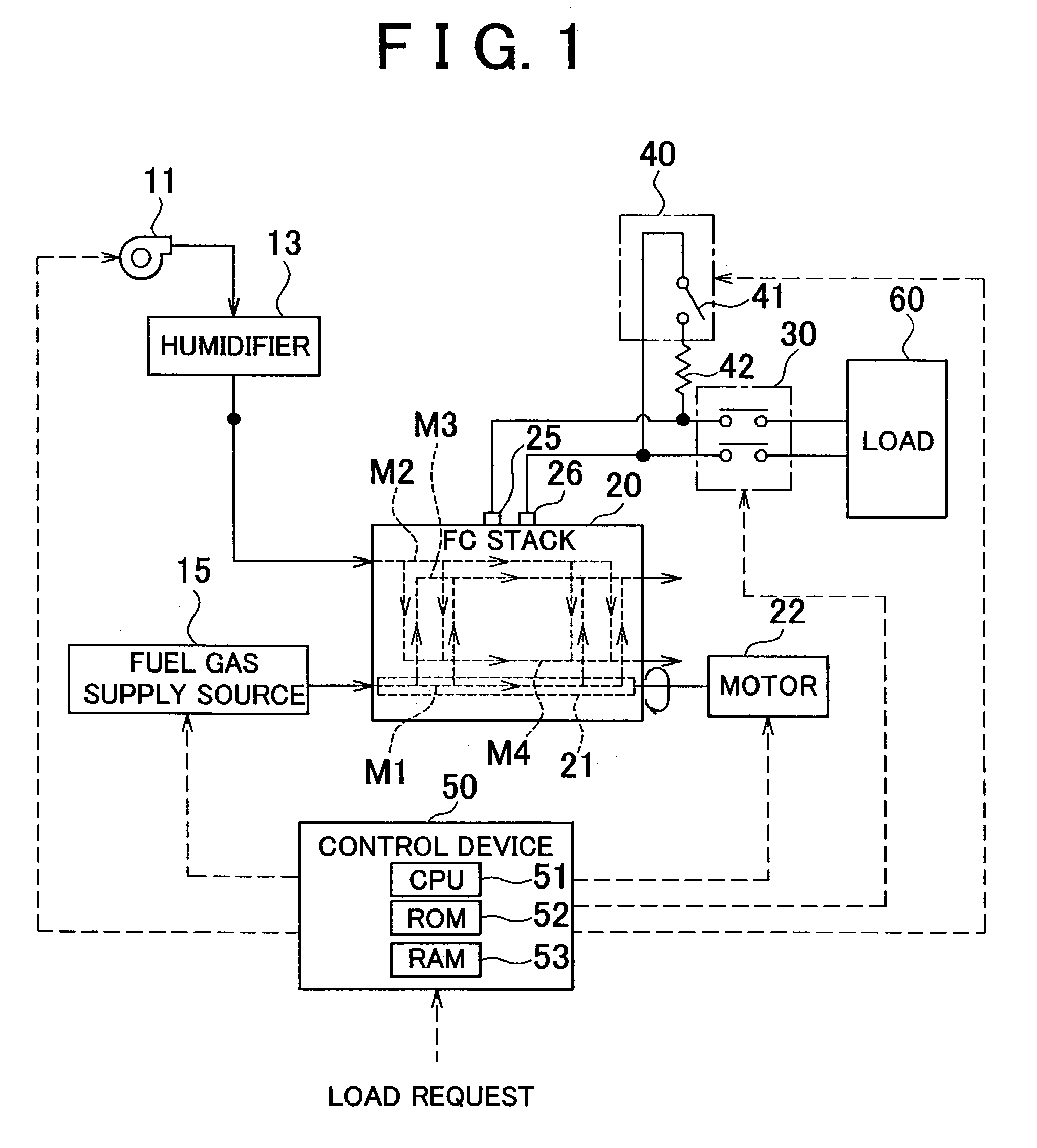
Figure 2 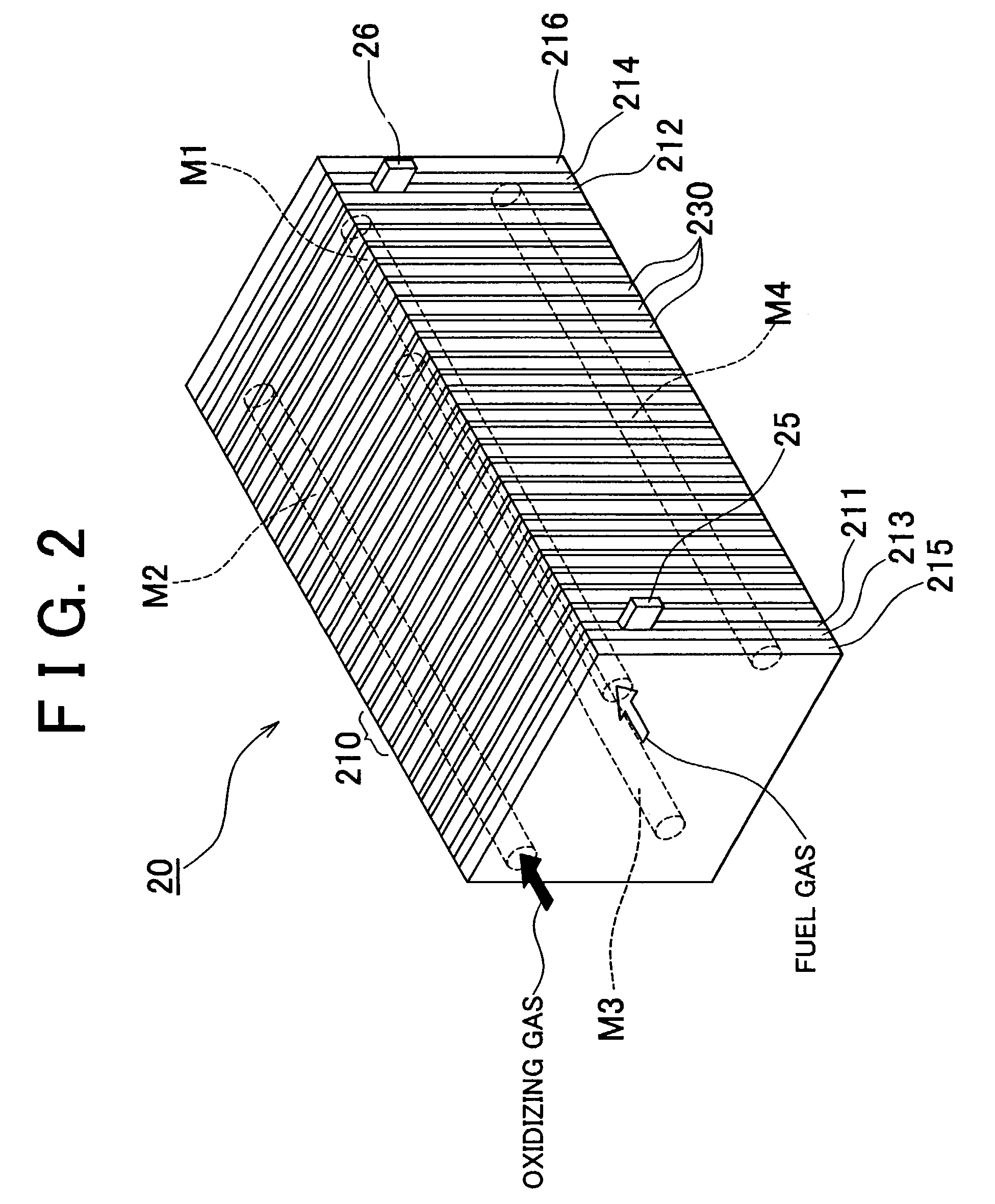
Figure 3
Abstract
Description
INCORPORATION BY REFERENCE
[0001] The disclosure of Japanese Patent Application No. 2002-116950 filed on Apr. 19, 2002, including the specification, drawings and abstract is incorporated herein by reference in its entirety.BACKGROUND OF THE INVENTION
[0002] 1. Field of the Invention
[0003] The invention relates to a fuel cell system and a control method thereof.
[0004] 2. Description of the Related Art
[0005] A fuel cell stack is formed by stacking a plurality of unit cells. Each of the unit cells is configured such that a membrane electrode assembly (hereinafter, referred to as MEA) is sandwiched by two separators. The MEA is formed from an electrolyte membrane in which platinum as a catalytic electrode is applied to both surfaces thereof, and a pair of gas diffusion electrodes which sandwich the electrolyte membrane. The catalytic electrode and the gas diffusion electrode on one surface of the electrolyte membrane form an anode, and the catalytic electrode and the gas diffusion electrode on...
Examples
Embodiment Construction
[0023]In order to further clarify the invention, hereafter, an exemplary embodiment of the invention will be described with reference to accompanying drawings. FIG. 1 is a block diagram schematically showing a fuel cell system 10 according to the embodiment, FIG. 2 is a perspective view of an FC stack 20, and FIG. 3 is an exploded perspective view of a unit cell 210.
[0024]The fuel cell system 10 according to the embodiment mainly includes a fuel cell stack (hereinafter, referred to as an FC stack) 20 of a solid polyelectrolyte type, a first interrupter 30 which is provided between output terminals 25, 26 of the FC stack 20 and a load 60, a second interrupter 40 which is provided between the output terminals 25, 26 of the FC stack 20, and a control device 50 which controls a supply of fuel gas and oxidizing gas to the FC stack 20 and controls connection and disconnection by the first interrupter 30 and the second interrupter 40.
[0025]The FC stack 20, which will be described later in ...