
Identification and isolation of novel polypeptides having WW domains and methods of using same
a polypeptide and domain technology, applied in the field of identification and isolation of polypeptides having ww domains, can solve the problem of low homology between different sequences that bind sh3 domains, and achieve the effect of ease of specificity
Patent Information
- Authority / Receiving Office
- US · United States
- Patent Type
- Patents(United States)
- Current Assignee / Owner
- Publication Date
- 2007-10-09
- Estimated Expiration
- Not applicable · inactive patent
Smart Images
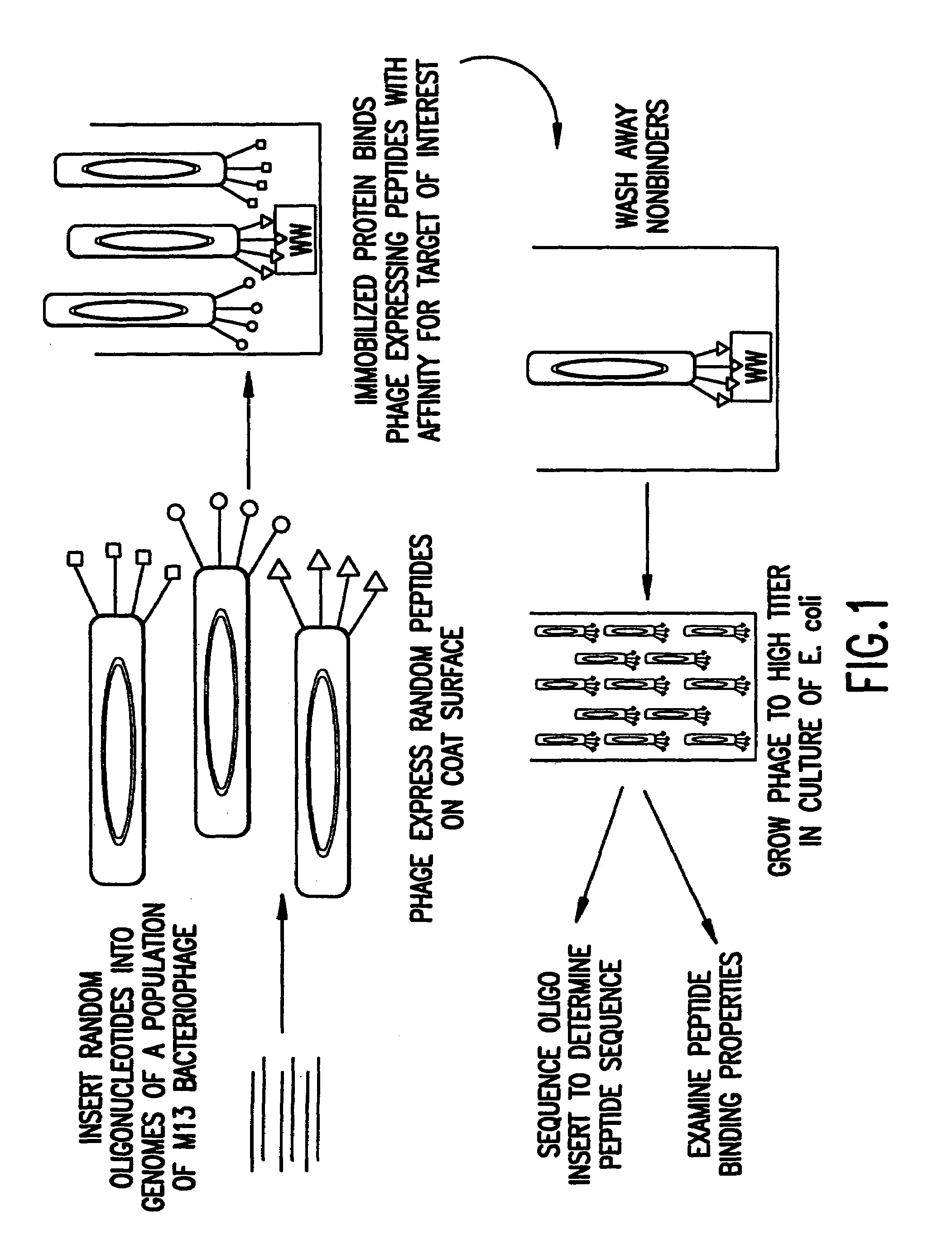
Figure 1 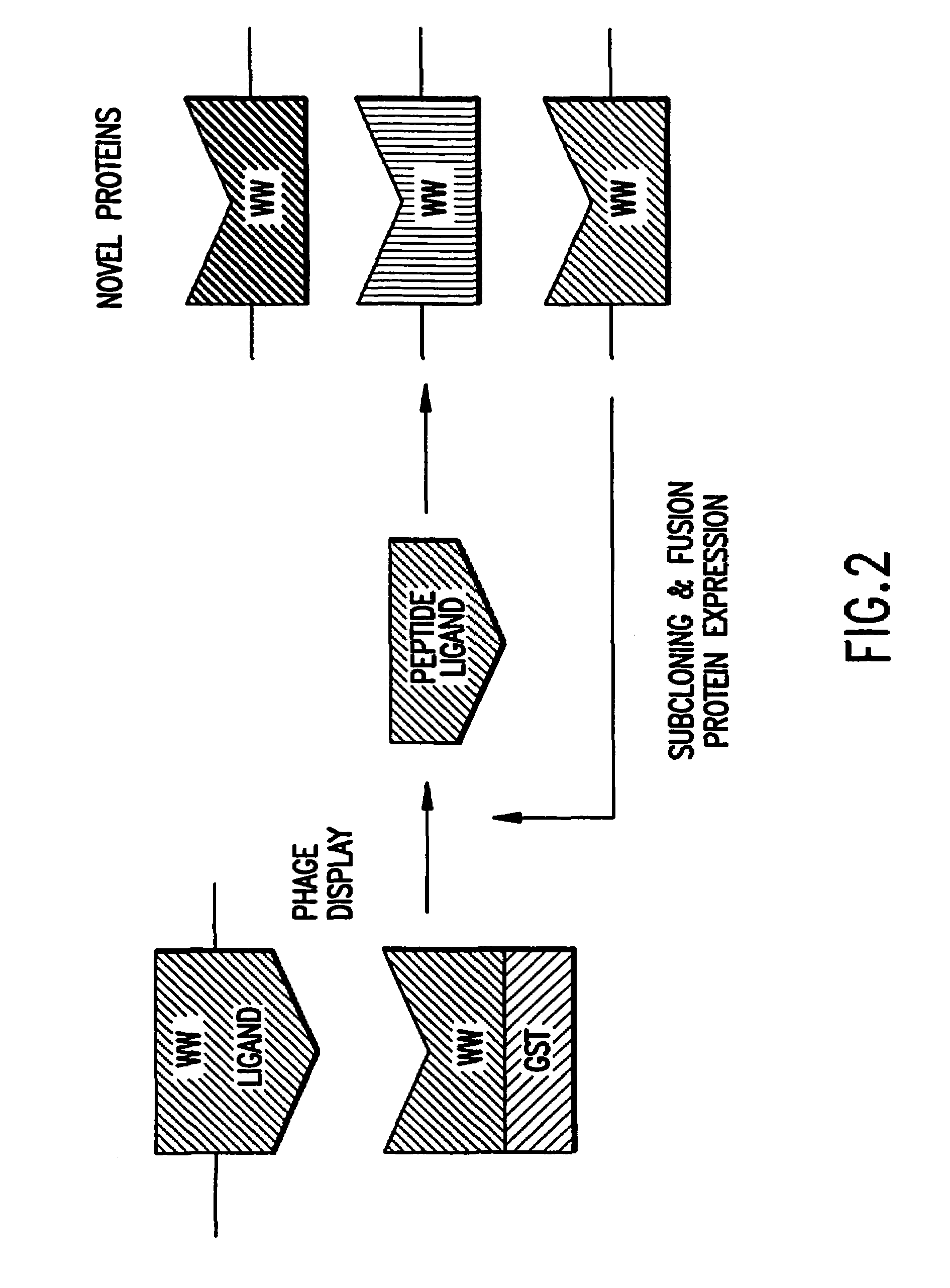
Figure 2 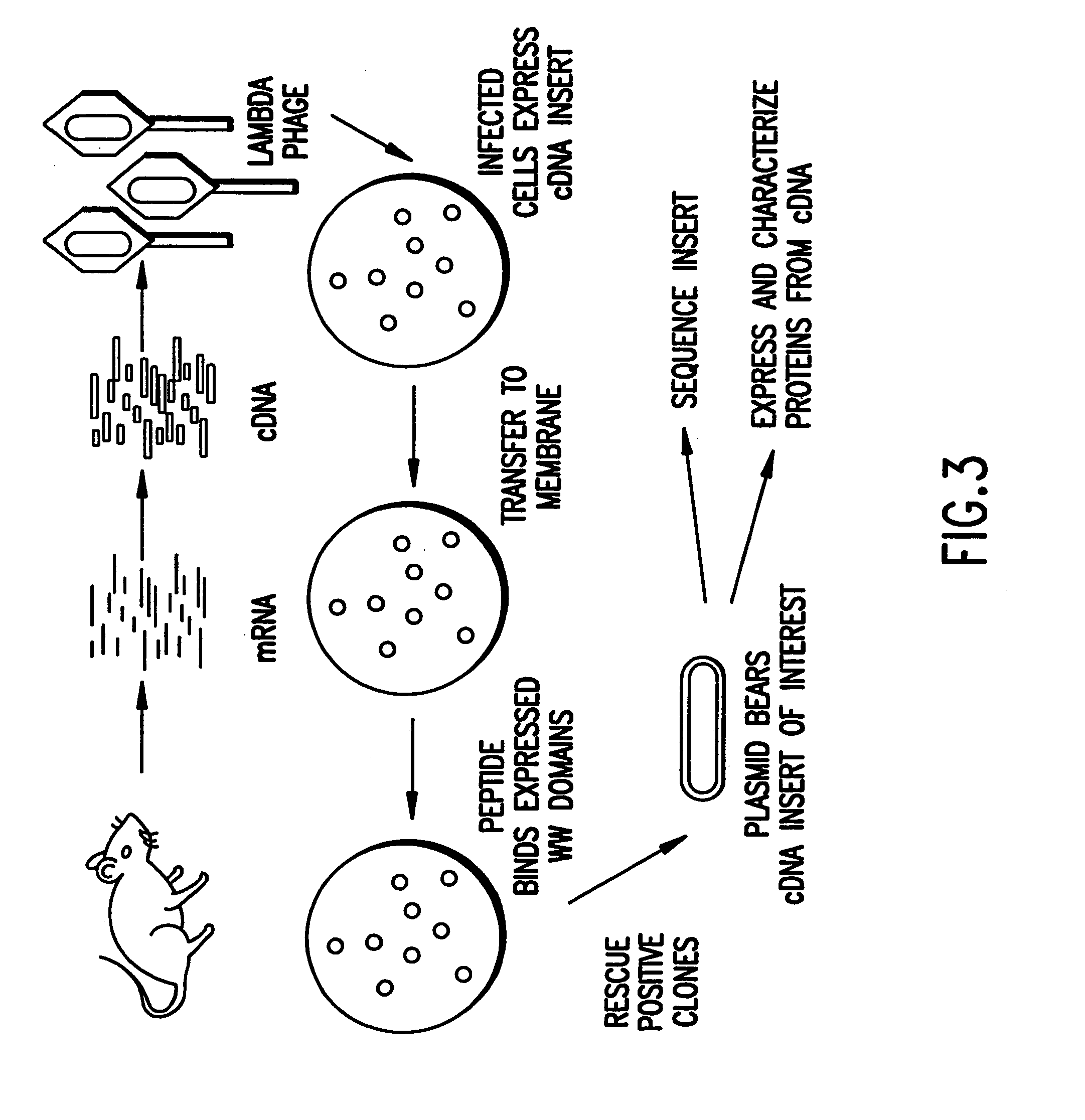
Figure 3
Abstract
Description
[0001] This application is a continuation of U.S. application Ser. No. 08 / 826,516, filed Apr. 13, 1997, now abandoned, which is a continuation-in-part of U.S. application Ser. No. 08 / 630,916, filed Apr. 3, 1996, now U.S. Pat. No. 6,011,137, which are incorporated herein by reference in their entirety.1. FIELD OF THE INVENTION
[0002] The present invention is directed to the identification and isolation of polypeptides having WW domains or functional equivalents thereof. Various methods of use of these polypeptides are described including, but not limited to, targeted drug discovery. Also provided are various peptide recognition units that bind to WW domains.2. BACKGROUND OF THE INVENTION
[0003] 2.1. Functional Domains in Proteins
[0004] Many biological processes involve the specific binding of proteins to one another. Examples of such processes are signal transduction, transcription, DNA replication, cytoskeletal organization, membrane transport, etc. In many cases it has been shown that sp...
Examples
Embodiment Construction
[0072]The present invention relates to polypeptides having a WW domain, methods of identifying and using these polypeptides and derivatives thereof, and nucleic acids encoding the foregoing. The detailed description that follows is provided to elucidate the invention further and to assist further those of ordinary skill who may be interested in practicing particular aspects of the invention.
[0073]First, certain definitions are in order. Accordingly, the term “polypeptide” refers to a molecule comprised of amino acid residues joined by peptide (i.e., amide) bonds and includes proteins and peptides. Hence, the polypeptides of the present invention may have single or multiple chains of covalently linked amino acids and may further contain intrachain or interchain linkages comprised of disulfide bonds. Some polypeptides may also form a subunit of a multiunit macromolecular complex. Naturally, the polypeptides can be expected to possess conformational preferences and to exhibit a three-d...