
Polypeptides having a functional domain of interest and methods of identifying and using same
a functional domain and polypeptide technology, applied in the field of polypeptides having a functional domain of interest, can solve the problems of limited applicability to finding novel proteins containing functional domains, non-complete understanding of the role of oncogenesis, normal cell growth, differentiation, etc., and achieves ease of specificity.
Patent Information
- Authority / Receiving Office
- US · United States
- Patent Type
- Patents(United States)
- Current Assignee / Owner
- Publication Date
- 2001-10-30
- Estimated Expiration
- Not applicable · inactive patent
Smart Images
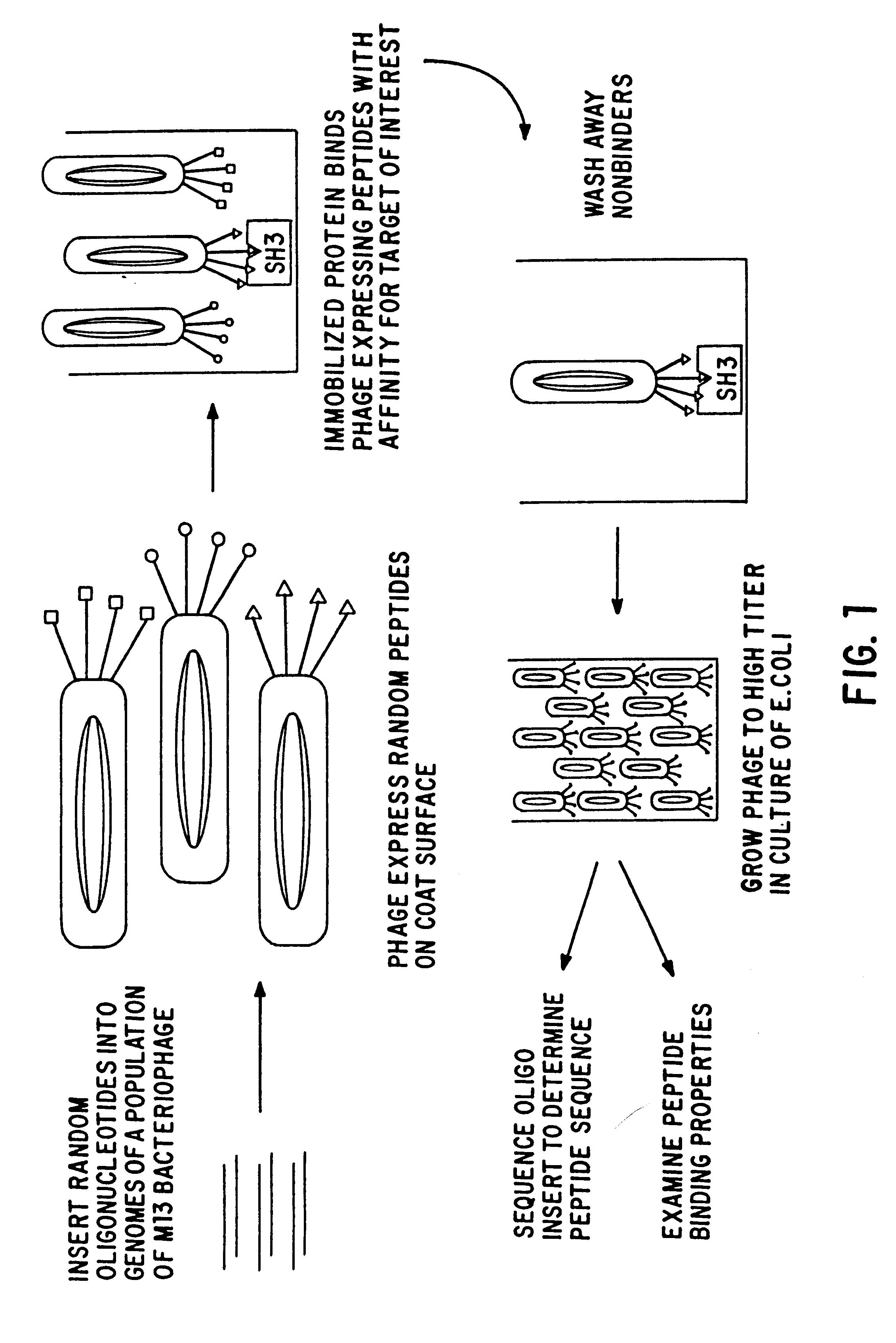
Figure 1 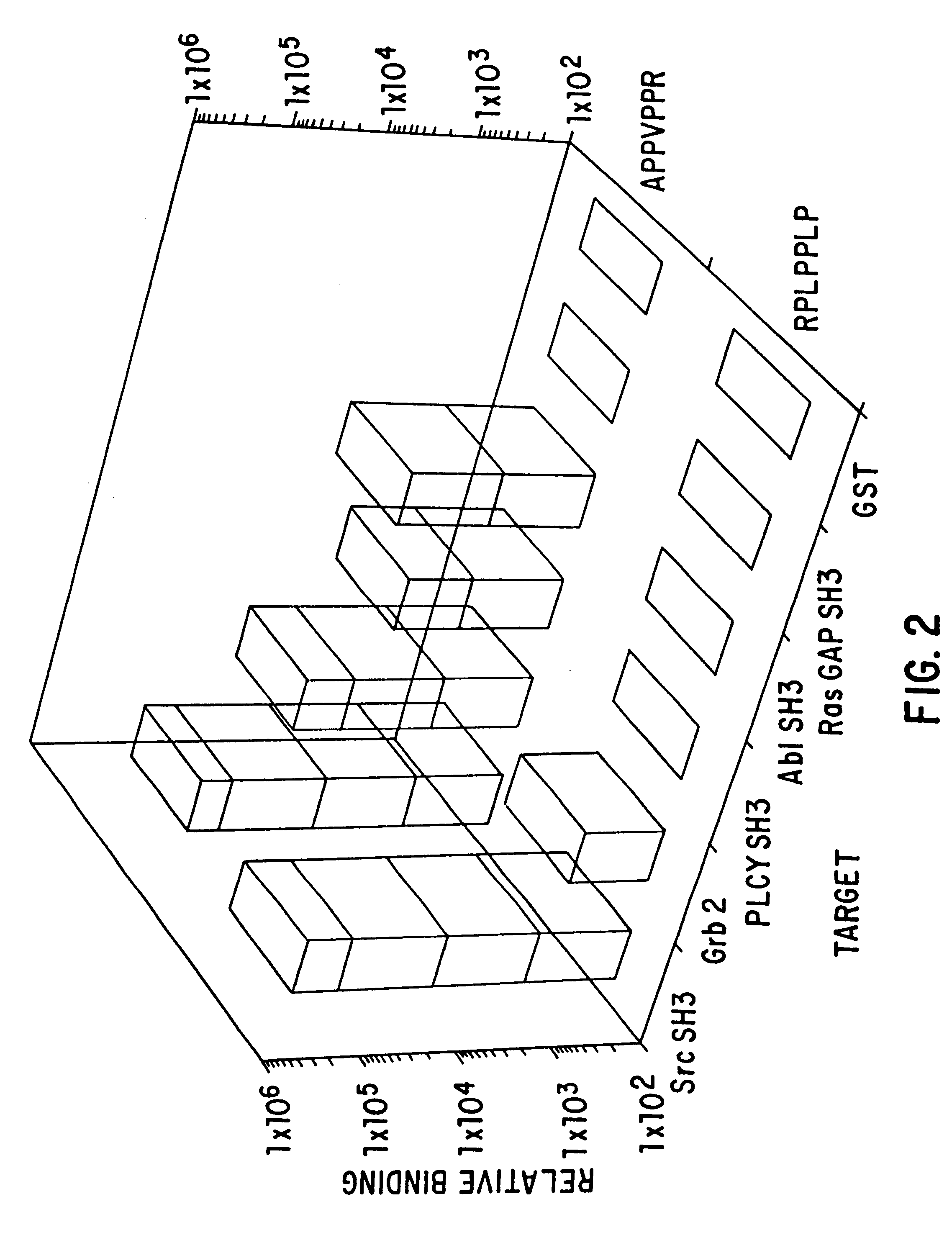
Figure 2 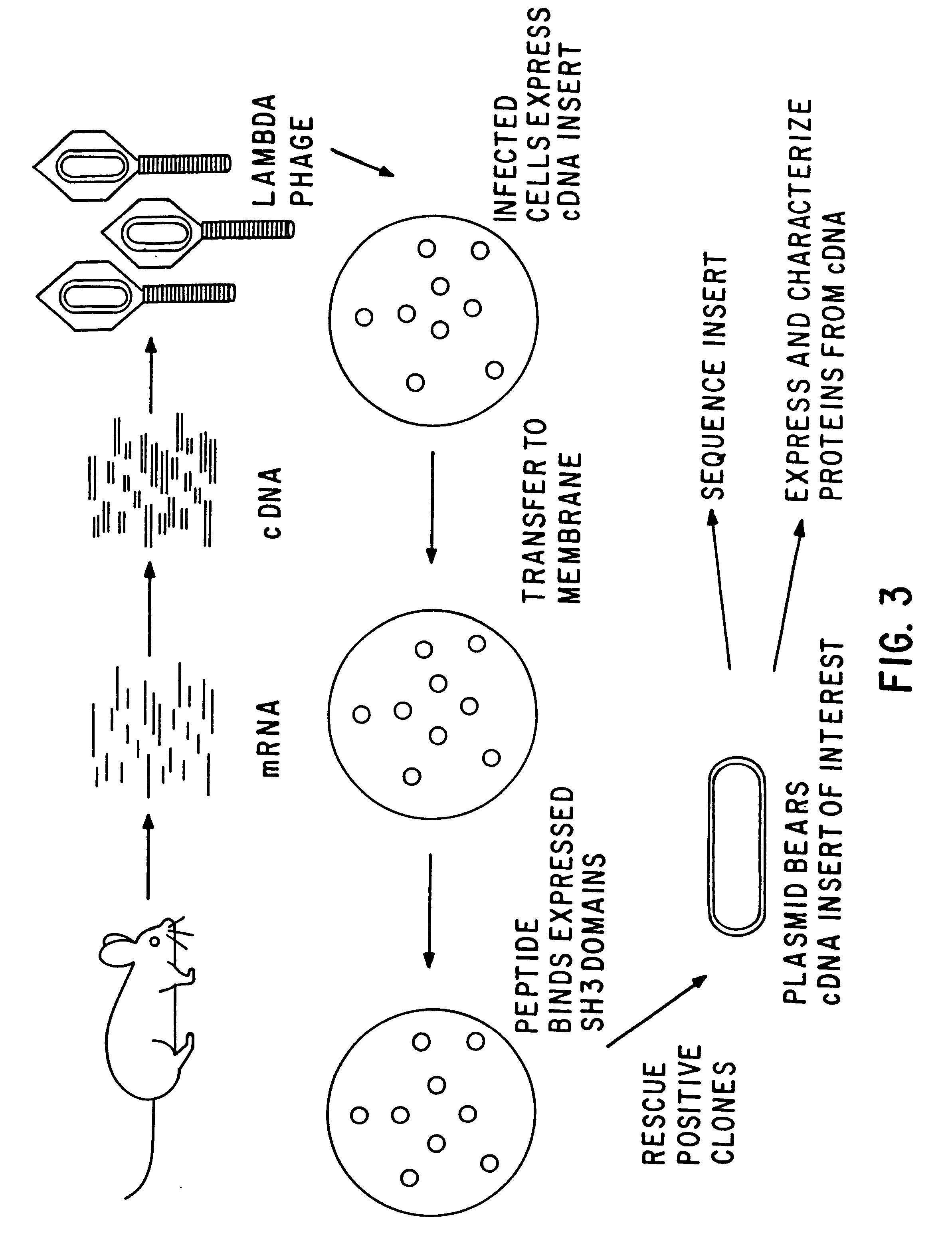
Figure 3
Abstract
Description
1. INTRODUCTIONThe present invention is directed to polypeptides having a functional domain of interest or functional equivalents thereof. Methods of identifying these polypeptides are described, along with various methods of their use, including but not limited to targeted drug discovery.2. BACKGROUND OF THE INVENTIONCombinatorial libraries represent exciting new tools in basic science research and drug design. It is possible through synthetic chemistry or molecular biology to generate libraries of complex polymers, with many subunit permutations. There are many guises to these libraries: random peptides, which can be synthesized on plastic pins (Geysen et al., 1987, J. Immunol. Meth. 102:259-274), beads (Lam et al., 1991, Nature 354:82-84) or in a soluble form (Houghten et al., 1991, Nature 354:84-86) or expressed on the surface of viral particles (Cwirla et al., 1990, Proc. Natl. Acad. Sci. USA 87:6378-6382; Kay et al., 1993, Gene 128:59-65; Scott and Smith, 1990, Science 249:386...
Examples
Embodiment Construction
As stated above, the present invention is related broadly to certain polypeptides having a functional domain of interest and is directed to methods of identifying and using these polypeptides. The present invention is also directed to a method of using isolated, operationally defined ligands involved in binding interactions for optimally identifying an exhaustive set of compounds binding such ligands and to compounds, target molecules, and, in one embodiment, polypeptides having a functional domain of interest and to methods of using these compounds. The detailed description that follows is provided to elucidate the invention further and to assist further those of ordinary skill who may be interested in practicing particular aspects of the invention.
First, certain definitions are in order. Accordingly, the term "polypeptide" refers to a molecule comprised of amino acid residues joined by peptide (i.e., amide) bonds and includes proteins and peptides. Hence, the polypeptides of the p...