
Method for purifying a branched water-soluble polymer
a water-soluble polymer and purification method technology, applied in the field of monofunctional derivatives of polymer, can solve the problems of protein immunological problems, enzymes with specific biocatalytic activity being less useful than they otherwise, and limiting the use of these compounds, etc., to achieve enhanced selectivity of attachment, simple and straightforward preparation, and careful purification
Patent Information
- Authority / Receiving Office
- US · United States
- Patent Type
- Patents(United States)
- Current Assignee / Owner
- Publication Date
- 2008-09-02
- Estimated Expiration
- Not applicable · inactive patent
Smart Images
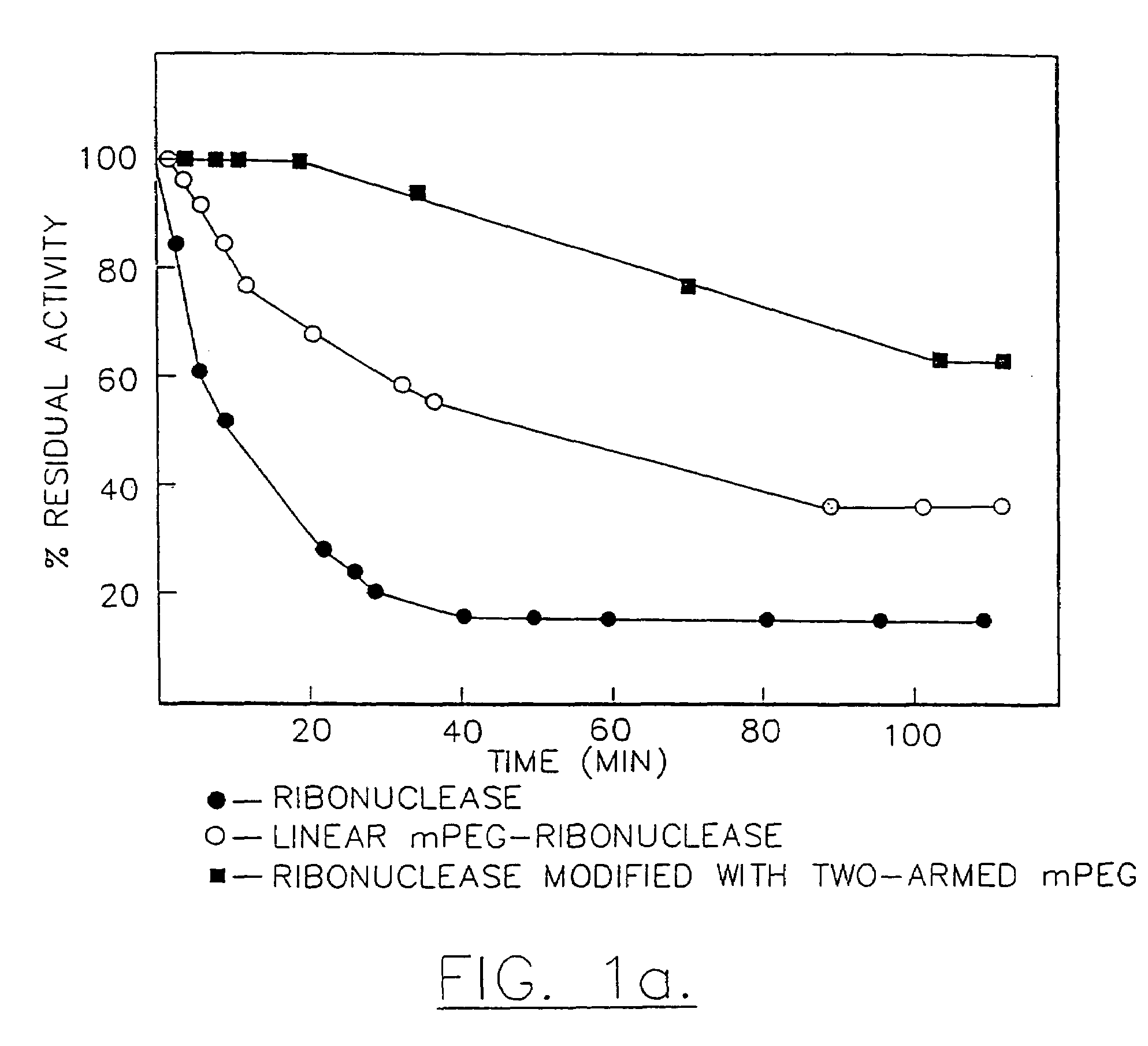
Figure 1 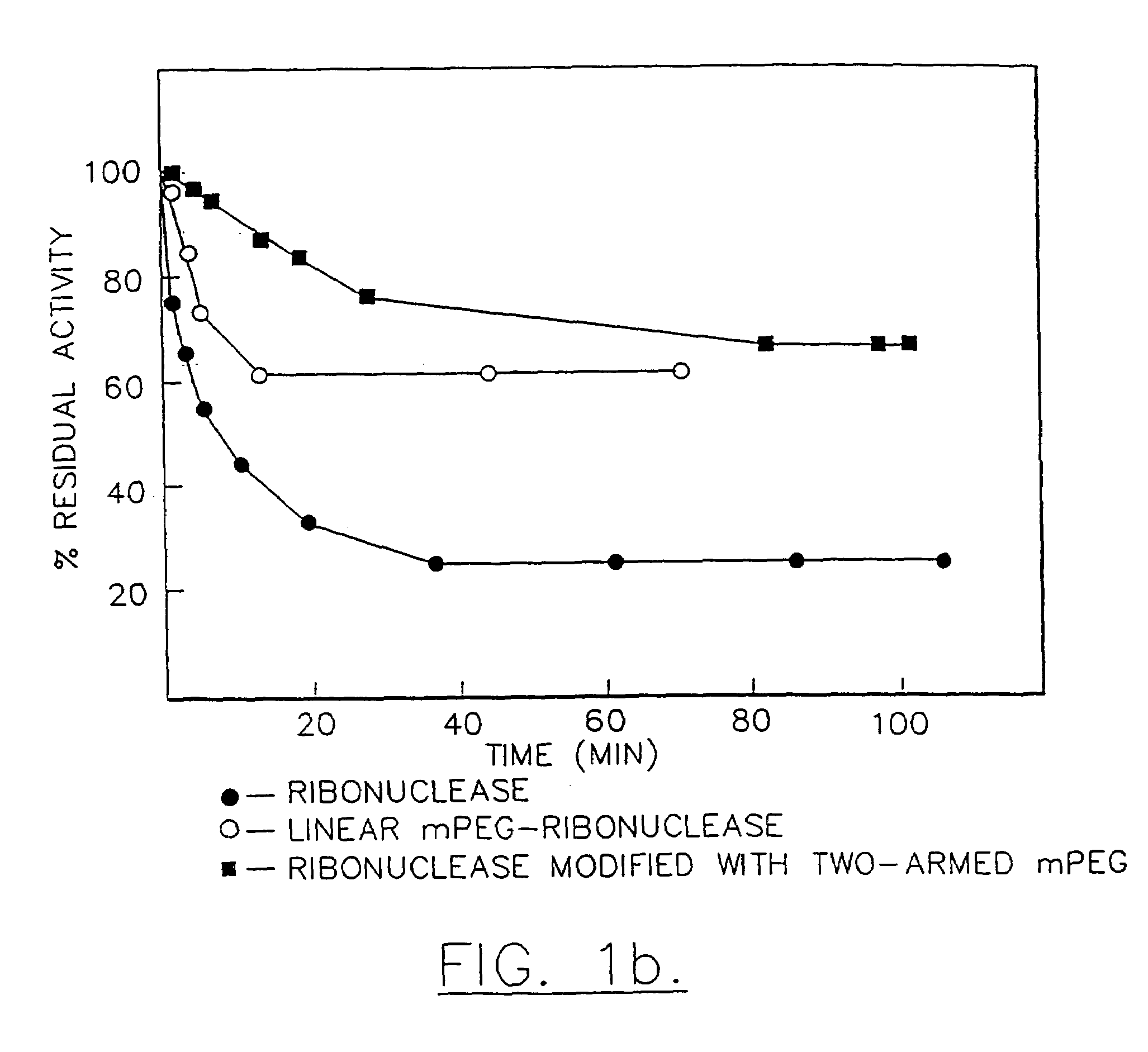
Figure 2 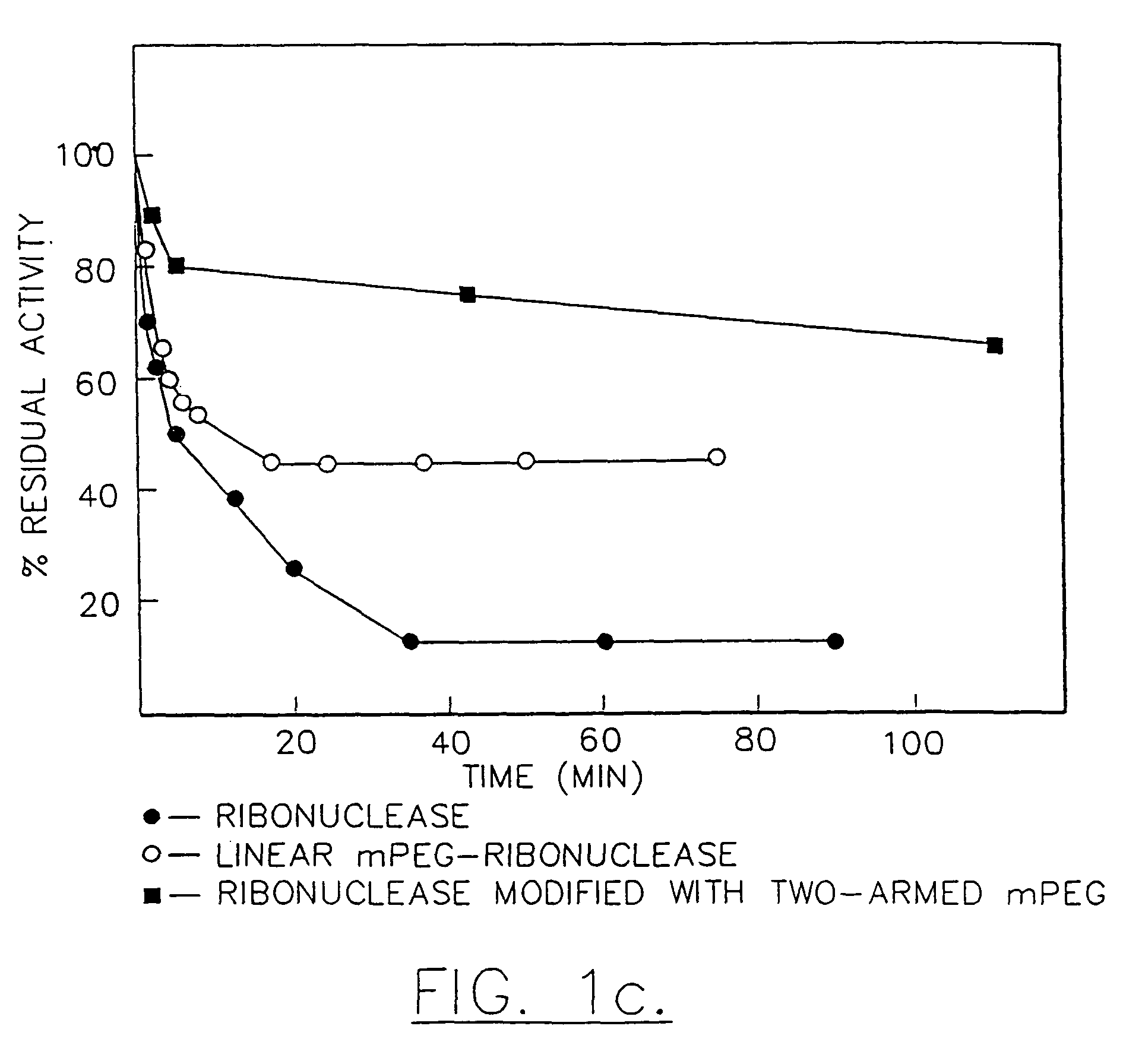
Figure 3
Abstract
Description
[0001] This application is a continuation of U.S. patent application Ser. No 10 / 119,546, filed Apr. 10, 2002; which is a continuation of U.S. patent application Ser. No. 09 / 939,867, filed Aug. 27, 2001, now abandoned which is a continuation of U.S. patent application Ser. No. 09 / 140,907, filed Aug. 27, 1998, now abandoned which is a continuation of U.S. patent application Ser. No. 08 / 443,383, filed May 17, 1995, now U.S. Pat. No. 5,932,462; which is a continuation-in-part of U.S. patent application Ser. No. 08 / 371,065, filed on Jan. 10, 1995 now abandoned.FIELD OF THE INVENTION
[0002] This invention relates to monofunctional derivatives of poly(ethylene glycol) and related polymers and to methods for their synthesis and activation for use in modifying the characteristics of surfaces and molecules.BACKGROUND OF THE INVENTION
[0003] Improved chemical and genetic methods have made many enzymes, proteins, and other peptides and polypeptides available for use as drugs or biocatalysts having s...
Examples
Embodiment Construction
[0063]I. Preparation of a Hydrolytically Stable mPEG-Disubstituted Lysine.
[0064]Two procedures are described for the preparation of a hydrolytically stable, two-armed, mPEG-disubstituted lysine. The first procedure is a two step procedure, meaning that the lysine is substituted with each of the two mPEG moieties in separate reaction steps. Monomethoxy-poly(ethylene glycol) arms of different lengths or of the same length can be substituted onto the lysine molecule, if desired, using the two step procedure. The second procedure is a one step procedure in which the lysine molecule is substituted with each of the two mPEG moieties in a single reaction step. The one step procedure is suitable for preparing mPEG-disubstituted lysine having mPEG moieties of the same length.
[0065]Unlike prior multisubstituted structures, no aromatic ring is present in the linkage joining the nonpeptidic polymer arms produced by either the one or two step methods described below that could result in toxicity...