
Brake control apparatus for vehicle
a technology for controlling apparatus and brakes, which is applied in the direction of braking systems, braking components, transportation and packaging, etc., can solve the problems of noise output from sensors used to control actuators, and the change of driving direction of the vehicle, so as to improve the stability of the driving state of the vehicle during braking, prevent the change of driving direction, and improve the safety of the driving state of the vehicl
Patent Information
- Authority / Receiving Office
- US · United States
- Patent Type
- Patents(United States)
- Current Assignee / Owner
- Publication Date
- 2009-07-28
Smart Images
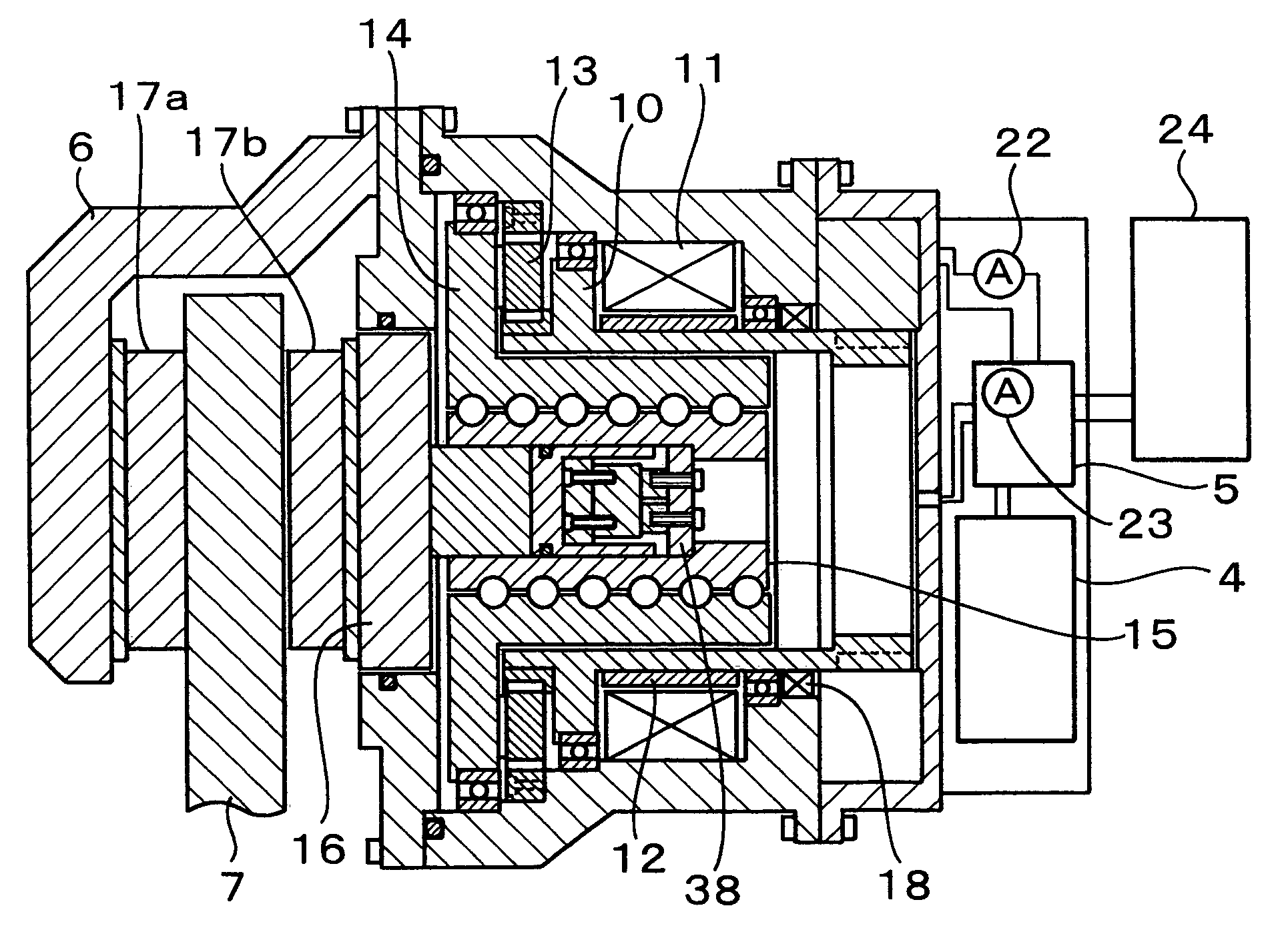
Figure 1 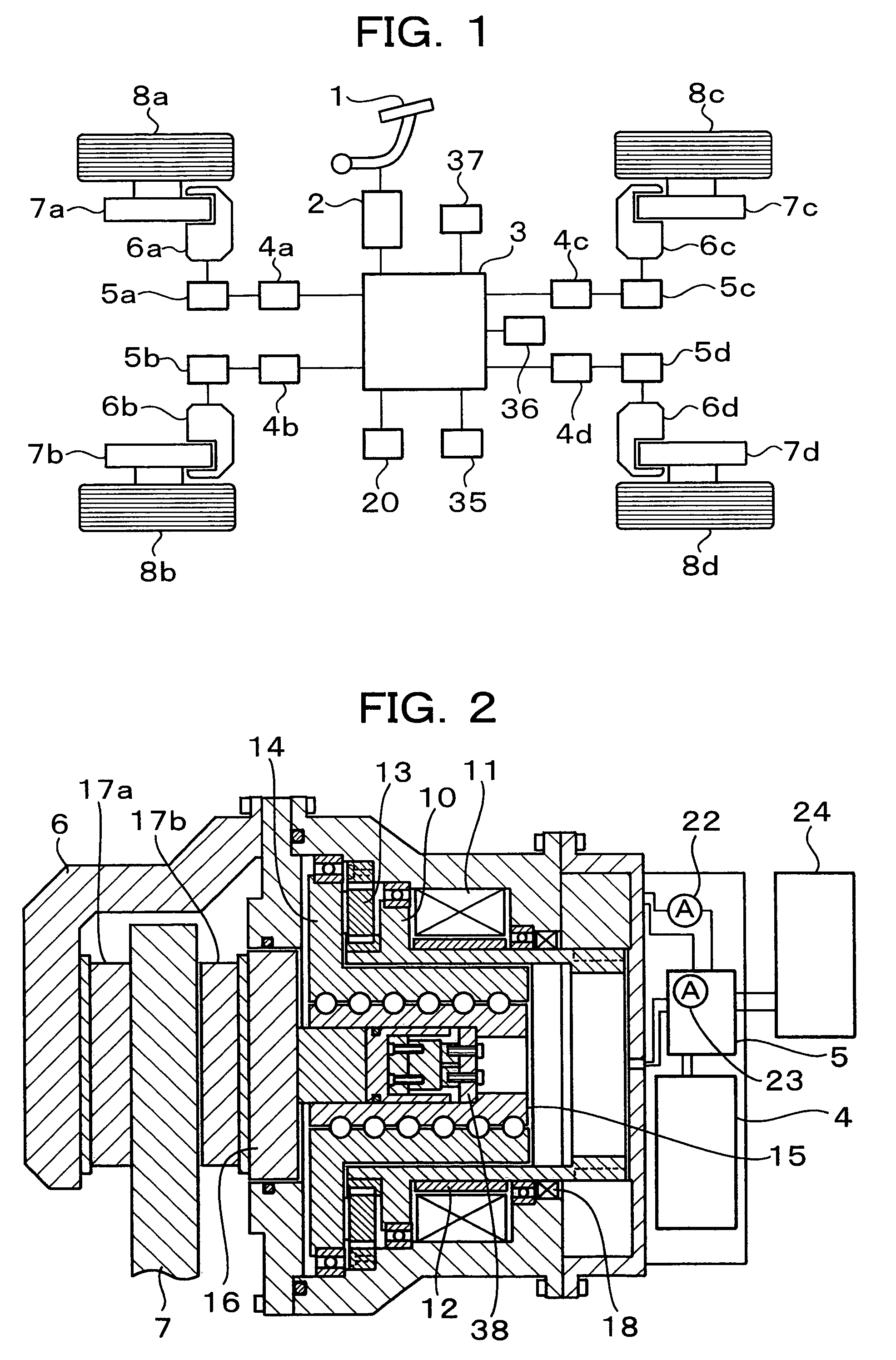
Figure 2 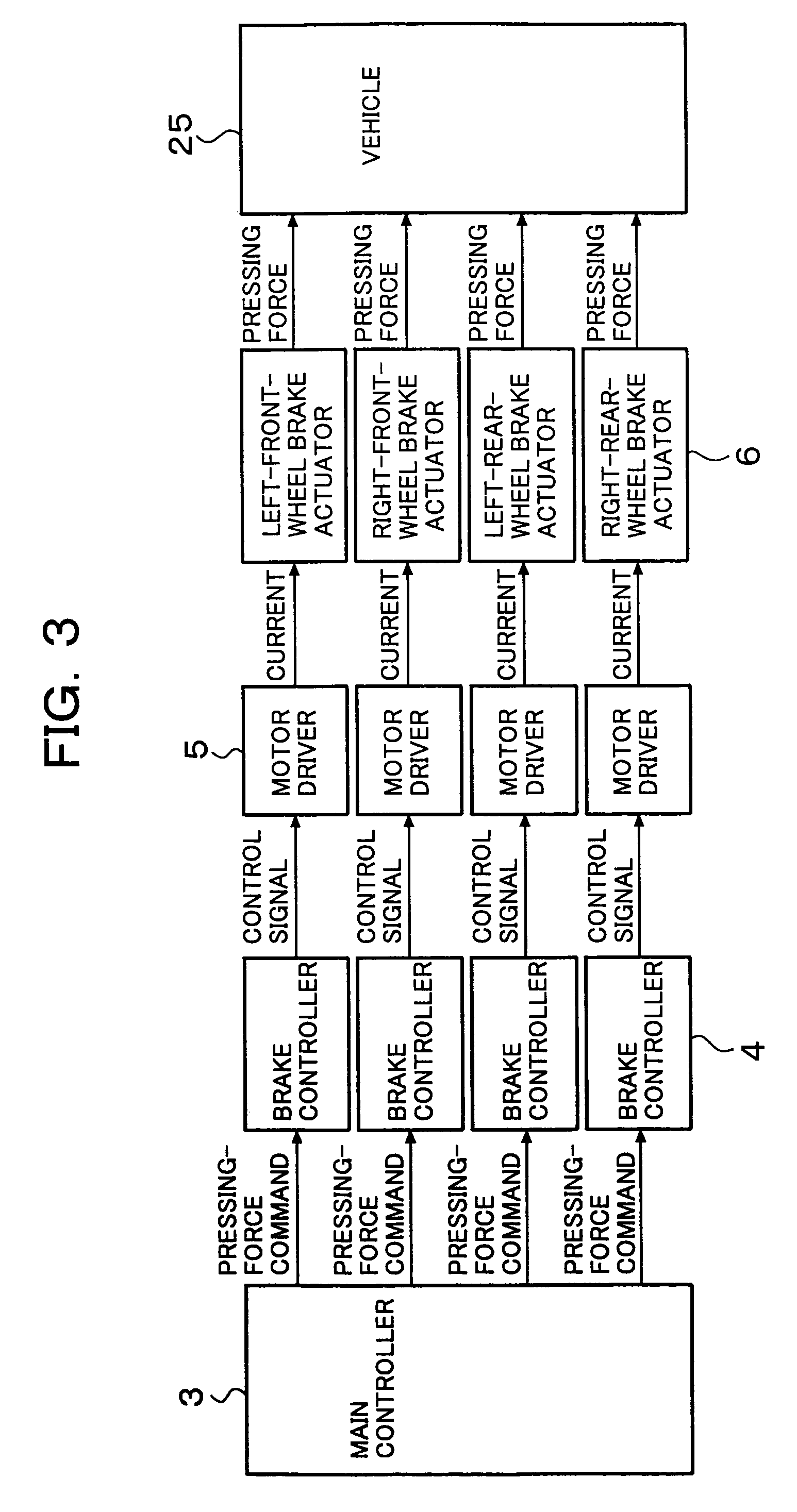
Figure 3
Abstract
Description
BACKGROUND OF THE INVENTION
[0001] 1. Field of the Invention
[0002] The present invention relates to a control apparatus for a brake device which can control a displacement of a piston using an electromotive device, such as a motor, and which generates a braking force by moving the piston so as to bring a brake friction member into contact with an object to be braked.
[0003] 2. Description of the Related Art
[0004] Recently, various brake devices that can freely change a pressing force applied to a brake friction member using an electromotive device, such as a motor, have been suggested. A vehicle having such a brake device can perform brake control without being restricted by a brake command from a driver. Therefore, it is possible to improve both the safety in driving the vehicle and comfort. For example, Japanese Unexamined Patent Application Publication No. 2003-175816 discloses an electric brake system capable of synchronizing the times at which brake devices apply brakes to respective...
Examples
Embodiment Construction
[0031]A brake control apparatus according to an embodiment of the present invention will be described in detail below with reference to FIGS. 1 to 14. FIG. 1 is a diagram illustrating the overall system structure of a vehicle including the brake control apparatus according to the embodiment of the present invention. More specifically, FIG. 1 shows a brake control system of the vehicle (for example, an automobile) having four wheels which each receive a braking force. Electric brake devices that function as brake devices for individually controlling the braking forces applied to the respective wheels are mounted on the vehicle.
[0032]Referring to FIG. 1, the vehicle includes wheels 8a to 8d; disc rotors 7a to 7d that rotate together with the respective wheels 8a to 8d; electric brake actuators 6a to 6d that slide along the respective disc rotors 7a to 7d while being pressed thereagainst; a brake pedal 1; a stroke sensor 2 that converts a displacement of the brake pedal 1 into an elect...