

Power of two multiplication engine
a multiplication engine and power technology, applied in computing, computation using denominational number representation, instruments, etc., can solve the problems of high hardware and hardware consumption, high overhead, and inconvenient operation, and achieve efficient implementation, efficient implementation, and minimum storage and execution overhead
Patent Information
- Authority / Receiving Office
- US · United States
- Patent Type
- Patents(United States)
- Current Assignee / Owner
- Publication Date
- 2010-03-23
- Estimated Expiration
- Not applicable · inactive patent
Smart Images
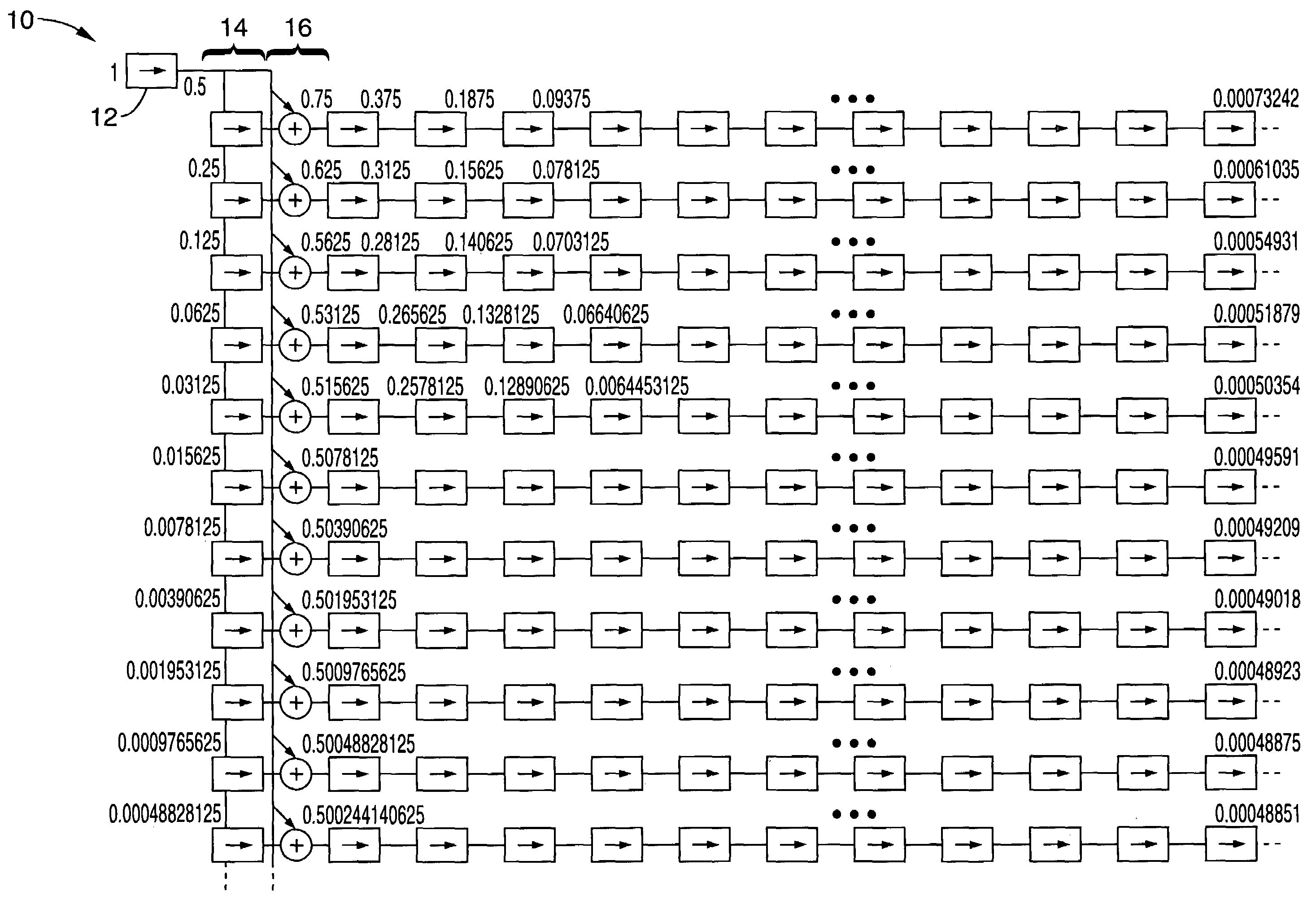
Figure 1 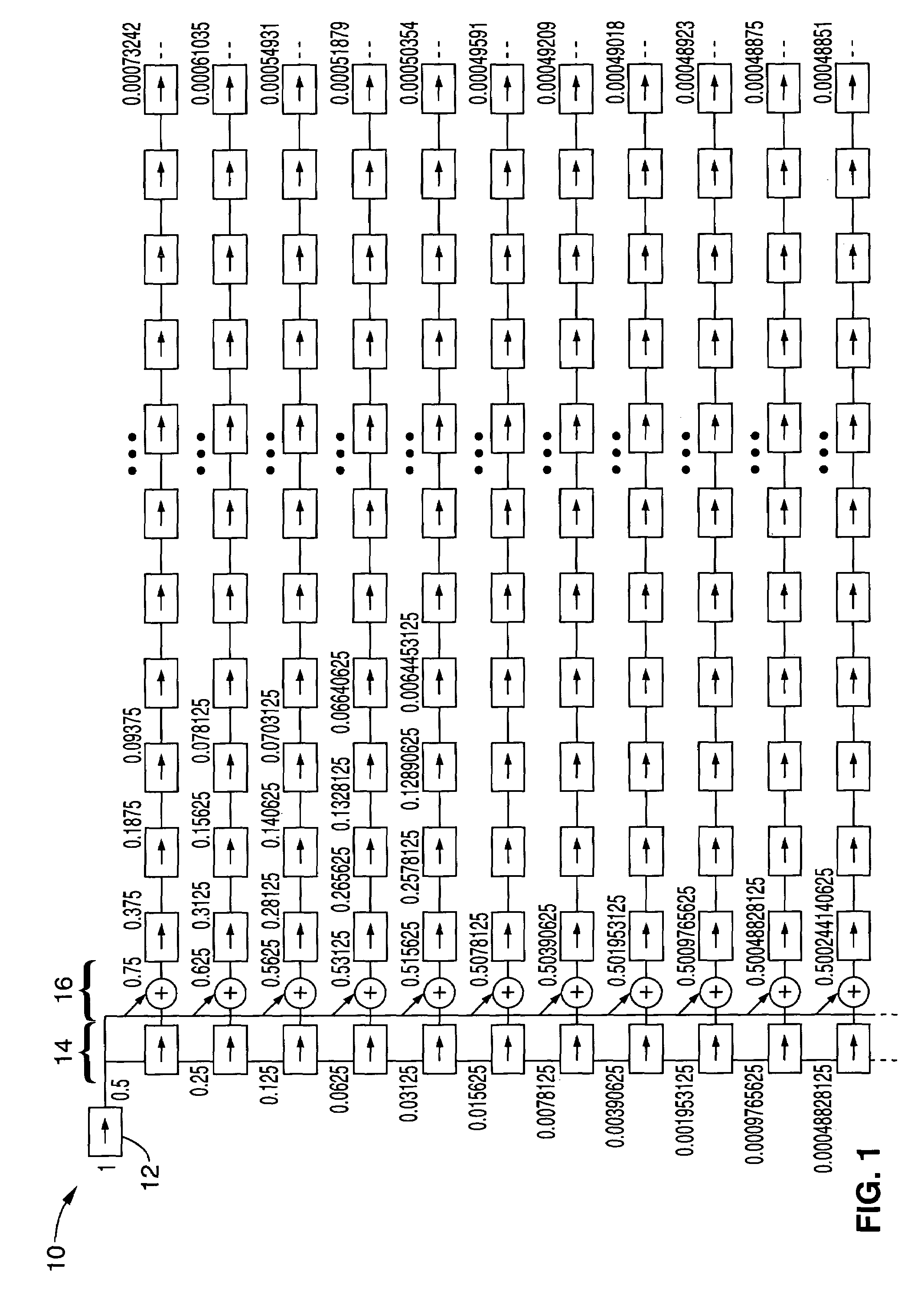
Figure 2 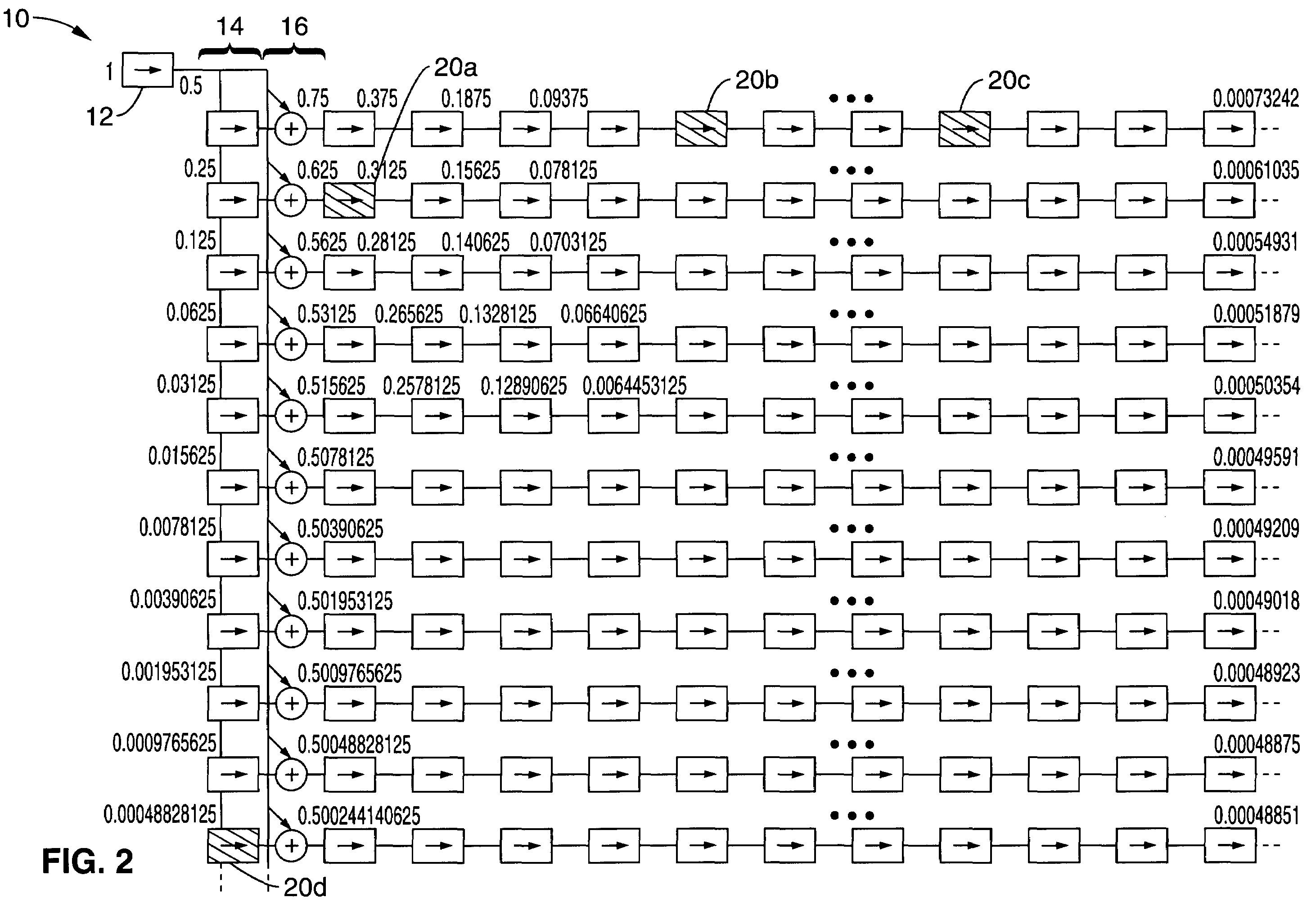
Figure 3
Abstract
Description
CROSS-REFERENCE TO RELATED APPLICATIONS
[0001] This application claims priority from U.S. provisional application Ser. No. 60 / 624,461, filed on Nov. 1, 2004, incorporated herein by reference in its entirety.STATEMENT REGARDING FEDERALLY SPONSORED RESEARCH OR DEVELOPMENT
[0002] Not ApplicableNOTICE OF MATERIAL SUBJECT TO COPYRIGHT PROTECTION
[0003] A portion of the material in this patent document is subject to copyright protection under the copyright laws of the United States and of other countries. The owner of the copyright rights has no objection to the facsimile reproduction by anyone of the patent document or the patent disclosure, as it appears in the United States Patent and Trademark Office publicly available file or records, but otherwise reserves all copyright rights whatsoever. The copyright owner does not hereby waive any of its rights to have this patent document maintained in secrecy, including without limitation its rights pursuant to 37 C.F.R. § 1.14.BACKGROUND OF THE INVE...
Examples
embodiment 26
[0114]FIG. 3 illustrates the combined shift and add paths from the table associated with the located coefficients for the example multiplier value of ⅓. Data input 28 connects to shifters 32b-32g and to adders 34a-34e to generate data output 30. It can be seen that this technique allows for the rapid development of hardware which performs multiplications, or in which multiplications are integrated. It should be noted that multiple sequential shifts are shown with a binary power notation, such as block 32d which is 2−9 representing 9 right shifts, block 32f which is 2−5 representing 5 right shift, and block 32g which is 2−3 representing three right shift.
[0115]The combination of shift and add paths for the example multiplication by ⅓ will result in multiplying the data by 0.333251953125. As part of the testing of the present technique we confirmed the operation of this static coefficient example within an FPGA design. Several filters were also made using this engine having various nu...
embodiment 90
[0140]FIG. 8 illustrates an embodiment 90 of a multiplier engine that is implemented completely in hardware and operates without need of reconfiguring connections between the shifters and adders to perform the multiplication. This embodiment is referred to as a “Y-adder slide shifter multiplication engine” and it can execute multiplications with any multiplier value (within the range of the associated table construct) rapidly as the multiplication is performed in hardware and can be readily setup for separate multiplier values. It should be appreciated that aspects described in the following embodiment can be applied separately or in any desired combination with aspects previously described without departing from the teachings of the present invention.
[0141]The hardware table implementation utilizes selectable operation blocks to form the table, so that the connections between shifters need not be changed. In the following embodiment each shifter and adder can be set by the controll...