
Head and neck immobilization in magnetic resonance imaging
a magnetic resonance imaging and head and neck technology, applied in the field of magnetic resonance imaging systems, apparatuses and, can solve the problems of limiting the imaging information obtained, providing a claustrophobic environment for patients, and affecting the comfort level of patients
Patent Information
- Authority / Receiving Office
- US · United States
- Current Assignee / Owner
- Publication Date
- 2010-04-27
Smart Images
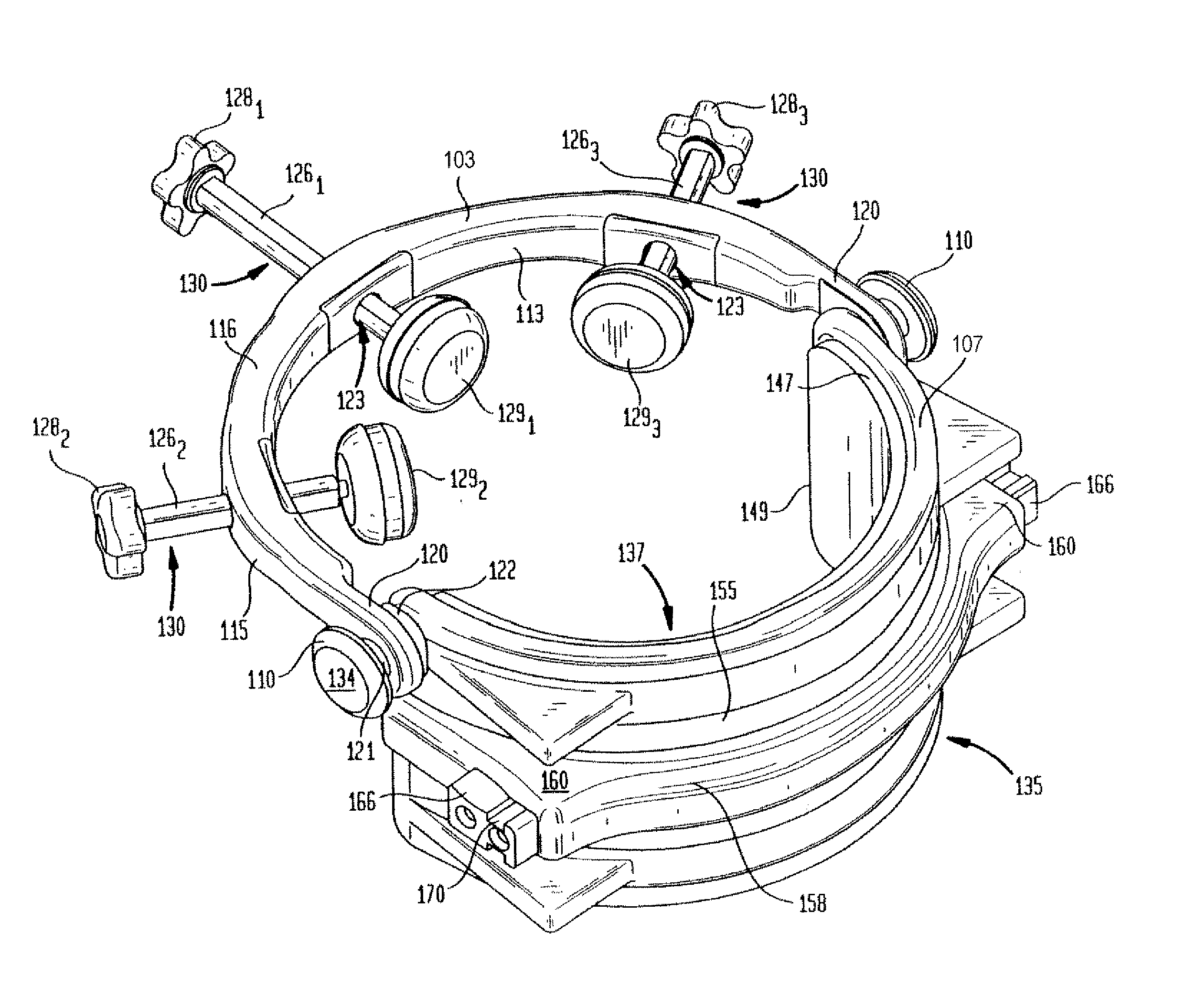
Figure 1 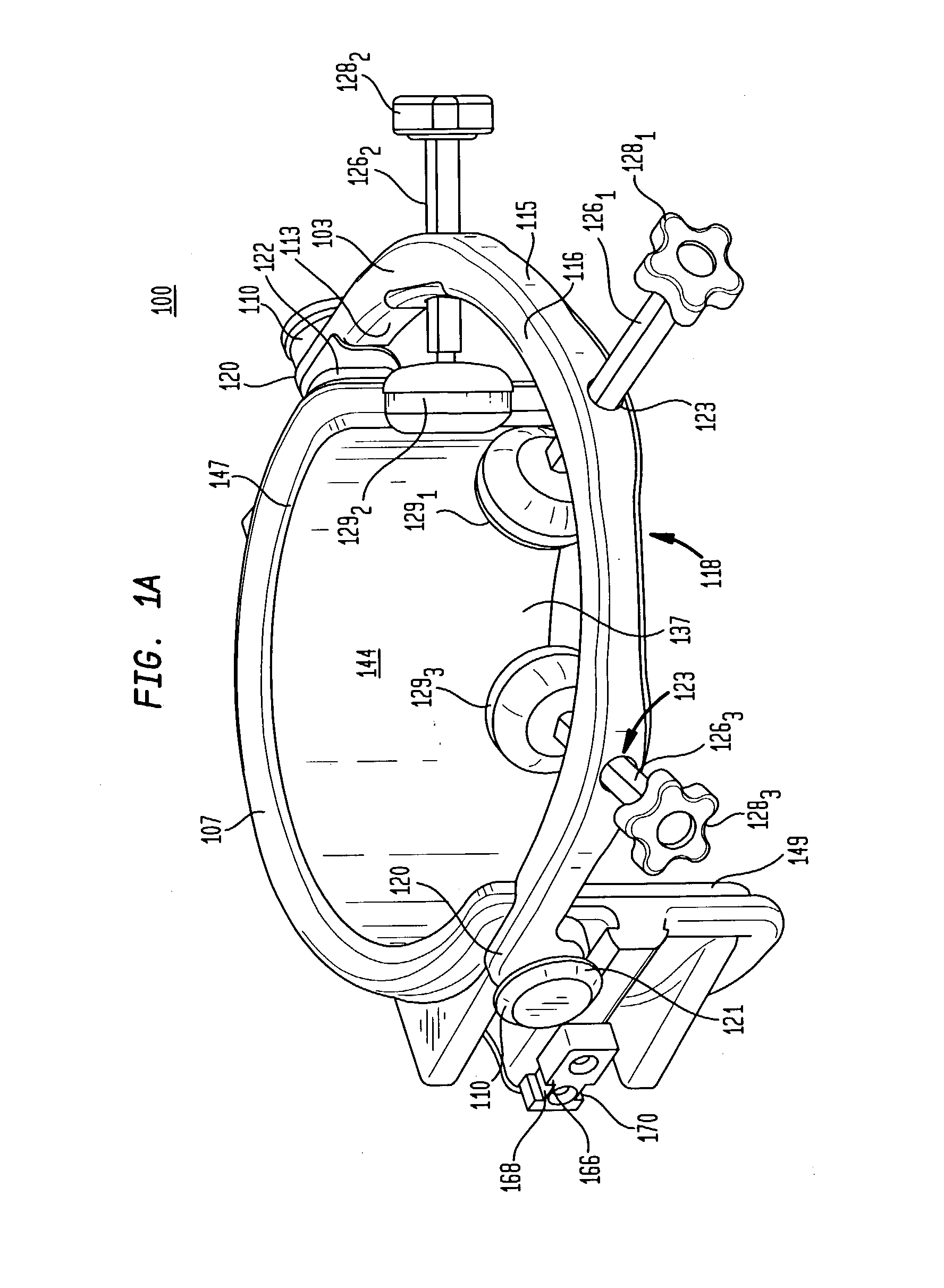
Figure 2 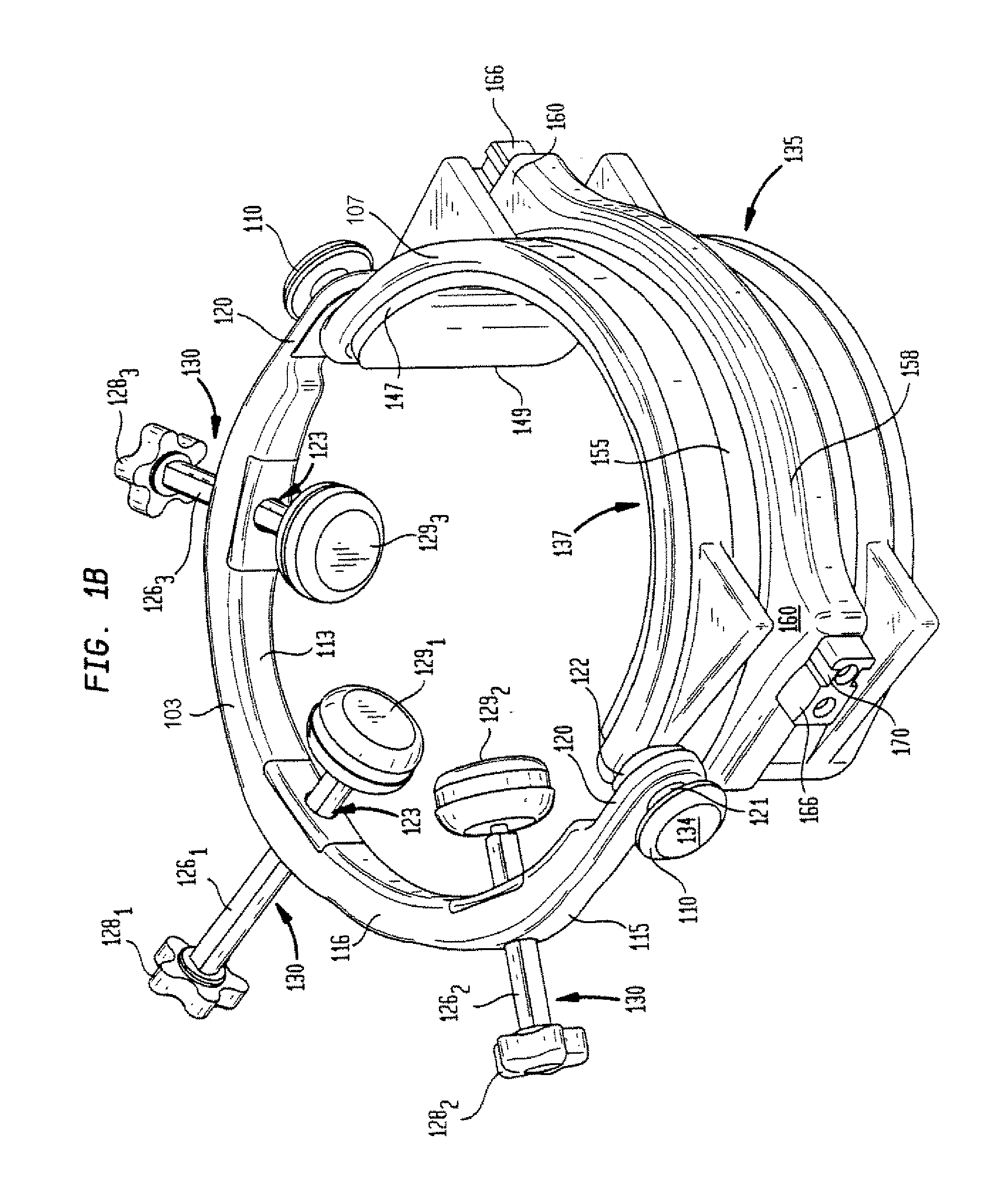
Figure 3
Abstract
Description
BACKGROUND OF THE INVENTION
[0001] The present invention relates to magnetic resonance imaging systems, apparatus and procedures. In magnetic resonance imaging, an object to be imaged as, for example, a body of a human subject, is exposed to a strong, substantially constant static magnetic field. The static magnetic field causes the spin vectors of certain atomic nuclei within the body to randomly rotate or “precess” around an axis parallel to the direction of the static magnetic field. Radio frequency excitation energy is applied to the body, and this energy causes the precessing automatic nuclei to rotate or “precess” in phase and in an excited state. As the precessing atomic nuclei relax, weak radio frequency signals are emitted; such radio frequency signals are referred to herein as magnetic resonance signals.
[0002] Different tissues produce different signal characteristics. Furthermore, relaxation times are the dominant factor in determining signal strength. In addition, tissues h...
Examples
Embodiment Construction
[0027]An aspect of the present invention is a head and neck immobilization device or halo 100 as shown in FIG. 1, in which FIG. 1A and FIG. 1B show front and rear perspective views of the device 100, respectively. The device 100 comprises a first substantially C-shaped or arcuate member 103 and a second C-shaped or arcuate member 107. The first and second C-shaped members 103 and 107 are mounted to each other by pivot mechanism 110. Pivot mechanism 110 advantageously allow first C-shaped member 103 to pivot about second C-shaped member 107 or vice-versa.
[0028]The first C-shaped member 103 includes an inner side wall 113 and an outer side wall 115. The inner side wall 113 defines an inner surface. The outer side wall 115 similarly defines an outer surface. The inner and outer side walls 113, 115 are terminated at an end by upper lateral wall 116 and at another end by lower lateral wall 118. In a preferred embodiment, the edges at the intersection of side walls 113, 115 and lateral wa...