
Rapid exchange balloon catheter and method for making same
a balloon catheter and balloon technology, applied in the field of rapid balloon catheters, can solve the problems of increasingimpede the procedure, and the catheter provides some challenges, and achieves the effects of reducing the risk of twisting and kinking, and reducing the risk of kinking
Patent Information
- Authority / Receiving Office
- US · United States
- Patent Type
- Patents(United States)
- Current Assignee / Owner
- Publication Date
- 2011-10-25
Smart Images
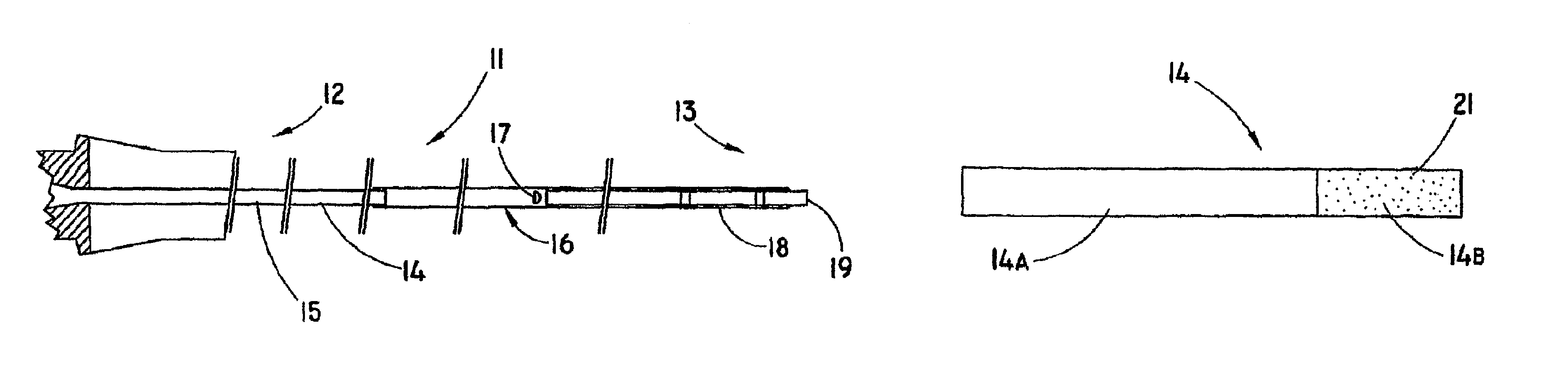
Figure 1 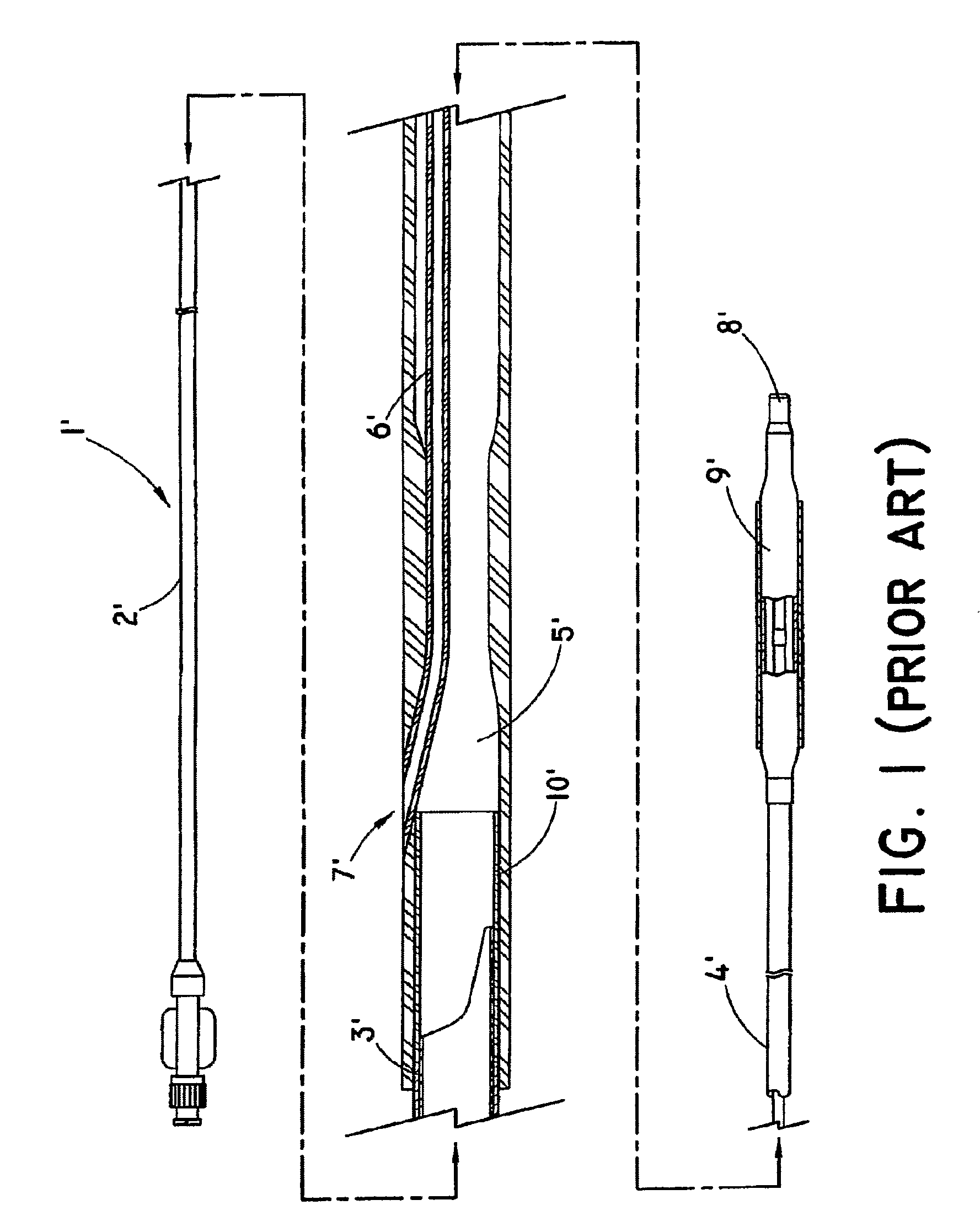
Figure 2 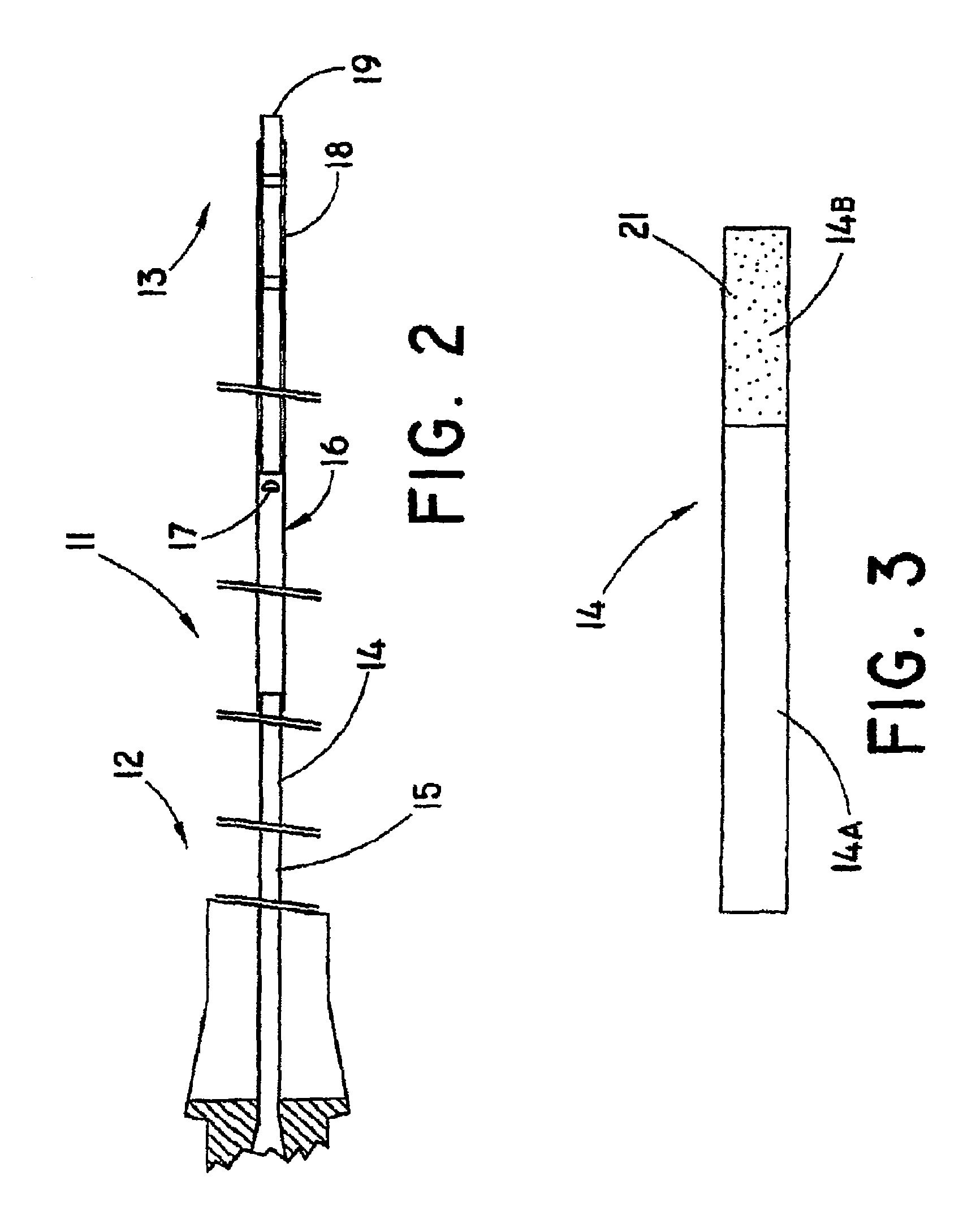
Figure 3
Abstract
Description
[0001] This application is a continuation of International Application No. PCT / US2006 / 044495, filed Nov. 16, 2006, which claims the benefit of U.S. Provisional Application Ser. No. 60 / 737,124, filed Nov. 16, 2005. These references are incorporated herein in their entirety.TECHNICAL FIELD
[0002] The present invention relates to a rapid exchange balloon catheter.BACKGROUND OF THE INVENTION
[0003] Catheters have found widespread use in medical procedures, such as percutaneous transluminal coronary angioplasty (PTCA) or for delivery of stents. Most catheters are guided to the application site by sliding the catheter along a guide wire, which has been carefully advanced and arranged within the patient. During advancement of the catheter along the guide wire, it is important to keep the guide wire steady. Ordinary catheters are guided to the application site in a patient by sliding the catheter along a guide wire extending all the way through a lumen of the catheter from the proximal end to th...
Examples
Embodiment Construction
[0022]A prior art rapid exchange catheter according to U.S. Pat. No. 6,746,423 as discussed above is seen in FIG. 1. This prior art catheter 1′ comprises a tubular metal shaft body 2′ extending from the proximal end along a majority of the total length and having an inflation lumen 3′ arranged therein. The catheter 1′ further comprises a plastics distal end portion 41 bonded to the metal body in extension thereof. The distal end portion 4′ is provided with an inflation lumen 5′ and a guide wire lumen 6′, said guide wire lumen 6′ extending from a proximal side port 7′ to a distal end opening 8′. The catheter 1′ further comprises a balloon 9′ arranged at the distal end of the catheter. This prior art catheter 1′ further incorporates a reinforcing member 10′ in form of a tube bridging the region of junction between the metal body 2′ and the plastics distal end portion 4′.
[0023]In FIG. 2 is shown a catheter according to the invention. This figure is somewhat distorted for illustration p...