
Complex event processing (CEP) adapters for CEP systems for receiving objects from a source and outputting objects to a sink
a technology of complex event processing and adapters, applied in the field of complex event processing (cep) adapters, can solve the problems of insufficient robustness of system-defined adapters to handle the various speeds and conditions associated with data streams, and the development of robust user-defined adapters to handle data streams may be a tedious task for information technology (it) specialists, so as to save processing resources, simplify processing, and simplify the effect of adapter creation and deploymen
Patent Information
- Authority / Receiving Office
- US · United States
- Patent Type
- Patents(United States)
- Current Assignee / Owner
- Publication Date
- 2012-03-06
Smart Images
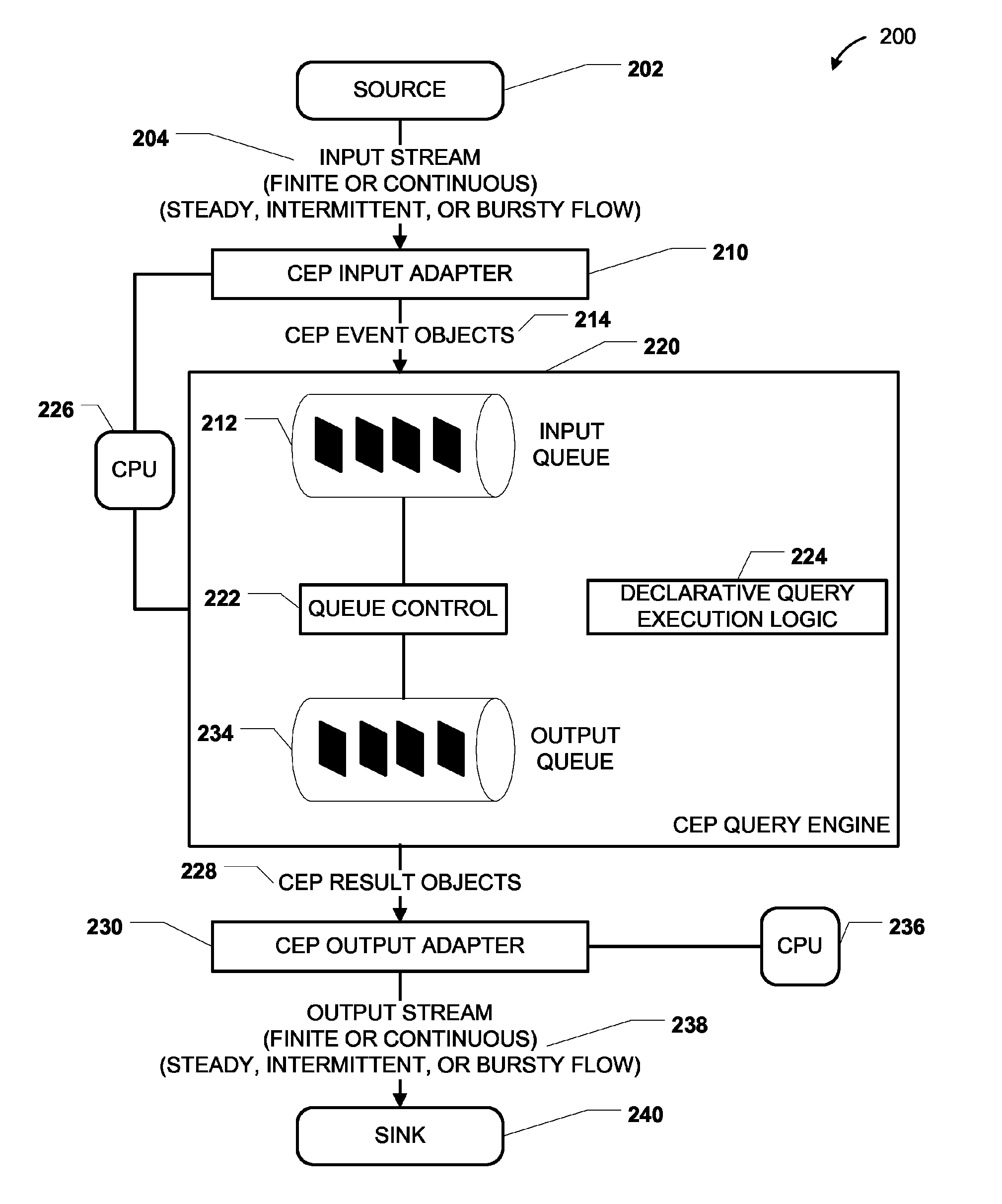
Figure 1 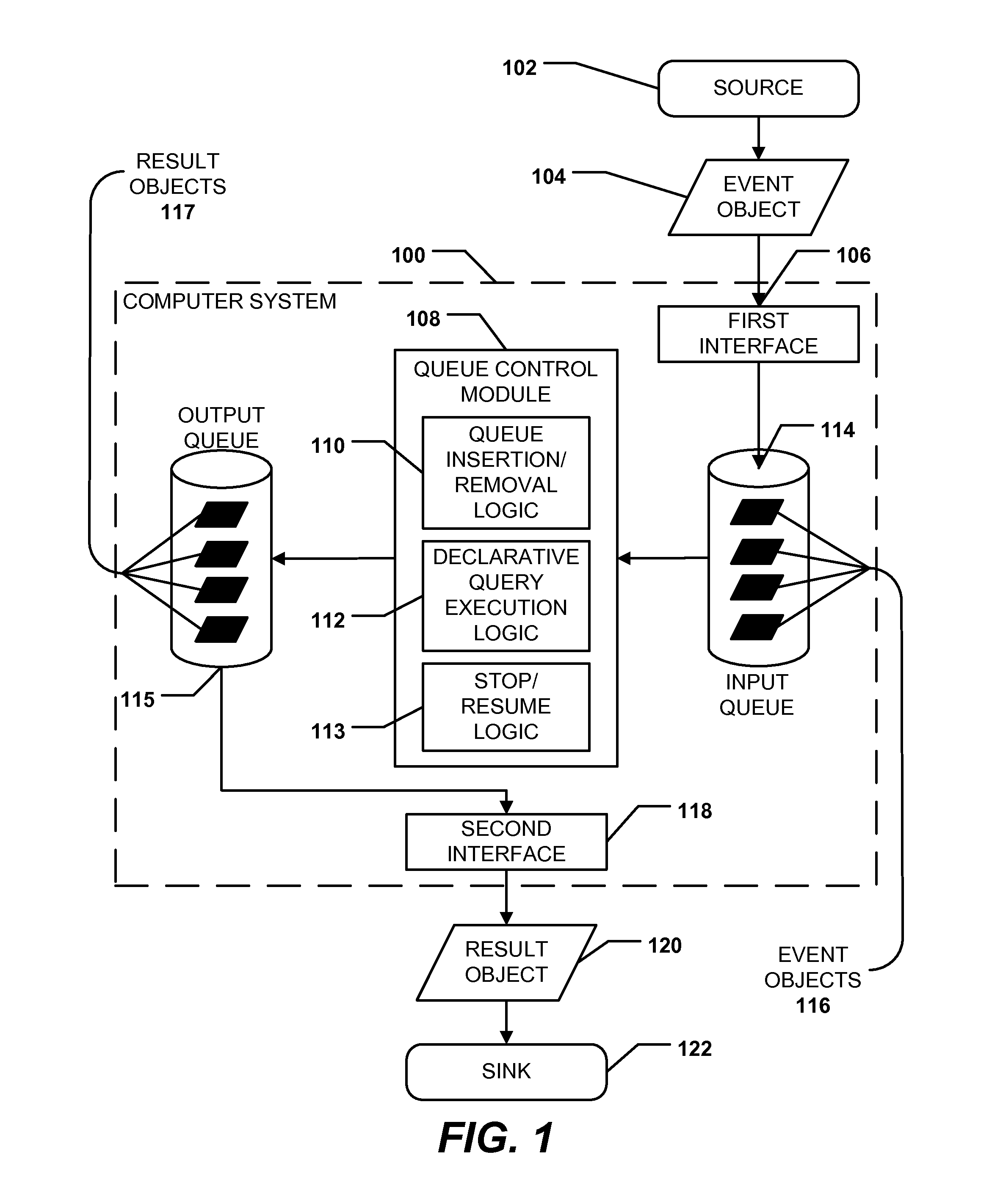
Figure 2 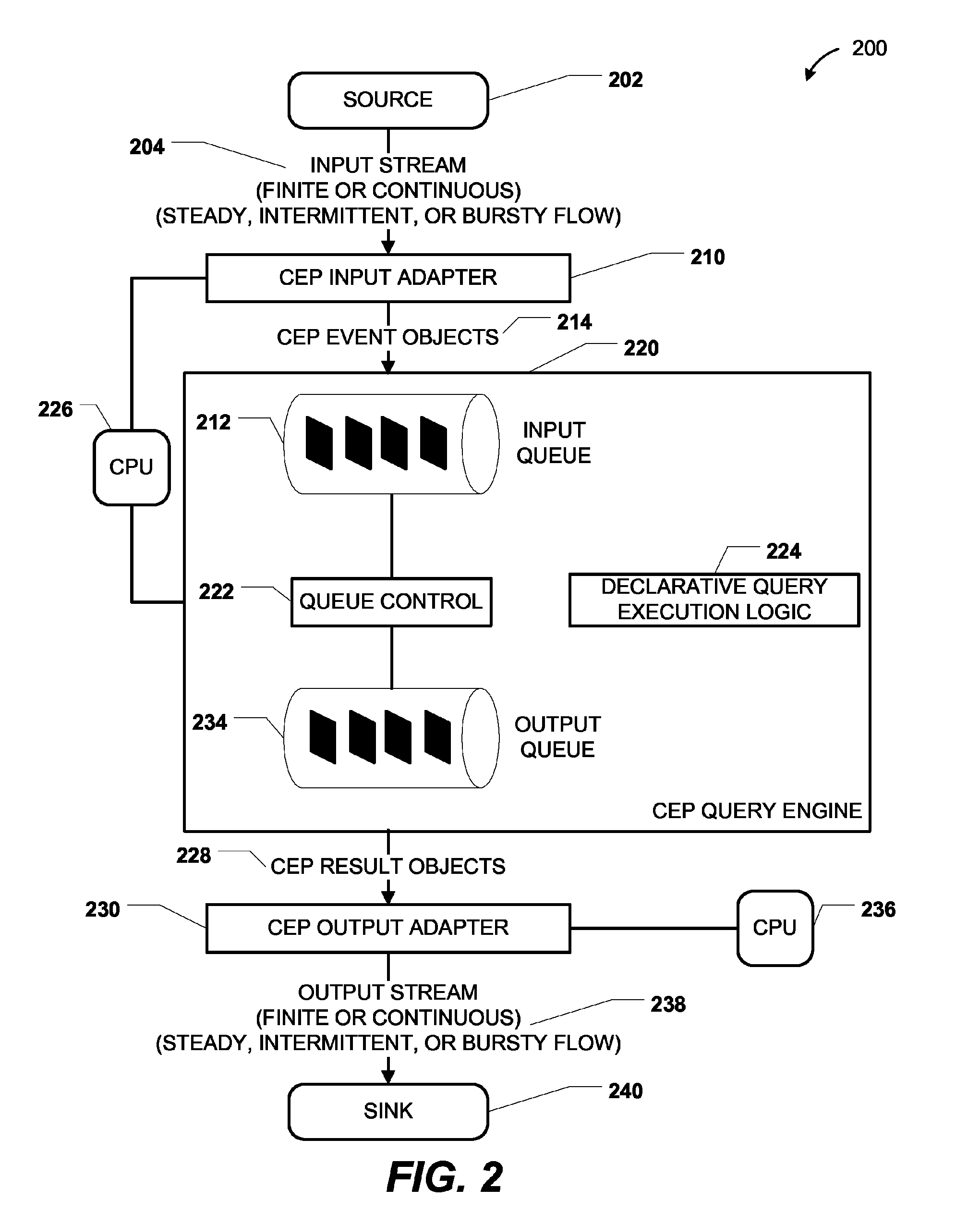
Figure 3
Abstract
Description
BACKGROUND
[0001] The event-based computation paradigm has grown in importance for enterprises. For example, many business applications and system control applications can be developed based on the event-based computation paradigm. Generally, event processing applications receive events, analyze the events, and output results (e.g., proposed actions) based on the analysis of the events.
[0002] Many event processing applications have adapters at either end of a data flow stream to handle the task of receiving and transmitting data. Adapters may be user-defined or system-defined (e.g., defined by a software vendor associated with the event processing system). System-defined adapters may not be robust enough to handle the various speeds and conditions associated with data streams. On the other hand, developing a robust user-defined adapter to handle data streams may be a tedious task for information technology (IT) specialists.SUMMARY
[0003] The present disclosure describes adapters for even...
Examples
Embodiment Construction
[0010]In a particular embodiment, a computer system is disclosed that includes a processor and a memory coupled to the processor. A first interface of the computer system is configured to receive an event object from a source. A second interface of the computer system is configured to transmit a result object to a sink. The processor is configured to retrieve and execute instructions from the memory. The instructions are configured to insert the event object into an input queue when the input queue is not full and to stop receipt of event objects at the first interface when the input queue is full. The instructions are also configured to execute at least one declarative complex event processing (CEP) query with respect to the event object to generate the result object. The instructions are further configured to insert the result object into an output queue. The instructions are configured to remove the result object from the output queue and to transmit the result object to the sink...