
Warm white lighting device
a lighting device and white light technology, applied in the field of optical devices, can solve the problems of short lifetime of approximately 1500 hours, poor energy efficiency, and short lifetime of 8-11 lumens/watt, and achieve the effects of improving light generation, widening the beam, and degrading uniformity performan
Patent Information
- Authority / Receiving Office
- US · United States
- Patent Type
- Patents(United States)
- Current Assignee / Owner
- Publication Date
- 2012-07-31
Smart Images
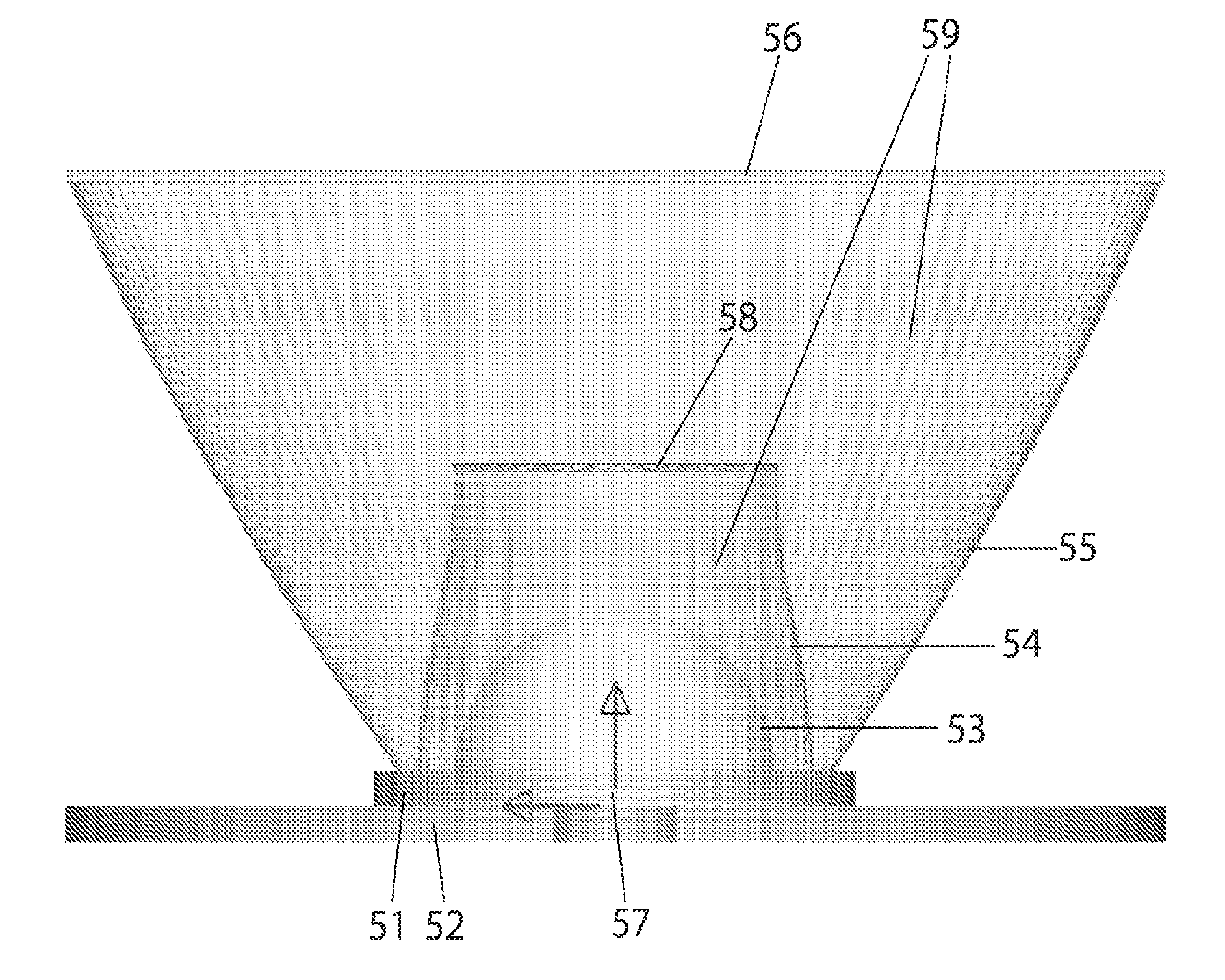
Figure 1 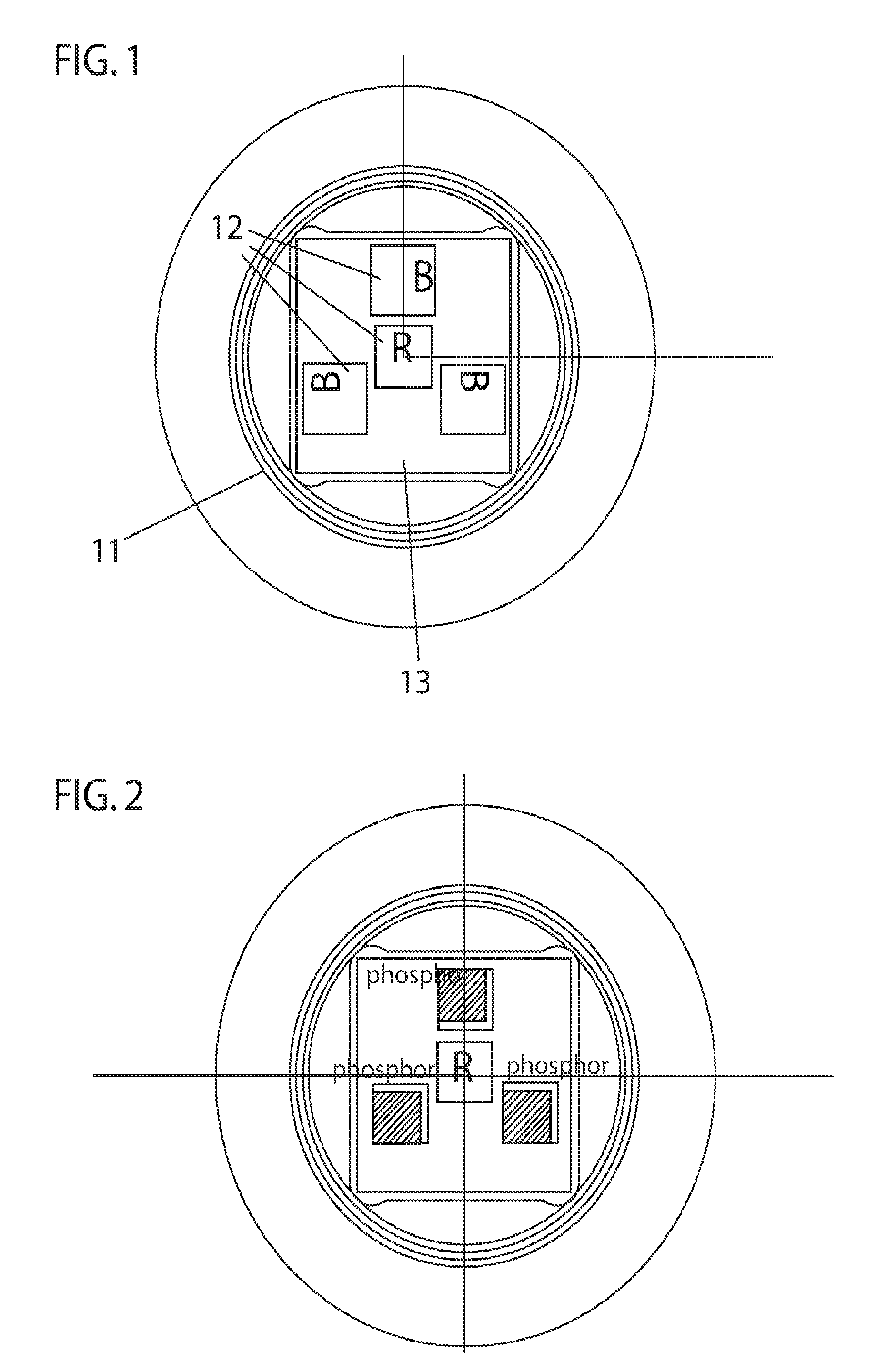
Figure 2 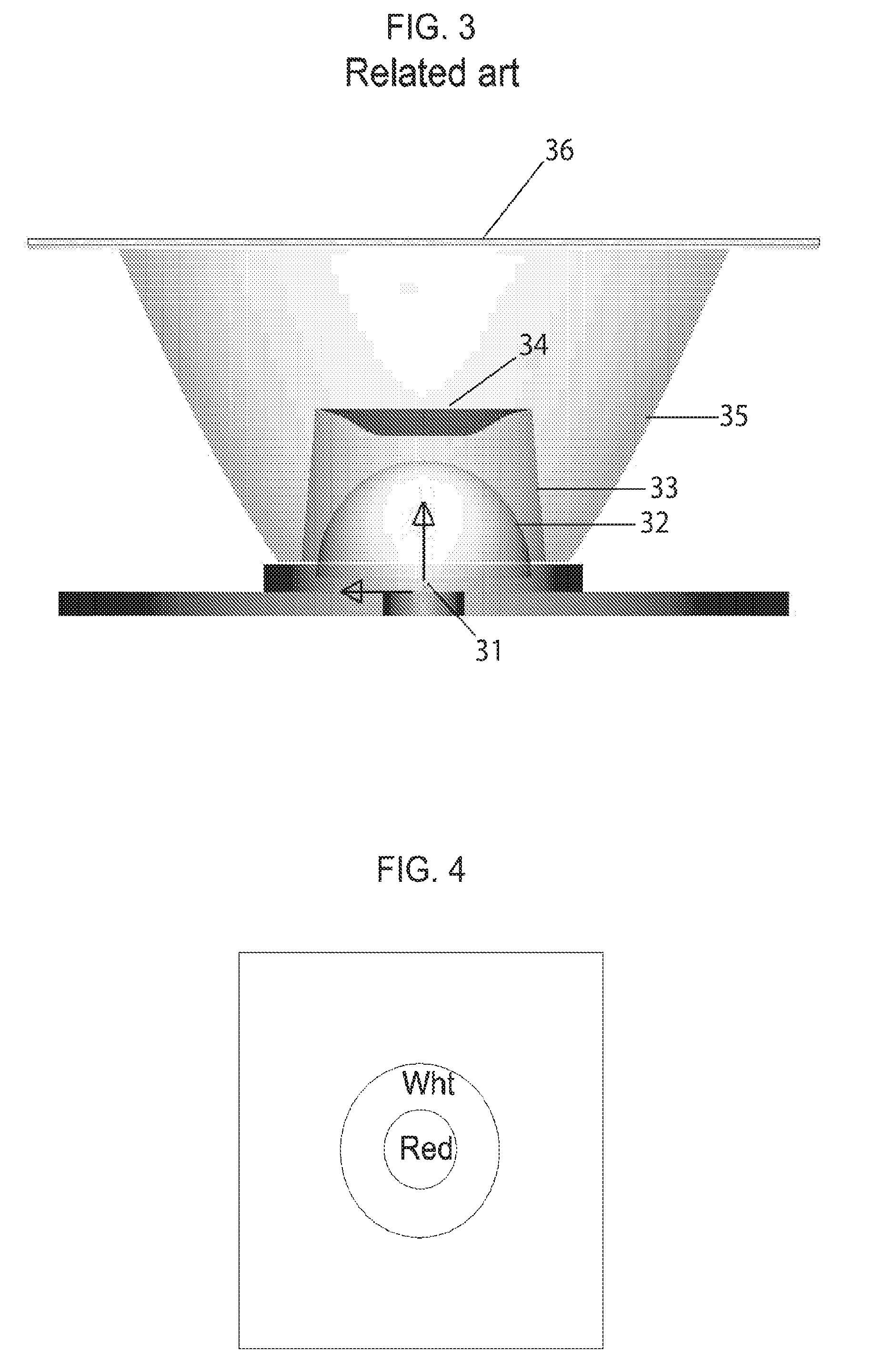
Figure 3
Abstract
Description
[0001] This application claims the benefit of U.S. Provisional Application No. 60 / 971,255, filed on Sep. 10, 2007, the entire disclosure of which is incorporated by reference.
[0002] Numerous references including various publications are cited and discussed in the description of this invention. The citation and / or discussion of such references is provided merely to clarify the description of the present invention and is not an admission that any such reference is “prior art” to the present invention. All references cited and discussed in this specification are incorporated herein by reference in their entirety and to the same extent as if each reference was individually incorporated by reference.FIELD OF THE INVENTION
[0003] This invention relates to optical devices. More specifically, the present invention relates to multicolor optical light source assemblies that produce a white light pleasing to the human eye.BACKGROUND OF THE INVENTION
[0004] White light for general lighting applicatio...
Examples
Embodiment Construction
[0030]One of the fundamental problems with conversion of blue light to red or red-orange light is the quantum deficit or Stokes down conversion loss. Approximately 25% of the radiometric flux is lost when down converting from blue to red. For this reason there is more potential in terms of efficiency in producing white light through the direct emission of multiple primaries than through the conversion of blue light to red light through a wavelength conversion element such as a phosphor.
[0031]Light engines including combinations of phosphors and multiple wavelength direct emission primaries can produce white light, but the light must be combined to produce a homogenous, highly uniform white light. White light is also more desirable when it is controlled and directed efficiently.
[0032]Unfortunately, conventional multi-colored LEDs, including conventional RGB assemblies, suffer from poor color mixing. Because the LED die emit considerable heat, the LED die are typically widely spaced f...