
Prosthetic liner with proximal seal
a technology of prosthetic liner and proximal seal, which is applied in the field of prosthetic liner with proximal seal, can solve the problems of high degree of angular and torsional stress at the interface of the socket/liner and the residual limb, and achieve the effect of improving the efficiency of sealing the interstitial volume, efficient sealing, and efficient sealing
Patent Information
- Authority / Receiving Office
- US · United States
- Patent Type
- Patents(United States)
- Current Assignee / Owner
- Publication Date
- 2013-03-12
Smart Images
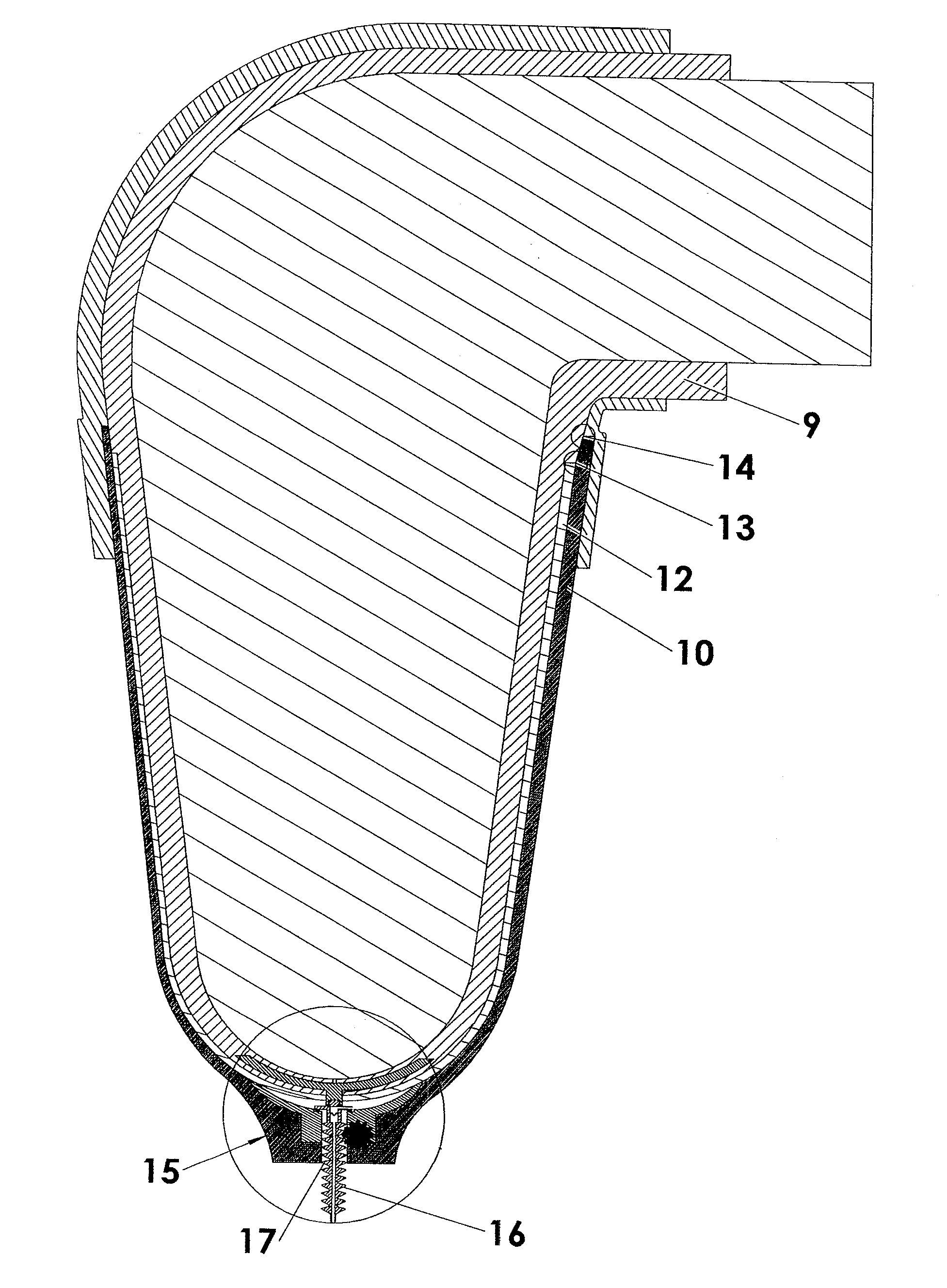
Figure 1 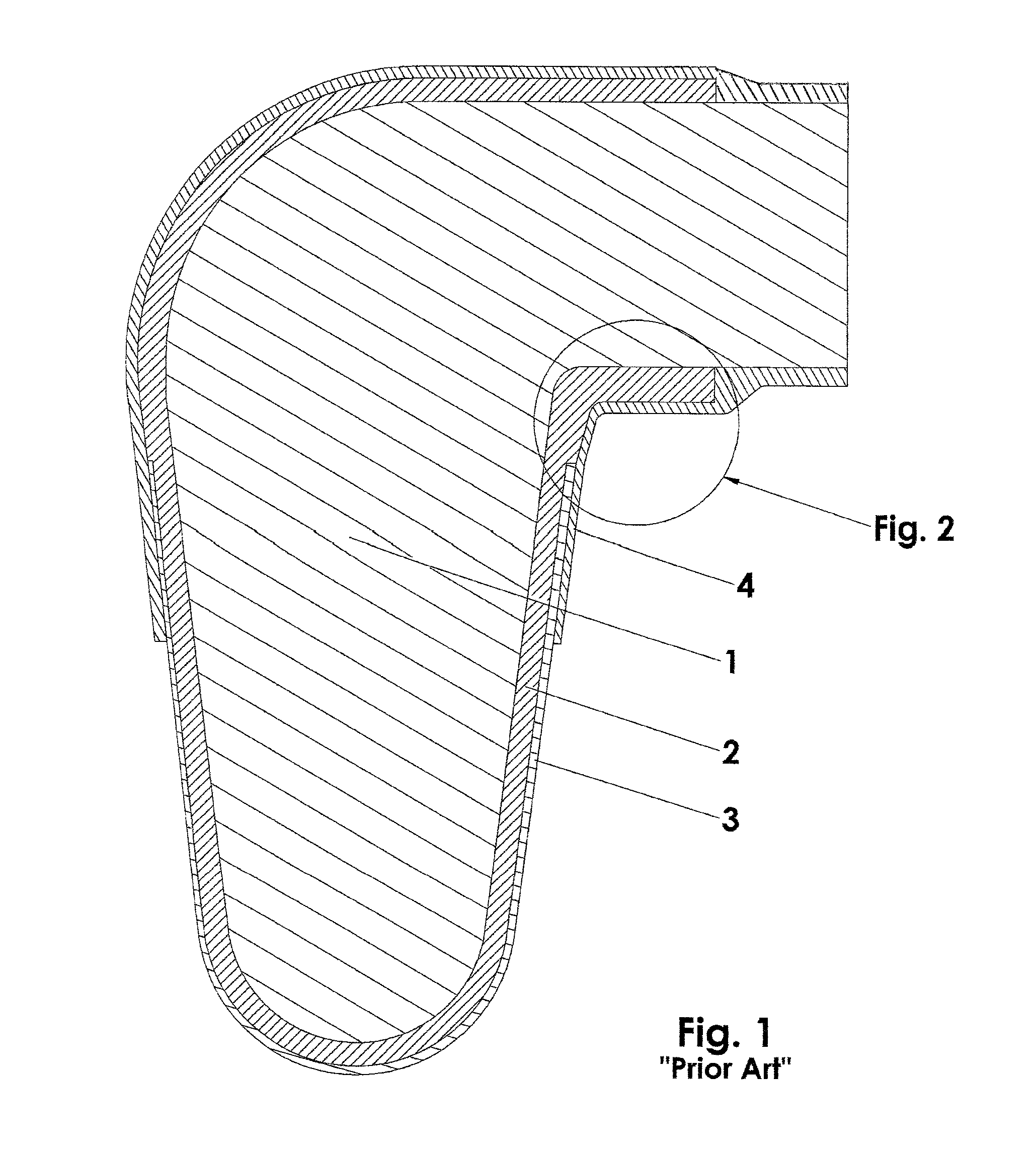
Figure 2 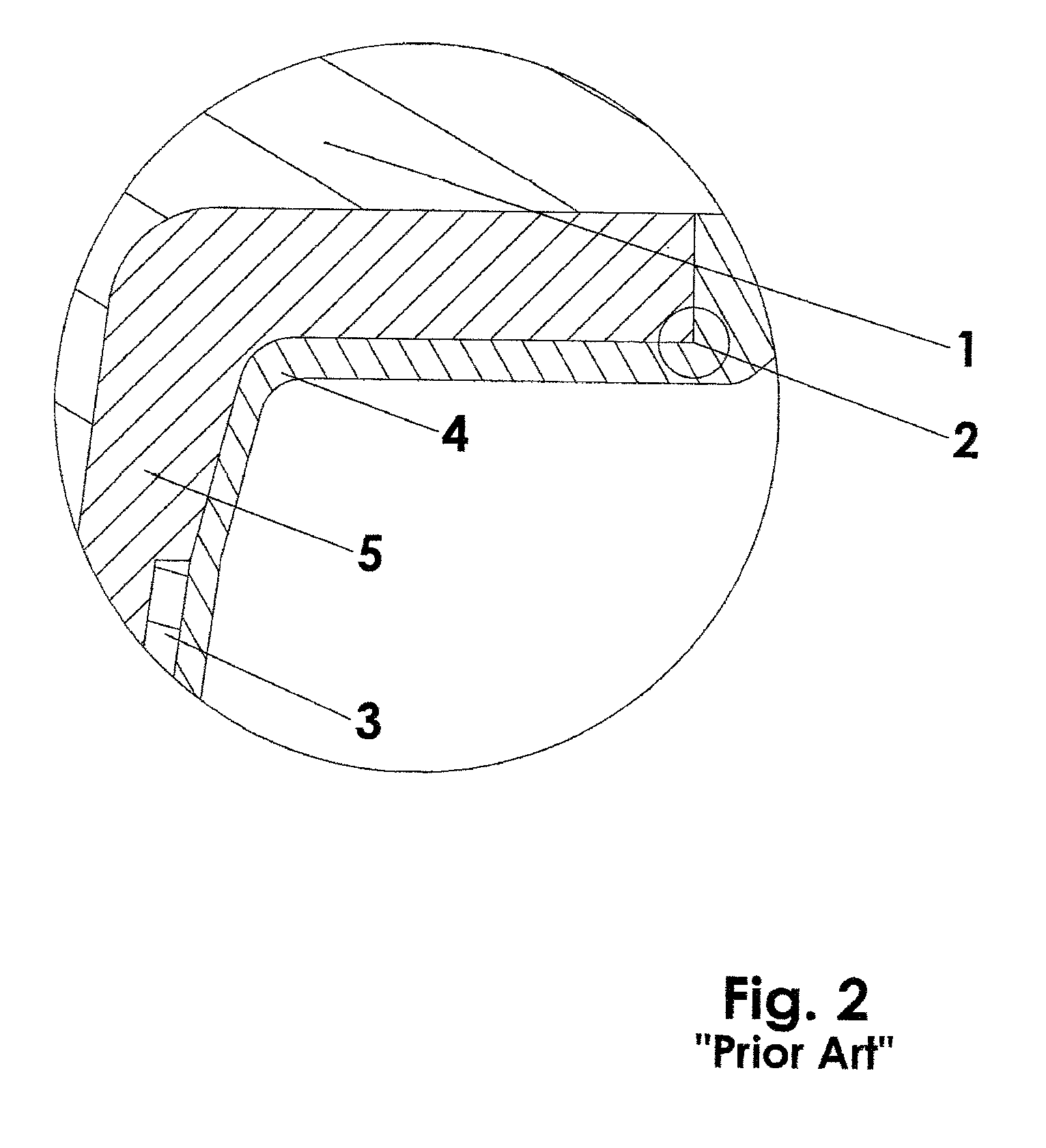
Figure 3
Abstract
Description
PRIORITY
[0001] This application is a Continuation-in-Part Application of U.S. application Ser. No. 12 / 381,146 filed on Mar. 6, 2009, which claims priority to U.S. provisional application Ser. No. 61 / 034,323, filed on Mar. 6, 2008.BACKGROUND OF THE INVENTION
[0002] During the 1980's, a means of suspending a prosthesis was developed which consisted of a docking means fabricated into an interface which, in turn, was rolled onto the distal portion of the wearer's residual limb. The docking means engaged into the prosthesis, and the prosthesis was thereby locked in position of attachment to the patient's limb.
[0003] Such a means of attachment became standard in the industry. However, it had drawbacks which ultimately led to its supplantation by other methods. One major drawback was the tendency of the residual limb to piston, or slip upwards and downwards in the interface upon ambulation. Over the years, it has been thought that pistoning occurred because only the distal portion of the limb ...
Examples
Embodiment Construction
[0032]FIGS. 1 and 2 illustrate a prior art prosthetic assembly. The liner includes a fabric layer (2) into which a wearer's prosthetic limb (1) is inserted. The limb / liner combination is inserted into a prosthetic socket (3). The prosthetic socket (3) has a proximal portion adjacent an intermediate portion (5) of fabric layer (2), against which the distal portion of a suspension sleeve (4) can seal, and which extends proximally, to some extent, up beyond the proximal end (2′) of the fabric layer onto the residual limb (1). The suspension sleeve, in its proper functioning position, extends proximally from the socket, over the fabric liner, to the thigh of the patient, against which a seal is formed. A vacuum is established in the volume between the socket, the residual limb and the suspension sleeve.
[0033]FIG. 3 is an illustration of an embodiment of a liner of the present invention comprising an elastomeric layer or interface layer (7), and a material layer (6) which overlies the di...