
Systems for expression of heterologous proteins in M. capsulatus
a technology of heterologous proteins and bacteria, applied in the field of expression systems of heterologous proteins in the bacteria m. capsulatus, can solve the problem of limit to how large of a protein (i.e. how long of an amino acid chain) may be transported
Patent Information
- Authority / Receiving Office
- US · United States
- Patent Type
- Patents(United States)
- Current Assignee / Owner
- Publication Date
- 2013-05-07
- Estimated Expiration
- Not applicable · inactive patent
Smart Images
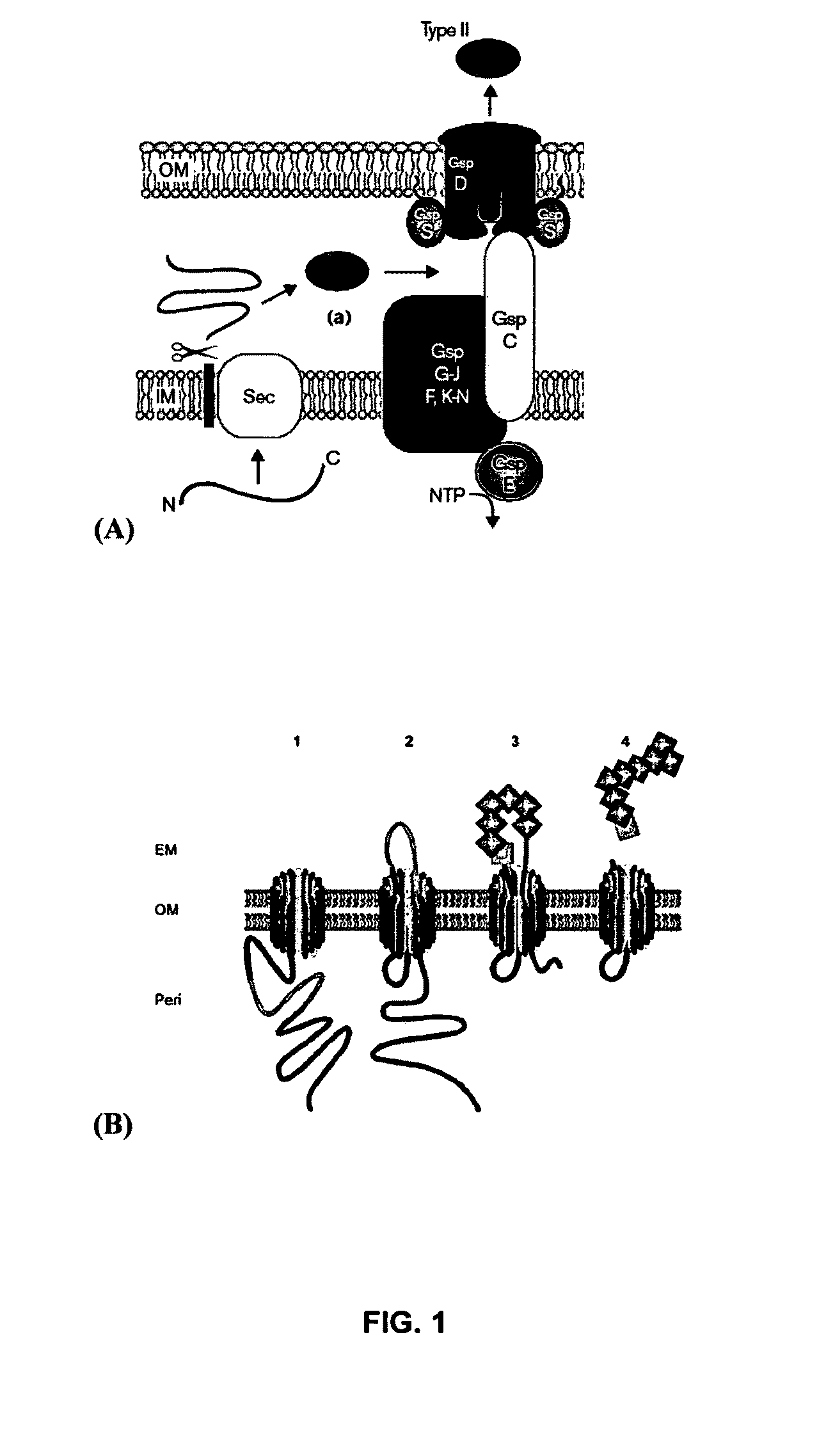
Figure 1 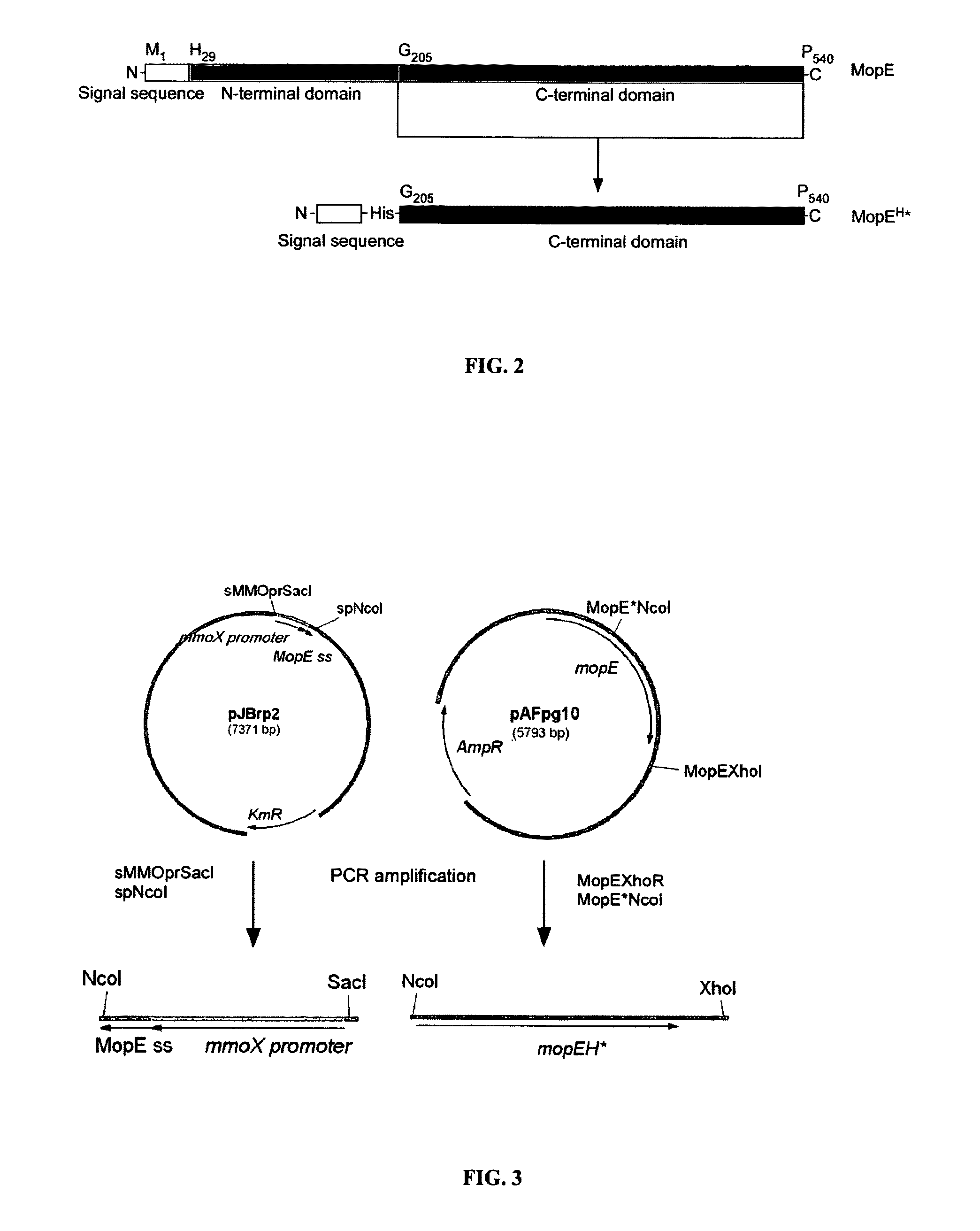
Figure 2 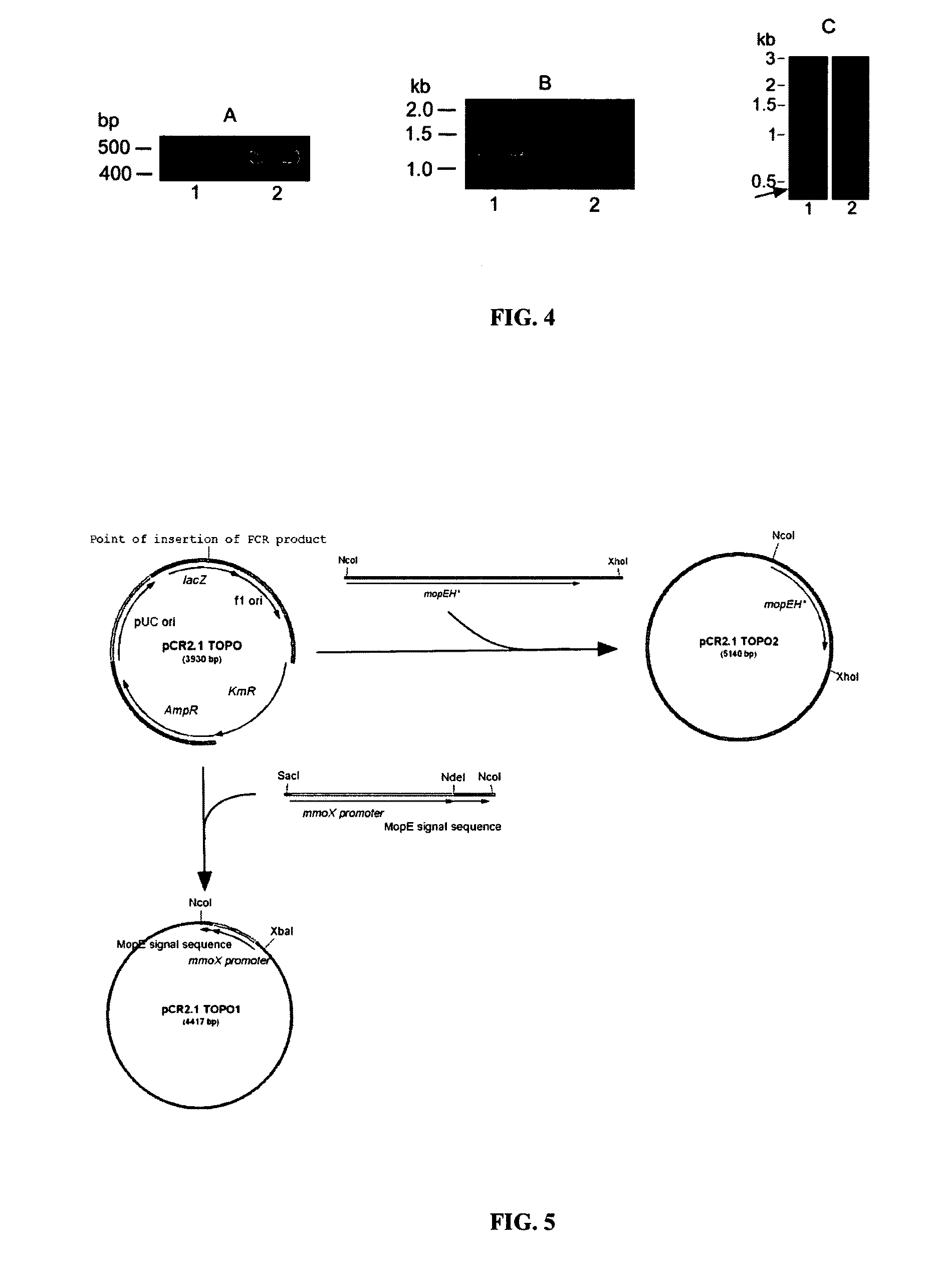
Figure 3
Abstract
Description
FIELD OF THE INVENTION
[0001] The present invention relates to the expression of heterologous proteins in the bacteria M. capsulatus. More specifically, the present invention relates to the exportation and display of polypeptides and proteins on the surface of said bacteria.
[0002] Thus, the present application relates to a recombinant vector, a bacterial host cell transformed with said vector, a method for producing a desired protein in a bacterial host cell, a protein capable of being exposed on the surface of a methanotrophic bacterium, and a fusion protein.BACKGROUND OF THE INVENTION
[0003] The expression of polypeptides on the surface of bacteria and bacteriophages has been pursued for several years, in part because of interest in recombinant antibody production. Many other potential applications exist, including the production of genetically-engineered whole cell adsorbents, construction of “peptide libraries”, cell bound enzymes, and use as live vaccines or immunogens to generate a...
Examples
Embodiment Construction
[0034]Cultured Methylococcus capsulatus with pBBmopEH* plasmid was deposited with DDZ access identification Methylococcus capsulatus McdeltamopEpBBmopEH=DSM 19108 on Mar. 1, 2007 with DSMZ-Deutsche Sammlung von Mikroorganismen and Zellkulturen GmbH (The German National Resource Centre for Biological Material), Inhoffenstr. 7 B, D-38124 Braunschweig, Germany.
[0035]A sequence listing was prepared using PatentIn3.4 for the amino acid sequences of MopE (SEQ. ID. NO. 1) and MopEH* (SEQ. ID. NO. 2), AHNVC-MopEH* fusion protein (SEQ. ID. NO. 11), MopEH*-AHNVCc fusion protein (SEQ. ID. NO. 13), MopEH*-AHNVC-20 aa fusion protein (SEQ. ID. NO. 15), and the DNA sequences of MopE (SEQ. ID. NO. 3), MopEH* (SEQ. ID. NO. 4), pET1 (SEQ. ID. NO. 5), pET2 (SEQ. ID. NO. 6), pCR2.1-TOPO1 (SEQ. ID. NO. 7), pCR2.1-TOPO2 (SEQ. ID. NO. 8), and pBBmopEH* (SEQ. ID. NO. 9), AHNVC-MopEH* (SEQ. ID. NO. 10), MopEH*-AHNVCc (SEQ. ID. NO. 12), MopEH*-AHNVC-20 aa (SEQ. ID. NO. 14), MopEH* with BspHI mutation in stop...