
Self-regulating gas generator and method
a gas generator and self-regulation technology, applied in the direction of machines/engines, process and machine control, instruments, etc., can solve the problems of power sources having their own drawbacks, and achieve the effect of increasing or decreasing gas production rates and long catalyst li
Patent Information
- Authority / Receiving Office
- US · United States
- Patent Type
- Patents(United States)
- Current Assignee / Owner
- Publication Date
- 2016-12-20
Smart Images
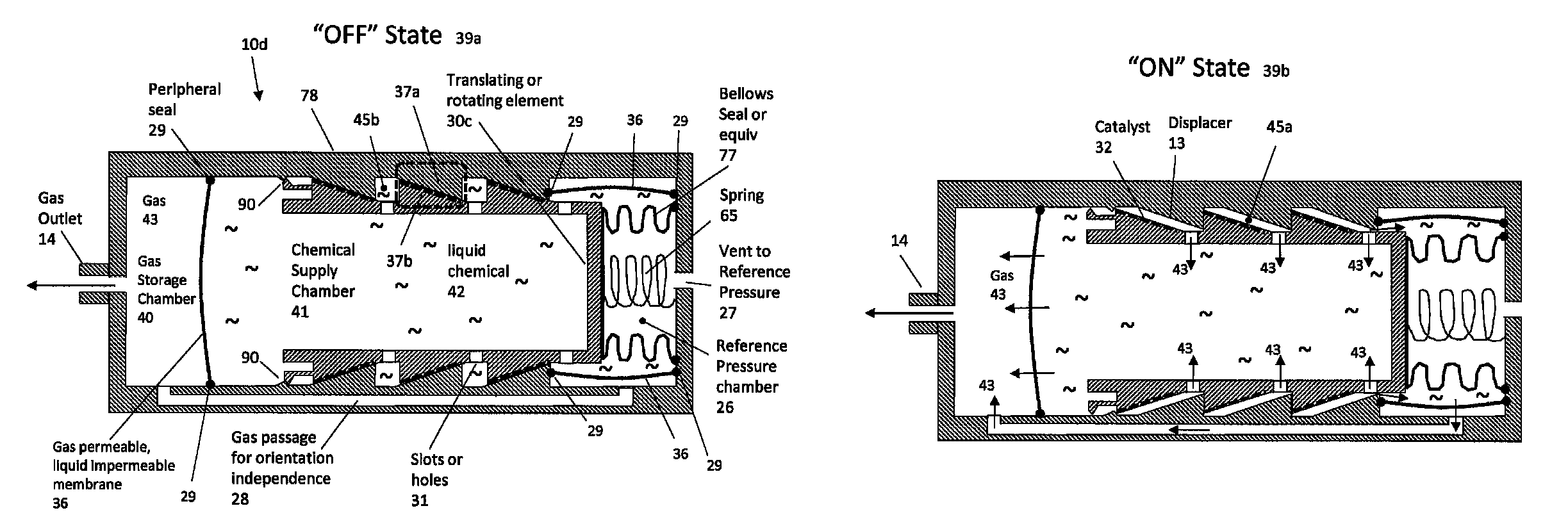
Figure 1 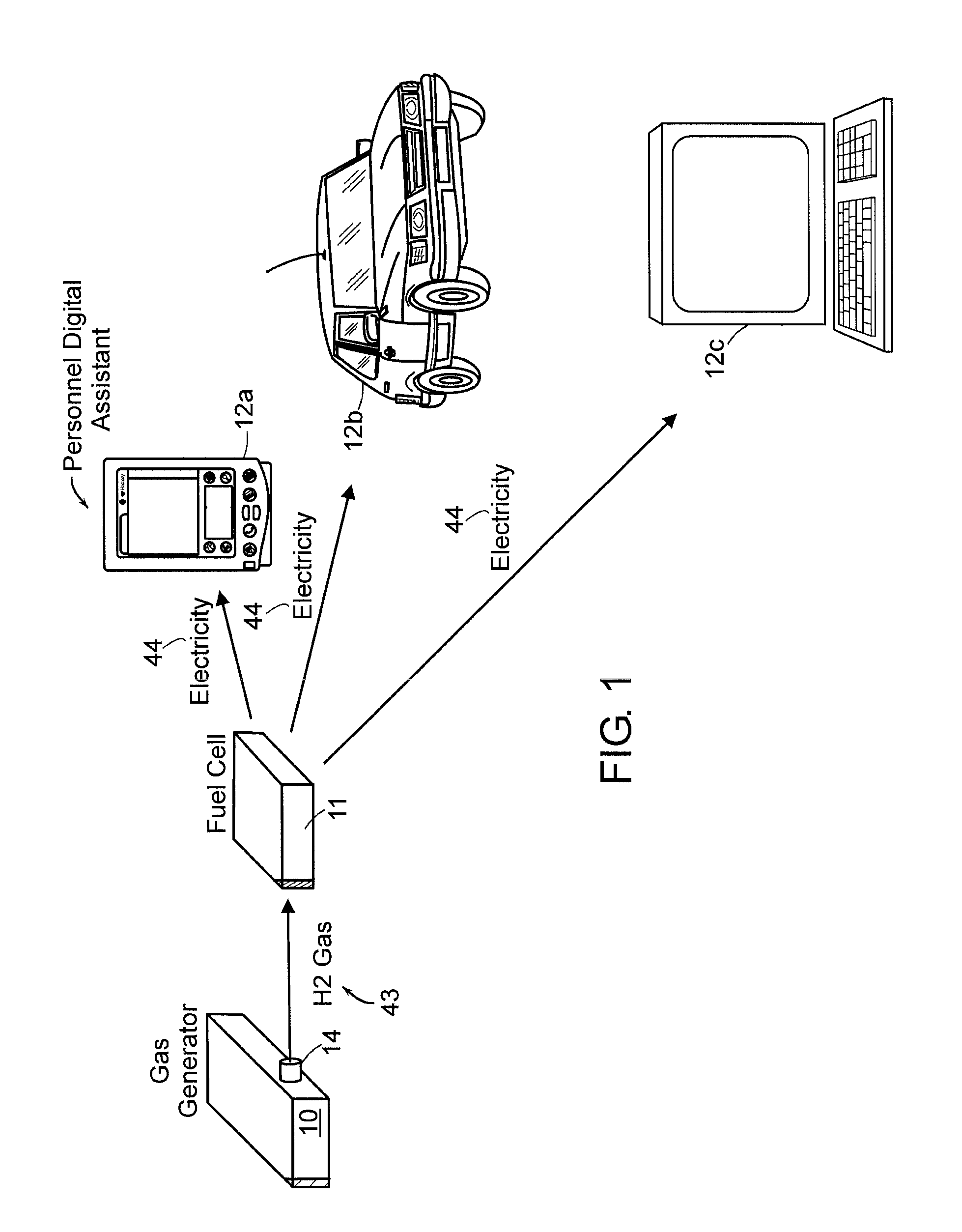
Figure 2 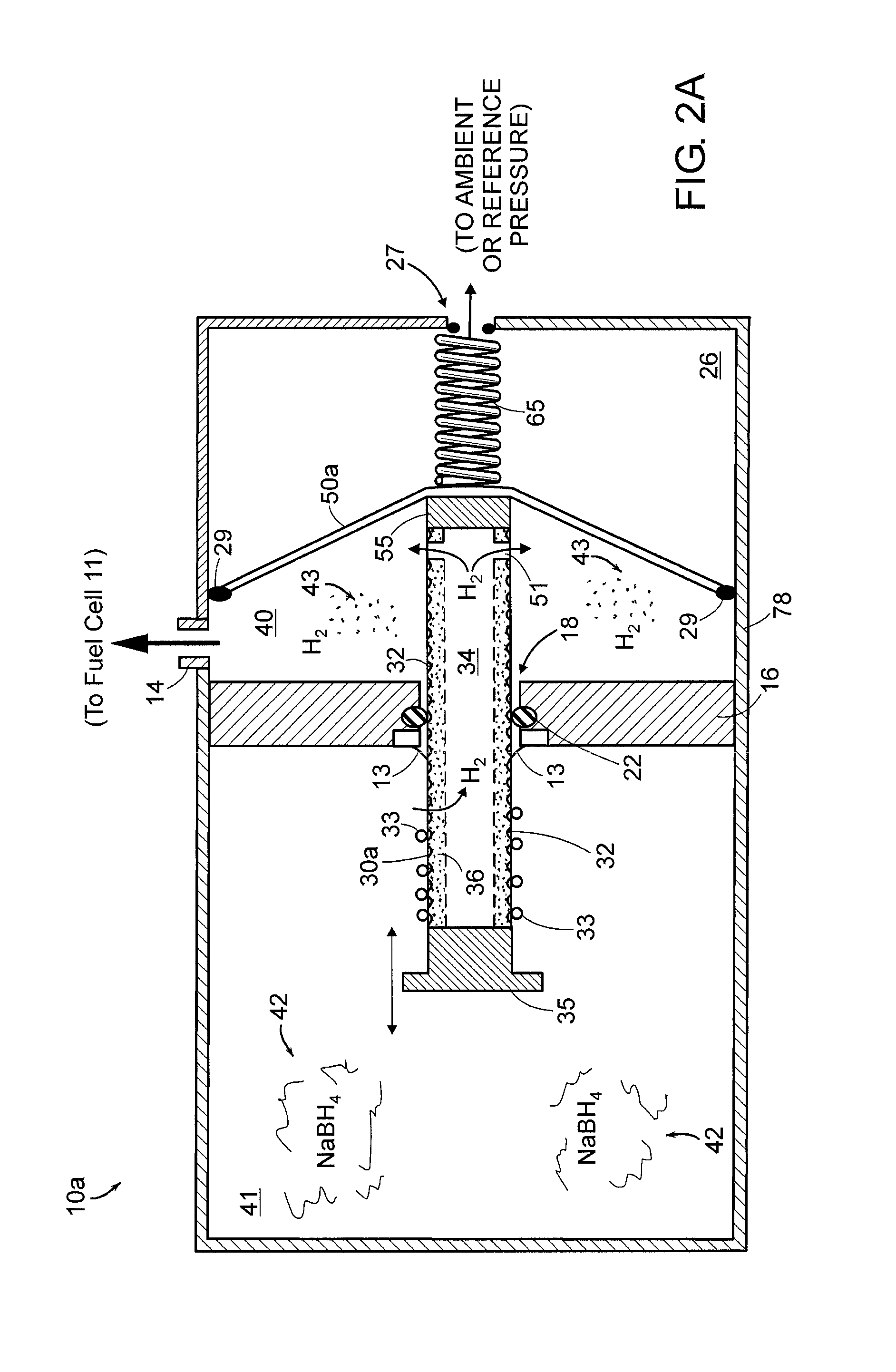
Figure 3
Abstract
Description
BACKGROUND OF THE INVENTION
[0001] Presently, nearly all military, industrial, and consumer electronics are powered by conventional sources—AC wall outlets, gas generators, or disposable or rechargeable batteries. Each of these power sources has its own drawbacks. One such drawback is in the form of pollution, where AC power generation plants, gas generators, and batteries produce respective environmentally unfriendly by-products (e.g., ozone destroying gases and battery acid waste).
[0002] Fuel cells have been proposed as an environmentally friendly solution to this problem. To be adopted as a solution, however, fuel (e.g., hydrogen gas) must be easily and safely accessible at a price competitive with its conventional counterparts.
[0003] Portable gas generators can safely produce high purity gas on demand. Such generators are useful in providing hydrogen gas as a fuel for fuel cells or other types of gases for other gas utilizing devices. In the case of generating hydrogen gas for fuel ...
Examples
Embodiment Construction
[0042]A description of preferred embodiments of the invention follows.
[0043]FIG. 1 is a graphical diagram of a fuel cell application in which a gas generator 10 according to the principles of the present invention may be employed. In the fuel cell application, the gas generator 10 generates and delivers hydrogen gas to a fuel cell 11. The fuel cell 11 reacts the hydrogen gas and oxygen to produce electricity 44, as well known in the art. The fuel cell 11 provides the electricity 44 to an electricity-consuming device, such as a personal entertainment device 12a (e.g., MP3 player), remote controlled car 12b, or portable computer 12c. Other fuel cell applications include military electronics, industrial electronics (e.g., printing presses), or consumer electronics (e.g., cellular telephones, Personal Digital Assistants (PDA's), and so forth).
[0044]Generally, a fuel cell consumes hydrogen gas at a rate depending on the power its generating. An example fuel cell is described in U.S. Pat....