

Composition based on insect-derived products and method for preparing same
The use of insect-derived biofertilizer and biostimulant composition addresses the challenge of greenhouse gas emissions from agriculture by enhancing soil health and plant growth, providing a sustainable alternative to conventional fertilizers.
Patent Information
- Application Number
- PCT/EP2024/060047
- Authority / Receiving Office
- WO · WO
- Patent Type
- Applications
- Current Assignee / Owner
- Priority Date
- 2023-04-13
- Filing Date
- 2024-04-12
- Publication Date
- 2024-10-17
AI Technical Summary
Agricultural practices contribute significantly to greenhouse gas emissions, particularly due to the use of fertilizers, and there is a need for environmentally friendly, cost-effective, and accessible alternatives to reduce these emissions while promoting sustainable agriculture.
A composition based on insect-derived products, specifically comprising insect droppings and cuticles, is developed as a biofertilizer and biostimulant, which can be used to improve soil health and plant growth, reducing the need for conventional fertilizers.
The insect-derived composition effectively enhances soil microbial richness, improves nutrient bioavailability, and promotes plant growth, thereby reducing greenhouse gas emissions and offering a sustainable solution for farmers.
Smart Images

Figure IMGF000024_0001 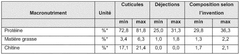
Figure IMGF000024_0002 
Figure IMGF000025_0001
Abstract
Description
[0001] COMPOSITION BASED ON INSECT-DERIVED PRODUCTS AND PREPARATION METHOD
[0002] The present invention relates to a composition based on insect-derived products and its manufacturing process. The invention relates in particular to a composition based on insect-derived products usable in the field of sustainable agriculture and more particularly as a natural biofertilizer and / or biostimulant.
[0003] Around 30% of greenhouse gas emissions are attributable to agriculture, 40% of which come from the use of fertilizers (organic or mineral). However, it is possible, through the use of biostimulants and / or biofertilizers, to reduce the need for fertilizers (organic or mineral), and therefore greenhouse gas emissions.
[0004] There is therefore a need for biostimulant and / or biofertilizer products that reduce greenhouse gas emissions and are environmentally friendly, inexpensive and easily accessible, thus offering a sustainable solution to farmers.
[0005] The work of the inventors has made it possible to demonstrate that a particular composition based on the use of insect-derived products presents these biostimulant and / or biofertilizing properties for plants and soils.
[0006] The present invention therefore relates to a composition comprising or consisting of insect droppings and at least 5% by dry weight of insect cuticles, the percentage by dry weight being given on the total dry weight of the composition.
[0007] It should be noted that within the framework of this application, and unless otherwise stipulated, the ranges of values indicated are understood to include limits.
[0008] Advantageously, this composition is particularly advantageous for use in the field of agriculture and gardening and in the field of maintenance of sports equipment (such as golf, football or rugby fields), as a biofertilizer and / or biostimulant.
[0009] By "insects" is preferably meant an insect at any stage of development, such as an adult, larval, nymph and / or egg stage, preferably adult and / or larval. This term therefore covers any stage of development (also called growth or development stage) from egg or ootheca to adult insect, including larva and nymph such as pupa.
[0010] Advantageously, the insects are chosen from the group of Coleoptera, Diptera, Lepidoptera, Orthoptera, Neuroptera, Hymenoptera, Dictyoptera including in particular Blattoptera, including Isoptera, and Mantoptera, Phasmoptera, Hemiptera, Heteroptera, Ephemeroptera, Mecoptera, and mixtures thereof, preferably from the group of Coleoptera, Diptera, Lepidoptera, Orthoptera and mixtures thereof, more preferably, the insect belongs to the group of Coleoptera. Preferably, Diptera belong to the suborder Brachycera. Preferably, Lepidoptera belong to the suborder Ditrysia, more preferably to the superfamily Pyraloidea. Preferably, Neuroptera belong to the suborder Hemerobiiformia. More preferably, Neuroptera belong to the families Mantispidae, Ithonidae, Chrysopidae, Hemerobiidae, or their mixtures.Preferably, the beetles belong to the infraorder Cucujiformia, in particular to the families Tenebrionidae, Coccinellidae, Cerambycidae, Dryophthoridae, or mixtures thereof. Preferably, in the composition according to the invention, the insect droppings and insect cuticles are beetle droppings and beetle cuticles.
[0011] More preferably, the beetles are chosen from Tenebrio molitor, Alphitobius diaperinus, Zophobas mono, Tenebrio obscurus, Tribolium casta neum, Rhynchophorus ferrugineus, and mixtures thereof, even more preferably Tenebrio molitor and / or Alphitobius diaperinus, and mixtures thereof. The insects targeted by the invention therefore preferably belong to the group of beetles and more particularly to the family Tenebrionidae. Preferably, the insects targeted by the invention belong to the species Tenebrio molitor.
[0012] Advantageously, the composition according to the invention comprises cuticles and droppings of insects from breeding, such as insects raised in breeding tanks.
[0013] According to the invention, "insect droppings" (or "frass") means insect excrement and more particularly, a mixture of excrement of farmed insects, food substrate, parts of farmed insects and dead eggs, in which the excrement content is at least 50%, preferably between 75 and 100%, and even more preferably between 90 and 98% by weight of the total weight of the mixture and the content of dead farmed insects does not exceed 5% by volume and 3% by weight. In particular, insect droppings are distinguished from manure which is composed in particular of urine and produced by animals such as cows, horses or pigs. In particular, the manure comprises between 26% and 60% such as 55% by weight of dry matter, while the insect droppings according to the invention comprise at least 65% by weight of dry matter, such as approximately 65% to 90%.
[0014] By "excrement" is meant fecal matter, that is, the material resulting from a process by which a raw material (e.g., food substrate) passes through a digestive system.
[0015] Advantageously, the composition according to the invention comprises at most 95% by weight of insect droppings, preferably at most 93% by dry weight, preferably at most 92% by dry weight, the percentage by dry weight being given on the total dry weight of the composition.
[0016] Preferably, the insect droppings content in the composition is between 70% and 95% by dry weight, preferably between 85% and 95% by dry weight, even more preferably between 90% and 95% by dry weight relative to the total dry weight of the composition.
[0017] Preferably, the insect droppings in the composition are in the form of powder having a particle size of between 0.1 mm and 1 cm, preferably between 0.3 mm and 0.8 mm, such as for example between 0.5 mm and 0.7 mm.
[0018] According to the invention, the term "insect cuticles" preferably means the outer layer (or exoskeleton) secreted by the epidermis of insects. In its natural state, it is generally formed of three layers: the epicuticle, the exocuticle and the endocuticle. In the composition according to the invention, the cuticles are isolated cuticles, that is to say they have been separated from the entire insect. In particular, a cuticle is separated from the soft part of the insect which comprises the flesh (comprising in particular the muscles and viscera) and the juice (comprising in particular the biological fluids, water and hemolymph) of the insects. Advantageously, this separation is carried out by a separator (of the belt, screw or press type).
[0019] Advantageously, once separated, the cuticles are ground and / or dried. The composition according to the invention then comprises a cuticle powder.
[0020] Advantageously, the cuticles are therefore in the form of a powder whose particle size is less than 1 cm (largest particle size observable using a microscope), preferably less than 5 mm, more preferably less than 3 mm, such as for example of the order of 1.25 mm. More particularly, the cuticle particle size is between 100 pm and 5 mm, preferably between 200 pm and 3 mm, even more preferably between 200 pm and 2 mm.
[0021] Advantageously, the composition according to the invention comprises at least 7% by dry weight of insect cuticles, preferably at least 8% by dry weight, the percentage by dry weight being given on the total dry weight of the composition.
[0022] Advantageously, in the composition according to the invention, the insect cuticle content is between 5% and 30% by dry weight relative to the total dry weight of the composition.
[0023] Preferably, the insect cuticle content is between 5% and 15% by dry weight, more preferably between 5% and 10% by dry weight, even more preferably between 7% and 10% by dry weight relative to the total dry weight of the composition.
[0024] Advantageously, insect droppings and / or insect cuticles come from insects of the same species or different species.
[0025] Preferably, the insect droppings and / or insect cuticles originate from insects of the same species; even more preferably, the insect droppings and insect cuticles originate from insects of the same species.
[0026] According to a preferred embodiment of the invention, the insect droppings and insect cuticles come from beetles, more preferably from tenebrionids such as Tenebrio molitor or Alphitobius diaperinus, and even more preferably from Tenebrio molitor.
[0027] Cuticles and / or frass may come from insects at the same or different stages of development. Preferably, cuticles come from insects at the larval stage of development and frass comes from insects at the larval and / or adult stages of development.
[0028] Advantageously, the composition according to the invention has a humidity level of between 5% and 15%.
[0029] Preferably, the humidity level of the composition according to the invention is between 6% and 14%, even more preferably between 7% and 12%.
[0030] According to a first embodiment, the composition comprises insect droppings and insect cuticles. Therefore, the composition according to the invention may comprise additional components such as those mentioned above (plants derived from nutrient substrates present in insect droppings). It may also comprise additional components such as products (such as plants, specific molecules, etc.) having an action on the soil and / or plants.
[0031] According to a second embodiment, the composition consists of insect droppings and insect cuticles. As a result, the composition according to the invention does not contain any additional components, and in particular no components of the nitrate, ammonium or urea type, generally present in inorganic chemical fertilizers, and likely to present risks to health and the environment.
[0032] Advantageously, the composition according to the invention is in the form of a powder or granule.
[0033] The use of the composition in powder or granular form has advantages in storage and transportation due to its lightness and resistance to decomposition due to low moisture content.
[0034] Preferably, the composition is in the form of granules. The advantage of the granule form is that it avoids dust production, facilitates application to the ground, and due to its density, facilitates storage and transportation.
[0035] The present invention also relates to a method for preparing a composition according to the invention, comprising the following steps: - recovery of insect cuticles; - recovery of insect droppings; and - mixing of insect cuticles with insect droppings.
[0036] Advantageously, the insect cuticles and insect droppings are as described above, including the preferred and advantageous features and embodiments.
[0037] Advantageously, the recovery of insect cuticles includes a step of separating the cuticles from the soft part of the insects. This separation can be carried out using any type of separator (or separating machine, such as a machine for mechanical deboning or mechanical denerving). The use of a separating machine allows separation on an industrial scale.
[0038] The recovery of cuticles is more fully described in step 2 of the detailed process for preparing a composition according to the invention below.
[0039] In particular, the cuticle separation step is carried out without any prior step of crushing the insects, particularly in the form of particles, having been carried out.
[0040] Advantageously, a slaughter step prior to the step of recovering insect cuticles is implemented in the process for preparing a composition according to the invention.
[0041] Advantageously, following the slaughtering step, the insects are directly used for the implementation of the insect cuticle separation step, that is to say that the insects are not subjected to any treatment, such as grinding, freezing or dehydration.
[0042] This slaughtering step is more fully described in step 1 of the detailed process for preparing a composition according to the invention below.
[0043] In the preparation method according to the invention, at the end of the step of recovering the insect cuticles, the cuticles are subjected to a step of freezing, drying and / or grinding.
[0044] Optionally, the method for preparing a composition according to the invention may further comprise a step of freezing the recovered cuticles. This step is more fully described in step 3 of the detailed method for preparing a composition according to the invention below.
[0045] Optionally, the method for preparing a composition according to the invention may further comprise a step of drying the recovered cuticles or the frozen cuticles. This step is more fully described in step 4 of the detailed method for preparing a composition according to the invention below.
[0046] Optionally, the process for preparing a composition according to the invention may further comprise a step of grinding the cuticles obtained either:
[0047] - after the insect cuticle recovery stage;
[0048] - after the step of freezing the recovered cuticles;
[0049] - after the drying step of the recovered cuticles or frozen cuticles.
[0050] This grinding step is more fully described in step 5 of the detailed process for preparing a composition according to the invention below.
[0051] According to a preferred embodiment, the method for preparing a composition according to the invention comprises a freezing step, a drying step, a grinding step at the end of the cuticle recovery step. More preferably, the method for preparing a composition according to the invention comprises a freezing step then a drying step then a grinding step at the end of the cuticle recovery step.
[0052] According to the invention, by "recovery of insect droppings" is preferably meant the collection (or harvesting) of droppings produced by insects.
[0053] Advantageously, the insects that produce the droppings are farmed insects, that is, raised in captivity. The insects are preferably raised in breeding tanks. Indeed, this breeding method makes it easier to collect the droppings.
[0054] Advantageously, the breeding tanks contain insects of the same or different species at the same or different stages of development. More advantageously, the breeding tanks contain insects of the same species at the same stages of development, thus facilitating the separation of droppings therefrom.
[0055] Advantageously, the recovery of insect droppings is carried out by sorting, preferably by sieving. Preferably, the sorting or sieving is carried out automatically.
[0056] This step is more fully described in step A of the detailed process for preparing a composition according to the invention below. Optionally, in the preparation process according to the invention, at the end of the step of recovering insect droppings, the droppings are treated by a heat treatment.
[0057] This step is more fully described in step B of the detailed process for preparing a composition according to the invention below.
[0058] Preferably, “mixing insect cuticles with insect droppings” is a mixing step:
[0059] - insect droppings, resulting from the recovery stage and having undergone heat treatment or not; with:
[0060] - insect cuticles, to obtain the composition according to the invention.
[0061] Advantageously, insect cuticles are obtained from the recovery, freezing, drying and / or grinding stage.
[0062] More preferably, the “mixing of insect cuticles with insect droppings” is a mixing step:
[0063] - insect droppings from the recovery stage and whether or not they have undergone heat treatment; with:
[0064] - cuticles recovered at the end of step 2;
[0065] - frozen cuticles at the end of step 3;
[0066] - dried cuticles after step 4; and / or
[0067] - crushed cuticles at the end of step 5; to obtain the composition according to the invention.
[0068] Advantageously, the mixture is produced in such a way as to respect the percentage by weight of insect cuticles and insect droppings of the composition according to the invention.
[0069] This step is more fully described in the “mixing step” step of the detailed process for preparing a composition according to the invention below.
[0070] Optionally, the composition according to the invention may be granulated (pelletized). According to the invention, by "granulation" (or "pelletization"), we preferably mean any method making it possible to agglomerate the particles making up a given composition, in order to form elements of larger dimensions, called granules (or pellets).
[0071] This step is more fully described in the “granulation (or pelletization) step” step of the detailed process for preparing a composition according to the invention below.
[0072] Advantageously, the powder obtained at the end of the mixing step or the granules obtained at the end of the granulation step undergo a hygienization step.
[0073] Advantageously, hygienization can be achieved by heat treatment.
[0074] This step is more fully described in the “hygienization step” step of the detailed process for preparing a composition according to the invention below.
[0075] Optionally, the composition according to the invention may be packaged and stored. This step is more fully described in the “storage step” step of the detailed process for preparing a composition according to the invention below.
[0076] According to a particularly advantageous embodiment, the method for preparing a composition according to the invention comprises the following steps: a) preparation of insect cuticles according to the following steps: i. killing the insects, ii. recovery of the cuticles by separating the soft part of the insect cuticles, iii. freezing of the recovered cuticles, iv. drying of the frozen cuticles, v. grinding of the dried cuticles, b) preparation of insect droppings according to the following steps: vi. recovery of the insect droppings, vii. heat treatment of the recovered droppings, c) mixing the insect cuticles prepared in step a) with the insect droppings prepared in step b) in order to obtain the composition, the composition optionally being able to be granulated, packaged and / or stored after step c).
[0077] The preferred embodiments of the various steps a) to c) and steps i) to vii) are as indicated above, including the advantageous and preferred characteristics and embodiments. In particular, the mixture is produced in such a way as to respect the percentage by weight of insect cuticles and insect droppings of the composition according to the invention. The composition according to the invention can advantageously be used as a biofertilizer and / or biostimulant.
[0078] According to the invention, the term "biofertilizer" preferably means any composition providing nutrients to plants and / or improving organic matter in the soil. Generally, biofertilizers are applied to plants and / or soils to improve soil fertility, plant vigor, product quality and yield.
[0079] According to the invention, by "biostimulant" is meant, preferably, any compositions stimulating the nutrition process of plants independently of the nutrients they contain, with the sole aim of improving one or more of the following characteristics of the plants or their rhizosphere: the efficiency of the use of nutrients and / or the tolerance to abiotic stress and / or the qualitative characteristics and / or the availability of nutrients confined in the soil and the rhizosphere.
[0080] Thus, some biofertilizers can be described as biostimulants.
[0081] Advantageously, the composition according to the invention or the composition capable of being obtained by a process improves the tolerance to abiotic stress and / or the availability of nutrients confined in the soil.
[0082] In particular, as shown in Example 4, while plants subjected to nutritional stress suffered a reduction in weight, the addition of the compositions according to the invention to the stressed plants improved their growth.
[0083] The invention also relates to a method of treating a soil using a composition comprising the following steps:
[0084] - preparation of a composition according to the invention; and,
[0085] - spreading said composition on the ground.
[0086] Advantageously, the composition, as well as its preparation are as described above, including the preferred and advantageous characteristics and embodiments. Advantageously, the treatment method can be carried out on all types of soil, such as for example clayey, sandy or silty soil. Preferably, the spreading is carried out on silty soil.
[0087] The soil can be bare or cultivated.
[0088] By "bare soil" we mean soil that does not yet support any plants of interest. The purpose of treating bare soil is to prepare it for future cultivation.
[0089] By "cultivated soil" we mean seeded soil or soil already bearing a crop of plants of interest.
[0090] Advantageously, the plants of interest can be any type of cultivable plant, such as cereals, legumes, fruits, vegetables, aromatic herbs, meadow grass, lawns, ornamental plants, trees, fruit trees, etc.
[0091] Preferably, the plants of interest belong to the Poaceae (or Gramineae) family, and more particularly to the Triticum or Lolium genera. Preferably, the plants of interest are plants of the species Triticum aestivum or Lolium perrene.
[0092] The spreading of the composition is advantageously carried out by distributing the composition in the form of powder or granules, on the ground.
[0093] The spreading can be carried out using suitable equipment, such as a spreader. Advantageously, the spreading of the composition according to the invention is carried out at a dose of between 50 and 1000 kg per hectare, preferably between 100 and 500 kg per hectare, more preferably between 200 and 400 kg per hectare.
[0094] Detailed process for preparing a composition according to the invention
[0095] Preparation of insect cuticles
[0096] * Step 1: Killing the insects
[0097] This slaughter step 1 can advantageously be carried out by thermal shock, such as by scalding or by blanching. This step makes it possible to kill the insects while lowering the microbial load (reducing the risk of spoilage and health) and by inactivating the internal enzymes of the insects which can trigger autolysis, and thus rapid browning of the latter. For scalding, the insects, preferably larvae, are thus scalded in water for 2 to 20 min, preferably 5 to 15 min. Preferably, the water is at a temperature between 87 and 100°C, preferably 92 to 95°C.
[0098] The quantity of water introduced during scalding is determined as follows: the ratio of the volume of water in ml to the weight in g of insect is preferably between 0.3 and 10, more preferably between 0.5 and 5, even more preferably between 0.7 and 3, even more preferably of the order of 1.
[0099] For blanching, the insects, preferably larvae, are blanched in water or steam (nozzles or steam bed) at a temperature between 80 and 105°C, preferably between 87 and 105°C, more preferably between 95 and 100°C, even more preferably 98°C or in water at a temperature between 90 and 100°C, preferably between 92 and 95°C (by spray nozzles) or in mixed mode (water + steam) at a temperature between 80 and 130°C, preferably between 90 and 120°C, more preferably between 95 and 105°C, even more preferably 98°C. When the insects are blanched only with steam, the blanching is advantageously carried out in forced steaming blanching plants. The residence time in the bleaching chamber is between 5 seconds and 15 minutes, preferably between 1 and 7 minutes.
[0100] • Step 2: Recovery of the cuticles by separating the cuticles from the soft part of the insects
[0101] Step 2 aims to collect the insect cuticles.
[0102] Advantageously, the recovery of insect cuticles includes a step of separating the cuticles from the soft part of the insects. The separation of the cuticles from the soft part of the insects can be carried out using any type of separator (or separating machine, such as a machine for mechanical deboning or mechanical denerving) suitable.
[0103] According to a first embodiment, the separation of the cuticles from the soft part of the insects is carried out using a press-type separator.
[0104] According to a second embodiment, the separation of the cuticles from the soft part of the insects is carried out using a belt separator.
[0105] According to a third embodiment, the separation of the cuticles from the soft part of the insects is carried out using a screw separator.
[0106] Advantageously, the screw separator is equipped with a conical screw in a perforated drum. The insects are thus crushed and the soft part passes through the perforations of the drum while the cuticles are pushed towards the bottom of the screw and are recovered.
[0107] • Step 3 (optional): Freezing the separated cuticles
[0108] The recovered insect cuticles are then, optionally, subjected to a freezing step.
[0109] Advantageously, freezing of the separated cuticles can be carried out by placing the separated cuticles at a temperature between -15°C and -25°C, preferably between -18°C and -20°C.
[0110] Step 4 (optional): Drying the cuticles The cuticles collected from step 2 or the frozen cuticles from step 3 can be dried.
[0111] Advantageously, the drying of cuticles is carried out using a disc dryer, a tubular dryer, a propeller dryer, a flash dryer, a fluidized bed dryer, a thin film dryer or an atomizing dryer.
[0112] Preferably, cuticle drying is carried out using a disc or tubular dryer.
[0113] Advantageously, the drying of the cuticles can be carried out for at least 24 hours, preferably 32 hours; such as for example for 24 hours to 72 hours, more preferably for 36 hours to 60 hours.
[0114] Advantageously, the drying of the cuticles can be carried out at a temperature of at least 30°C, preferably at least 60°C; such as for example at a temperature between 30°C and 120°C, more preferably at a temperature between 50°C and 90°C.
[0115] Advantageously, the drying of the cuticles is carried out at approximately 70°C for approximately 48 hours.
[0116] By "about X", where X represents a value, we are aiming for the value X + / - 10%.
[0117] Preferably, cuticle drying is carried out at atmospheric pressure.
[0118] Advantageously, this step of drying the cuticles makes it possible to obtain a dry matter content greater than 60%, preferably 85%. Preferably, the dry matter content is between 60 and 99%, more preferably between 65 and 95%.
[0119] This drying step has the particular advantage of preventing cuticle fermentation. Step 5 (optional): Grinding the cuticles
[0120] The cuticles recovered from step 2 or the frozen cuticles from step 3 or the dried cuticles from step 4 are then optionally ground.
[0121] A crusher such as a hammer mill or a cone crusher or a flail mill or a knife mill can for example be used.
[0122] Advantageously, at the end of this grinding, the particle size is less than 1 cm (largest particle size observable using a microscope), preferably less than 5 mm, more preferably less than 3 mm, such as for example of the order of 1.25 mm. More particularly, the particle size is between 100 pm and 5 mm, preferably between 200 pm and 3 mm, even more preferably between 200 pm and 2 mm.
[0123] According to a preferred embodiment, the cuticles recovered at the end of step 2 or the frozen cuticles at the end of step 3 can be dried and ground simultaneously.
[0124] Preparation of insect droppings
[0125] • Step A: Collecting insect droppings
[0126] Insect droppings can be collected from captive-bred insects in a temperature- and humidity-controlled breeding room. This helps prevent contamination. Insects are preferably raised in breeding tanks.
[0127] Advantageously, the breeding tanks contain all the elements necessary for the growth of insects, such as nutrient substrate. The breeding tank may also contain a solid breeding substrate in particulate form and possibly an additional water source, such as an aqueous gel.
[0128] Advantageously, the recovery of insect droppings is carried out by sieving, in order to separate the droppings from the rest of the elements contained in the breeding tanks, namely in particular the nutrient substrate, living or dead insects, the breeding substrate and / or the additional water source.
[0129] Sieving can be carried out manually or automatically, for example using an oscillatory nutating sieve or a linear vibratory sieve. For example, when the insect is an adult of the species Tenebrio molitor, the droppings correspond to particles passing through a sieve with a mesh size of 0.8 mm and retained by a sieve with a mesh size of 0.5 mm.
[0130] * Step B (optional): Treatment of collected insect droppings
[0131] The insect droppings collected in step A are optionally heat-treated. This step limits the presence of pathogens in order to ensure the safety of the product in terms of the concentration of pathogens harmful to humans and / or animals.
[0132] Advantageously, the heat treatment of the excrement can be carried out at a temperature of at least 50°C, such as a temperature between 50 and 120°C, preferably between 60 and 90°C, such as for example approximately 70°C.
[0133] Advantageously, the heat treatment of the excrement can be carried out for 30 to 120 minutes, preferably 45 to 90 minutes, such as, for example, approximately 60 minutes.
[0134] Preparation of the composition according to the invention
[0135] Mixing step At least 5% by dry weight:
[0136] - cuticles recovered at the end of step 2 or frozen cuticles at the end of step 3 or dried cuticles at the end of step 4 or crushed cuticles at the end of step 5 or mixtures thereof, are then mixed with:
[0137] - insect droppings recovered at the end of step A or insect droppings treated at the end of step B or their mixture, to obtain the composition according to the invention.
[0138] Advantageously, the insect cuticle content is between 5% and 30% by dry weight relative to the total dry weight of the composition. Preferably, the insect cuticle content is between 5% and 15% by dry weight, more preferably between 5% and 10% by dry weight, even more preferably between 7% and 10% by dry weight relative to the total dry weight of the composition.
[0139] Mixers that can be used are, for example, conical screw mixers, or pendulum mixers, or continuous rotor mixers.
[0140] Advantageously, the mixture is homogenized so as to facilitate its subsequent use.
[0141] • Granulation (or pelletization) stage (optional)
[0142] The composition according to the invention obtained at the end of the mixing step can be granulated.
[0143] The granulation of the composition according to the invention can be carried out by any technique known to those skilled in the art.
[0144] Advantageously, the granulation of the composition according to the invention can be carried out by dry means, by wet means, by pressing, by spraying on a fluidized bed or by shearing. Preferably, the granulation of the composition according to the invention is carried out by dry means or by pressing. Advantageously, when the granulation of the composition according to the invention is carried out by pressing, the latter is carried out, for example, using a pellet press.
[0145] Furthermore, the granulation of the composition according to the invention makes it possible to limit potential heterogeneity of the composition (in terms of granulometry / density between insect droppings and insect cuticles), to avoid the production of dust, to ensure better conservation of the composition, to facilitate the transport of the composition and to facilitate its spreading on the ground.
[0146] • Hygiene step (optional)
[0147] Advantageously, the powder obtained at the end of the mixing step or the granules obtained at the end of the granulation step undergo a hygienization step.
[0148] Hygienization can be achieved by heat treatment.
[0149] Advantageously, the heat treatment following the granulation step can be carried out at a temperature of at least 50°C, such as a temperature between 50 and 120°C, preferably between 60 and 90°C, such as for example approximately 70°C.
[0150] Advantageously, the heat treatment may be carried out for 30 to 120 minutes, preferably 45 to 90 minutes, such as, for example, approximately 60 minutes.
[0151] Such heat treatment is advantageously followed by a cooling step to reach a temperature + / - 10°C compared to ambient temperature.
[0152] • Packaging and / or storage stage (optional)
[0153] The composition can then be packaged and / or stored.
[0154] Advantageously, the composition can be packaged in properly closed containers, such as plastic bags or large bags (big bags). It can also be stored in closed and insulated silos or suitably equipped sheds.
[0155] This packaging and / or storage helps to limit any contamination, secondary infestation or formation of humidity as much as possible.
[0156] BRIEF DESCRIPTION OF THE DRAWINGS
[0157] Other characteristics and advantages of the invention will appear in the following examples, given for illustrative purposes, with reference to:
[0158] Figure 1: Evaluation of functional richness after 72 hours of incubation, on three soil samples distinctly enriched with an addition (hereinafter referred to as “A”) of cuticles and / or excrement: A 10(“Excrements + cuticles 10%”), A déjections ("Excretions only") or A cuticules (“Cuticles only”) and an unenriched soil sample A contrôle (" Control ").
[0159] Figure 2: Evaluation of the AWCD 590nm after 168 hours of incubation for each substrate family (carbohydrates, carbon polymers, carboxylic and ketonic acids, amines / amides and amino acids) on three soil samples distinctly enriched with a contribution of cuticles and excreta A 10 , in droppings alone A déjections , in cuticles only A cuticules and an unenriched soil sample A contrôle.
[0160] Example 1: Process for the preparation of insect droppings, insect cuticles and a composition according to the invention
[0161] 1. Preparation of insect cuticles
[0162] The cuticles are prepared from Tenebrio molitor larvae. Upon receipt of the larvae, they can be stored at 4°C for 0 to 15 days in their rearing tanks before slaughter without major degradation. • Step 1: Bleaching / slaughtering the insects
[0163] The live larvae are transported to a blanching chamber. The insects are then blanched using steam at 100°C or water at 98°C (spray nozzles) or in a mixed mode (water + steam). The residence time in the blanching chamber is between 1 and 15 minutes, ideally 5 minutes.
[0164] The temperature of the larvae emerging from blanching is between 75°C and 98°C.
[0165] • Step 2: Recover the cuticles by separating the soft part of the insect cuticles
[0166] The larvae, once blanched, are conveyed to the feed hopper of a separator (belt, press or screw type), in order to separate the cuticles from the soft part of the larvae. Advantageously, the separation is carried out immediately after slaughter so that the larvae do not have time to cool to room temperature.
[0167] • Step 3: Freezing
[0168] The recovered cuticles are frozen by placing them at a temperature between -18°C and -20°C.
[0169] • Step 4: Drying
[0170] The frozen cuticles are placed on a tray in a thin layer (approximately 2 cm) and dried in ventilated / stirred air at 70°C for at least 48 hours to obtain a dry matter content of 90%. This step protects against any contamination that may have occurred since slaughter.
[0171] • Step 5: Grinding
[0172] The dried cuticles are finally ground using a continuous impact crusher (6 reversible mobiles - thickness 8 mm). The crusher is fed by a hopper with a flow control hatch (180 kg / h). The perforated grid used to control the output particle size is 2 mm. The motor rotation speed is 3000 rpm (electric motor, power consumption 4 kW (5.5 HP)). Once this step is completed, the ground cuticles are recovered.
[0173] 2. Preparation of insect droppings
[0174] • Step 1: Breeding Tenebrio molitor
[0175] To optimize the breeding of Tenebrio molitor, they are sorted and grouped in breeding tanks according to their stage of development (for example, adult, larval, nymph and / or egg stage). These breeding tanks contain all the elements necessary for their growth, such as nutrient substrate.
[0176] • Step 2: Collecting the droppings
[0177] During the breeding period of Tenebrio molitor in these breeding tanks, a significant quantity of droppings is produced. These droppings are advantageously collected by a linear vibratory sieve. This sieving is carried out using different sieves whose mesh sizes vary depending on the stage of development of the insects in the breeding tanks.
[0178] The droppings can be collected from insect breeding tanks in the larval and / or adult insect stage. A person skilled in the art can adapt the mesh size of the sieve to the size of the droppings of the target insect species and its stage of development.
[0179] This step 2 allows you to separate the droppings from the bulk of the other elements in the tanks (such as nutrient substrate or live or dead insects).
[0180] • Step 3: Heat treatment
[0181] The collected droppings are treated by heat treatment at at least 70°C for at least 60 minutes. This step helps to prevent any contamination that has occurred.
[0182] 3. Preparation of the composition according to the invention
[0183] The composition according to the invention is formed by mixing 90% by weight of the excrement and 10% by weight of cuticles as prepared previously, the percentages by weight being percentages by dry weight, expressed on the total dry weight of the composition. Adequate mixing also makes it possible to obtain a homogeneous composition.
[0184] Example 2: Characterization of the cuticles, excrement and composition according to the invention obtained in Example 1
[0185] 1. Analysis methods
[0186] A detailed analysis of the composition of the cuticles, the excreta and the composition according to the invention, obtained in Example 1, was carried out. The analysis methods described below are the same for all the compositions to be analyzed.
[0187] Protein level measurement
[0188] The protein rate is obtained by the Dumas method, with the conversion coefficient of 6.25, adapted from the NF EN ISO 16634-1 standard.
[0189] Lipid content measurement
[0190] The method used complies with EC Regulation 152 / 2009.
[0191] Measurement of organic matter content
[0192] The method used complies with standard NF U44-160.
[0193] Carbon content measurement
[0194] The method used complies with standard NF U44-160.
[0195] Measurement of nitrogen content
[0196] The method used complies with NF EN 13654-1 standards.
[0197] Measurement of phosphorus pentoxide (P2O5) content
[0198] The method used complies with standard NF EN 13650.
[0199] Measurement of potassium dioxide (KO2) content The method used complies with standard NF EN 13650.
[0200] Measurement of chitin content
[0201] In a round-bottomed flask equipped with a stirrer, 50 g of sample to be analyzed (excrement or cuticle or composition according to the invention) and 200 ml of distilled water are placed. The medium is heated to 60 °C for 30 minutes. 15 ml of alcalase enzyme are added to the heated medium and left stirring for 24 hours at 60 °C. Then the temperature is raised to 95 °C for 15 minutes under magnetic stirring to inactivate the enzyme. 8 g of NaOH pellets (40 g / mol) are added directly to the reaction medium to obtain a NaOH concentration close to 1 M. After 5 hours of alkaline hydrolysis, the round-bottomed flask is removed from the heating system. The reaction medium is then filtered with a vacuum filtration system and a 500 μm sieve to recover the chitin. This recovered chitin is placed in a round-bottomed flask with 200 mL of distilled water and 8 g of NaOH pellets.The medium is heated at 95°C for 16 hours to perform a second chemical extraction. After this step, a new filtration with the vacuum filtration system and the 500 μm sieve is carried out. The recovered chitin is then rinsed with hot tap water until the pH is neutralized. The chitin is then rinsed with ethanol. The washed chitin is placed in a previously weighed stainless steel cup and placed in an oven and dried at 60°C for 24 hours.
[0202] The chitin content can therefore be calculated as follows:
[0203] 2. Results
[0204] The composition of the cuticles, the excrement and the composition according to the invention, obtained in example 1, is detailed in Table 1 below.
[0205] * The percentages by weight are expressed on the total weight of the cuticles (90% dry matter), the excrement (90% dry matter) or the composition according to the invention (90% dry matter).
[0206] Table 1: Composition of cuticles, excrement and composition according to the invention, obtained in Example 1
[0207] The above results show that the chitin measurement method is not sensitive enough to measure the chitin level in the droppings / excrement. Additional measurements revealed a chitin level in the droppings / excrement of between 0.043% and 0.063%, i.e. an average of around 0.05%.
[0208] Example 3: Effects of the composition according to the invention and obtained in example 1 on the functional richness of a soil
[0209] 1. The composition of the soil before additions
[0210] To evaluate the effect of the composition according to the invention, cuticles and droppings, obtained from Example 1, on the microbial richness of a soil, a sample of loamy soil was taken. This loamy soil has characteristics described in Table 2. More specifically, the sample was taken from the first 20 centimeters of a field in Brittany, France, where barley and wheat were grown without pesticides and fungicides.
[0211] This soil sample was dried at 70°C for 48 hours.
[0212] This dried soil sample was then sieved using a 2 mm mesh sieve and its water holding capacity (WHC) was calculated to determine the amount of water required to achieve a WHC of 60%, which corresponds to the field capacity.
[0213] Table 2: Characteristics of the silty soil used.
[0214] 2. The different contributions and doses tested
[0215] In airtight jars, 25g of dried loamy soil as described above was added with the following additions: - An airtight jar was enriched with an addition which is the composition according to the invention A 10 , obtained in example 1;
[0216] - A sealed jar has been enriched with a contribution which is the excrement alone A déjections , obtained in example 1; or,
[0217] - An airtight jar has been enriched with a contribution which is the cuticles alone A cuticules , obtained in example 1.
[0218] These different additions were added uniformly to the airtight jars. One airtight jar, called the control group, was not enriched ( A contrôle ) .
[0219] The doses used for the different types of intake are summarized in Table 3, as below:
[0220] Table 3: Indication of doses used in experiments where there was an A intake 10 , HAS déjections or A cuticules .
[0221] All sealed jars were placed in the dark to replicate real-world conditions and prevent plant and / or algae growth. Both enriched and unenriched loamy soils were maintained at 60% of their water-holding capacity throughout the trial.
[0222] These airtight jars were then frozen at -80°C for 4 days to preserve the microorganisms present and stop their development. The following experiment was then carried out.
[0223] 3. Protocol implemented
[0224] For each airtight jar, the following protocol is implemented: Step 1: Preparation of aqueous suspensions
[0225] A 5g sample of enriched or unenriched soil, as prepared according to the previous section, containing a microbial community inherent to it, is collected. This soil sample is packaged in resealable vials to preserve the relative humidity of the sample. An aqueous suspension is prepared from this sample, following the following steps:
[0226] - 5g of sample is placed in a 50mL tube designed for centrifugation;
[0227] - then add 45mL of sterile 0.85% NaCI
[0228] - stir everything for 30 minutes at a rotation speed of 200rpm
[0229] - then, the suspension is sonicated for 2 minutes, then left to settle for 15 minutes at 4°C.
[0230] At the end of these steps, each aqueous suspension is thus prepared. In addition, for each tested contribution, 4 replicates were carried out.
[0231] Step 2: Inoculation
[0232] The aqueous suspension prepared from the soil sample is diluted 1 / 1000 with sterile 0.85% NaCl and 150μL is inoculated into the Ecoplate™ wells. This ensures the same microbial density for all samples. The Ecoplate™ is then centrifuged at 50 rpm and incubated at 25°C under ambient oxygen conditions.
[0233] This Ecoplate™ was created specifically for the analysis of microbial communities. It is a 96-well microplate containing a carbon substrate and a dye. It contains 3 replicates of a series of 31 carbon substrates and a negative control (water). These carbon substrates represent five different classes of substrate families: amines / amides, carbohydrates, carbon polymers, carboxylic acids, amino acids. These carbon substrates represent the most common carbon sources found in the terrestrial environment, the majority of them being derived from plant matter (e.g., D-Xylose). This choice of carbon substrates was determined to provide sufficient and relevant information in the case of studying microbial populations.
[0234] The carbon substrates tested are presented in the following Table 4:
[0235] Table 4: Presentation of the different carbon substrates tested and grouped by substrate family.
[0236] Step 3: Spectrometric measurement
[0237] After inoculation, spectrophotometric monitoring is carried out at defined time intervals (72h and 168h). This incubation time thus allows the metabolization of each substrate contained in the wells.
[0238] Each well also contains a tetrazolium salt that serves as a positive color indicator. This salt acts as an artificial electron acceptor in the bacteria's respiratory chain. Thus, when the bacteria metabolize the substrate, this salt is irreversibly reduced to an insoluble purple compound: formazan.
[0239] Using a spectrometric plate reader (Infinité® 200 PRO), the formation of the violet color can be measured. In particular, formazan production is quantified by measuring the absorbance at 590 nm (OD 590nm ) and at 750 nm (OD 750nm ).
[0240] To correct the absorbance measurements, the following protocol is performed for each well:
[0241] Before incubation: a “Well value before incubation” and a “Control well value before incubation” (well containing water) are calculated. These well values are calculated using the following method:
[0242] • Step A: For a given well, a value is calculated according to the following subtraction: (absorbance measured at 590 nm) - (absorbance measured at 750 nm). • Step B: If the value obtained in step A is negative, it is corrected by being replaced by zero, otherwise it is kept.
[0243] Afterwards :
[0244] • Step C: The following subtraction is performed: Well value before incubation - Control well value before incubation (values obtained in step B).
[0245] • Step D: If the value obtained in step C is negative, it is corrected by being replaced by zero, otherwise it is kept.
[0246] After incubation: at a given time t, a “Well Value” and a “Control Well Value” (well containing water) are calculated. These well values are calculated using the following method:
[0247] • Step A': For a given well, a value is calculated according to the following subtraction: (absorbance measured at 590 nm) - (absorbance measured at 750 nm).
[0248] • Step B': If the value obtained in step A' is negative, it is corrected by being replaced by zero, otherwise it is kept.
[0249] We thus obtain the well value at time t.
[0250] Afterwards :
[0251] • Step C': The following subtraction is performed: Well value at time t - Control well value at time t (values obtained in step B').
[0252] • Step D': If the value obtained in step C' is negative, it is corrected by being replaced by zero, otherwise it is kept.
[0253] Finally :
[0254] • Step E: The following subtraction is performed: Value obtained in step D' - Well value before incubation (value obtained in step D).
[0255] • Step F: If the value obtained in step E is negative, it is corrected by being replaced by zero, otherwise it is kept.
[0256] Thus, at the end of the above protocol, the corrected absorbance measurement is obtained. In addition, centrifugation in step 2 of the aqueous suspension prepared in step 1 makes it possible to reduce the density of soluble carbon compounds in the soil (humic substances and organic matter) which would induce non-specific coloration of the wells.
[0257] 4. Interest parameters
[0258] • AWCD
[0259] It is possible to quantify the metabolic activity for each carbon substrate (well absorbance), but also to quantify their overall activity (Average Well Colour Development, AWCD) for each substrate family. More precisely, AWCD represents the average colour development of the wells, i.e. the average metabolic activity of the microbial community in the sample.
[0260] • Functional richness
[0261] It is also possible to measure functional richness indices in the community. In particular, to study the functional richness of a community, the absorbance values of the wells will be taken into account. These values are corrected by implementing the protocol presented above.
[0262] A test is considered positive when its absorbance value is still positive after correction. Negative tests are set to zero. The functional richness of the community corresponds to the sum of positive wells.
[0263] It is considered that the higher the value of functional richness, the more the microbial community in the soil is capable of degrading different carbon compounds.
[0264] These results were statistically analyzed by the following tests: the Normal distribution test (Shapiro wilk) then the homogeneity of variance test (Levene) then the analysis of variance (ANOVA) then a multiple comparison (Tukey test). 5. The results
[0265] • Functional richness at t = 72 hours
[0266] The results presented in Figure 1 show that the addition of a composition according to the invention to a soil, after a period of 72 hours, results in a significant improvement in the functional richness of said soil. This improvement is 28.9% compared to the control (without addition).
[0267] On the other hand, the results presented in Figure 1 show that the contribution of droppings or cuticles to a soil led to a decrease in the functional richness of said soil, respectively by 22.2% and 53.3%. This means that these isolated contributions had a deleterious effect on the quality of the soil, by reducing microbial biodiversity.
[0268] These results indicate that the addition of a composition according to the invention to a soil makes it possible to improve its quality, by increasing microbial richness in a synergistic manner.
[0269] • AWCD at t = 168 hours
[0270] The AWCD results after 168 hours of incubation for each substrate family are presented in Figure 2. It is noted that the metabolic activities associated with carbohydrates, carbon polymers, as well as carboxylic and ketonic acids are relatively similar between unenriched soil A contrôle and soil enriched with the A contribution10 . Thus, contribution A 10 does not reduce metabolic activity linked to these carbon sources.
[0271] Furthermore, the results show a significant and unexpected increase in amino acid-related metabolic activity when the soil was enriched with A 10 compared to a soil enriched with input A déjections or A cuticules . In particular, compared to unenriched soil A contrôle , amino acid-related metabolic activity increased by 7,194% with A intake 10 , of 2,258% with contribution A déjections and decreased by 79% with the A contribution cuticules - Thus, contribution A 10 has a synergistic effect on this amino acid-specific metabolic activity. These results therefore suggest that A intake 10promotes the development of microorganisms capable not only of degrading carbohydrates, carbon polymers, carboxylic and ketonic acids and amines / amides, but also more likely to degrade other carbon sources such as amino acids.
[0272] It is well known that plants need nutrients to grow and develop, and nitrogen is one of these key nutrients. Bacteria that can degrade amino acids provide nitrogen in the form of ammonium or nitrate, which can be used by plants for their growth. It is therefore important for plants to grow in soils rich in bacteria that can degrade amino acids, thus providing plants with access to an additional source of nitrogen. 10 is therefore particularly interesting and contributes significantly to improving the bioavailability of nutrient compounds in a soil.
[0273] Example 4: Demonstration of the effect of two compositions according to the invention on wheat (Triticum aestivum) subjected to stress conditions
[0274] 1. Soil composition
[0275] In order to evaluate the effect of the composition according to the invention on a plant subjected to stress conditions, a soil comprising 75% by volume of topsoil and 25% by volume of sand.
[0276] 2. Induction of stress in the plant
[0277] Two-liter pots were filled with 1.5 kg of soil adjusted to 60% of its water-holding capacity using tap water. To provide nitrogen to the plants, ammonium nitrate was added to the soil at the following rates:
[0278] - 174 mg / pot for 100% optimal intake: which means that the plant is not under stress; - 87 mg / pot for 50% of the optimum intake, which generates stress in the plant due to a nutrient deficiency.
[0279] 3. The different contributions and doses tested
[0280] The jars containing 87 mg of ammonium nitrate were enriched in three different ways:
[0281] - A pot was enriched with an addition which is the composition according to invention A 10 , obtained in example 1;
[0282] - A pot has been enriched with a contribution which is the droppings alone A déjections , obtained in example 1; or,
[0283] - A pot was enriched with an addition which is a composition according to the invention A7 (“Excretions + cuticles 7%”) comprising insect excretion and 7% by dry weight of insect cuticles relative to the total dry weight of the composition, the insect excretion and the insect cuticles having been prepared as in Example 1.
[0284] Additionally, a non-enriched pot containing 87 mg of ammonium nitrate was used as a stressed control group (“Negative Control”: A contrôle négatif ), and another jar containing 147 mg of ammonium nitrate and not enriched was used as a non-stressed control group (“Positive Control”: A contrôle positif )- 8 replicates were carried out for each of the above experiments.
[0285] The doses used for the different types of intake are summarized in Table 5, as below: Table 5: Indication of doses used in experiments where there was an A contribution 10 , HAS déjections OR A7.
[0286] The conversion from kg / ha to mg / pot was made on the basis of the pot surface area (=219 cm 2 ). The product dose was adjusted to apply a dose at 90% of the dry matter.
[0287] 4. Protocol implemented
[0288] • Planting and selection
[0289] Four sprouted wheat seeds (Triticum aestivum) were sown in each pot. After 1 week of growth, an average of the size and surface area of the seedlings was established.
[0290] The most representative of the 4 seedlings (the one closest to the average) was selected.
[0291] • Growing conditions
[0292] Following a regular cycle, the pots were exposed to controlled climate conditions in a greenhouse, with a temperature of 20°C + / - 2°C for 12 hours per day and 16°C + / - 2°C for 12 hours at night. To maintain an adequate level of moisture in the soil, the pots were watered twice a week to ensure that the soil maintained 60% of its water-holding capacity.
[0293] • Measure
[0294] After 6 weeks, the aerial parts and roots of the selected seedling were harvested and after cleaning the roots with water, the fresh weight was measured.
[0295] 5. The results
[0296] The results of the fresh weight measurement are presented in Table 6, below.
[0297] Table 6: Average fresh weight of wheat plants (Triticum aestivum) after 6 weeks of growth, in pots either distinctly enriched with the A input 10, HAS déjections or A7 and containing 87 mg of ammonium nitrate, either unenriched and containing either 87 mg ( A contrôle négatif ) or 174 mg (A contrôle positif ) of ammonium nitrate.
[0298] The results presented in Table 6 show that when the plants are deprived of nutrients (negative control), after 6 weeks of growth, a decrease in weight of 6.2% compared to the positive control is observed. This decrease in weight is not compensated by the addition of the A supply déjections , but, on the contrary, is accentuated (-24.7%). Thus, the contribution A déjections appears to have a deleterious effect on plants under nutrient deficiency stress.
[0299] Furthermore, the results show that when plants are subjected to nutrient deficiency conditions and are supplied with A 10 or A7, there is no reduction in plant growth. What is surprising is that these two A inputs10 and A7, improve the growth of plants under stress conditions by 23% and 16.5%, respectively, compared to the negative control A contrôle négatif .
Claims
Claims 1. Composition comprising or consisting of insect droppings and at least 5% by dry weight of insect cuticles, the percentage by dry weight being given on the total dry weight of the composition.
2. The composition of claim 1, wherein the insect droppings and insect cuticles are beetle droppings and beetle cuticles.
3. Composition according to claim 1 or 2, in which the insect cuticle content is between 5% and 30% by dry weight relative to the total dry weight of the composition.
4. Composition according to any one of claims 1 to 3, having a humidity level of between 5% and 15%.
5. Composition according to any one of claims 1 to 4, in the form of a powder or granule.
6. Composition according to any one of claims 1 to 5, in which the insect droppings content is between 70% and 95% by dry weight relative to the total weight of the composition.
7. A method of preparing a composition according to any one of claims 1 to 6, comprising the following steps: a. recovering insect cuticles; b. recovering insect droppings; and c. mixing the insect cuticles with the insect droppings.
8. Preparation method according to claim 7, wherein at the end of the step of recovering the insect cuticles, the cuticles are subjected to a step of freezing, drying and / or grinding.
9. Preparation method according to claim 7 or 8, in which at the end of the step of recovering the insect droppings, the droppings are treated by a heat treatment.
10. Use of the composition according to any one of claims 1 to 6, as a biofertilizer.
11. Use of the composition according to any one of claims 1 to 6, as a biostimulant.
11. Method of treating a soil using a composition comprising the following steps: a. preparation of a composition according to any one of claims 1 to 6; and, b. spreading said composition on the soil.
Citation Information
Patent Citations
Operation of a cricket mass-rearing farm for the production of meals and a biofertiliser for market gardening
WO2014046529A2